About the neighborhood
Neighborhood in Madrid, Spain
(Learn how and when to remove this message)
Lavapiés (ˌlaβaˈpjes) is a historic neighbourhood in the city of Madrid, Spain. It is located in the administrative ward (barrio) of Embajadores in the downtown Centro District, southeast of neighbouring neighbourhood La Latina.
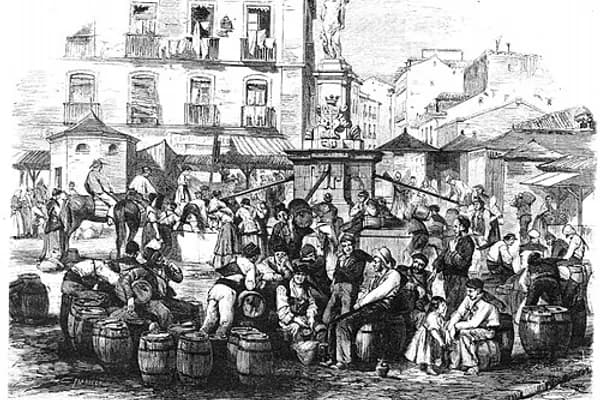
The name literally means "wash feet", possibly in reference to the fountain in Plaza de Lavapiés which no longer exists.
Location
The neighborhood is centered on the Plaza de Lavapiés.
The boundaries of the Lavapiés neighborhood are Calle Magdalena and Calle Duque de Alba to the north, Calle Embajadores to the southwest, Calle Sebastián Elcano and Paseo Santa María de la Cabeza to the southeast, and Calle Atocha to the northeast.
Overview
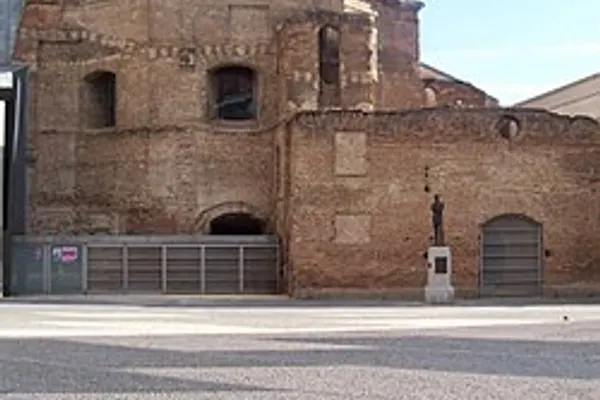
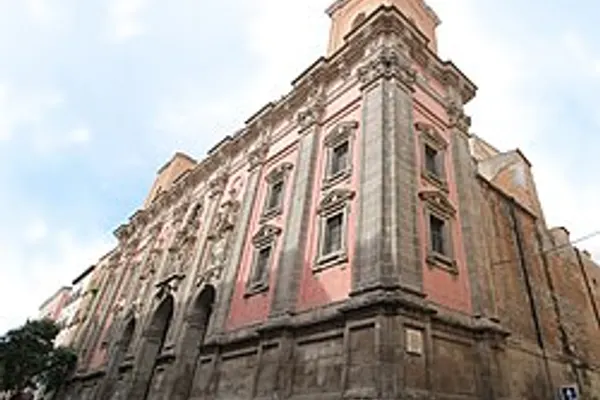
Lavapiés was long considered the most "typical" neighborhood of Madrid; humble and somewhat neglected. Now its large immigrant population has given it a diverse and cosmopolitan flavor and it draws many visitors from other parts of Madrid, as well as foreign tourists. An inscription on a fountain in Plaza de Cabestreros is a monument to the Spanish Republic in Madrid. The ruins of Escuelas Pías, a religious school, were left to stand for many years after it was burned down by the anti-Catholic, radical left that supported the Popular Front in 1936. Only in 2002 were part of the ruins converted into a university library. The north side of the ruins face the Plaza Augustin Lara, named after the 20th century Mexican composer who wrote a song about Madrid which includes the phrase "I'll make you the empress of Lavapiés".
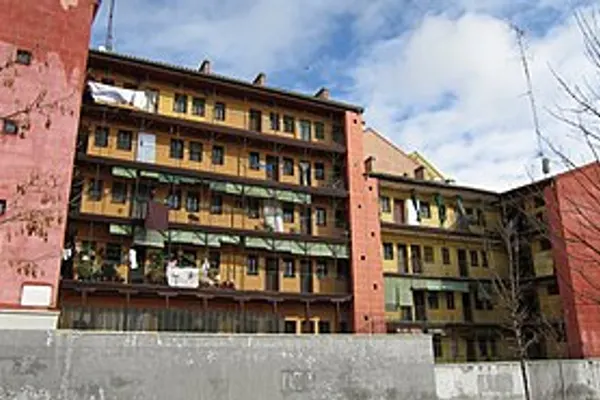
In the late 1980s and 1990s, Lavapiés had acquired a reputation as a "vertical slum", with its tenement blocks either empty or occupied by older people paying low rents. As a result, it became the most important location for okupación, or squatting, in Madrid.
More recently, it has become the focal point for immigrant populations, most notably from the Indian subcontinent, Chinese, Arabs and Senegalese. It has been estimated that around 60% of the population is of foreign origin and that there are 82 different nationalities represented.
West of Calle Ave María has a very high percentage of immigrant residents and shops and restaurants are almost exclusively owned by Chinese, Indians, Bangladeshis, Maghrebis and Middle Easterners. East of Calle Ave María, while still maintaining a socialist atmosphere relative to the other areas of Madrid, has a far higher native Spanish population and culinary/night scene.
There is a consistent police presence in Plaza de Lavapiés, as well as a high level of open drug dealing. Aside from the police, the area is relatively safe in the south and east end. Surveillance cameras are present throughout the neighborhood.
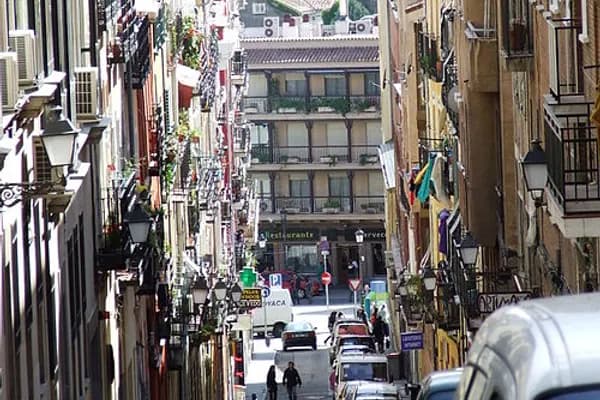
The architecture of Lavapiés, much like other barrios of Madrid (including Malasaña, La Latina and Chueca) is rather uniform with similar height, windows, balconies, pastel colours and shop/apartment set up. However, Lavapiés is unique in that there are steep hills creating a dramatic effect on some streets as well as tall trees unique to the centre of Madrid.
At the end of the 1990s, a programme of urban renewal was begun, in the hope of bringing in more prosperous residents attracted to its Bohemian atmosphere. The resulting sharp increase in rents has driven out much of its previous population.
The Lavapiés metro station on Line 3 of the Madrid Metro is nearby.
Ambiance
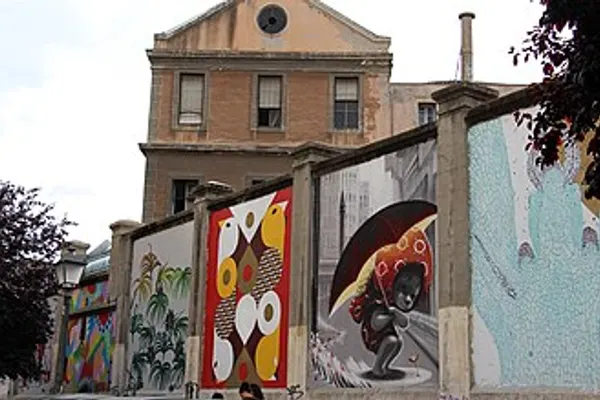
The area has evolved from almost projecting a level of high impoverishment to a more multicultural entity within Madrid's metropolitan area. Much of this attitude or culture can be seen in the graffiti that is often on display in the walls. Much of it speaks of an attitude that can be traced to an era in which many of its citizens portrayed an anti-Franco sentiment; however, some writings are more artistic in nature. Furthermore, many graffiti artists in the area are talented, politically minded leftists and anarchists. Street art is a visible reminder of the neighborhood's history and present as an often revolutionary and anti-capitalist tendency.
The atmosphere of the nightlife of Lavapiés can be divided into three parts. South of the plaza are several bars and cafés with a bohemian vibe and many terraces during the summer.
On Calle Ave María and east of it are many alternative bars, not to mention fringe meetings (parties or artistic/musical meetings) that also happen in abandoned or unlicensed premises. There are also several shisha bars and a café selling the Madrid-renowned Zapatilla, a 1kg sandwich made with ham and cheese.
Gallery
See also
Embajadores
Corral (housing)
Barrio de La Latina (Madrid)
Lavapiés (Madrid Metro)
References
Wikimedia Commons has media related to Lavapiés.
External links
Article title
40°24.51′N 3°42.06′W / 40.40850°N 3.70100°W / 40.40850; -3.70100
Encyclopedic content adapted from the Wikipedia article on Lavapiés, used under CC BY-SA 4.0.
What makes Lavapiés special
Lavapiés stands out among Madrid’s neighborhoods for its distinctive character: the city's most multicultural maze. Ranked #5 in Madrid, it offers the kind of experience that defines a great city trip — a place where the streets themselves tell a story and every block rewards curiosity.
Best for
Our take on Lavapiés
Lavapiés occupies a distinctive place in Madrid's neighborhood landscape. It is the kind of district that rewards travelers who venture beyond the obvious choices — quieter than the tourist-facing areas, richer in local character, and full of the small details that make a city trip memorable.
What makes Lavapiés worth the visit is the texture of daily life here. It is a neighborhood that functions for the people who live in it — not just for the visitors who pass through. The shops serve local needs, the restaurants feed local appetites, and the streets have a rhythm that reflects genuine community rather than tourism infrastructure. That is the quality our editors prize most, and Lavapiés has it in abundance.
Our editors recommend budgeting at least half a day here — enough time to walk the main streets, sit down for coffee, and discover the side streets where Lavapiés's real character lives.
Living in Lavapiés
Lavapiés is connected to the rest of Madrid by public transit, and most visitors find it straightforward to reach from the city center or airport. Once you arrive, the neighborhood is best explored on foot — the scale is human and the streets reward wandering.
Day-to-day life in Lavapiés has the rhythm of a genuine residential neighborhood. You will find grocery stores, pharmacies, cafés with morning regulars, and the kind of small independent shops that only survive where locals support them. For visitors, this means the infrastructure you need — good coffee, a decent meal, a quiet place to sit — is always within a short walk.
Accommodation in Lavapiés ranges from boutique hotels to short-term rentals. We generally recommend staying within the neighborhood itself rather than commuting from a hotel elsewhere in Madrid — the experience of waking up inside a great neighborhood is fundamentally different from visiting one as a day trip.
What locals say about Lavapiés
Long-term residents of Lavapiés tend to describe their neighborhood with a mix of pride and protectiveness. Like any district with genuine character, Lavapiés inspires loyalty — the kind of place people move to and never quite leave, or leave and spend years trying to get back to.
What locals appreciate most about Lavapiés is its consistency — the feeling that the neighborhood works the same way on a Tuesday morning as it does on a Saturday night. It is not a place that performs for visitors and then goes quiet. The rhythm is genuine, the community is real, and the daily experience of living here is what draws people and keeps them.
Compared to the more famous districts in Madrid, Lavapiés has maintained a lower profile, which many residents consider an advantage. The neighborhood evolves gradually rather than being reshaped by sudden attention, and the result is a community that still feels organic rather than curated.
Visitor tips
- Lavapiés is located in Madrid, Spain. The neighborhood is accessible by public transport, taxi, or rideshare from most parts of the city.
- Morning is often the best time to explore — the streets are quieter, the light is better for photography, and cafes are at their most welcoming.
- Wear comfortable walking shoes — the best way to experience Lavapiés is on foot, wandering the side streets and discovering what lies around each corner.
- Save the neighborhood's location on your phone before you arrive. Offline maps are especially useful for navigating the smaller side streets.