About the neighborhood
Street in Leeds, England
Kirkgate (/ˈkɜːrɡət/) is a street in the city centre of Leeds, in England.
History
The street originated in the Mediaeval period, leading from the centre of the settlement to the parish church. The Anglo-Saxon Leeds Cross was found when the church was replaced by the current Leeds Minster, in the 19th century. By the time of the Domesday Book, Leeds also had a manor house, which lay on the street. The street became associated with cloth manufacturing, and in 1711, the First White Cloth Hall was constructed on the street. Other early buildings included a chantry, built in 1430, later replaced by a vicarage, the town's bakehouse, and a prison, built in 1655.
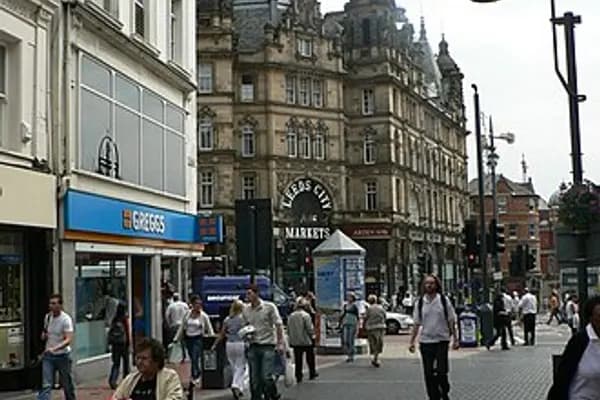
The city's first hospital was established in a house on the street in 1767. In 1790, the Ancient Order of Foresters was founded at the Crown Inn on the street, although the building was demolished in 1935. In the 19th century, the Kirkgate Market was constructed at the city centre end of the street, while a railway line was built, spanning the middle of the street.
In 1984, a police officer, John Speed, was shot and killed on the street, and there is a memorial in his memory.
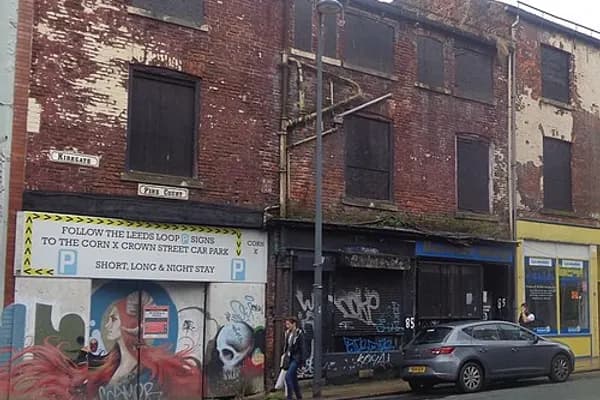
Leeds City Council announced a regeneration programme in April 2016, named the Lower Kirkgate Townscape Heritage Initiative, with an aim to improve vacant buildings in the southern end of Kirkgate. This included the restoration of 1st White Cloth Hall, which was announced in March 2018.
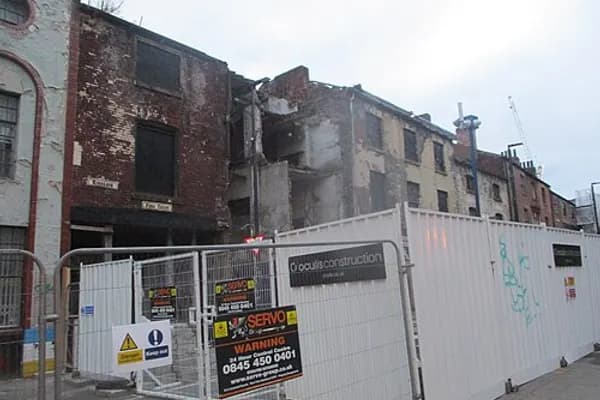
On 12 April 2024, a dilapidated property collapsed onto the road on the southern end of Kirkgate. The collapse took out the telephone lines of neighbouring businesses but resulted in no injuries. The council had previously approached the building's owner about receiving a grant as part of the council's regeneration scheme, but terms couldn't be agreed upon. On 14 August 2024, the council proposed issuing an urgent works notice for other buildings most at risk of collapse on Kirkgate; they also proposed an acquisition of seven properties owned by the same company. The urgent works notice was approved by the government four months later, and was served on 18 December 2024. The southern part of Kirkgate remains closed to motor vehicle traffic as a result of the collapse.
The Welcome to Leeds website notes that the street became run-down, but by the 2020s became "a more calm street which has recently been reinvigorated by exciting local businesses".
Layout and architecture
The street runs south-east from the junction of Briggate and Commercial Street, to a junction with East Street and Duke Street. Fish Street, Vicar Lane, New York Street, Harper Street, Cross York Street, and Church Lane lead off its north-east side, while Central Road, New Market Street, Call Lane, Wharf Street, High Court, and Maude Street lead off its south-west side.
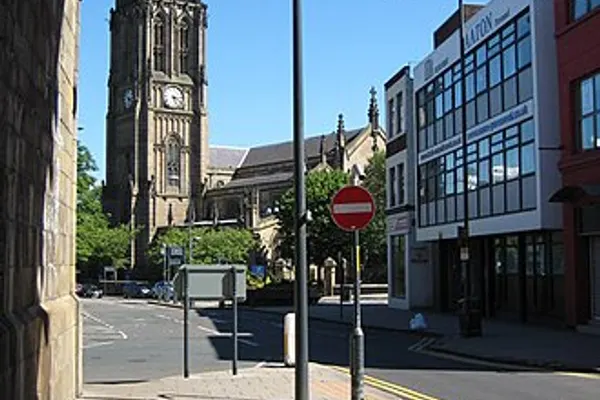
Notable buildings on the north-east side of Kirkgate include the grade I listed Kirkgate Market. On the south-west side of the street lie the former bank at 110 Kirkgate, designed by William Bakewell; the grade II* listed First White Cloth Hall; and the grade I listed Leeds Minster.
References
Further reading
"The History of Kirkgate". Leeds Minster. Retrieved 14 March 2022.
Encyclopedic content adapted from the Wikipedia article on Kirkgate, used under CC BY-SA 4.0.
What makes Kirkgate special
Kirkgate stands out among Leeds’s neighborhoods for its distinctive character: leeds' oldest street. Ranked #4 in Leeds, it offers the kind of experience that defines a great city trip — a place where the streets themselves tell a story and every block rewards curiosity.
Best for
Our take on Kirkgate
Kirkgate occupies a distinctive place in Leeds's neighborhood landscape. It is the kind of district that rewards travelers who venture beyond the obvious choices — quieter than the tourist-facing areas, richer in local character, and full of the small details that make a city trip memorable.
What makes Kirkgate worth the visit is the texture of daily life here. It is a neighborhood that functions for the people who live in it — not just for the visitors who pass through. The shops serve local needs, the restaurants feed local appetites, and the streets have a rhythm that reflects genuine community rather than tourism infrastructure. That is the quality our editors prize most, and Kirkgate has it in abundance.
Our editors recommend budgeting at least half a day here — enough time to walk the main streets, sit down for coffee, and discover the side streets where Kirkgate's real character lives.
Living in Kirkgate
Kirkgate is connected to the rest of Leeds by public transit, and most visitors find it straightforward to reach from the city center or airport. Once you arrive, the neighborhood is best explored on foot — the scale is human and the streets reward wandering.
Day-to-day life in Kirkgate has the rhythm of a genuine residential neighborhood. You will find grocery stores, pharmacies, cafés with morning regulars, and the kind of small independent shops that only survive where locals support them. For visitors, this means the infrastructure you need — good coffee, a decent meal, a quiet place to sit — is always within a short walk.
Accommodation in Kirkgate ranges from boutique hotels to short-term rentals. We generally recommend staying within the neighborhood itself rather than commuting from a hotel elsewhere in Leeds — the experience of waking up inside a great neighborhood is fundamentally different from visiting one as a day trip.
What locals say about Kirkgate
Long-term residents of Kirkgate tend to describe their neighborhood with a mix of pride and protectiveness. Like any district with genuine character, Kirkgate inspires loyalty — the kind of place people move to and never quite leave, or leave and spend years trying to get back to.
What locals appreciate most about Kirkgate is its consistency — the feeling that the neighborhood works the same way on a Tuesday morning as it does on a Saturday night. It is not a place that performs for visitors and then goes quiet. The rhythm is genuine, the community is real, and the daily experience of living here is what draws people and keeps them.
Compared to the more famous districts in Leeds, Kirkgate has maintained a lower profile, which many residents consider an advantage. The neighborhood evolves gradually rather than being reshaped by sudden attention, and the result is a community that still feels organic rather than curated.
Visitor tips
- Kirkgate is located in Leeds, United Kingdom. The neighborhood is accessible by public transport, taxi, or rideshare from most parts of the city.
- Morning is often the best time to explore — the streets are quieter, the light is better for photography, and cafes are at their most welcoming.
- Wear comfortable walking shoes — the best way to experience Kirkgate is on foot, wandering the side streets and discovering what lies around each corner.