About the neighborhood
Street and area of Leeds, West Yorkshire, England
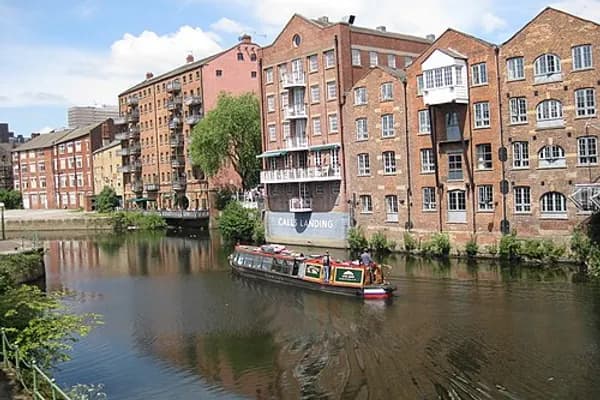
The Calls is an area and street by the River Aire in Leeds city centre, West Yorkshire, England. This district falls within the City and Hunslet ward of the City of Leeds Council. Formerly an area of industry in Leeds, it has now been regenerated with a mixture of uses: primarily offices, residential and leisure.
Etymology
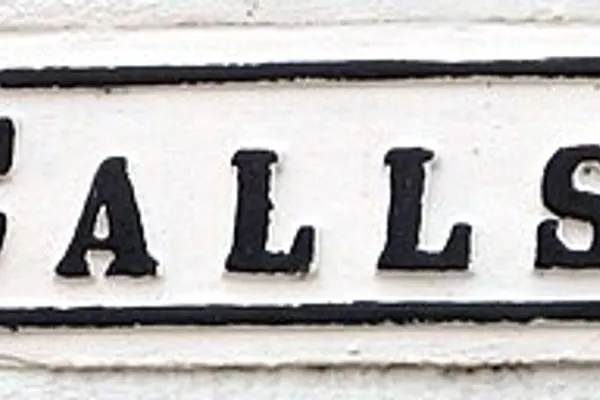
The first evidence for the existence of the place-name The Calls is the street-name Call Lane, first attested in 1557, but presumably referring to The Calls. The place-name The Calls is first attested in its own right in 1668, with the French definite article le, as Le Calls. The place first appears on maps from John Cossins' 1726 Plan of Leeds, which shows a street labelled "Calls" running from the Leeds Bridge to Leeds Parish Church. The old street sign also shows it as "Calls", without "the".
The origin of the name Calls is uncertain. Recent local history books frequently give the etymology as the Latin word callis ('a stony footway, foot-path'). However, this word is not found elsewhere in English usage or place-names, making it an unlikely origin for The Calls. Rather, the usual authority on English place-names, the English Place-Name Society, concluded that the name was 'probably' from the Northern English dialect word caul, meaning 'weir' (whose origin is itself obscure). At the time of the publication of the Society's volumes on West Yorkshire, the Oxford English Dictionary listed the earliest attestation of this word as 1805, but other research showed the word in use already in the sixteenth century. Another possibility, however, is that the name comes from the Northern English dialect word call 'place where cows are driven'.
History
It is thought that in Roman times there was a ford over the River Aire near the present Leeds Bridge. "The Calls" was originally an open space mainly of orchards, but is now a built up area. The Calls area along with neighbouring Clarence Dock served as docks on the Leeds and Liverpool Canal and the Aire and Calder Navigation throughout the Industrial Revolution and the early 20th century.
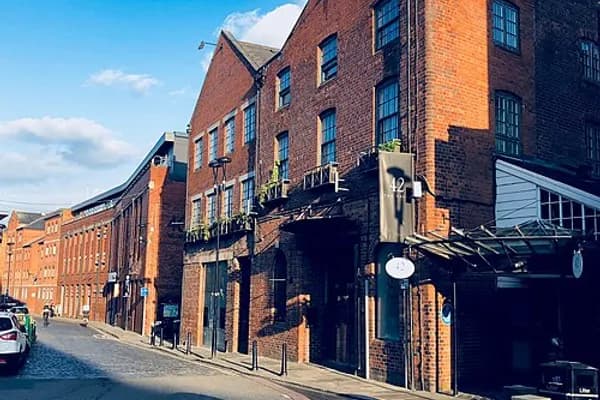
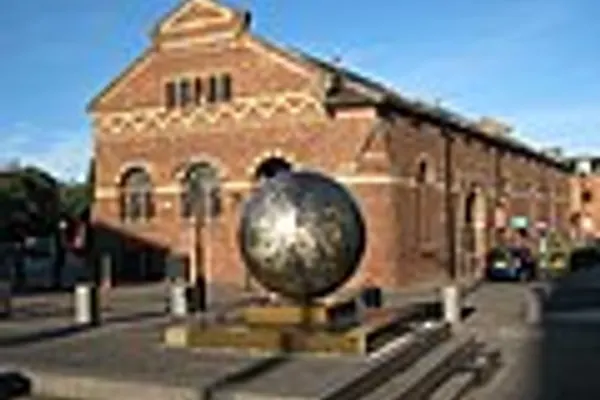
The area's decline began in the early 20th century when Leeds' industry moved away from the centre out towards Hunslet, Holbeck, Armley and Kirkstall. From 1985 to 1995 Leeds Corporation carried out a major regeneration with careful conversion of listed building warehouses and new build in sympathetic style for a mixed use area. This includes the historic Fletlands Corn Mills into a boutique hotel, 42 The Calls Hotel, in 1991. The Centenary Footbridge by Ove Arup & Partners across the river to Brewery Wharf was opened in 1993. A silver ball fountain was installed to commemorate this work.
Leisure
There are many pubs and bars around the area. The pub The New Penny on Call Lane was awarded a blue plaque by Leeds Civic Trust on 19 October 2016, "for providing a safe venue for lesbian, gay, bisexual and transgender people." The plaque states that the pub is "one of the longest continually running LGB & T* venues in the UK, having been so since 1953". The area is also the setting for the post parade street party and stalls at Leeds Pride.
References
LawOrganisationsCultureEconomy Pink pound
Stonewall Workplace Equality Index
Other Anti-transgender movement in the United Kingdom
Bi Academic Intervention
Boy Meets Girl (2015 TV series)
History of violence against LGBT people in the United Kingdom
List of LGBT politicians in the United Kingdom
Museum of Transology
My Transsexual Summer
OneLove
PinkNews
The Queer Emporium
Rainbow plaque
Timeline of LGBT history in the United Kingdom
The Well of Loneliness
53°47′38″N 1°32′17″W / 53.794°N 1.538°W / 53.794; -1.538
Encyclopedic content adapted from the Wikipedia article on Call Lane, used under CC BY-SA 4.0.
What makes Call Lane special
Call Lane stands out among Leeds’s neighborhoods for its distinctive character: leeds' drinking heart. It tops our ranking of the best neighborhoods in Leeds, it offers the kind of experience that defines a great city trip — a place where the streets themselves tell a story and every block rewards curiosity.
Best for
Our take on Call Lane
Call Lane is the neighborhood we send friends to first when they visit Leeds. It earns the top spot in our ranking not because it is the most famous district in the city, but because it delivers the most complete neighborhood experience — the kind of place where every block rewards curiosity and every return visit reveals something new.
What makes Call Lane exceptional is the density of its cultural life. Art galleries, independent bookshops, small theaters, and creative studios are woven into the fabric of the neighborhood rather than clustered in a single zone. You encounter culture here by accident, which is how the best cultural experiences always happen.
Our editors recommend budgeting at least half a day here — enough time to walk the main streets, sit down for coffee, and discover the side streets where Call Lane's real character lives.
Living in Call Lane
Call Lane is connected to the rest of Leeds by public transit, and most visitors find it straightforward to reach from the city center or airport. Once you arrive, the neighborhood is best explored on foot — the scale is human and the streets reward wandering.
Day-to-day life in Call Lane has the rhythm of a genuine residential neighborhood. You will find grocery stores, pharmacies, cafés with morning regulars, and the kind of small independent shops that only survive where locals support them. For visitors, this means the infrastructure you need — good coffee, a decent meal, a quiet place to sit — is always within a short walk.
Accommodation in Call Lane ranges from boutique hotels to short-term rentals. We generally recommend staying within the neighborhood itself rather than commuting from a hotel elsewhere in Leeds — the experience of waking up inside a great neighborhood is fundamentally different from visiting one as a day trip.
What locals say about Call Lane
Long-term residents of Call Lane tend to describe their neighborhood with a mix of pride and protectiveness. Like any district with genuine character, Call Lane inspires loyalty — the kind of place people move to and never quite leave, or leave and spend years trying to get back to.
The creative community in Call Lane is genuine, not aspirational. Residents include working artists, writers, musicians, and designers who chose the neighborhood because it supported their work — affordable studio space, a community that values craft, and enough foot traffic to sustain independent galleries and shops.
Like any neighborhood that has earned attention, Call Lane is navigating the tension between popularity and preservation. Rents have risen, new businesses have arrived, and long-time residents occasionally grumble that the neighborhood is not what it was. But the fundamentals — the walkability, the food, the community — remain strong, and most locals we speak to believe the neighborhood is still gaining more than it is losing.
Visitor tips
- Call Lane is located in Leeds, United Kingdom. The neighborhood is accessible by public transport, taxi, or rideshare from most parts of the city.
- Morning is often the best time to explore — the streets are quieter, the light is better for photography, and cafes are at their most welcoming.
- Wear comfortable walking shoes — the best way to experience Call Lane is on foot, wandering the side streets and discovering what lies around each corner.
- Save the neighborhood's location on your phone before you arrive. Offline maps are especially useful for navigating the smaller side streets.