About the neighborhood
District in Jakarta, Indonesia
Kelapa Gading or also known as KG or Gading, is a district (Indonesian: kecamatan) of the administrative city of North Jakarta, Indonesia. The district is known to the local population as a city within a city, due to the integrated residential-commercial planning, and the supporting facilities.
History
The area that was going to be Kelapa Gading was an undeveloped marshland and sparsed agricultural land until 1976, when a local real estate developer company, known as PT Summarecon Agung, developed the area into a more productive land by establishing an integrated residential-commercial area in a grid-like urban planning with main boulevards and supporting facilities including schools and hospitals.
Government
As a district (Indonesian kecamatan), Kelapa Gading is the southernmost district of North Jakarta. Kelapa Gading has a total land area of 1,633.7 hectares (4,037 acres). The district is bounded by Bekasi Raya - Perintis Kemerdekaan Road to the south, Sunter Canal to the west, Bendungan Batik Canal to the north, and Cakung - Petukangan River to the east.
Kelapa Gading is divided into 3 kelurahan (administrative villages):
Kelapa Gading Barat - area code 14240
Kelapa Gading Timur - area code 14240
Pegangsaan Dua - area code 14250
Residential
Kelapa Gading as a residential area is generally targeted toward the middle to upper market, though there are exceptions with non-gated residences. The residences of Kuta and Artha Gading Villa in Bukit Gading Villa are up-market areas in the location. The prime location and luxury contribute to the price factor. About 65% of the residents of Kelapa Gading are Chinese Indonesians. Since the late 1990s, vertical residences started to be built in Kelapa Gading. Starting from Kondominium Menara Kelapa Gading on the east gate, Wisma Gading Permai, to Gading Mediterranean Residences. After that, more apartment buildings continued to fill Kelapa Gading.
Commercial
Kelapa Gading is famous amongst food lovers as varieties of Indonesian food like Chinese food, Minang food and Javanese food, as well as non-Indonesian cuisine such as Thai, Japanese and Western foods. The central point in Kelapa Gading is an area known as Gading Food City 6°09′37″S 106°54′22″E / 6.16022°S 106.90624°E / -6.16022; 106.90624. The Jakarta Fashion & Food Festival is annually held in several locations of this area.
The district of Kelapa Gading contains multiple shopping malls. Some of the well-known malls in the district include Mal Kelapa Gading (the first and the largest shopping mall in Kelapa Gading, opened in 1990 by PT Summarecon Agung), Mal Artha Gading, Kelapa Gading Trade Center, Bella Terra, and Mall of Indonesia.
Kelapa Gading is popular for its nightlife, with several bars and entertainment places that open up until late at night. Known as the world's capital of Bakmi (meat noodle), Kelapa Gading provides a large variety of Bakmi noodles that can be found, such as noodles from Bangka, Makassar, Pontianak, Japanese ramen, Korean-styled noodles, and others. .
Flooding problem
Despite being a well-developed area, Kelapa Gading is affected by floods, mainly during the rainy season, due to its geographically low plain characteristics (5 meters above sea level) and the lack of an effective flood diversion network established by the district developer. The district was severely affected by the 2007 Jakarta flood, the worst flooding disaster in Jakarta.
Flood control infrastructures in Kelapa Gading include several small reservoirs in the Administrative Village of Kelapa Gading Barat, with linking water channels.
Since 2010, the East Flood Channel began functioning, diverting water that used to cross Kelapa Gading's surrounding waterway. Many are hoping that this flood channel can make Kelapa Gading flood-free.
Between 2008 and 2011, no crucial flood struck the area. In 2020, however, the area was overwhelmed with multiple floods.
Because of the ongoing risk of flooding, many homes in Kelapa Gading are built elevated, with inclined driveways leading up from street level to the ground level of the house.
Education
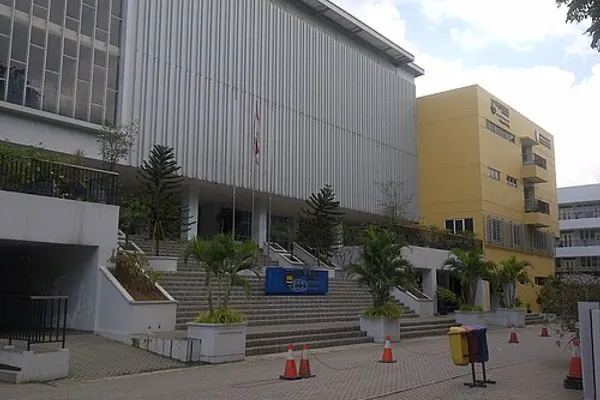
North Jakarta Intercultural School is located in Kelapa Gading.
SIS Kelapa Gading is an IB curriculum school located in Kelapa Gading.
Raffles Christian School Kelapa Gading is a Cambridge curriculum school located in Kelapa Gading
Sekolah Menengah Atas Kristen 5 BPK Penabur Kelapa Gading is one of the most prestigious Christian school located in Kelapa Gading
Sekolah Menengah Pertama Kristen 4 BPK Penabur Kelapa Gading is another notable and prestigious Christian school academically and non-academically, it is also founded by the same institution as SMAK 5 Penabur Jakarta and shares the same building as them.
Mahatma Gading School is one of the schools in Kelapa Gading which provides both the national curriculum and Cambridge curriculum or just the Cambridge curriculum.
There are also many state-run schools in the district.
Transportation
Kelapa Gading has a considerable road access to all areas throughout the city. To the west of this area, there is a network of inner-city toll roads that connects all areas of the city and Soekarno-Hatta International Airport. There is also a toll road going through Kelapa Gading that is called Kelapa Gading - Pulo Gebang Toll.
The area is served by TransJakarta bus network. Jakarta LRT passes through Kelapa Gading.
List of important places
Mall of Indonesia
Mal Artha Gading
Mal Kelapa Gading
The BritAma Arena
Notable residents
Novel Baswedan, investigator for the Corruption Eradication Commission
Alan Budikusuma, former badminton player
Hotman Paris Hutapea, lawyer
Denny Sumargo, actor and former basketball player
Susi Susanti, former badminton player
External links
GadingZone.Com - Media Informasi & Interaksi Komunitas Kawasan Kelapa Gading
References
Encyclopedic content adapted from the Wikipedia article on Kelapa Gading, used under CC BY-SA 4.0.
What makes Kelapa Gading special
Kelapa Gading stands out among Jakarta’s neighborhoods for its distinctive character: jakarta's shopping and food capital. Ranked #5 in Jakarta, it offers the kind of experience that defines a great city trip — a place where the streets themselves tell a story and every block rewards curiosity.
Best for
Our take on Kelapa Gading
Kelapa Gading occupies a distinctive place in Jakarta's neighborhood landscape. It is the kind of district that rewards travelers who venture beyond the obvious choices — quieter than the tourist-facing areas, richer in local character, and full of the small details that make a city trip memorable.
What strikes us most about Kelapa Gading is the depth of its food culture. This is not a neighborhood with a few good restaurants — it is a neighborhood where eating well is woven into daily life, where the corner places are as good as the destination spots, and where you could eat every meal for a week without repeating yourself or being disappointed.
Our editors recommend budgeting at least half a day here — enough time to walk the main streets, sit down for coffee, and discover the side streets where Kelapa Gading's real character lives.
Living in Kelapa Gading
Kelapa Gading is connected to the rest of Jakarta by public transit, and most visitors find it straightforward to reach from the city center or airport. Once you arrive, the neighborhood is best explored on foot — the scale is human and the streets reward wandering.
Dining options range from quick, affordable local spots to more deliberate sit-down restaurants. The neighborhood supports a genuine food ecosystem — bakeries, grocery shops, specialty stores — which means you can eat well at every price point. Weekend mornings tend to be the most atmospheric time for a food-focused walk.
Accommodation in Kelapa Gading ranges from boutique hotels to short-term rentals. We generally recommend staying within the neighborhood itself rather than commuting from a hotel elsewhere in Jakarta — the experience of waking up inside a great neighborhood is fundamentally different from visiting one as a day trip.
What locals say about Kelapa Gading
Long-term residents of Kelapa Gading tend to describe their neighborhood with a mix of pride and protectiveness. Like any district with genuine character, Kelapa Gading inspires loyalty — the kind of place people move to and never quite leave, or leave and spend years trying to get back to.
Ask a local what they love most, and the answer almost always starts with the food. Residents have strong opinions about which bakery is best, which café makes the best morning coffee, which restaurant they bring visiting friends to as proof that Kelapa Gading is the best neighborhood in Jakarta. The food culture here is not performative — it is the backbone of community life.
Compared to the more famous districts in Jakarta, Kelapa Gading has maintained a lower profile, which many residents consider an advantage. The neighborhood evolves gradually rather than being reshaped by sudden attention, and the result is a community that still feels organic rather than curated.
Visitor tips
- Kelapa Gading is located in Jakarta, Indonesia. The neighborhood is accessible by public transport, taxi, or rideshare from most parts of the city.
- For the best food experience, visit during lunchtime on weekdays when locals fill the restaurants, or explore weekend markets if available.
- Wear comfortable walking shoes — the best way to experience Kelapa Gading is on foot, wandering the side streets and discovering what lies around each corner.