About the neighborhood
Subdistrict of Tallinn, Estonia
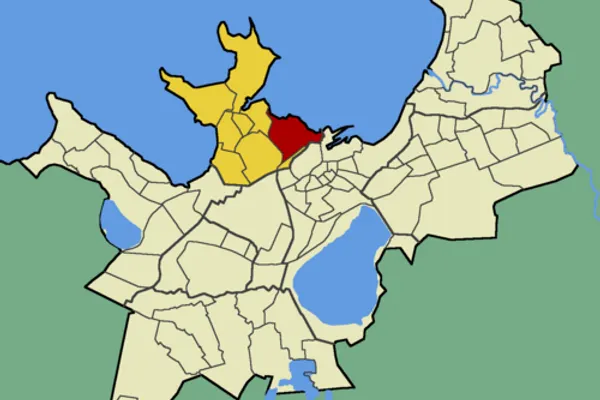
Kalamaja (Estonian for Fish House; German: Fischermay) is a subdistrict of the district of Põhja-Tallinn (Northern Tallinn) in Tallinn, the capital of Estonia. It is located just northwest of the historical town centre, on the coast of the Tallinn Bay. Kalamaja has a population of 12,930 (As of 1August2022).
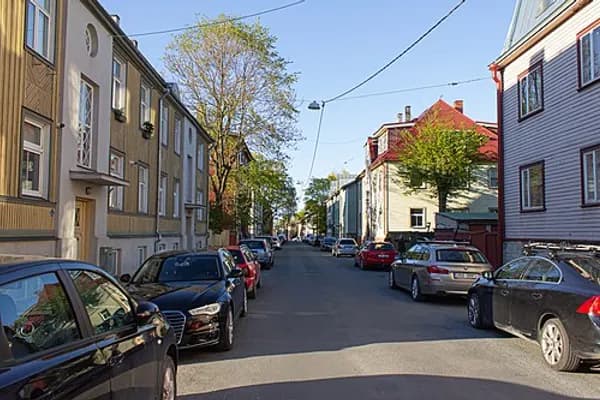
Kalamaja is one of the best preserved wooden architecture areas in Tallinn and Estonia. The quiet neighbourhood has long been known for its colourful hodgepodge of old fashioned, working class houses.
Throughout most of Tallinn's history Kalamaja served as the city's main fishing harbour. Starting from the 14th century the area was traditionally dominated by fishermen, fishmongers and boat wrights. A new era began in 1870, when Tallinn was connected to Saint Petersburg by railroad. The Tallinn railway station (Balti jaam), was built between Kalamaja and the city centre. Suddenly enormous factories started to sprout up in this part of town, and they brought with them an influx of thousands of new workers. The wooden houses, which have become Kalamaja's architectural legacy, were built to accommodate these workers.
Most of the Kalamaja's main sightseeings are located on the coast of Kalamaja. In 2011 a former railway embankment was converted into a walking trail called "Culture Kilometre" (Kultuurikilomeeter). The walk-way starts next to the Tallinn harbour passes the Creative Hub (Kultuurikatel), continues past the historic Patarei Prison and Sea Fortress, the region's biggest sea centre Seaplane Harbour (Lennusadam) and ends at the end of Kalamaja park on Tööstuse street. In 2015, the former Kultuurikilomeeter was converted into a street, which quickly became one of the defining streets of the neighbourhood.
Kalamaja cemetery
Kalamaja was the location of the oldest cemetery in Tallinn, known as Kalamaja cemetery (Estonian: Kalamaja kalmistu, German: Fischermay Kirchhof) which was founded in the 15th or 16th century. The cemetery was flattened in 1964, during the second occupation of the Baltic states, by Soviet authorities who used the area of Kalamaja as a base for the Soviet Armed Forces.
Gallery
See also
Kalamaja cemetery
Patarei Prison
Linnahall
Tallinn Power Plant (Kultuurikatel)
Estonia Piano Factory
External links
Kalamaja Information Page
Image of a late 19th or early 20th century map showing the district of Kalamaja and the area of the cemetery Archived 2012-02-23 at the Wayback Machine
Discovering Tallinn Fish Market Archived 2010-07-01 at the Wayback Machine
Kalamaja blog (in Estonian)
Patarei Prison - Culture Park
References
Wikimedia Commons has media related to Kalamaja.
59°26′49″N 24°43′52″E / 59.446981°N 24.730981°E / 59.446981; 24.730981
Science and education Tallinn University
Tallinn University of Technology
Estonian Academy of Arts
Estonian Academy of Music and Theatre
Estonian Academy of Security Sciences
Estonian Maritime Academy
Tallinn University of Applied Sciences
Estonian Business School
Estonian Academy of Sciences
Sports Pirita Yachting Centre
A. Le Coq Arena
Kadriorg Stadium
Kalevi Keskstaadion
Unibet Arena
Kalev Sports Hall
Tondiraba Ice Hall
Pirita Velodrome
Mustamäe Ski Jumping Hill
Tallinn Hippodrome
Pirita-Kose-Kloostrimetsa Circuit
Transportation Port of Tallinn Old City Harbour
Paljassaare Harbour
Bekker Port
Tallinn Airport
Tallinn Baltic Station
Tallinn bus station
Tallinna Linnatranspordi AS
Events Estonian Song Festival
Estonian Dance Festival
Tallinn Black Nights Film Festival
Tallinn Old Town Days
Tallinn Marathon
Tallinn Music Week
Tallinn Christmas Market
Õllesummer
Tallinn Legends
Encyclopedic content adapted from the Wikipedia article on Kalamaja, used under CC BY-SA 4.0.