About the neighborhood
Neighborhood in Antwerp, Belgium
(Learn how and when to remove this message) The Zuid (Dutch for "South") is a southern neighborhood in the city center of Antwerp, abutting the Scheldt River. The Zuid had a revival in the mid-1980s and is now composed of buildings in the Art Nouveau and Modern architecture styles. Zuid contains numerous cafés, restaurants and shops, as well as three museums, two art centres, and many commercial art galleries.
History
The neighbourhood of Zuid, or Antwerp South, emerged following the dismantling of the Antwerp Citadel, colloquially known as the Zuidkasteel. The fort was originally constructed by the Spanish, and the demolition process began in 1874. The layout of the streets was officially approved through a Royal Decree in 1875. The design of the neighbourhood is believed to have been influenced by Georges-Eugène Haussmann, earning it the moniker "Le Petit Paris". Concurrently with the approval of the street plan, the excavation of the Zuiderdokken (Southern Docks) commenced. Over the subsequent 25 years, the area saw significant development, with the majority of its key public buildings reaching completion in the last decade of the 19th century. Historic events in the area include:
Two World Fairs, held in 1885 and 1894
The completion of the Royal Museum of Fine Arts in 1890
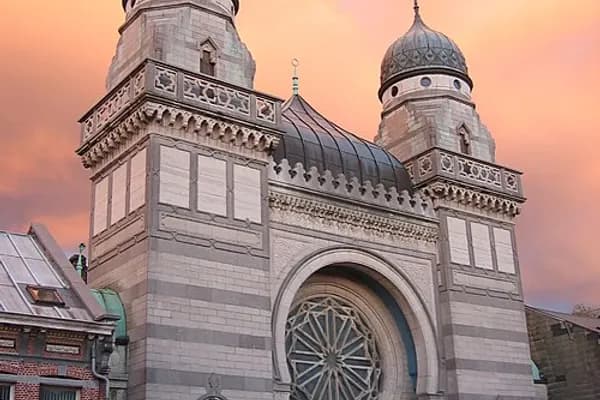
The completion of the "Dutch" Synagogue in the Bouwmeestersstraat in 1893 (see History of the Jews in Antwerp)
The opening of the Parein Biscuit Factory in the Brusselsestraat in 1894
The completion of the St. Michael's Church (Amerikalei) in 1897
The completion of the buildings of the State Commercial College (Handelshogeschool) (Schildersstraat) likewise in 1897. It now houses a nursery school after being the home of the Higher Institute for Translators and Interpreters for 53 years.
The opening of the South Station in 1898
The designation "Petit Paris", along with its well-regarded street layout, monuments, and cultural sites, made "het Zuid" or "Le Midi" a sought-after residential area up until the Second World War. Throughout the conflict, the neighbourhood experienced significant damage due to V bomb attacks, with the initial bomb impacting Antwerp, striking at the intersection of Schildersstraat and Leopold De Waelplaats.
Following the war, the area entered a prolonged period of decline. Contributing factors to this downturn included suburbanization, the downturn of the Southern Docks, and the shutdown and subsequent demolition in 1965 of the South Station.
The affordability of the area made it appealing to immigrants and individuals in search of a bohemian lifestyle. This economic accessibility enabled Anny De Decker to establish the "Wide White Space Gallery" (1966–1976) on the ground floor of Het Bootje, an architecturally diverse building situated at the corner of Schildersstraat and Plaatsnijdersstraat, which is now recognized as a protected monument.
In 1968 and 1969, the Southern Docks were filled in and repurposed as a parking area. The construction of a new building for the Court of Appeals on the former entrance to these docks, along with the demolition of the Hippodrome in 1972, further diminished the prominence of "het Zuid," relegating it to a district noted only for its residual charm.
Ultimately, the inherent appeal of the neighbourhood, along with a shift in attitudes towards city living, contributed to a revival in the area's prospects. There was a resurgence of interest in the Zuid after the International Rubens Year in 1977, which attracted numerous visitors to South Antwerp.
Museums
Royal Museum of Fine Arts
The building dates from 1890 and was constructed specifically to house the city's growing collection of art. The collection includes many Dutch and Belgian masterpieces from the 15th century onwards, by artists such as Jan van Eyck, Rogier van der Weyden, Rembrandt, and Rubens as well as several works by Ensor, Magritte, and Delvaux.
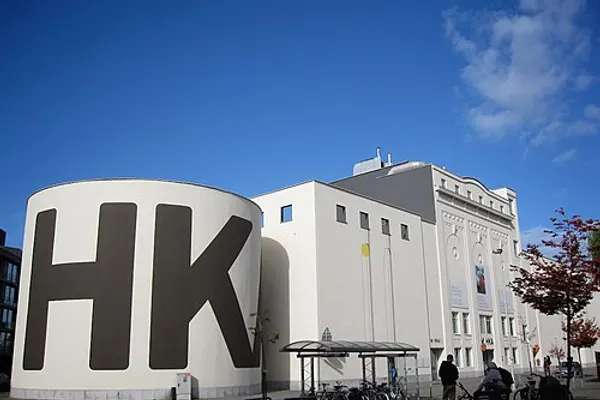
Museum van Hedendaagse Kunst Antwerpen
This is the contemporary art museum of the city and one of the largest of its kind in Belgium. The museum holds a permanent collection of contemporary art by Belgian and international artists, a cinema, and a specialized library. The architect responsible was Michel Grandsard. He also designed the museum's new wing (1997). Since 1992, the director of the museum has been Bart de Baere.
Fotomuseum
This museum has a historical and contemporary collection of photography that is given a new presentation every year. Alongside the collection are frequently changing photography exhibitions, film projections, and lectures. It also publishes a magazine "FMM" in Dutch that presents articles on photography with a particular emphasis on fine art photography. The museum opened in 2004.
Monuments
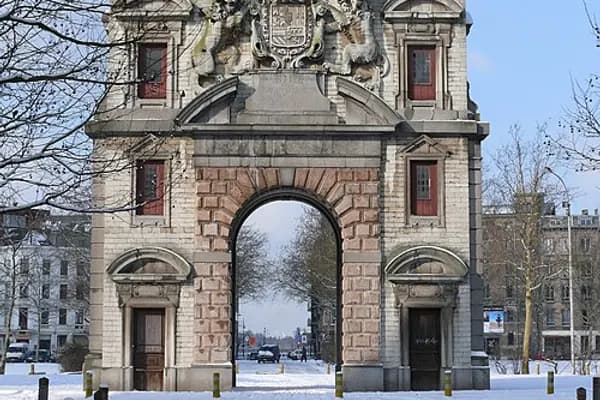
Several of the area's squares have public monuments. These include a statue on the Marnixplaats, a fountain on the Lambermontplaats, and a statue on the Baron Dhanislei. Of more general interest, however, is the "Waterpoort" (Water Gate), based on a design by Rubens, and which stands on the Sint-Gillisplaats.
On 6 July 2012, a new statue of William of Orange (William the Silent) and Marnix of Sint-Aldegondis was inaugurated in the gardens of the Royal Museum of Fine Arts. The statue is surrounded by a number of stelae commemorating key conflicts leading to the Thirty Years' War. The monument stands on or close to what was once the stronghold defended by both men against the Spanish aggressors.
Arts centres
In 1987 the theatre company "De Internationale Nieuwe Scene" moved into the derelict "Zuiderpershuis". Since then, this former hydraulic power station has become an important centre for the arts.
As its name might suggest, De Monty was formerly a local cinema and parish hall. It is now a venue for numerous travelling companies and groups of all kinds.
Raamtheater shared part of the large complex of buildings occupied by the Hoger Instituut van Vertalers en Tolken, the language department of Hogeschool Antwerpen, now Artesia.
Innovation, business, and new development
Once the Southern Docks fell into disuse the attraction of the area as a location for industrial and semi-industrial activities declined. This, combined with strict zoning laws, resulted in virtually all the small workshops and warehousing operations having to shut down or relocate.
Apart from existing attractions such as the housing stock and agreeable street plan, an important factor in reestablishing the elan of the neighborhood has been the availability of land for development. This has come from the demolition or conversion of industrial and semi-industrial buildings, the abandonment and/or redevelopment of buildings such as the former Hippodrome, and the demolition of the South Station. The derelict marshalling yards on the southern edge of the neighborhood are being developed into a sustainable development called Circulair Zuid including 2,200 homes between 2018 and 2030.
At present the area is served by a single supermarket on the ground floor of the redeveloped Hippodrome site. A recent development is the new Palace of Justice law courts complex on the former South Station site. This award-winning project, designed by the Richard Rogers Partnership in association with VKStudio and Ove Arup & Partners, opened in 2007.
The presence of this new complex has encouraged lawyers, and various support services to seek premises nearby. Finally, a number of IT start-ups have been attracted by the area's fashionable image in recent years. Whether the trading atmosphere will prove to be congenial in the longer term remains to be seen.
References
External links
For a full timeline of Antwerp's history in Dutch. This site also includes an extensive photographic library of contemporary Antwerp.
The website of the Buildings Agency (Regie der gebouwen) provides several pictures of the new Law Courts and project details in Dutch and French. Archived 31 December 2007 at the Wayback Machine
Zuid.be – Zuid Online A commercial site listing a number of businesses and cultural activities in the area. The site also includes an image gallery, a city plan and useful links.
Encyclopedic content adapted from the Wikipedia article on Het Zuid, used under CC BY-SA 4.0.
What makes Het Zuid special
Het Zuid stands out among Antwerp’s neighborhoods for its distinctive character: antwerp's museum and design quarter. It tops our ranking of the best neighborhoods in Antwerp, it offers the kind of experience that defines a great city trip — a place where the streets themselves tell a story and every block rewards curiosity.
Best for
Our take on Het Zuid
Het Zuid is the neighborhood we send friends to first when they visit Antwerp. It earns the top spot in our ranking not because it is the most famous district in the city, but because it delivers the most complete neighborhood experience — the kind of place where every block rewards curiosity and every return visit reveals something new.
What makes Het Zuid exceptional is the density of its cultural life. Art galleries, independent bookshops, small theaters, and creative studios are woven into the fabric of the neighborhood rather than clustered in a single zone. You encounter culture here by accident, which is how the best cultural experiences always happen.
Our editors recommend budgeting at least half a day here — enough time to walk the main streets, sit down for coffee, and discover the side streets where Het Zuid's real character lives.
Living in Het Zuid
Het Zuid is connected to the rest of Antwerp by public transit, and most visitors find it straightforward to reach from the city center or airport. Once you arrive, the neighborhood is best explored on foot — the scale is human and the streets reward wandering.
Day-to-day life in Het Zuid has the rhythm of a genuine residential neighborhood. You will find grocery stores, pharmacies, cafés with morning regulars, and the kind of small independent shops that only survive where locals support them. For visitors, this means the infrastructure you need — good coffee, a decent meal, a quiet place to sit — is always within a short walk.
Accommodation in Het Zuid ranges from boutique hotels to short-term rentals. We generally recommend staying within the neighborhood itself rather than commuting from a hotel elsewhere in Antwerp — the experience of waking up inside a great neighborhood is fundamentally different from visiting one as a day trip.
What locals say about Het Zuid
Long-term residents of Het Zuid tend to describe their neighborhood with a mix of pride and protectiveness. Like any district with genuine character, Het Zuid inspires loyalty — the kind of place people move to and never quite leave, or leave and spend years trying to get back to.
The creative community in Het Zuid is genuine, not aspirational. Residents include working artists, writers, musicians, and designers who chose the neighborhood because it supported their work — affordable studio space, a community that values craft, and enough foot traffic to sustain independent galleries and shops.
Like any neighborhood that has earned attention, Het Zuid is navigating the tension between popularity and preservation. Rents have risen, new businesses have arrived, and long-time residents occasionally grumble that the neighborhood is not what it was. But the fundamentals — the walkability, the food, the community — remain strong, and most locals we speak to believe the neighborhood is still gaining more than it is losing.
Visitor tips
- Het Zuid is located in Antwerp, Belgium. The neighborhood is accessible by public transport, taxi, or rideshare from most parts of the city.
- Morning is often the best time to explore — the streets are quieter, the light is better for photography, and cafes are at their most welcoming.
- Wear comfortable walking shoes — the best way to experience Het Zuid is on foot, wandering the side streets and discovering what lies around each corner.