About the neighborhood
Ward in Kyushu, Japan
Hakata-ku (博多区) is a ward of the city of Fukuoka in Fukuoka Prefecture, Japan.
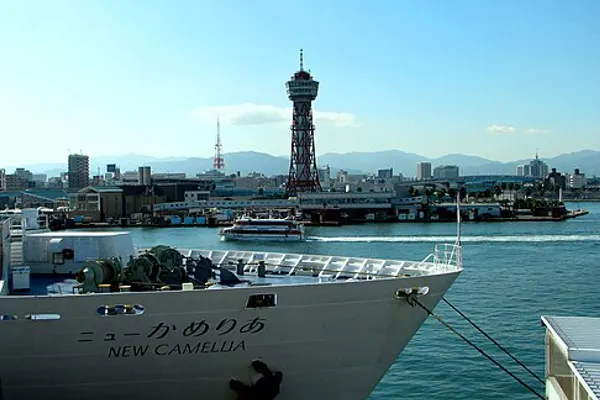
Many of Fukuoka Prefecture and Fukuoka City's principal government, commercial, retail and entertainment establishments are located in the district. Hakata-ku is also the location of Fukuoka's main train station, Hakata Station, Fukuoka Airport and the Hakata Port international passenger ship terminal.
Geography
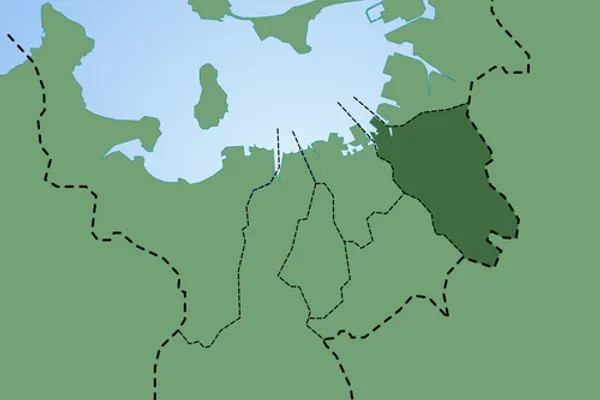
Hakata-ku is a ward of Fukuoka City located on its eastern edge. It covers an area of 31.47km (12.15sqmi) with a population of 206,629 (as of January 1, 2009). Much of the ward consists of low-lying plains beside the Mikasa River (御笠川, Mikasagawa). The northwestern end of the ward faces Hakata Bay, which includes both ferry and international cruise ship terminals Hakata Harbor (博多港, Hakata kō). The northeast end of the ward is slightly elevated, and is named Higashihirao (東平尾), with nearby Fukuoka Airport. Around Hakata Station is downtown; Nakasu (中洲) is the main dining and entertainment district of the ward along the Naka River (那珂川, Nakagawa). Hakata-ku also houses the Fukuoka Prefectural office.
Economy
Many Japanese companies have established branch offices in Hakata-ku due to its ease of access to local government offices as well transportation hubs such as Hakata Station and Fukuoka Airport. The headquarters of JR Kyūshū, Best Denki, and many other companies are in the ward.
Air Next, a subsidiary of All Nippon Airways, is headquartered on the grounds of Fukuoka Airport in Hakata-ku. Link Airs has its headquarters in the Fukuoka Gion Daiichi Seimei Building (福岡祇園第一生命ビル Fukuoka Gion Daiichi Seimei Biru) in Hakata-ku. Cisco has an Asia-Pacific sales office on the 12th floor of the Fukuoka Gion Daiichi Seimei Building.
Prior to its dissolution, Harlequin Air was headquartered on the grounds of the airport in Hakata-ku.
Hakata's economy was significantly transformed in 1996 with the opening of Canal City Hakata, an award-winning destination shopping and entertainment center.
Cruise ship tourism
From the early 2010s Hakata became the beneficiary of significant growth in cruise ship tourism; particularly with visitors from China.
In 2014, 91 cruise ships travelled from China called at Hakata. In 2015, 245 cruise ship calls were made at Hakata Port. After expansion and redevelopment of the port facilities, the number of cruise ship port calls in 2016 is expected to exceed 400. As of 2015, the largest passenger vessel making regular port calls at Hakata is Royal Caribbean International's MS Quantum of the Seas.
Partly as a result of growing international tourism, in 2015 Fukuoka reported the fastest rising tax revenues and population in Japan.
History
Hakata is one of the oldest cities in Japan. In the Middle Ages, Hakata which faces onto the Genkai-Nada Channel (玄界灘) dividing Japan from Korea, was a base for merchants who traded with China and Korea, and the city housed Japan's first Chinatown. Taira no Kiyomori is said to have built the artificial harbor Sode-no-minato (袖の湊) to increase commerce. Hakata was burned down by many wars, including the Mongol invasions.
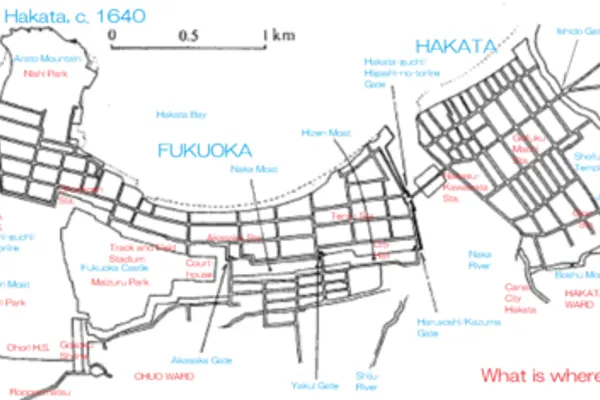
In the early Edo period, Kuroda Nagamasa, appointed the lord of Chikuzen Province, and most of his samurai vassals lived in Fukusaki, on the opposite shore of the Naka River from Hakata. Kuroda Nagamasa changed the name of the area to Fukuoka after his home town; Fukuoka in Okayama Prefecture. He ordered Tachibana Castle and Najima Castle dismantled, and had Fukuoka Castle built using the stones from those older castles. At that time Hakata was no larger than one square kilometer, demarcated by defensive lines along the Naka River, the Boshu-bori (or Boshu Canal), and the Ishido or Mikasa River.
In 1876, Hakata (ja:博多), then also known as Dai-Ni-Dai-ku, and Fukuoka, or Dai-Ichi-Dai-ku, were merged. In 1878 the settlement was renamed Fukuoka-ku (福岡区) by the Fukuoka prefectural government, though the population of Hakata was 25,677 and that of Fukuoka was 20,410. At that time, the name Hakata vanished from the administration. In 1889, after a local referendum in which half the voters chose the name Fukuoka and half chose Hakata, the city was officially renamed Fukuoka-shi, but at the same time a new train station then being built was named Hakata Station.
An imperial decree issued in July 1899 established Hakata as an open port for trade with the United States and the United Kingdom.
In 1972, when Fukuoka City was granted designated status by government ordinance, a ward including the old Hakata area was given the name Hakata-ku.
In 2016 a large sinkhole appeared in the city center just west of Hakata station. The sinkhole was filled and the affected roads were completely repaired within a few days. However, the hasty repair seems to have been problematic as less than a month later the road began showing signs of imminent implosion.
Culture
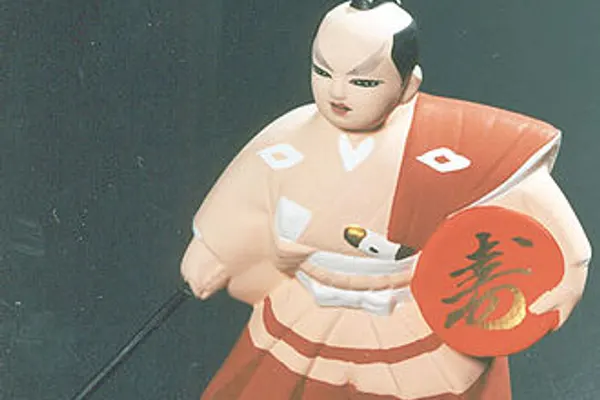
Hakata was the traditional center for the manufacture of Hakata ningyō, which are traditional Japanese dolls that are famous throughout Japan. Today, almost all Hakata ningyō makers (Hakata ningyō shi) have their factories in the Old Hakata Area, a part of modern Hakata-ku.
Hakata-ori is a textile used for obi of kimono.
It is also the home of Mentai Rock, named after the popular mentaiko dish served in the region, that spawned numerous J-pop idols during the early 1980s. Neo Mentai Rock is the name given to a recent renewal in activity from local musicians.
Hakata-ben is the local Japanese dialect spoken in the Old Hakata Area.
Hakata is also the location of the pop group HKT48. Other popular groups from Hakata are Kanikapila and NUMBER GIRL.
Parts of the famous crime novel 'Points and lines' ('Ten to Sen' in Japanese) by the award-winning Japanese writer Seichō Matsumoto occur in Hakata and its train station.
The South Korean government maintains the Korea Education Institution (Korean: 후쿠오카 한국교육원; Japanese: 福岡韓国教育院) in Hakata-ku.
Famous foods
Mentaiko
Tonkotsu (pork bone) ramen, also called simply Hakata ramen
Motsunabe
Japanese cheesecake
Mizutaki - Nabemono of chicken
Hakata Torimon (ja:博多通りもん) - a type of cake
Hakata no Hito - a type of cake
Tsukemen (dipping noodles)
Festivals
Hakata Dontaku Minato Matsuri - May 3 and 4
Hakata Gion Yamakasa - from July 1 to 15
Hakata O-kunchi - October 23 and 24 (prior to 1953, November 23)
Transportation
Rail
JR West Sanyō Shinkansen Hakata Station
JR Kyūshū Kyūshū Shinkansen Hakata Station
Kagoshima Main Line Yoshizuka Station - Hakata Station - Takeshita Station - Minami-Fukuoka Station
Sasaguri Line Yoshizuka Station
Nishi-Nippon Railroad Tenjin Ōmuta Line Zasshonokuma Station - Sakuranamiki Station
Fukuoka City Subway Airport Line Nakasu-Kawabata Station - Gion Station - Hakata Station - Higashi-Hie Station - Fukuoka Airport Station
Hakozaki Line Nakasu-Kawabata Station - Gofukumachi Station - Chiyo-Kenchōguchi Station
Bus
Hakata bus terminus (see Nishitetsu)
Airport
Fukuoka Airport
Harbor
Bayside place Hakata Futoh (Hakata Pier)
Chūō Wharf (Central Wharf) - international ferry Beetle and Kobee and New Camellia
Facilities
Commerce
Canal City Hakata Grand Hyatt Fukuoka
Hakata Riverain Hakata-za
Hotel Ōkura Fukuoka
Culture
Level-5 stadium (Hakata no mori Stadium)
Fukuoka Convention Center - Marine Messe Fukuoka, Fukuoka International Congress Center, Fukuoka Kokusai Center
Hakata Civic Center, Hakata Library
Hakata South Library
Nakasu
Rakusui-en
Religion
Shinto Kushida Shrine
Sumiyoshi Shrine
Tōka Ebisu Shrine
Buddhism Shōfuku Temple
Tōchō Temple
Jōten Temple
Sōfuku Temple
Christianity Fukuoka Korean Christian Church, Chiyo
Hakata New Life Church
Hikarigaoka (Hill of light) Catholic Church
Minoshima Catholic Pastoral Center
Japan Evangelical Lutheran church, Sasaki machi
Japan Baptist Church, Aoki
North Kyushu Japanese Orthodox Church, Higashi-hirao
References
External links
Wikimedia Commons has media related to Hakata-ku, Fukuoka.
Japan portal
KitakyushuCore city Kurume
Cities Asakura
Buzen
Chikugo
Chikushino
Dazaifu
Fukutsu
Iizuka
Itoshima
Kasuga
Kama
Koga
Miyama
Miyawaka
Munakata
Nakagawa
Nakama
Nōgata
Ogōri
Ōkawa
Ōmuta
Ōnojō
Tagawa
Ukiha
Yame
Yanagawa
Yukuhashi
Districts Asakura District Chikuzen
Tōhō
Chikujō District Chikujō
Kōge
Yoshitomi
Kaho District Keisen
Kasuya District Hisayama
Kasuya
Sasaguri
Shime
Shingū
Sue
Umi
Kurate District Kotake
Kurate
Mii District Tachiarai
Miyako District Kanda
Miyako
Mizuma District Ōki
Onga District Ashiya
Mizumaki
Okagaki
Onga
Tagawa District Aka
Fukuchi
Itoda
Kawara
Kawasaki
Ōtō
Soeda
Yame District Hirokawa
List of mergers in Fukuoka Prefecture
Encyclopedic content adapted from the Wikipedia article on Hakata, used under CC BY-SA 4.0.
What makes Hakata special
Hakata stands out among Fukuoka’s neighborhoods for its distinctive character: fukuoka's merchant heart. It tops our ranking of the best neighborhoods in Fukuoka, it offers the kind of experience that defines a great city trip — a place where the streets themselves tell a story and every block rewards curiosity.
Best for
Our take on Hakata
Hakata is the neighborhood we send friends to first when they visit Fukuoka. It earns the top spot in our ranking not because it is the most famous district in the city, but because it delivers the most complete neighborhood experience — the kind of place where every block rewards curiosity and every return visit reveals something new.
What makes Hakata exceptional is the density of its cultural life. Art galleries, independent bookshops, small theaters, and creative studios are woven into the fabric of the neighborhood rather than clustered in a single zone. You encounter culture here by accident, which is how the best cultural experiences always happen.
Our editors recommend budgeting at least half a day here — enough time to walk the main streets, sit down for coffee, and discover the side streets where Hakata's real character lives.
Living in Hakata
Hakata is connected to the rest of Fukuoka by public transit, and most visitors find it straightforward to reach from the city center or airport. Once you arrive, the neighborhood is best explored on foot — the scale is human and the streets reward wandering.
Day-to-day life in Hakata has the rhythm of a genuine residential neighborhood. You will find grocery stores, pharmacies, cafés with morning regulars, and the kind of small independent shops that only survive where locals support them. For visitors, this means the infrastructure you need — good coffee, a decent meal, a quiet place to sit — is always within a short walk.
Accommodation in Hakata ranges from boutique hotels to short-term rentals. We generally recommend staying within the neighborhood itself rather than commuting from a hotel elsewhere in Fukuoka — the experience of waking up inside a great neighborhood is fundamentally different from visiting one as a day trip.
What locals say about Hakata
Long-term residents of Hakata tend to describe their neighborhood with a mix of pride and protectiveness. Like any district with genuine character, Hakata inspires loyalty — the kind of place people move to and never quite leave, or leave and spend years trying to get back to.
The creative community in Hakata is genuine, not aspirational. Residents include working artists, writers, musicians, and designers who chose the neighborhood because it supported their work — affordable studio space, a community that values craft, and enough foot traffic to sustain independent galleries and shops.
Like any neighborhood that has earned attention, Hakata is navigating the tension between popularity and preservation. Rents have risen, new businesses have arrived, and long-time residents occasionally grumble that the neighborhood is not what it was. But the fundamentals — the walkability, the food, the community — remain strong, and most locals we speak to believe the neighborhood is still gaining more than it is losing.
Visitor tips
- Hakata is located in Fukuoka, Japan. The neighborhood is accessible by public transport, taxi, or rideshare from most parts of the city.
- Morning is often the best time to explore — the streets are quieter, the light is better for photography, and cafes are at their most welcoming.
- Wear comfortable walking shoes — the best way to experience Hakata is on foot, wandering the side streets and discovering what lies around each corner.
- Save the neighborhood's location on your phone before you arrive. Offline maps are especially useful for navigating the smaller side streets.