About the neighborhood
United States historic place
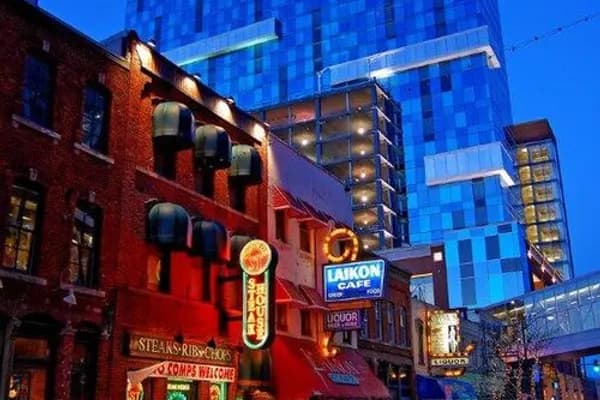
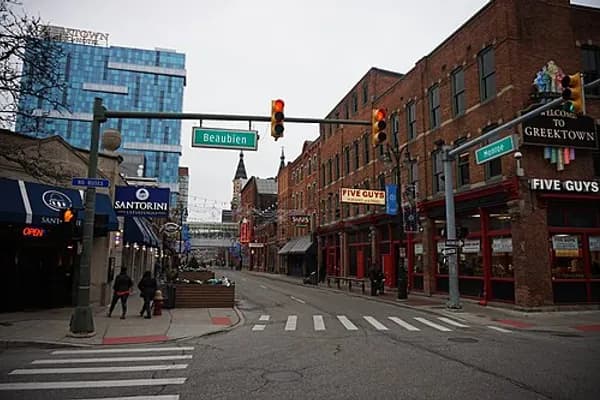
Greektown is a commercial and entertainment district in Detroit, Michigan, United States, located northeast of Downtown Detroit, along Monroe Avenue between Brush and St. Antoine streets. It has a station by that name on the city's elevated downtown transit system known as the Detroit People Mover. Greektown is situated between the Renaissance Center, Comerica Park, and Ford Field.
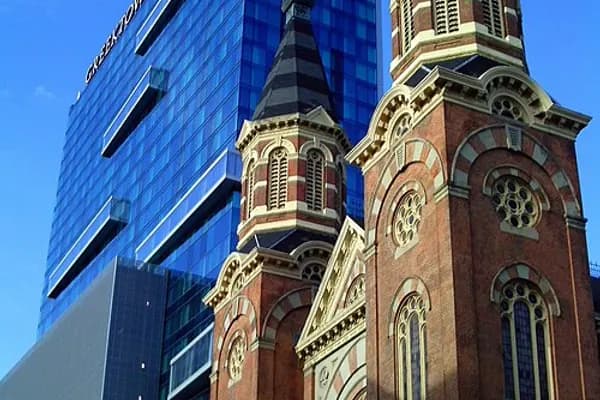
Named for the historic Greek immigrant community of the early 20th century, the district still has Greek-themed restaurants. Notable buildings include Annunciation Greek Orthodox Cathedral, St. Mary Roman Catholic Church (originally built for the former ethnic German congregation of the parish), Second Baptist Church, the Atheneum Suite Hotel, and the contemporary Hollywood Casino at Greektown (formerly Trapper's Alley, opened in 1972 by Frances and David Sonne) within its boundaries. The district was listed on the National Register of Historic Places in 1982. The district is the site of the annual Detroit Greek Independence Day Parade.
History
The area known today as Greektown was first settled in the 1830s by German immigrants, who created a primarily residential neighborhood in the area. However, in the earliest years of the 20th century, most of the ethnic German residents, who had gotten established in the city, began moving from the neighborhood into newer residential areas farther from downtown. As they left, a new wave of Greek immigrants moved into this older housing. Theodore Gerasimos was the first documented Greek immigrant in Detroit. The newly arrived Greeks soon established their own businesses in the neighborhood.
By the 1920s, the area was developing more commercial structures, and the Greek residents began moving out in turn to newer housing. But the restaurants, stores, and coffeehouses they established remained. The next thirty years brought a melange of immigrants to the few residential spaces left in the neighborhood. Redevelopment in the 1960s led to the neighborhood becoming the site of new municipal buildings and parking.
Realizing the culturally significant neighborhood was at risk, Detroit's ethnic Greek leaders banded together. With the help of the Mayor's office, the streetscape and building exteriors were improved, and additional street lighting was installed. The neighborhood threw a Greek festival in 1966, timed to coincide with Fourth of July celebrations. The festival was a success, and was continued for years until turnout grew too large. By that time, Greektown was firmly established in Detroit. The Greektown Historic District was listed on the National Register of Historic Places in 1982.
Changes continue, and as of June 2012 only three full-fledged Greek restaurants remain in Greektown. The neighborhood is a popular restaurant and entertainment district, having many restaurants that serve authentic Greek cuisine, and one of the city's three casinos, Hollywood Casino at Greektown. Certain buildings on Monroe Street feature themes related to the mythical Pegasus, and such historic Greek structures as the Parthenon, and other ancient architecture. Greek music is played on Monroe Street throughout the day. Well-known restaurants include The Golden Fleece, Bakaliko Cafe, Pegasus Taverna, and Fishbone's Rhythm Kitchen Cafe. The Detroit People Mover has a station at the Hollywood Casino on Beaubien Street between Monroe Street and Lafayette Boulevard.
In popular culture
Greektown is featured in the video game Midnight Club 3: DUB Edition (2005).
In the American cable TV series Low Winter Sun (2013), the Detroit Police precinct is located four blocks from Greektown. Maya and Damon "kick up" tributes from her bar and from their drug and prostitution earnings to Skelos, Greektown's main crime lord. Seeking to gain independence from Skelos, Damon opens a blind pig outside of Greektown, where he kicks up to Reverend Lowdown (season 1, episodes 3 and 4).
See also
Michigan portal
Greece portal
History of the Greek Americans in Metro Detroit
Greektown station
References
External links
Wikimedia Commons has media related to Greektown, Detroit.
Greektown Merchants Association
Skyscrapers and complexes 150 West Jefferson
Ally Detroit Center
Book Tower
Broderick Tower
Buhl Building
Cadillac Place
Cadillac Square Building (demolished)
Cadillac Tower
Chrysler House
David Whitney Building
Detroit Life Building
Executive Plaza Building
Federal Reserve Building
First National Building
Fisher Building
Ford Building
Fort Pontchartrain Hotel
Francis Palms Building
Guardian Building
Hudson's Detroit
Industrial Building
Lafayette Building (demolished)
Michigan Central Station
Millender Center
One Campus Martius
One Griswold Street
One Kennedy Square
One Woodward Avenue
Penobscot Building
Renaissance Center
Riverfront Condominiums Detroit
David Stott Building
Westin Book Cadillac Hotel
Meridian Health Plan Headquarters (proposed)
Detroit Statler Hotel (demolished)
Water Board Building
Wurlitzer Building, a former Wurlitzer office building
Parks Belle Isle
Campus Martius Park
Water Works Park (closed)
Public art Bagley Memorial Fountain
Scott Fountain
Russell Alger Memorial Fountain
General Alexander Macomb
Michigan Soldiers' and Sailors' Monument
The Spirit of Detroit
Stevens T. Mason
General Thaddeus Kosciuszko
Other landmarks Comerica Park
Detroit Athletic Club
Detroit Building
Detroit City Hall (demolished)
Detroit Opera House
Detroit Public Safety Headquarters
Detroit Club (club defunct, but building still exists)
Elwood Bar
Farwell Building
The Fillmore Detroit
Ford Auditorium (demolished)
Ford Field
Fort Shelby Hotel
Fort Street Presbyterian Church
Fox Theatre
Frank Murphy Hall of Justice
Gem Theatre
Griswold Building Senior Apartments
Hollywood Casino
Huntington Place
Joe Louis Arena (demolished)
Kennedy Fountain, a/k/a Kennedy Square (demolished)
MGM Grand Detroit
Park Avenue House
Town Apartments
Veterans' Memorial Building
Wayne County Building
William Livingstone Memorial Light, only marble lighthouse in the United States, located on Belle Isle
Women's City Club
Coleman A. Young Municipal Center
University Club (demolished)
Yondotega Club
Detroit People Mover stations Broadway
Bricktown
Cadillac Center
Financial District
Fort/Cass
Grand Circus Park
Greektown
Huntington Place
Michigan Avenue
Millender Center
Renaissance Center
Times Square
Water Square
This list is incomplete. The Michigan State University College of Law was in Downtown Detroit prior to 1997 and was known as the "Detroit College of Law." WestHistoric Districts See also: National Register of Historic Places listings (Downtown and Midtown Detroit, Rest of Detroit, Rest of Wayne County) and List of National Historic Landmarks in Michigan
Low rise under 10 stories selectedParks and gardens Belle Isle
Cranbrook
Campus Martius
Grand Circus
Metroparks
Matthaei Botanical Gardens
Riverfront parks
Detroit Zoo
Museums and libraries Cranbrook Educational Community
Charles H. Wright Museum of African American History
Detroit Historical Museum
Detroit Institute of Arts
Detroit Public Library
Detroit Science Center
Edsel and Eleanor Ford House
Fair Lane
Ford Piquette Avenue Plant
The Henry Ford
Meadowbrook Hall
Pewabic Pottery
Southfield Public Library
University of Michigan Museum of Art
Religious landmarks Religious landmarks
Performance centers Theatres and performing arts venues
Neighborhood Historic DistrictsSee also: List of tallest buildings in Detroit
Encyclopedic content adapted from the Wikipedia article on Greektown, used under CC BY-SA 4.0.
What makes Greektown special
Greektown stands out among Detroit’s neighborhoods for its distinctive character: detroit's downtown nightlife. Ranked #4 in Detroit, it offers the kind of experience that defines a great city trip — a place where the streets themselves tell a story and every block rewards curiosity.
Best for
Our take on Greektown
Greektown occupies a distinctive place in Detroit's neighborhood landscape. It is the kind of district that rewards travelers who venture beyond the obvious choices — quieter than the tourist-facing areas, richer in local character, and full of the small details that make a city trip memorable.
The energy of Greektown builds as the day goes on, peaking in the evening when the streets fill with locals heading to their regular spots. This is a neighborhood where the nightlife feels organic rather than manufactured — bars that have regulars, music venues where the crowd actually listens, late-night spots where the kitchen stays open because the community demands it.
Our editors recommend budgeting at least half a day here — enough time to walk the main streets, sit down for coffee, and discover the side streets where Greektown's real character lives.
Living in Greektown
Greektown is connected to the rest of Detroit by public transit, and most visitors find it straightforward to reach from the city center or airport. Once you arrive, the neighborhood is best explored on foot — the scale is human and the streets reward wandering.
The neighborhood transitions through distinct phases during the day. Mornings are quiet — coffee shops and bakeries set the pace. Afternoons bring more energy as the retail and café scene picks up. Evenings are when Greektown truly comes alive, with restaurants and bars filling steadily from around 7 PM onward. If you are staying in the neighborhood, embrace the rhythm rather than fighting it.
Accommodation in Greektown ranges from boutique hotels to short-term rentals. We generally recommend staying within the neighborhood itself rather than commuting from a hotel elsewhere in Detroit — the experience of waking up inside a great neighborhood is fundamentally different from visiting one as a day trip.
What locals say about Greektown
Long-term residents of Greektown tend to describe their neighborhood with a mix of pride and protectiveness. Like any district with genuine character, Greektown inspires loyalty — the kind of place people move to and never quite leave, or leave and spend years trying to get back to.
Residents value the neighborhood's evening energy but will quickly tell you that Greektown is more than its bars. The nightlife is an expression of the community, not a tourist attraction — locals know the bartenders by name, have their preferred corners, and treat the neighborhood's bars and restaurants as extensions of their living rooms.
Compared to the more famous districts in Detroit, Greektown has maintained a lower profile, which many residents consider an advantage. The neighborhood evolves gradually rather than being reshaped by sudden attention, and the result is a community that still feels organic rather than curated.
Visitor tips
- Greektown is located in Detroit, United States. The neighborhood is accessible by public transport, taxi, or rideshare from most parts of the city.
- The neighborhood comes alive in the evening. Plan to arrive after sunset to experience the best of the local bar and dining scene.
- Wear comfortable walking shoes — the best way to experience Greektown is on foot, wandering the side streets and discovering what lies around each corner.
- Save the neighborhood's location on your phone before you arrive. Offline maps are especially useful for navigating the smaller side streets.