About the neighborhood
United States historic place
The French Quarter is a historic district and a section of downtown Charleston, South Carolina, United States, that is listed on the National Register of Historic Places.
Description
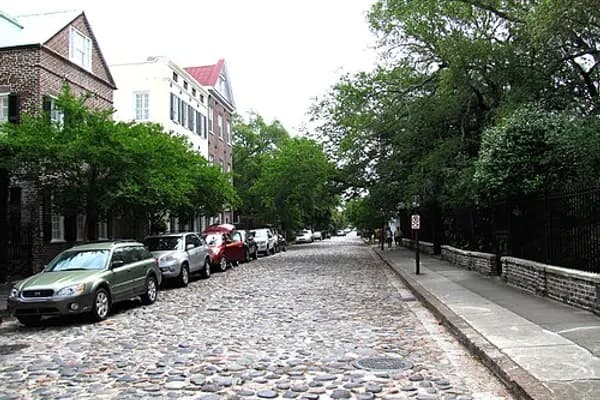
The area is considered to be bounded by the Cooper River on the east, Broad Street on the south, Meeting Street on the west, and Market Street on the north. The French Quarter is within the original "walled" city of Charleston. The area began being called the French Quarter in 1973 when preservation efforts began for warehouse buildings on the Lodge Alley block. The name recognizes the high concentration of French merchants in the area's history. It was named to the National Register of Historic Places in 1973.
The neighborhood was settled as part of the original Grande Modell of Charles Towne in 1680. It is famous for its art galleries; it also has many restaurants and places of commerce as well as Charleston's Waterfront Park.
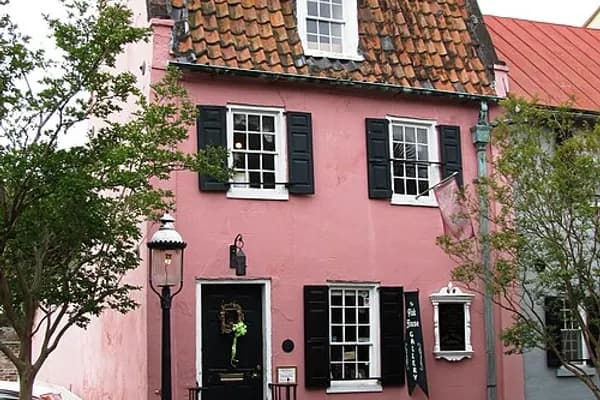
Charleston's French Quarter is home to many fine historic buildings, among them, the Pink House Tavern, built around 1712, and the Old Slave Mart, built by Z.B. Oakes in 1859. Also in the French Quarter are the Dock Street Theatre, arguably the first site of theatrical productions in the United States, and the French Huguenot Church, a beautiful Gothic Revival church which houses the sole-surviving French Calvinist Congregation in the United States. St. Philip's Episcopal Church, the first congregation in Charleston, whose current building dates to 1835, is also in the French Quarter. St. Philip's graveyard is the final resting place of Edward Rutledge, the youngest signer of the Declaration of Independence, and U.S. Senator and Vice President John C. Calhoun, whose body was exhumed during the Civil War and buried near the church in an unmarked grave. Later, after the war, his body was moved back to its original location and a memorial constructed in the 1880s.
See also
National Register of Historic Places portal
National Register of Historic Places listings in Charleston, South Carolina
French Quarter (New Orleans)
French Quarter (San Francisco)
French quarter (London)
French quarter (Hanoi)
French Quarter (St. Louis)
References
Moore, Margaret H. (1997). Complete Charleston: A Guide to the Architecture, History and Gardens of Charleston. TM Photography, Inc. pp.132–147. ISBN0-9660144-0-5.
External links
Media related to French Quarter (Charleston, South Carolina) at Wikimedia Commons
Encyclopedic content adapted from the Wikipedia article on French Quarter, used under CC BY-SA 4.0.
What makes French Quarter special
French Quarter stands out among Charleston’s neighborhoods for its distinctive character: the oldest preserved charleston block. Ranked #2 in Charleston, it offers the kind of experience that defines a great city trip — a place where the streets themselves tell a story and every block rewards curiosity.
Best for
Our take on French Quarter
French Quarter is one of the strongest neighborhoods in Charleston, and it consistently appears in our editors' personal favorites lists. It may not always get the same attention as the city's most famous district, but among travelers who know Charleston well, French Quarter is often the first recommendation.
What makes French Quarter worth the visit is the texture of daily life here. It is a neighborhood that functions for the people who live in it — not just for the visitors who pass through. The shops serve local needs, the restaurants feed local appetites, and the streets have a rhythm that reflects genuine community rather than tourism infrastructure. That is the quality our editors prize most, and French Quarter has it in abundance.
Our editors recommend budgeting at least half a day here — enough time to walk the main streets, sit down for coffee, and discover the side streets where French Quarter's real character lives.
Living in French Quarter
French Quarter is connected to the rest of Charleston by public transit, and most visitors find it straightforward to reach from the city center or airport. Once you arrive, the neighborhood is best explored on foot — the scale is human and the streets reward wandering.
Day-to-day life in French Quarter has the rhythm of a genuine residential neighborhood. You will find grocery stores, pharmacies, cafés with morning regulars, and the kind of small independent shops that only survive where locals support them. For visitors, this means the infrastructure you need — good coffee, a decent meal, a quiet place to sit — is always within a short walk.
Accommodation in French Quarter ranges from boutique hotels to short-term rentals. We generally recommend staying within the neighborhood itself rather than commuting from a hotel elsewhere in Charleston — the experience of waking up inside a great neighborhood is fundamentally different from visiting one as a day trip.
What locals say about French Quarter
Long-term residents of French Quarter tend to describe their neighborhood with a mix of pride and protectiveness. Like any district with genuine character, French Quarter inspires loyalty — the kind of place people move to and never quite leave, or leave and spend years trying to get back to.
What locals appreciate most about French Quarter is its consistency — the feeling that the neighborhood works the same way on a Tuesday morning as it does on a Saturday night. It is not a place that performs for visitors and then goes quiet. The rhythm is genuine, the community is real, and the daily experience of living here is what draws people and keeps them.
Like any neighborhood that has earned attention, French Quarter is navigating the tension between popularity and preservation. Rents have risen, new businesses have arrived, and long-time residents occasionally grumble that the neighborhood is not what it was. But the fundamentals — the walkability, the food, the community — remain strong, and most locals we speak to believe the neighborhood is still gaining more than it is losing.
Visitor tips
- French Quarter is located in Charleston, United States. The neighborhood is accessible by public transport, taxi, or rideshare from most parts of the city.
- Morning is often the best time to explore — the streets are quieter, the light is better for photography, and cafes are at their most welcoming.
- Wear comfortable walking shoes — the best way to experience French Quarter is on foot, wandering the side streets and discovering what lies around each corner.
- Save the neighborhood's location on your phone before you arrive. Offline maps are especially useful for navigating the smaller side streets.