About the neighborhood
Historic district in South Carolina, United States
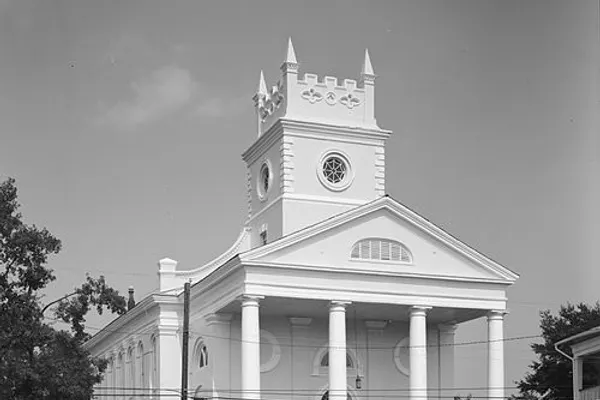
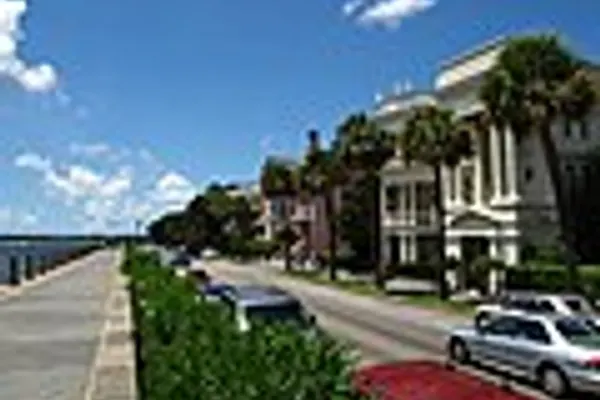
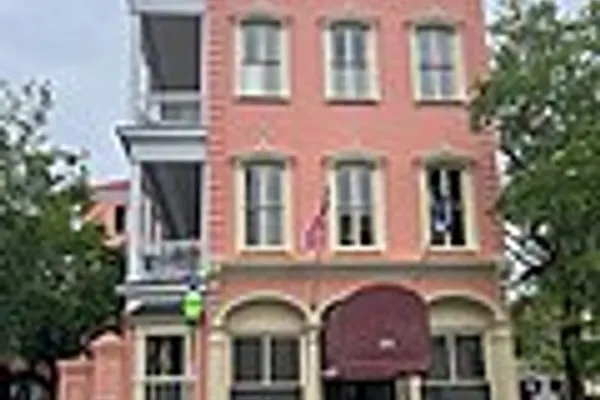
The Charleston Historic District, alternatively known as Charleston Old and Historic District, is a National Historic Landmark District in Charleston, South Carolina. The district, which covers most of the historic peninsular heart of the city, contains an unparalleled collection of 18th and 19th-century architecture, including many distinctive Charleston "single houses". It was declared a National Historic Landmark in 1960.
As noted by the New York Preservation Archive Project, the Charleston Old and Historic District's creation in 1931 established "the first historic district protected by local legislation in the United States and inspired legal protection of historic sites in New York City." It is legally set up in the city's regulations. According to Charleston's interactive zoning map, the "Old District" runs south from east-west Fishburne and Line streets. The National Historic Landmark-designated district is smaller, running south from Bee Street.
Description and history
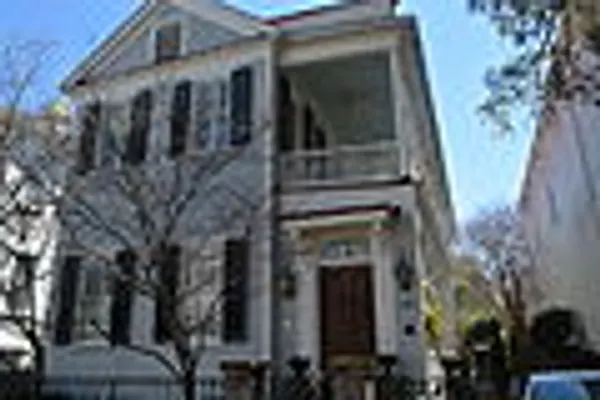
The city of Charleston was founded in 1670, with its main historic colonial heart laid out in 1680 on the peninsula at the confluence of the Ashley and Cooper Rivers. Since that time, the city has been a major commercial and trade center on the southeastern seaboard of North America. Its architecture reflects numerous significant periods of development, with high-quality examples of different architectural styles resulting from the city's continued importance through more than 300 years of history. Significant among these are the many Charleston "single houses", which are typically a single room in depth, and oriented with the short access toward the street, with the entrance area on a long side. These types of houses are built using all types of building materials, including wood, brick, and stucco. In Ansonborough, there are blocks of fine Greek Revival houses, built in the wake of an 1838 fire.
Broad Street, a major east–west thoroughfare since the early days, is home to a fine collection of Federal period houses, many of which have been converted to commercial uses. It is also where a number of important early civic and institutional buildings are located, including the 1752 St. Michael's Episcopal Church, the 1767 Exchange, and the 1792 Charleston County Courthouse.
The city of Charleston legislatively established the "Old and Historic District" as a local historic district. In 1960, a portion of this district was designated a National Historic Landmark District for its architectural significance. When initially listed in the National Register of Historic Places in 1966, the district was defined as "An area roughly bounded by Broad, Bay, S. Battery and Ashley and an area along Church bounded by Cumberland and Chalmers". Significant boundary enlargements of the National Register district in 1970 and 1978 have resulted in it now coinciding with the locally legislated district, extending in parts as far north as Calhoun Street. The 1978 version was defined as incorporating "most of area S of Bee, Morris, and Mary Sts. to Waterfront."
The district was enlarged to add individual buildings in 1984, 1985 and 1986.
NARA version of "Charleston Historic District" is very different, is missing core documents. Includes maps of 1931 designated (portion which became NHL), of later addition to NHL, and of 1960 designated which was NRHP-listed. Includes correspondence, photos, more.
Images
See also
Charleston's French Quarter District
Charleston Navy Yard Historic District
Emma Abbott Memorial Chapel
References
External links
Media related to Charleston Old and Historic District at Wikimedia Commons
Charleston Historic District, Charleston County (Charleston), at South Carolina Department of Archives and History
map of the district
Encyclopedic content adapted from the Wikipedia article on Downtown, used under CC BY-SA 4.0.
What makes Downtown special
Downtown stands out among Charleston’s neighborhoods for its distinctive character: antebellum charleston. It tops our ranking of the best neighborhoods in Charleston, it offers the kind of experience that defines a great city trip — a place where the streets themselves tell a story and every block rewards curiosity.
Best for
Our take on Downtown
Downtown is the neighborhood we send friends to first when they visit Charleston. It earns the top spot in our ranking not because it is the most famous district in the city, but because it delivers the most complete neighborhood experience — the kind of place where every block rewards curiosity and every return visit reveals something new.
What makes Downtown worth the visit is the texture of daily life here. It is a neighborhood that functions for the people who live in it — not just for the visitors who pass through. The shops serve local needs, the restaurants feed local appetites, and the streets have a rhythm that reflects genuine community rather than tourism infrastructure. That is the quality our editors prize most, and Downtown has it in abundance.
Our editors recommend budgeting at least half a day here — enough time to walk the main streets, sit down for coffee, and discover the side streets where Downtown's real character lives.
Living in Downtown
Downtown is connected to the rest of Charleston by public transit, and most visitors find it straightforward to reach from the city center or airport. Once you arrive, the neighborhood is best explored on foot — the scale is human and the streets reward wandering.
Day-to-day life in Downtown has the rhythm of a genuine residential neighborhood. You will find grocery stores, pharmacies, cafés with morning regulars, and the kind of small independent shops that only survive where locals support them. For visitors, this means the infrastructure you need — good coffee, a decent meal, a quiet place to sit — is always within a short walk.
Accommodation in Downtown ranges from boutique hotels to short-term rentals. We generally recommend staying within the neighborhood itself rather than commuting from a hotel elsewhere in Charleston — the experience of waking up inside a great neighborhood is fundamentally different from visiting one as a day trip.
What locals say about Downtown
Long-term residents of Downtown tend to describe their neighborhood with a mix of pride and protectiveness. Like any district with genuine character, Downtown inspires loyalty — the kind of place people move to and never quite leave, or leave and spend years trying to get back to.
What locals appreciate most about Downtown is its consistency — the feeling that the neighborhood works the same way on a Tuesday morning as it does on a Saturday night. It is not a place that performs for visitors and then goes quiet. The rhythm is genuine, the community is real, and the daily experience of living here is what draws people and keeps them.
Like any neighborhood that has earned attention, Downtown is navigating the tension between popularity and preservation. Rents have risen, new businesses have arrived, and long-time residents occasionally grumble that the neighborhood is not what it was. But the fundamentals — the walkability, the food, the community — remain strong, and most locals we speak to believe the neighborhood is still gaining more than it is losing.
Visitor tips
- Downtown is located in Charleston, United States. The neighborhood is accessible by public transport, taxi, or rideshare from most parts of the city.
- Morning is often the best time to explore — the streets are quieter, the light is better for photography, and cafes are at their most welcoming.
- Wear comfortable walking shoes — the best way to experience Downtown is on foot, wandering the side streets and discovering what lies around each corner.
- Save the neighborhood's location on your phone before you arrive. Offline maps are especially useful for navigating the smaller side streets.