About the neighborhood
Urban district in Ho Chi Minh, Vietnam
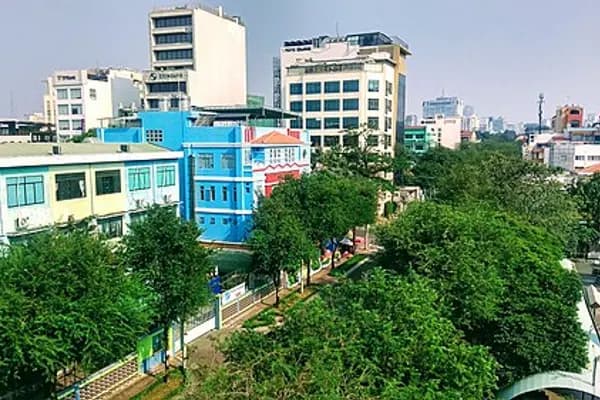
District 3 (Vietnamese: Quận 3) is a former urban district of Ho Chi Minh City, the largest city in Vietnam. Together with District 1, District 3 was considered the bustling heart of the city, with a multitude of businesses, religious sites, historical buildings and tourist attractions.
History
Established in December 1920, it was one of the first districts of Saigon.
Geography
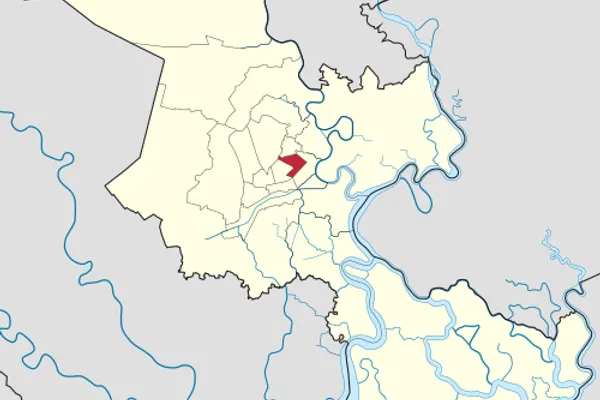
This district has a total area of 4.92 km, located in the city center and borders:
District 1 to the east by Hai Bà Trưng and Nguyễn Thị Minh Khai Street
District 10 to the south and southwest by Điện Biên Phủ, Nguyễn Thượng Hiền and Cách Mạng Tháng 8 Street
Phú Nhuận District to the north by part of Nhiêu Lộc – Thị Nghè Channel (and the historic Canal de Ceinture on maps before 1975)
Tân Bình District to the west and northwest by Nhiêu Lộc – Thị Nghè Channel (and the historic Canal de Ceinture on maps before 1975).
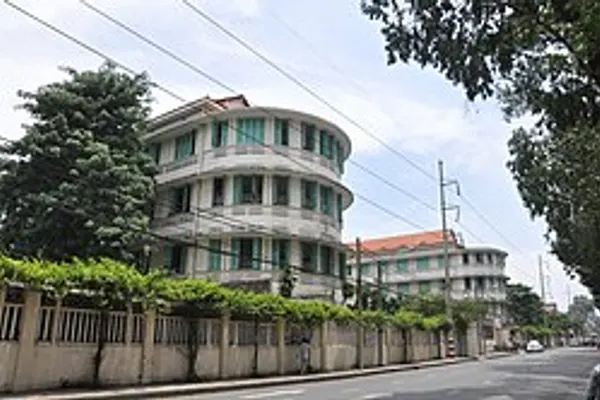
It is the location of Xá Lợi Pagoda, the largest in the city. The Vĩnh Nghiêm Pagoda is also located in District 3, next to Công Lý Bridge and on Nam Kỳ Khởi Nghĩa Street, directly connected to Tan Son Nhat International Airport. There are many French-style villas in this district as in the French Indochina period, District 1 is a business district then District 3 is the residential district for bureaucrats and wealthy families. Some notable offices are located in District 3 such as the Royal Thai Consulate (77 Trần Quốc Thảo).
Wards
District 3 is subdivided into twelve wards (phường), eleven of which are numbered.
Transportation
Streets
Watercourse and bridges
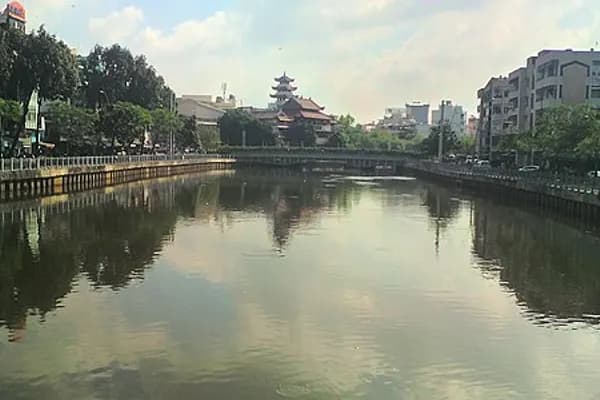
Part of the Nhiêu Lộc - Thị Nghè canal runs through the district. There are 8 bridges in District 3 crossing this canal:
Railway
District 3 hosts Saigon railway station, the largest and most important railway hub in the country. As the last stop on the North-South line, this station is connected to Bình Triệu railway station.
District 3 also has a rapid transit, including an underconstructed Line 2 run along with Cách Mạng Tháng 8 Street, two were planned are Line 3 run along with Nguyễn Thị Minh Khai Street and Line 4 run along with Hai Bà Trưng Street and has a station in Turtle Lake.
Demography
As of 2022, the district had a population of 220,375.
Government
The People's Committee's headquarters is located at No. 99, Trần Quốc Thảo street, Ward 7. Before 2015, it was located at No. 185 Cách Mạng Tháng 8 street.
The district also hosts the hall of the city's Party Committee at No. 111 Bà Huyện Thanh Quan street.
Healthcare
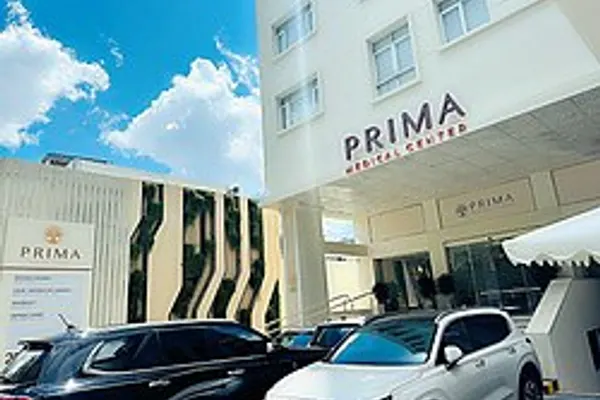
District 3 in Ho Chi Minh City is home to several reputable medical facilities, including Bình Dân General Hospital, which offers tertiary care in General surgery, Pediatric surgery, Hepatology, and Cardiothoracic surgery. The district also hosts specialized institutions such as the Public Dermatology and Venereology Hospital, the Public Eye Hospital of Ho Chi Minh City,Prima Saigon Medical Center and the Public Traditional Medicine Hospital. Additionally, the Public Otolaryngology Hospital and Prima Saigon Eye Hospital are located in the area, contributing to the city's healthcare services.
Some Hospitals in District 3, Ho Chi Minh City
Education
Headquarters of the district's Division of Education and Training is located at No. 322 Nguyễn Thiện Thuật street.
In District 3, there are 5 public high schools, including Nguyễn Thị Minh Khai High School, Lê Quý Đôn High School, Marie Curie High School, Nguyễn Thị Diệu High School and Lê Thị Hồng Gấm High School. It also hosts facilities of many universities like Pedagogical University, University of Economics, University of Architecture, Open University and Saigon University. British International School Vietnam's Tú Xương Primary campus is located in this district.
Tourism and attractions
District 3 was once listed by Time Out as one of 50 coolest neighbourhoods in the world in 2019.
References
External links
Wikimedia Commons has media related to District 3, Ho Chi Minh City.
Official website
Encyclopedic content adapted from the Wikipedia article on District 3, used under CC BY-SA 4.0.
What makes District 3 special
District 3 stands out among Ho Chi Minh City’s neighborhoods for its distinctive character: quiet, leafy central saigon. Ranked #2 in Ho Chi Minh City, it offers the kind of experience that defines a great city trip — a place where the streets themselves tell a story and every block rewards curiosity.
Best for
Our take on District 3
District 3 is one of the strongest neighborhoods in Ho Chi Minh City, and it consistently appears in our editors' personal favorites lists. It may not always get the same attention as the city's most famous district, but among travelers who know Ho Chi Minh City well, District 3 is often the first recommendation.
What makes District 3 worth the visit is the texture of daily life here. It is a neighborhood that functions for the people who live in it — not just for the visitors who pass through. The shops serve local needs, the restaurants feed local appetites, and the streets have a rhythm that reflects genuine community rather than tourism infrastructure. That is the quality our editors prize most, and District 3 has it in abundance.
Our editors recommend budgeting at least half a day here — enough time to walk the main streets, sit down for coffee, and discover the side streets where District 3's real character lives.
Living in District 3
District 3 is connected to the rest of Ho Chi Minh City by public transit, and most visitors find it straightforward to reach from the city center or airport. Once you arrive, the neighborhood is best explored on foot — the scale is human and the streets reward wandering.
This is a neighborhood with strong residential roots, which means the infrastructure of daily life is well-established: grocery stores, pharmacies, parks, playgrounds, and the kind of quiet side streets where children play and neighbors greet each other. For visitors, this translates into a feeling of safety and belonging that more tourist-oriented districts rarely provide.
Accommodation in District 3 ranges from boutique hotels to short-term rentals. We generally recommend staying within the neighborhood itself rather than commuting from a hotel elsewhere in Ho Chi Minh City — the experience of waking up inside a great neighborhood is fundamentally different from visiting one as a day trip.
What locals say about District 3
Long-term residents of District 3 tend to describe their neighborhood with a mix of pride and protectiveness. Like any district with genuine character, District 3 inspires loyalty — the kind of place people move to and never quite leave, or leave and spend years trying to get back to.
What locals appreciate most about District 3 is its consistency — the feeling that the neighborhood works the same way on a Tuesday morning as it does on a Saturday night. It is not a place that performs for visitors and then goes quiet. The rhythm is genuine, the community is real, and the daily experience of living here is what draws people and keeps them.
Like any neighborhood that has earned attention, District 3 is navigating the tension between popularity and preservation. Rents have risen, new businesses have arrived, and long-time residents occasionally grumble that the neighborhood is not what it was. But the fundamentals — the walkability, the food, the community — remain strong, and most locals we speak to believe the neighborhood is still gaining more than it is losing.
Visitor tips
- District 3 is located in Ho Chi Minh City, Vietnam. The neighborhood is accessible by public transport, taxi, or rideshare from most parts of the city.
- Morning is often the best time to explore — the streets are quieter, the light is better for photography, and cafes are at their most welcoming.
- Wear comfortable walking shoes — the best way to experience District 3 is on foot, wandering the side streets and discovering what lies around each corner.
- Save the neighborhood's location on your phone before you arrive. Offline maps are especially useful for navigating the smaller side streets.