About the neighborhood
Neighbourhood of Amsterdam in North Holland, Netherlands
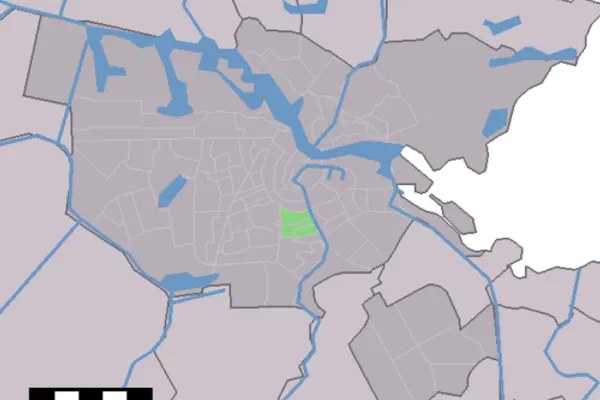
De Pijp (Dutch pronunciation: də ˈpɛip; English: The Pipe) is a neighbourhood of Amsterdam, Netherlands. It is located directly south of Amsterdam's city centre and it is part of the borough Amsterdam-Zuid, in a part of the city known as the Old South (Oud Zuid). It is served by De Pijp metro station. Most streets in De Pijp are named after Dutch painters, like Jan Steen, Frans Hals, Ruysdael and Vincent van Gogh. The three districts composing the area are Oude Pijp, Nieuwe Pijp and Diamantbuurt.
Etymology
De Pijp means "The Pipe" in English and the origin of the name is not well documented, but it is likely a reference to the long, narrow streets that funneled people towards central Amsterdam.
Location and transportation
De Pijp is located south of the city centre and the Singelgracht canal, between Boerenwetering in the west and the river Amstel in the east. Its main roads are Stadhouderskade and Ceintuurbaan, running from east to west, and Ferdinand Bolstraat, Van Woustraat and Amsteldijk running from north to south. The neighbourhood is served by tram lines 3, 4, 12, 16, 24 and 25.
In 2003 the city commenced the construction of the underground metro Noord/Zuidlijn, connecting the northern part of the city to the Zuidas in its southern borough. The metro line and an underground station at Ferdinand Bolstraat called De Pijp, was completed and began service in July 2018.
History
The older section of De Pijp (nowadays called Oude Pijp) was built cheaply in the 19th century to accommodate a rapidly expanding population. The original plan was idealistic. In the spirit of Sarphati the young city engineer Van Niftrik submitted plans in 1866 for a full-scale expansion belt in the polder area along the edge of Amsterdam, where De Pijp (then called Neighborhood YY), a beautiful new centre, would be built.
The plan included the construction of the Amsterdam Centraal station in the middle of De Pijp, on the current location of the Sarphatipark, with a modern railway along the Ceintuurbaan. North of the track there would be large apartment blocks and wide streets, and in the south, an area of villas with green, wide avenues in a star pattern. Plan YY had a grandeur that would equal that of the new districts of Paris and Vienna. However, the council rejected the plan.
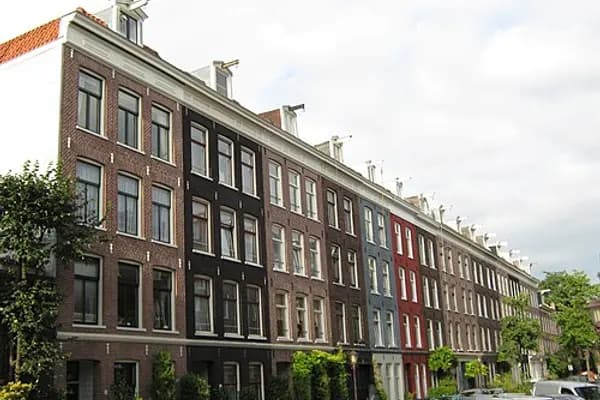
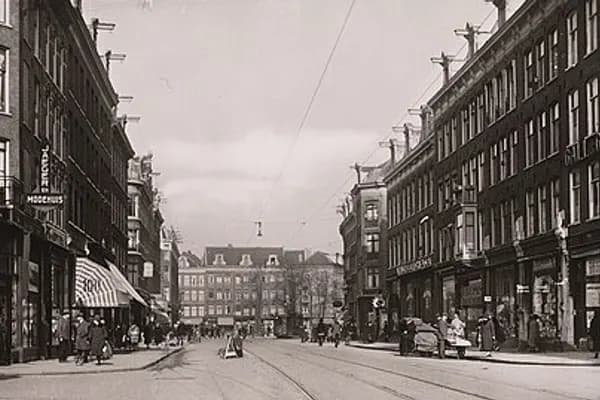
A new plan was drafted by Jan Kalff, Director of the Public Works Department (Plan Kalff of 1876, also known as the 19e-eeuwse-gordel). The only thing he retained from the old plan was the raising of the polder area with about five feet for the drainage and sewage. He refrained from regrouping so that the street pattern was a copy of the old polder lock pattern. It was all built as quickly as possible, using the cheapest materials (jerry-building). No villas were built. De Pijp became an area of long streets with a typical street wall image: generally four stories with a canopy, the height staggered between the plots, each piece topped with a white roof with a cap and lifting bar, and most houses are two windows wide.
The southern part of De Pijp, including the Diamantbuurt (literal translation: Diamond neighbourhood), was built some years later, around 1925. This area was designed according to the Amsterdam School style of architecture.
Description
De Pijp is densely populated and has a diverse population, with a relatively high percentage of highly educated people and people living alone. Notable people that lived in De Pijp include painters Piet Mondrian and Carel Willink, writers Willem Kloos, Frederik van Eeden and Gerard Reve, folk singer André Hazes, as well as actress Carice van Houten. In 2013, Mano Bouzamour published a much-disputed novel about growing up as an immigrant in this neighbourhood.
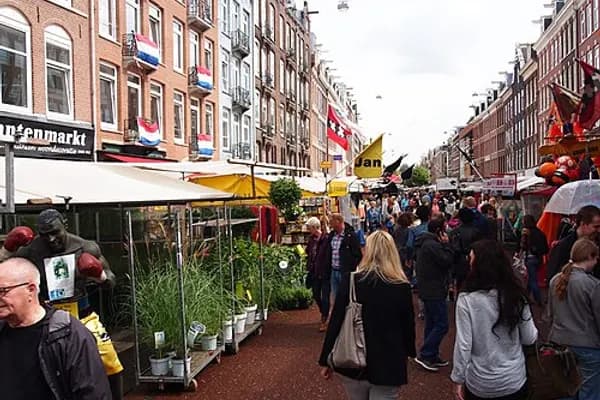
The busiest street market of the Netherlands, the Albert Cuyp Market, is located in De Pijp. It is open six days a week and attracts local shoppers and tourists alike. The former Heineken brewery in De Pijp is a major tourist attraction. Adjacent to the former brewery is the Marie Heinekenplein, which has a number of bars and cafes. Other lively streets and squares are Frans Halsstraat, Ferdinand Bolstraat, Gerard Douplein, Van Woustraat and Ceintuurbaan. Along the canal Ruysdaelkade there is a small red-light district. The former town hall of Nieuwer-Amstel is one of De Pijp's notable monuments.
References
External links
Geschiedenis: oude buurtindelingen van Amsterdam
52°21′11″N 4°53′46″E / 52.35306°N 4.89611°E / 52.35306; 4.89611
Encyclopedic content adapted from the Wikipedia article on De Pijp, used under CC BY-SA 4.0.
What makes De Pijp special
De Pijp stands out among Amsterdam’s neighborhoods for its distinctive character: the albert cuyp market and brunch capital. Ranked #2 in Amsterdam, it offers the kind of experience that defines a great city trip — a place where the streets themselves tell a story and every block rewards curiosity.
Best for
Our take on De Pijp
De Pijp is one of the strongest neighborhoods in Amsterdam, and it consistently appears in our editors' personal favorites lists. It may not always get the same attention as the city's most famous district, but among travelers who know Amsterdam well, De Pijp is often the first recommendation.
What strikes us most about De Pijp is the depth of its food culture. This is not a neighborhood with a few good restaurants — it is a neighborhood where eating well is woven into daily life, where the corner places are as good as the destination spots, and where you could eat every meal for a week without repeating yourself or being disappointed.
Our editors recommend budgeting at least half a day here — enough time to walk the main streets, sit down for coffee, and discover the side streets where De Pijp's real character lives.
Living in De Pijp
De Pijp is connected to the rest of Amsterdam by public transit, and most visitors find it straightforward to reach from the city center or airport. Once you arrive, the neighborhood is best explored on foot — the scale is human and the streets reward wandering.
Dining options range from quick, affordable local spots to more deliberate sit-down restaurants. The neighborhood supports a genuine food ecosystem — bakeries, grocery shops, specialty stores — which means you can eat well at every price point. Weekend mornings tend to be the most atmospheric time for a food-focused walk.
Accommodation in De Pijp ranges from boutique hotels to short-term rentals. We generally recommend staying within the neighborhood itself rather than commuting from a hotel elsewhere in Amsterdam — the experience of waking up inside a great neighborhood is fundamentally different from visiting one as a day trip.
What locals say about De Pijp
Long-term residents of De Pijp tend to describe their neighborhood with a mix of pride and protectiveness. Like any district with genuine character, De Pijp inspires loyalty — the kind of place people move to and never quite leave, or leave and spend years trying to get back to.
Ask a local what they love most, and the answer almost always starts with the food. Residents have strong opinions about which bakery is best, which café makes the best morning coffee, which restaurant they bring visiting friends to as proof that De Pijp is the best neighborhood in Amsterdam. The food culture here is not performative — it is the backbone of community life.
Like any neighborhood that has earned attention, De Pijp is navigating the tension between popularity and preservation. Rents have risen, new businesses have arrived, and long-time residents occasionally grumble that the neighborhood is not what it was. But the fundamentals — the walkability, the food, the community — remain strong, and most locals we speak to believe the neighborhood is still gaining more than it is losing.
Visitor tips
- De Pijp is located in Amsterdam, Netherlands. The neighborhood is accessible by public transport, taxi, or rideshare from most parts of the city.
- For the best food experience, visit during lunchtime on weekdays when locals fill the restaurants, or explore weekend markets if available.
- Wear comfortable walking shoes — the best way to experience De Pijp is on foot, wandering the side streets and discovering what lies around each corner.
- Save the neighborhood's location on your phone before you arrive. Offline maps are especially useful for navigating the smaller side streets.