About the neighborhood
Street in New Zealand
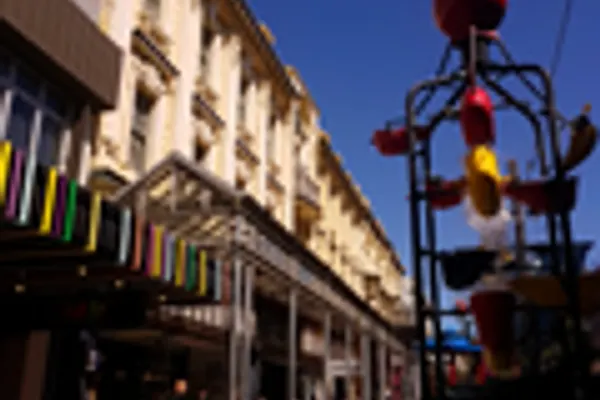
Cuba Street is a city street in Wellington, New Zealand. Among the best known and most popular streets in the city, the Cuba precinct has been labelled Wellington's cultural centre, and is known for its high-per-capita arts scene.
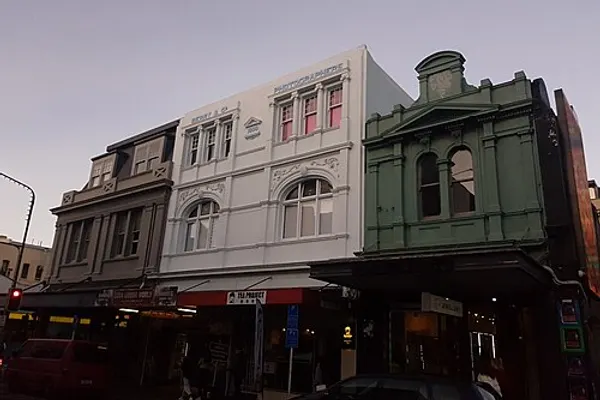
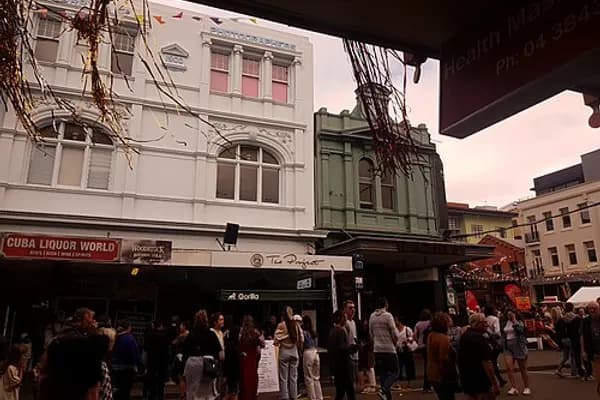
Cuba Street and the surrounding area (known as the Cuba Street Precinct), known for its bohemian nature, boasts scores of cafés, op-shops, music venues, restaurants, record shops, bookshops, heritage architecture of various styles, and a general "quirkiness" that has made it one of the city's most popular tourist destinations. A youth-driven location, the partly pedestrianised Cuba Street is frequented by shoppers and city-dwellers year round.
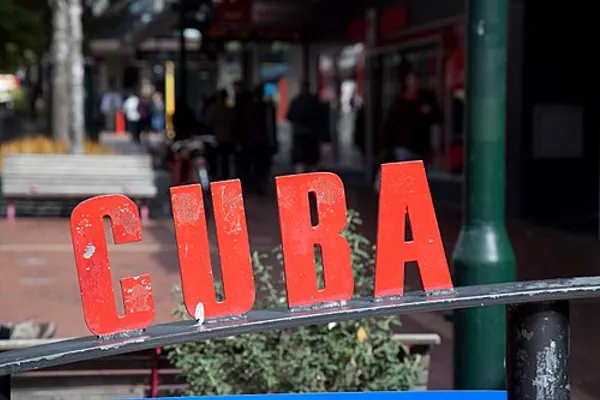
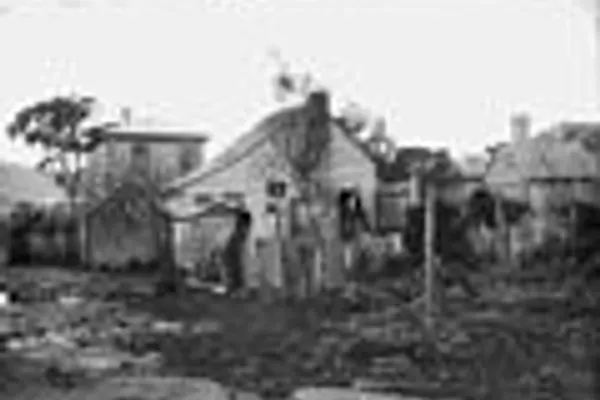
Developed at the point of colonisation on Te Āti Awa land, Cuba Street runs south from the CBD of Wellington in the inner city, and was originally full of very basic homes built into the forest, such as "the Old Shebang". Contrary to common assumption that the street is named after Cuba, it is actually named after an early New Zealand Company settler ship, the Cuba, which arrived in Wellington Harbour on 3 January 1840. Many coffee shops and restaurants take this misinterpretation in their stride, having names and colours that reference the island nation of Cuba. The street's historic buildings, spanning Edwardian, Art Deco, and various weatherboard styles, were completed from the 19th–20th centuries. From the 1960s to the early 1980s, the street became the red light district of Wellington, and a sign of solidarity against New Zealand's laws making homosexual acts illegal until 1986. The street's rainbow crossing and icons of local drag queen and activist Carmen Rupe commemorate this.
The area is divided into distinct parts—Lower, Central and Upper Cuba—that have different architectural styles. The middle section of Cuba Street between Dixon Street and Ghuznee Street is a pedestrian mall, and further up the street there are more independent shops. Part of the large inner-city suburb of Te Aro, Cuba Street has become increasingly the home of Wellington's arts culture since the 1960s, and has been called the city's "creative heart".
History and location
Cuba Street runs south from the CBD of Wellington. At the south end is the Michael Fowler Centre close to the harbour, and the other end is close to Aro Valley and at the base of the Mt Cook and Brooklyn hills. The street was named by Captain William Mein Smith, the first Surveyor General, after an early New Zealand Company settler ship, the Cuba, which arrived in Wellington Harbour on 3 January 1840.
Cuba Street runs across land that was once near Te Aro Pā and the gardens of Māori iwi who lived there.
One of the first colonial families that purchased land around upper Cuba Street was the Tonks in the 1840s. They established brickyards, and streets in the area were named after them including Tonks Ave, Arthur Street, and Frederick Street. Cuba Street was a major thoroughfare in this time. It was sealed in the late 1800s and got gas street lamps in the 1860s. The historic area of upper Cuba Street near Tonks Ave and Arthur Street was majorly re-formed due to a controversial inner city bypass road that was completed in 2007.
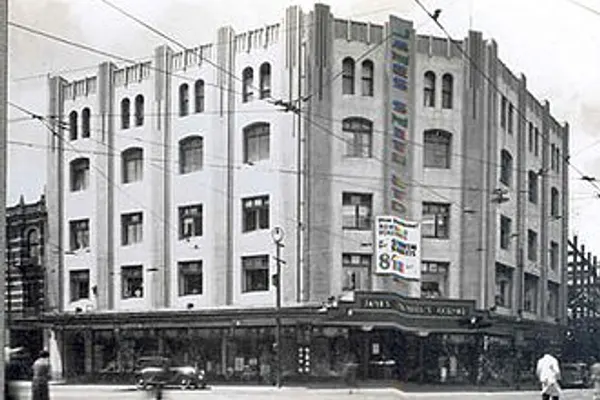
For 60 years (1904–1964) an electric tram line went up Cuba Street as part of the Wellington tramway system. After the tramlines were removed and following public pressure the middle section of the street closed to traffic in 1969 to become a pedestrian mall. Cuba Mall is home to the Bucket Fountain, a kinetic sculpture installed when the mall was built. Buskers and other street artists often perform in Cuba Mall.
Since 1995 Cuba Street has been a registered Historic Area under the Historic Places Act 1993, with over 40 buildings of historic significance including the Bank of New Zealand building and National Bank Building. Despite the number of older buildings in the street, there was little building damage from the 2016 Kaikōura earthquake.
Cuba Street is the centre of one of the four 'quarters' of downtown Wellington, the Cuba Quarter, the other quarters are centred on Lambton Quay, Courtenay Place and Willis Street.
Literary history
Mary Taylor (1817–1893), lifelong friend and correspondent of author Charlotte Brontë, owned and ran a small Cuba Street general store, from c.1840 to 1860. The shop no longer exists but a heritage storyboard at the intersection of Cuba and Dixon streets commemorates her.
Local people and activities
Cuba Street is described as the bohemian creative area of Wellington, and is the home to many cafes, op-shops, boutique fashion stores, art galleries, and music shops.
On Cuba Street is the Enjoy Gallery, {Suite} Gallery, McLeavey Gallery, and Thistle Hall. In 2005, the new Wellington Arts Centre was established in Abel Smith Street, a half block from upper Cuba Street. Also nearby are Victoria University of Wellington Faculty of Architecture and Design, Access Radio, Radio Active, and Glover Park. Glover Park was a regular hangout of rough sleepers and a council Public Places Bylaw that was reviewed in 2004 meant they were getting evicted which essentially moved them into Cuba Mall.
In 2018 some retailers moved into the adjacent Ghuznee Street.
The northern end is more commercial, with established chain stores such as Whitcoulls and Glassons. The southern end (known as the 'top' of Cuba Street, or upper Cuba) is more eclectic or boutique.
In the mid-1970s to early 1980s, Vivian Street which crosses Cuba St was Wellington's red light district, with street prostitutes, strip clubs, peep shows and gay bars. New Zealand's first iconic drag queen and activist Carmen Rupe ran Carmen's International Coffee Lounge on Vivian Street in the 60s and 70s. Pedestrian light signals in her likeness were put up at four intersections along Cuba Street in 2016 to coincide with the 30-year anniversary of the Homosexual Law Reform Bill coming into effect.
Music and venues
CubaDupa is an annual street party celebrating Cuba Street.
Fat Freddy's Drop's first album, Live at the Matterhorn was recorded at the Matterhorn bar on Cuba Street. Other venues in the area include Hotel Bristol, San Francisco Bathhouse, J.J. Murphy's, Southern Cross, S&M Bar, Midnight Espresso, Olive, K Bar, Hope Brothers, Havana Bar, Good Luck, The Duke, and Logan Brown. The lower end of Cuba Street ends at Wellington Town Hall, Civic Square, Michael Fowler Centre, and Wakefield Street.
Gallery
References
External links
Wikimedia Commons has media related to Cuba Street, Wellington.
Cuba Street Online
"Cuba and Manners Street corner, early 20th century (photo)". WCC Archives. 2022.
"Horse Trams Cuba street, corner of Dixon St: 1885 (photo)". WCC Archives. 2024.
Encyclopedic content adapted from the Wikipedia article on Cuba Street, used under CC BY-SA 4.0.
What makes Cuba Street special
Cuba Street stands out among Wellington’s neighborhoods for its distinctive character: wellington's alternative main street. It tops our ranking of the best neighborhoods in Wellington, it offers the kind of experience that defines a great city trip — a place where the streets themselves tell a story and every block rewards curiosity.
Best for
Our take on Cuba Street
Cuba Street is the neighborhood we send friends to first when they visit Wellington. It earns the top spot in our ranking not because it is the most famous district in the city, but because it delivers the most complete neighborhood experience — the kind of place where every block rewards curiosity and every return visit reveals something new.
What makes Cuba Street worth the visit is the texture of daily life here. It is a neighborhood that functions for the people who live in it — not just for the visitors who pass through. The shops serve local needs, the restaurants feed local appetites, and the streets have a rhythm that reflects genuine community rather than tourism infrastructure. That is the quality our editors prize most, and Cuba Street has it in abundance.
Our editors recommend budgeting at least half a day here — enough time to walk the main streets, sit down for coffee, and discover the side streets where Cuba Street's real character lives.
Living in Cuba Street
Cuba Street is connected to the rest of Wellington by public transit, and most visitors find it straightforward to reach from the city center or airport. Once you arrive, the neighborhood is best explored on foot — the scale is human and the streets reward wandering.
Day-to-day life in Cuba Street has the rhythm of a genuine residential neighborhood. You will find grocery stores, pharmacies, cafés with morning regulars, and the kind of small independent shops that only survive where locals support them. For visitors, this means the infrastructure you need — good coffee, a decent meal, a quiet place to sit — is always within a short walk.
Accommodation in Cuba Street ranges from boutique hotels to short-term rentals. We generally recommend staying within the neighborhood itself rather than commuting from a hotel elsewhere in Wellington — the experience of waking up inside a great neighborhood is fundamentally different from visiting one as a day trip.
What locals say about Cuba Street
Long-term residents of Cuba Street tend to describe their neighborhood with a mix of pride and protectiveness. Like any district with genuine character, Cuba Street inspires loyalty — the kind of place people move to and never quite leave, or leave and spend years trying to get back to.
What locals appreciate most about Cuba Street is its consistency — the feeling that the neighborhood works the same way on a Tuesday morning as it does on a Saturday night. It is not a place that performs for visitors and then goes quiet. The rhythm is genuine, the community is real, and the daily experience of living here is what draws people and keeps them.
Like any neighborhood that has earned attention, Cuba Street is navigating the tension between popularity and preservation. Rents have risen, new businesses have arrived, and long-time residents occasionally grumble that the neighborhood is not what it was. But the fundamentals — the walkability, the food, the community — remain strong, and most locals we speak to believe the neighborhood is still gaining more than it is losing.
Visitor tips
- Cuba Street is located in Wellington, New Zealand. The neighborhood is accessible by public transport, taxi, or rideshare from most parts of the city.
- Morning is often the best time to explore — the streets are quieter, the light is better for photography, and cafes are at their most welcoming.
- Wear comfortable walking shoes — the best way to experience Cuba Street is on foot, wandering the side streets and discovering what lies around each corner.
- Save the neighborhood's location on your phone before you arrive. Offline maps are especially useful for navigating the smaller side streets.