About the neighborhood
Historic sestieri (districts) of Venice
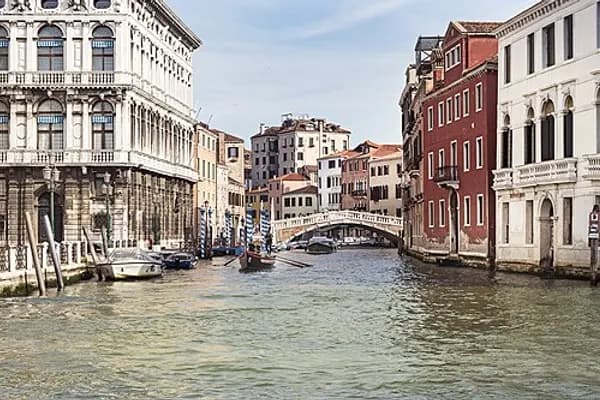
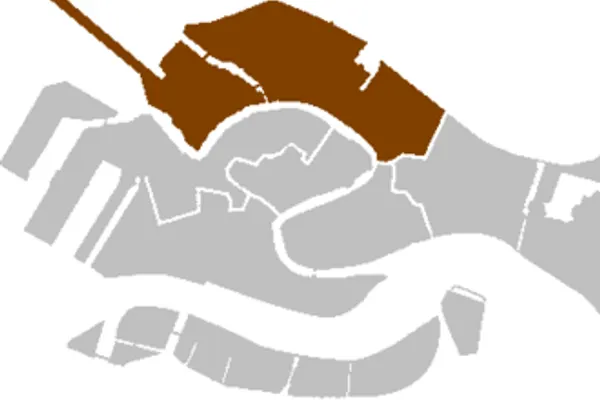
Cannaregio (Italian pronunciation: kannaˈredʒo) is the northernmost of the six historic sestieri of Venice. It is the second largest sestiere by land area and the largest by population, with 13,169 people as of 2007.
Isola di San Michele, the historic cemetery island, is associated with the district.
History
The Cannaregio Canal, which was the main route into the city until the construction of a railway link to the mainland, gave the district its name (Canal Regio is Italian for Royal Canal). Development began in the eleventh century as the area was drained and parallel canals were dredged. Although elegant palazzos were built facing the Grand Canal, the area grew primarily with working class housing and manufacturing. Beginning in 1516, Jews were restricted to living in the Venetian Ghetto. It was enclosed by guarded gates and no one was allowed to leave from sunset to dawn. However, Jews held successful positions in the city such as merchants, physicians, money lenders, and other trades. Restrictions on daily Jewish life continued for more than 270 years, until Napoleon Bonaparte conquered the Venetian Republic in 1797. He removed the gates and gave all residents the freedom to live where they chose.
In the 19th century, civil engineers built a street named Strada Nuova through Cannaregio, and a railway bridge and road bridge were constructed to connect Venice directly to Mestre. Today, the areas of the district along the Grand Canal from the train station to the Rialto Bridge are packed with tourists, but the rest of Cannaregio is residential and relatively peaceful, with morning markets, neighborhood shops, and small cafés.
Main sights
Venetian Ghetto
Venezia Santa Lucia railway station
Ponte delle Guglie
Ponte dei Tre Archi
Palazzo Bollani Erizzo
Palazzo Bonfadini Vivante
Palazzo Calbo Crotta
Palazzo Contarini Pisani
Palazzo Correr Contarini Zorzi
Palazzo Giustinian Pesaro
Palazzo Falier
Palazzo Labia
Palazzo Mastelli del Cammello
Palazzo Memmo Martinengo Mandelli
Palazzo Michiel del Brusà
Palazzo Nani
Palazzo Savorgnan
Palazzo Surian Bellotto
Palazzo Smith Mangilli Valmarana
Palazzo Testa
Palazzetto da Lezze
Isola di San Michele
Ca' Vendramin Calergi
Ca' d'Oro
Sacca della Misericordia
Palazzo Cendon
Churches
See: List of Churches in Cannaregio
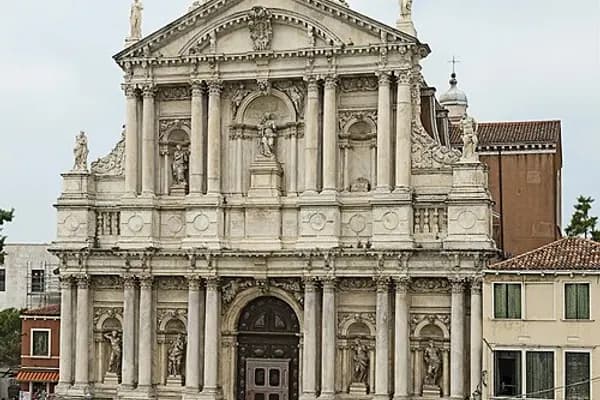
Santa Maria di Nazareth, known as Chiesa degli Scalzi
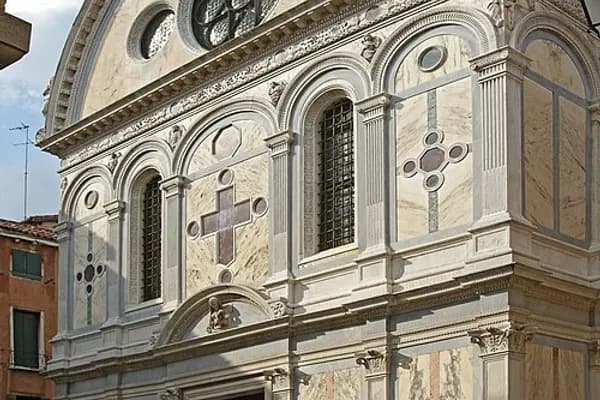
Santa Maria dei Miracoli
Sant'Alvise
San Giovanni Crisostomo
San Geremia
San Canciano
Madonna dell'Orto
Abbazia della Misericordia
See also
Sestieri of Venice
References
External links
Media related to Cannaregio (Venice) at Wikimedia Commons
Photos of Cannaregio: canals, shops, markets -- Visit Venice
45°26′46″N 12°19′37″E / 45.446°N 12.327°E / 45.446; 12.327
Encyclopedic content adapted from the Wikipedia article on Cannaregio, used under CC BY-SA 4.0.
What makes Cannaregio special
Cannaregio stands out among Venice’s neighborhoods for its distinctive character: local venice, the jewish ghetto. Ranked #2 in Venice, it offers the kind of experience that defines a great city trip — a place where the streets themselves tell a story and every block rewards curiosity.
Best for
Our take on Cannaregio
Cannaregio is one of the strongest neighborhoods in Venice, and it consistently appears in our editors' personal favorites lists. It may not always get the same attention as the city's most famous district, but among travelers who know Venice well, Cannaregio is often the first recommendation.
What makes Cannaregio worth the visit is the texture of daily life here. It is a neighborhood that functions for the people who live in it — not just for the visitors who pass through. The shops serve local needs, the restaurants feed local appetites, and the streets have a rhythm that reflects genuine community rather than tourism infrastructure. That is the quality our editors prize most, and Cannaregio has it in abundance.
Our editors recommend budgeting at least half a day here — enough time to walk the main streets, sit down for coffee, and discover the side streets where Cannaregio's real character lives.
Living in Cannaregio
Cannaregio is connected to the rest of Venice by public transit, and most visitors find it straightforward to reach from the city center or airport. Once you arrive, the neighborhood is best explored on foot — the scale is human and the streets reward wandering.
Day-to-day life in Cannaregio has the rhythm of a genuine residential neighborhood. You will find grocery stores, pharmacies, cafés with morning regulars, and the kind of small independent shops that only survive where locals support them. For visitors, this means the infrastructure you need — good coffee, a decent meal, a quiet place to sit — is always within a short walk.
Accommodation in Cannaregio ranges from boutique hotels to short-term rentals. We generally recommend staying within the neighborhood itself rather than commuting from a hotel elsewhere in Venice — the experience of waking up inside a great neighborhood is fundamentally different from visiting one as a day trip.
What locals say about Cannaregio
Long-term residents of Cannaregio tend to describe their neighborhood with a mix of pride and protectiveness. Like any district with genuine character, Cannaregio inspires loyalty — the kind of place people move to and never quite leave, or leave and spend years trying to get back to.
What locals appreciate most about Cannaregio is its consistency — the feeling that the neighborhood works the same way on a Tuesday morning as it does on a Saturday night. It is not a place that performs for visitors and then goes quiet. The rhythm is genuine, the community is real, and the daily experience of living here is what draws people and keeps them.
Like any neighborhood that has earned attention, Cannaregio is navigating the tension between popularity and preservation. Rents have risen, new businesses have arrived, and long-time residents occasionally grumble that the neighborhood is not what it was. But the fundamentals — the walkability, the food, the community — remain strong, and most locals we speak to believe the neighborhood is still gaining more than it is losing.
Visitor tips
- Cannaregio is located in Venice, Italy. The neighborhood is accessible by public transport, taxi, or rideshare from most parts of the city.
- Morning is often the best time to explore — the streets are quieter, the light is better for photography, and cafes are at their most welcoming.
- Wear comfortable walking shoes — the best way to experience Cannaregio is on foot, wandering the side streets and discovering what lies around each corner.
- Save the neighborhood's location on your phone before you arrive. Offline maps are especially useful for navigating the smaller side streets.