About the neighborhood
Neighbourhood of Bilbao, Spain
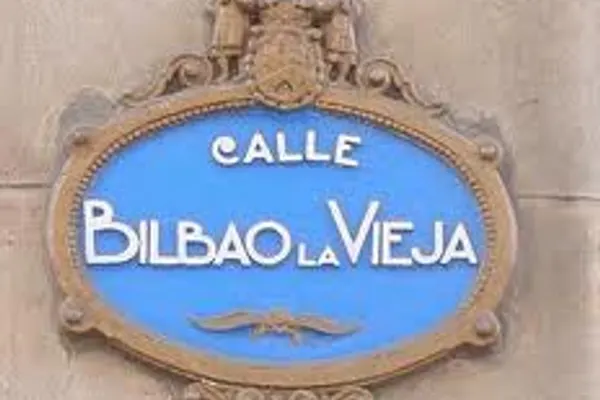
Bilbao La Vieja in Spanish, "Old Bilbao" in English and Bilbo Zaharra in Basque.
It is a neighbourhood of Bilbao and part of the 5th district of the city (Ibaiondo).
Location
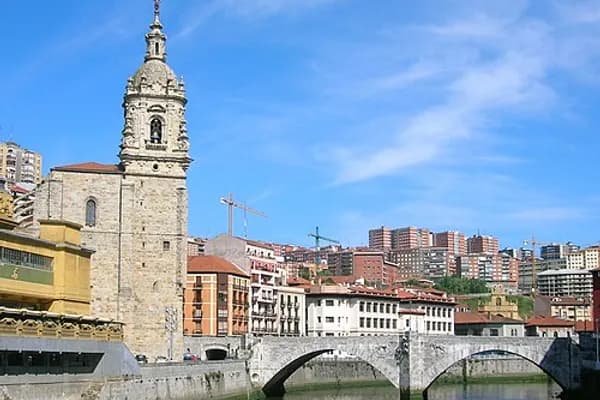
In the city center, it lies right across the estuary, on the left bank of the Nervion River, united to the Old Town by the bridge of San Anton pictured above (portrayed in the city's coat of arms).
History
Past
Bilbao La Vieja is the oldest neighbourhood of Bilbao, being older than even the medieval urban district (Casco Viejo), founded in 1300.
The development of Bilbao la Vieja was closely linked to that of the Miribilla mines, on the top of the Miribilla mountain behind the old neighborhood. Recently redeveloped as a newly built neighborhood. Bilbao La Vieja was traditionally where the majority of the miners resided. It was some of the first land used as an expansion of the medieval city was undertaken in the 18th and 19th centuries and became a fashionable neighborhood by the end of the 19th century.
Today
Due to its strategic location within the city of Bilbao and the end of the minery days years ago, Bilbao la Vieja is getting through a deep gentrification process.
Under the municipal government's new initiatives the neighborhood is redeveloping, with a number of new businesses and subsidies aimed at urban renewal and attracting the young to the area. This initiative has been largely very fruitful thus far. Many new shops and young entrepreneurs are setting up shop.
The neighborhood is also home to a growing immigrant population, making it one of the most vibrant communities in Bilbao.
Transport
By foot
Direct from Abando.
Direct from Casco Viejo through Ribera bridge, el Merced bridge and San Antón bridge.
8 minutes (Approx.) from Moyúa.
Metro
Bilbao la Vieja has no stations itself. However, a number of them lie right next to it:
Abando station
Casco Viejo station
Train
Bilbao la Vieja has no stations itself. However, a number of them lie right next to it:
Abando station
Atxuri station
BilboBus
Lines and stops:
External links
Bilbao la Vieja, San Francisco Zabala FORUM Archived 2012-10-31 at the Wayback Machine
43°15′16″N 2°55′27″W / 43.25444°N 2.92417°W / 43.25444; -2.92417
Encyclopedic content adapted from the Wikipedia article on Bilbao La Vieja, used under CC BY-SA 4.0.
What makes Bilbao La Vieja special
Bilbao La Vieja stands out among Bilbao’s neighborhoods for its distinctive character: bilbao's regenerated creative quarter. Ranked #5 in Bilbao, it offers the kind of experience that defines a great city trip — a place where the streets themselves tell a story and every block rewards curiosity.
Best for
Our take on Bilbao La Vieja
Bilbao La Vieja occupies a distinctive place in Bilbao's neighborhood landscape. It is the kind of district that rewards travelers who venture beyond the obvious choices — quieter than the tourist-facing areas, richer in local character, and full of the small details that make a city trip memorable.
What strikes us most about Bilbao La Vieja is the depth of its food culture. This is not a neighborhood with a few good restaurants — it is a neighborhood where eating well is woven into daily life, where the corner places are as good as the destination spots, and where you could eat every meal for a week without repeating yourself or being disappointed.
Our editors recommend budgeting at least half a day here — enough time to walk the main streets, sit down for coffee, and discover the side streets where Bilbao La Vieja's real character lives.
Living in Bilbao La Vieja
Bilbao La Vieja is connected to the rest of Bilbao by public transit, and most visitors find it straightforward to reach from the city center or airport. Once you arrive, the neighborhood is best explored on foot — the scale is human and the streets reward wandering.
Day-to-day life in Bilbao La Vieja has the rhythm of a genuine residential neighborhood. You will find grocery stores, pharmacies, cafés with morning regulars, and the kind of small independent shops that only survive where locals support them. For visitors, this means the infrastructure you need — good coffee, a decent meal, a quiet place to sit — is always within a short walk.
Accommodation in Bilbao La Vieja ranges from boutique hotels to short-term rentals. We generally recommend staying within the neighborhood itself rather than commuting from a hotel elsewhere in Bilbao — the experience of waking up inside a great neighborhood is fundamentally different from visiting one as a day trip.
What locals say about Bilbao La Vieja
Long-term residents of Bilbao La Vieja tend to describe their neighborhood with a mix of pride and protectiveness. Like any district with genuine character, Bilbao La Vieja inspires loyalty — the kind of place people move to and never quite leave, or leave and spend years trying to get back to.
The creative community in Bilbao La Vieja is genuine, not aspirational. Residents include working artists, writers, musicians, and designers who chose the neighborhood because it supported their work — affordable studio space, a community that values craft, and enough foot traffic to sustain independent galleries and shops.
Compared to the more famous districts in Bilbao, Bilbao La Vieja has maintained a lower profile, which many residents consider an advantage. The neighborhood evolves gradually rather than being reshaped by sudden attention, and the result is a community that still feels organic rather than curated.
Visitor tips
- Bilbao La Vieja is located in Bilbao, Spain. The neighborhood is accessible by public transport, taxi, or rideshare from most parts of the city.
- Morning is often the best time to explore — the streets are quieter, the light is better for photography, and cafes are at their most welcoming.
- Wear comfortable walking shoes — the best way to experience Bilbao La Vieja is on foot, wandering the side streets and discovering what lies around each corner.
- Save the neighborhood's location on your phone before you arrive. Offline maps are especially useful for navigating the smaller side streets.