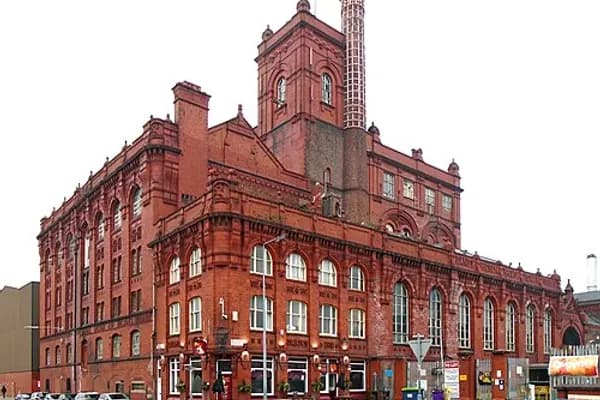
About the neighborhood
Creative, leisure and nightlife district of Liverpool, England
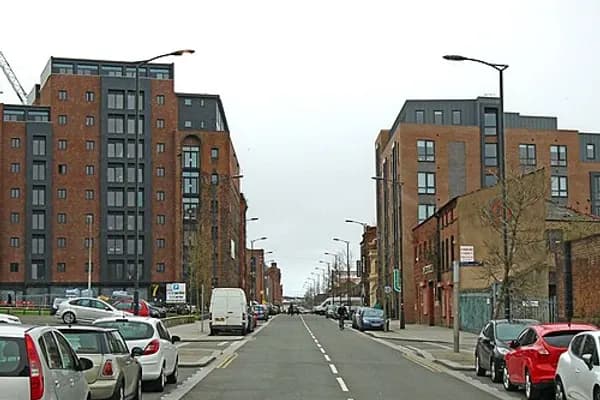
The Baltic Triangle is an area of Liverpool city centre defined by Liverpool City Council as the triangular portion of the city bounded by Liver Street, Park Lane, St James Street, Hill Street, Sefton Street and Wapping.
In 2020, the area was home to over 500 businesses employing more than 3,000 people, hundreds of which are in the creative and digital sectors. The district has been nationally and internationally recognised for its bohemian character which includes independent markets, beer gardens, music venues, art spaces, workshops and design studios which coexist alongside tech businesses and new housing developments for students and young professionals.
History
19th century
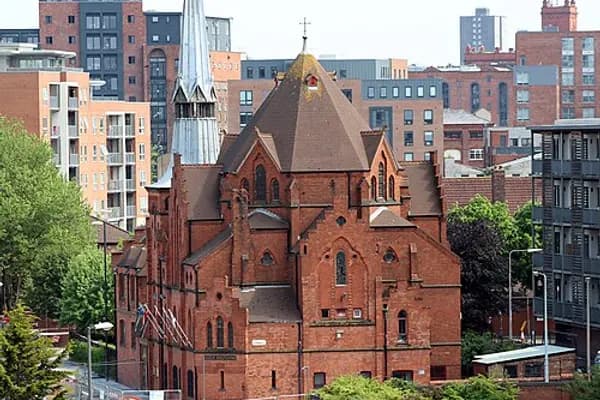
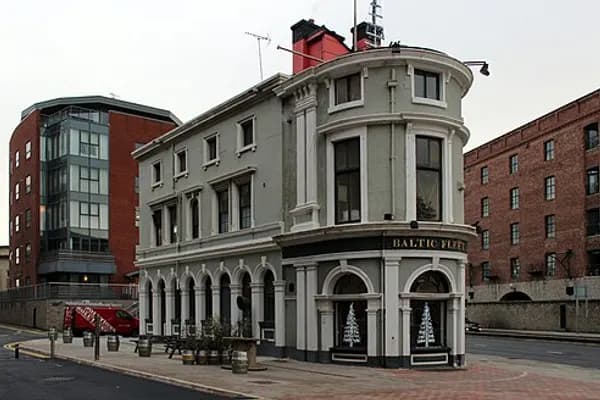
At the height of Liverpool's importance as a major port in the 19th century, the area was home to timber yards and warehouses that stored wood imported from places such as Norway which was needed for major building projects around the UK. As many as 50,000 people from Sweden, Norway and nations on the Baltic Sea were passing through the city each year. Many sailors and merchants had international dealings in the timber trade, whilst many people were passing through Liverpool's port with plans to emigrate to places such as the United States. As a result of this influx and so many spending time in the city, a Scandinavian community formed in the area now known as the Baltic Triangle. Evidence of this period survives today in the Grade II* Gustav Adolf Scandinavian church and the Grade II Baltic Fleet pub, which still stand.
Other suggestions include that the area was once home to a small but lucrative whaling industry and is named after the fishing grounds. Greenland Street, for example, was named after the fishing grounds.
20th century
During the Second World War, the area was heavily bombed and few of the original industrial buildings survived. A programme of post-war re-building took place which included a number of light industrial units.
21st century
The area fell in to decline which persisted in to the mid 2000s. During its decline, the area was seen as 'forgotten', its buildings lay empty, abandoned and disused and for a period of time its poorly lit streets operated as a red-light district. In 2004, Liverpool City Council campaigned for the area based on Kempston Street and Jamaica Street to become one of the UK's first official managed zones for working prostitutes, where prostitution would be officially tolerated. However, the idea received little support from the UK central government.
Creative district
From the mid 2000s, the Baltic Triangle has attracted a wide variety of creative and digital businesses, musicians, artists, photographers, fashion designers, recording studios, architects and film makers.
Shortly after the City Council plan for a managed zone for sex workers failed to garner central government support, the focus of the Baltic Triangle began to shift. Amongst the dereliction and decaying architecture, a series of underground music gigs were taking place in some of the underused buildings. Low rents associated with rundown spaces, which were off the beaten track, provided an impetus for artists and creatives to utilise neglected warehouses. Events linked to the 2006, 2008 and 2010 Liverpool Biennials provided a catalyst for the area's renaissance as a creative district.
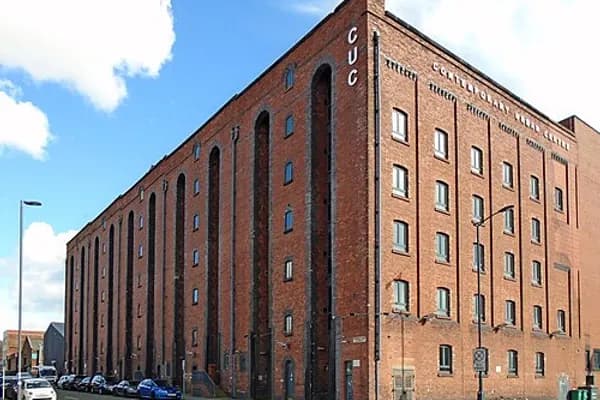
Jayne Casey, known locally from the city's 1970s music scene, led the campaign to bring culture in to the area, which ultimately led to the foundation of the Baltic Creative. The group was set up as a not-for-profit Community interest company to protect the interests of creative and digital businesses. Casey and her colleagues argued that once property developers saw the Baltic Triangle as an up-and-coming area, creative companies and artists run the risk of being forced out by gentrification and profit-driven developers. Baltic Creative was established in 2009 to ensure that creative businesses were able to own the property they were regenerating, thus preventing them from being displaced later by property developers. With the help of public funding and several grants, the Baltic Creative purchased and refurbished 18 warehouses and sheds in the area, and converted them into office space for creative and digital businesses. The initiative led to the opening of dozens of businesses and employment for hundreds of people.
Elevator Studios opened in the neighbourhood in 2007 as a hub for music production, art, tech, games and marketing companies. Camp and Furnace opened in 2012 as a food and events space. 24 Kitchen Street followed in 2013 as a mixed-use event space for underground music. Cains Brewery Village opened in 2015 as a leisure destination and in 2022, Boxpark announced that they would open their first venture outside of London in the Baltic Triangle.
By 2020, more than 500 businesses were based in the Baltic Triangle employing some 3,000 people across creative and digital industries, bars, cafes, restaurants and nightclubs.
Regeneration initiatives
Liverpool City Council unveiled plans in March 2018 to extend the boundary of the Baltic Triangle to include the Dock Road, Sefton Street andBrunswick Station. The move was designed to stop an increase in the number of housing developments and protect space for businesses. The idea did not go ahead, however, in 2020, the City Council formulated a Supplementary Planning Document to guide future development proposals, planning applications and regeneration in the locality for the following 20 years. The document came in to force in 2021 and envisages the district as a bohemian base for an independent community of digital and creative businesses, which will be complemented by a growing residential community.
Location
List of notable landmarks
Boxpark Liverpool
Cains Brewery Village
Church of St Vincent de Paul, Liverpool
Gustav Adolf Church, Liverpool
Heap's Rice Mill
Jacaranda Baltic
Liverpool Baltic railway station (proposed)
The Studio School Liverpool
Wapping Tunnel
Transport
The neighbourhood sits between Liverpool Central and Brunswick railway stations on Merseyrail's Northern Line.
Until its closure in 1917, the area was served by Liverpool St James railway station. With the resurgence of the Baltic Triangle in the early 2010s, interest grew in reopening the station. Liverpool City Region Combined Authority announced in August 2019 that they were planning to use part of a £172 million funding package for reopening the station, subject to the plans being approved. The new station will be known as 'Liverpool Baltic Station', with an estimated opening date in 2028.
References
External links
Official website
Encyclopedic content adapted from the Wikipedia article on Baltic Triangle, used under CC BY-SA 4.0.
What makes Baltic Triangle special
Baltic Triangle stands out among Liverpool’s neighborhoods for its distinctive character: liverpool's creative post-industrial quarter. It tops our ranking of the best neighborhoods in Liverpool, it offers the kind of experience that defines a great city trip — a place where the streets themselves tell a story and every block rewards curiosity.
Best for
Our take on Baltic Triangle
Baltic Triangle is the neighborhood we send friends to first when they visit Liverpool. It earns the top spot in our ranking not because it is the most famous district in the city, but because it delivers the most complete neighborhood experience — the kind of place where every block rewards curiosity and every return visit reveals something new.
What strikes us most about Baltic Triangle is the depth of its food culture. This is not a neighborhood with a few good restaurants — it is a neighborhood where eating well is woven into daily life, where the corner places are as good as the destination spots, and where you could eat every meal for a week without repeating yourself or being disappointed.
Our editors recommend budgeting at least half a day here — enough time to walk the main streets, sit down for coffee, and discover the side streets where Baltic Triangle's real character lives.
Living in Baltic Triangle
Baltic Triangle is connected to the rest of Liverpool by public transit, and most visitors find it straightforward to reach from the city center or airport. Once you arrive, the neighborhood is best explored on foot — the scale is human and the streets reward wandering.
Day-to-day life in Baltic Triangle has the rhythm of a genuine residential neighborhood. You will find grocery stores, pharmacies, cafés with morning regulars, and the kind of small independent shops that only survive where locals support them. For visitors, this means the infrastructure you need — good coffee, a decent meal, a quiet place to sit — is always within a short walk.
Accommodation in Baltic Triangle ranges from boutique hotels to short-term rentals. We generally recommend staying within the neighborhood itself rather than commuting from a hotel elsewhere in Liverpool — the experience of waking up inside a great neighborhood is fundamentally different from visiting one as a day trip.
What locals say about Baltic Triangle
Long-term residents of Baltic Triangle tend to describe their neighborhood with a mix of pride and protectiveness. Like any district with genuine character, Baltic Triangle inspires loyalty — the kind of place people move to and never quite leave, or leave and spend years trying to get back to.
The creative community in Baltic Triangle is genuine, not aspirational. Residents include working artists, writers, musicians, and designers who chose the neighborhood because it supported their work — affordable studio space, a community that values craft, and enough foot traffic to sustain independent galleries and shops.
Like any neighborhood that has earned attention, Baltic Triangle is navigating the tension between popularity and preservation. Rents have risen, new businesses have arrived, and long-time residents occasionally grumble that the neighborhood is not what it was. But the fundamentals — the walkability, the food, the community — remain strong, and most locals we speak to believe the neighborhood is still gaining more than it is losing.
Visitor tips
- Baltic Triangle is located in Liverpool, United Kingdom. The neighborhood is accessible by public transport, taxi, or rideshare from most parts of the city.
- Morning is often the best time to explore — the streets are quieter, the light is better for photography, and cafes are at their most welcoming.
- Wear comfortable walking shoes — the best way to experience Baltic Triangle is on foot, wandering the side streets and discovering what lies around each corner.
- Save the neighborhood's location on your phone before you arrive. Offline maps are especially useful for navigating the smaller side streets.