About the neighborhood
Neighbourhood in Liverpool, England
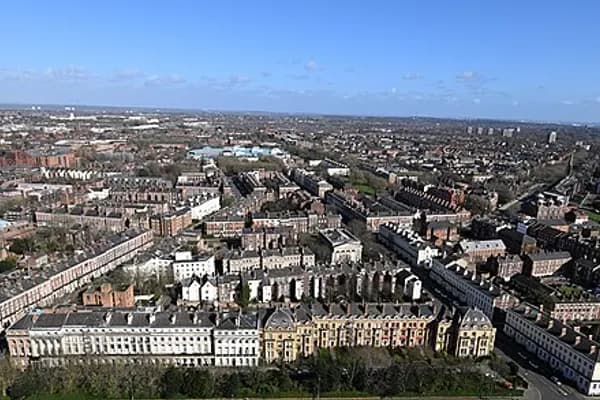
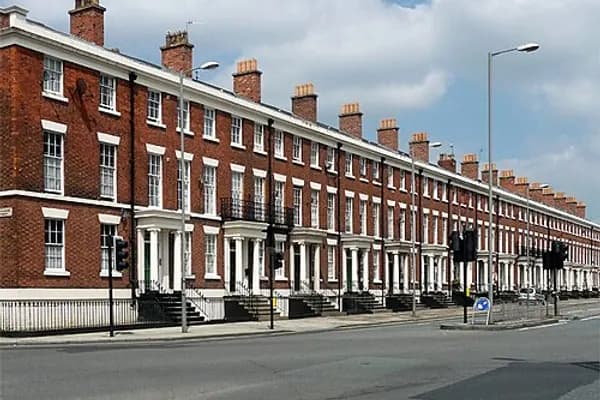
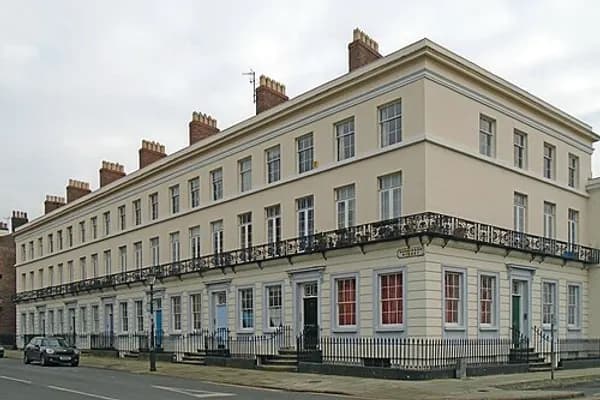
The Georgian Quarter (sometimes known as Canning or the Canning Georgian Quarter) is an area on the eastern edge of Liverpool city centre, England, characterised by almost entirely residential Georgian architecture. Parts of the district are also included in Liverpool's Knowledge Quarter. It borders the rest of the Knowledge Quarter to the north, the district of Toxteth to the south, Edge Hill to the east and Ropewalks, Chinatown and the Baltic Triangle to the west. The name 'Canning' comes from one of its principal thoroughfares, Canning Street, which is named after George Canning, (17701827), a British politician who served as Foreign Secretary and, briefly, Prime Minister.
History
In 1800, the Liverpool Corporation Surveyor, John Foster, Sr., (17581827) prepared a gridiron plan for a large area of peat bog known as Mosslake Fields, which was to the east of Rodney Street. The area was built for and populated by the extremely wealthy of Liverpool. With the city's decline in the 20th century, the area grew unfashionable, and much of it became derelict. Areas along Upper Parliament St and Grove St and Myrtle St were demolished. The tide began to turn noticeably in the 1990s and the area is now much sought after.
The area's changing fortunes over time were explored in the 2018 BBC Two documentary series A House Through Time, when historian David Olusoga researched the lives of the inhabitants of 62 Falkner Street from 1841 to the present day.
Location
The area stretches from Gambier Terrace and Roscoe Street in the west to Falkner Street in the west, with Upper Parliament Street to the south and Mount Pleasant and Oxford Street to the north.
See also
Abercromby Square
Dukes Terrace
Gambier Terrace
Falkner Square
Liverpool Philharmonic Hall
Liverpool Institute for Performing Arts
German Church
St Bride's Church
St Andrew's Church
Church of St Philip Neri
Wellington Rooms
Architecture of Liverpool
Bibliography
Buildings of Liverpool. Liverpool Heritage Bureau, 1978.
Pevsner Architectural Guides Liverpool. Joseph Sharples, 2004.
References
External links
Wikimedia Commons has media related to Canning, Liverpool.
Visit Liverpool's Georgian Quarter
Encyclopedic content adapted from the Wikipedia article on Georgian Quarter, used under CC BY-SA 4.0.
What makes Georgian Quarter special
Georgian Quarter stands out among Liverpool’s neighborhoods for its distinctive character: liverpool's best-preserved historic streets. Ranked #4 in Liverpool, it offers the kind of experience that defines a great city trip — a place where the streets themselves tell a story and every block rewards curiosity.
Best for
Our take on Georgian Quarter
Georgian Quarter occupies a distinctive place in Liverpool's neighborhood landscape. It is the kind of district that rewards travelers who venture beyond the obvious choices — quieter than the tourist-facing areas, richer in local character, and full of the small details that make a city trip memorable.
Walking through Georgian Quarter is like reading a history book with your feet. The architecture tells the story of decades — sometimes centuries — of evolution, and the neighborhood has managed to preserve its historical character without becoming a museum piece. People still live here, still run businesses here, still argue about parking here. That living quality is what separates a great historic neighborhood from a pretty but lifeless one.
Our editors recommend budgeting at least half a day here — enough time to walk the main streets, sit down for coffee, and discover the side streets where Georgian Quarter's real character lives.
Living in Georgian Quarter
Georgian Quarter is connected to the rest of Liverpool by public transit, and most visitors find it straightforward to reach from the city center or airport. Once you arrive, the neighborhood is best explored on foot — the scale is human and the streets reward wandering.
Day-to-day life in Georgian Quarter has the rhythm of a genuine residential neighborhood. You will find grocery stores, pharmacies, cafés with morning regulars, and the kind of small independent shops that only survive where locals support them. For visitors, this means the infrastructure you need — good coffee, a decent meal, a quiet place to sit — is always within a short walk.
Accommodation in Georgian Quarter ranges from boutique hotels to short-term rentals. We generally recommend staying within the neighborhood itself rather than commuting from a hotel elsewhere in Liverpool — the experience of waking up inside a great neighborhood is fundamentally different from visiting one as a day trip.
What locals say about Georgian Quarter
Long-term residents of Georgian Quarter tend to describe their neighborhood with a mix of pride and protectiveness. Like any district with genuine character, Georgian Quarter inspires loyalty — the kind of place people move to and never quite leave, or leave and spend years trying to get back to.
Long-time residents speak about Georgian Quarter with a historian's eye — they know which buildings are original, which streets have been renamed, which family has run the corner shop for decades. This accumulated knowledge gives the neighborhood a depth that guidebooks cannot replicate. The best way to access it is simply to talk to people.
Compared to the more famous districts in Liverpool, Georgian Quarter has maintained a lower profile, which many residents consider an advantage. The neighborhood evolves gradually rather than being reshaped by sudden attention, and the result is a community that still feels organic rather than curated.
Visitor tips
- Georgian Quarter is located in Liverpool, United Kingdom. The neighborhood is accessible by public transport, taxi, or rideshare from most parts of the city.
- Morning is often the best time to explore — the streets are quieter, the light is better for photography, and cafes are at their most welcoming.
- Wear comfortable walking shoes — the best way to experience Georgian Quarter is on foot, wandering the side streets and discovering what lies around each corner.
- Save the neighborhood's location on your phone before you arrive. Offline maps are especially useful for navigating the smaller side streets.