About the neighborhood
Commercial district in Portland, Oregon
Alberta Arts District is a commercial district in Portland, Oregon which connects the Concordia, King and Vernon neighborhoods in the Northeast quadrant of the city. The district centers on NE Alberta Street, and stretches approximately 1.5 miles (2.4km), from Martin Luther King Jr. Boulevard to NE 33rd Avenue.
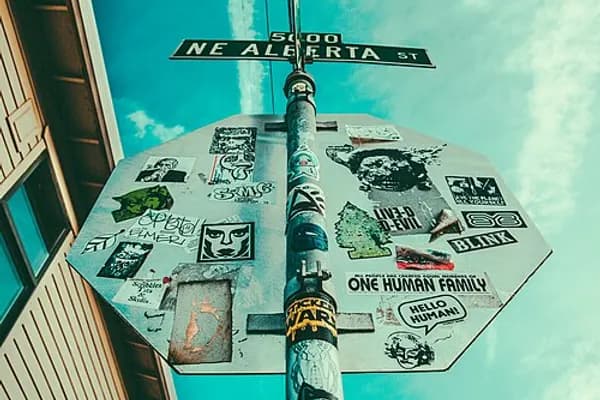
Alberta Street was once riddled with crime but began to be transformed in the early 1990s to what is now an "epicenter of youth and culture," lined with art galleries, restaurants, clothing boutiques and gift shops. The surrounding area has become popular with both young urban professionals and counterculture groups.
History
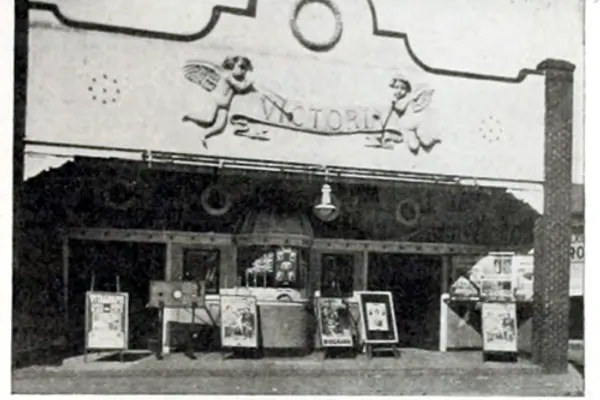
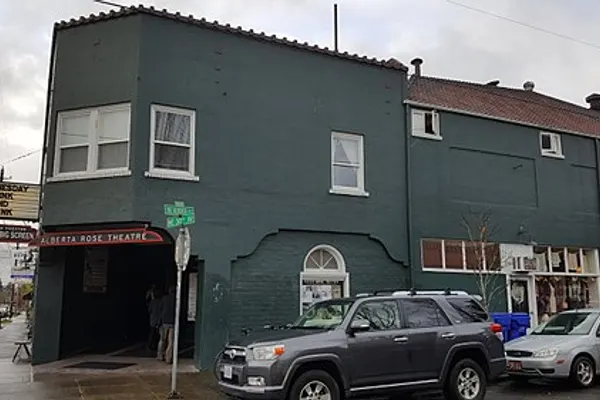
Alberta Street was named after Princess Alberta and was first developed by immigrants in the 1880s with streetcar service beginning in 1903. Streetcar service brought additional pedestrian traffic and the commercial district began to flourish with business owners living in second-floor apartments above their establishments and modestly-sized homes being built during the housing booms of 1905–1913 and 1922–1928. A range of services could be found on Alberta Street, including grocery stores, barber shops, restaurants, a theater and a library. In addition, there were multiple religious institutions for the many ethnicities which lived on Alberta Street, which included many German and Russian immigrants who settled at the western end of Alberta Street.
In the 1950s, the Portland Development Commission (PDC) leveled hundreds of homes south of Alberta to make room for the development of Memorial Coliseum. The displaced residents of the predominantly minority and lower income area moved north to find new residences. Additional homes were cleared in the 1960s to make way for the Minnesota Freeway, now known as Interstate 5, which led to further displacement but also shifted traffic and investment away from Alberta Street. Redevelopment continued into the 1970s, with the expansion of Legacy Emanuel Medical Center leading to the destruction of nearly 300 homes and businesses in the predominantly black Albina neighborhood and their displacement to the Alberta area. The multiple publicly financed projects and the displacement it caused led to gangs, vandalism and violence on and around Alberta Street.
In 1981, after 66 years of business, the local landmark Rexall Pharmacy closed its doors due to the declining community and banks refused to provide mortgages in the area—even to qualified home buyers—and the area was allegedly redlined up through the late 1980s. Gang activity also reached unprecedented levels with the Bloods and Crips moving up from Southern California and bringing additional drug use and violence. Eventually, members of the Alberta community organized and formed two organizations: the North/Northeast Economic Development Task Force and the Sabin Community Development Corporation. The N/NE Economic Development Task Force envisioned a more prosperous Alberta Street and published an "action plan" centered around the development of small, neighborhood-oriented businesses which the City of Portland adopted in 1993. The Sabin CDC assisted in providing low income housing to residents within the Alberta area.
The public sector involvement was paramount in Alberta's revival, but credit is often given to Roslyn Hill, an artist and community activist, in turning around Alberta Street. She sought to maintain black ownership on the street and opened one of the first new businesses in 1993 when she purchased a dilapidated building from foreclosure and opened a garden cafe for the community. Soon after, others who shared Hill's vision opened additional businesses, and Magnus Johannesson purchased the old Rexall Pharmacy building to rent the upstairs space to artists with a coffee shop on the ground floor. Hill would go on to buy and fix up a dozen more buildings and insisted on renting them to community-minded tenants. From 1996 to 1999, the number of businesses nearly doubled, from 60 to 112.
In 1997, Alberta Street held its first art walk—referred to as Last Thursday—with art venues opening their doors and destinations shown on a monthly-published map. Participation was slow at first but eventually the event grew, and street vendors, musicians and street theater were also added. Art and artists were featured prominently as more independent and first time businesses and art galleries opened. The grassroots movement continued as more and more foot traffic came to Alberta Street and the community grew. Slowly, the area became known as an arts district, and the first time the words "Art District" was seen in print was on a local realtor's brochure and the term stuck.
In 2004 a group of business owners led by Diane Coward (Fuel Cafe) and Stacey Matney (PIE Footware) banded together to create the Alberta Business Association which started to market the business on the street. When this proved successful, they were able to pitch the city for a Main Street Program to help strengthen the vibrancy of the neighborhood business district. With a full time Main Street program staff person helping to organize events and marketing Alberta Arts district became one of the most popular business districts in Portland.
Culture
On the last Thursday of every month, Alberta Street is home to the Last Thursday art walk which takes place in galleries and shops during the winter months, and outdoors during warmer weather, with tables set up by local artisans and traveling merchants along the sidewalk. Street performers and food carts also participate in the monthly event. The Alberta Clown House, "Part-vaudeville, part Burning Man, part bike repair shop, part hostel, and all-freak show," was an integral part of the carnival-like atmosphere of Last Thursday and other neighborhood events. The Alberta Clown House disbanded in 2007 due to rising rent along Alberta Street, members of the troupe remain in the community.
Architecture
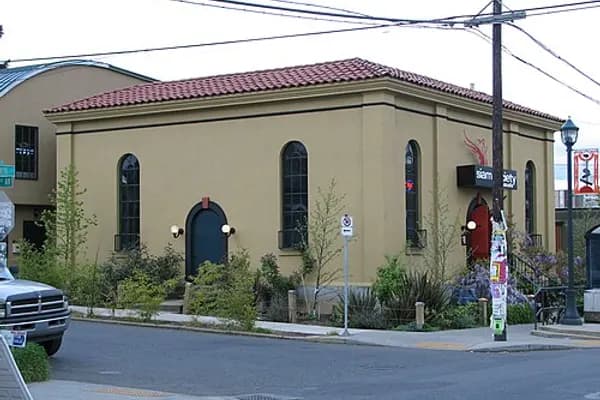
The Northwestern Electric Company – Alberta Substation, which was built in 1931 and is listed on the National Register of Historic Places, is located on Alberta Street. As of 2022, the building houses Bar Cala.
Transit and transportation
Alberta Street is served by TriMet bus line 72 from Martin Luther King Jr. Boulevard to NE 30th Avenue. TriMet bus lines 6, 8, 17, and 70 intersect Alberta Street at Martin Luther King Jr. Boulevard, NE 15th, NE 27th and NE 33rd Avenues, respectively.
Bicycle boulevards parallel NE Alberta Street on NE Going Street and NE Skidmore Street.
In popular culture
The song "Fat Alberta" by the Portland performance group MarchFourth! is about the gentrification of Alberta Street.
See also
List of streets in Portland, Oregon
References
External links
Alberta Main Street
Alberta Street Fair
Your Guide to the Alberta Arts
Art about gentrification on Alberta
Last Thursday
Business Abyssinian Kitchen
Baes Fried Chicken
Bar Cala
La Bonita
DarSalam
Gabbiano's
Kinnamōns
Matt's BBQ Tacos
Mole Mole
Paladin Pie
Pasar
Sure Shot Burger
Thơm Portland
Urdaneta
Geography Alberta Arts District
Fernhill Park
Category
Commons
Geography Alberta Arts District
Public art We Stand with You
Related Martin Luther King Jr. School Museum of Contemporary Art
Category
Commons
Geography Alberta Arts District
Alberta Park
Category
Commons
Encyclopedic content adapted from the Wikipedia article on Alberta Arts, used under CC BY-SA 4.0.
What makes Alberta Arts special
Alberta Arts stands out among Portland’s neighborhoods for its distinctive character: portland's street-art north. Ranked #2 in Portland, it offers the kind of experience that defines a great city trip — a place where the streets themselves tell a story and every block rewards curiosity.
Best for
Our take on Alberta Arts
Alberta Arts is one of the strongest neighborhoods in Portland, and it consistently appears in our editors' personal favorites lists. It may not always get the same attention as the city's most famous district, but among travelers who know Portland well, Alberta Arts is often the first recommendation.
What makes Alberta Arts exceptional is the density of its cultural life. Art galleries, independent bookshops, small theaters, and creative studios are woven into the fabric of the neighborhood rather than clustered in a single zone. You encounter culture here by accident, which is how the best cultural experiences always happen.
Our editors recommend budgeting at least half a day here — enough time to walk the main streets, sit down for coffee, and discover the side streets where Alberta Arts's real character lives.
Living in Alberta Arts
Alberta Arts is connected to the rest of Portland by public transit, and most visitors find it straightforward to reach from the city center or airport. Once you arrive, the neighborhood is best explored on foot — the scale is human and the streets reward wandering.
Day-to-day life in Alberta Arts has the rhythm of a genuine residential neighborhood. You will find grocery stores, pharmacies, cafés with morning regulars, and the kind of small independent shops that only survive where locals support them. For visitors, this means the infrastructure you need — good coffee, a decent meal, a quiet place to sit — is always within a short walk.
Accommodation in Alberta Arts ranges from boutique hotels to short-term rentals. We generally recommend staying within the neighborhood itself rather than commuting from a hotel elsewhere in Portland — the experience of waking up inside a great neighborhood is fundamentally different from visiting one as a day trip.
What locals say about Alberta Arts
Long-term residents of Alberta Arts tend to describe their neighborhood with a mix of pride and protectiveness. Like any district with genuine character, Alberta Arts inspires loyalty — the kind of place people move to and never quite leave, or leave and spend years trying to get back to.
The creative community in Alberta Arts is genuine, not aspirational. Residents include working artists, writers, musicians, and designers who chose the neighborhood because it supported their work — affordable studio space, a community that values craft, and enough foot traffic to sustain independent galleries and shops.
Like any neighborhood that has earned attention, Alberta Arts is navigating the tension between popularity and preservation. Rents have risen, new businesses have arrived, and long-time residents occasionally grumble that the neighborhood is not what it was. But the fundamentals — the walkability, the food, the community — remain strong, and most locals we speak to believe the neighborhood is still gaining more than it is losing.
Visitor tips
- Alberta Arts is located in Portland, United States. The neighborhood is accessible by public transport, taxi, or rideshare from most parts of the city.
- Morning is often the best time to explore — the streets are quieter, the light is better for photography, and cafes are at their most welcoming.
- Wear comfortable walking shoes — the best way to experience Alberta Arts is on foot, wandering the side streets and discovering what lies around each corner.
- Save the neighborhood's location on your phone before you arrive. Offline maps are especially useful for navigating the smaller side streets.