About the neighborhood
Suburb of Cape Town, in Western Cape, South Africa
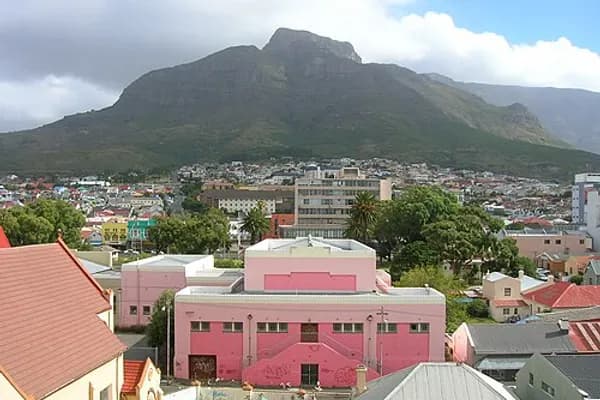
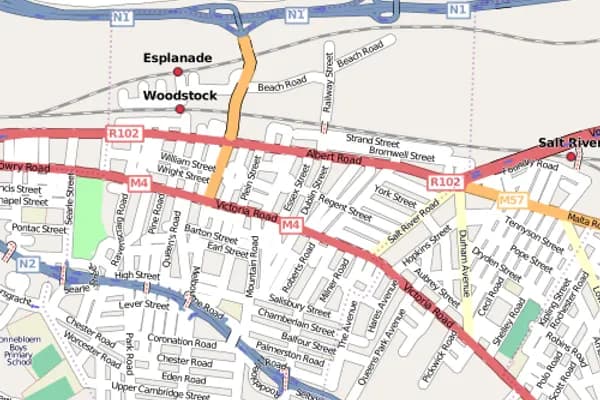
Woodstock is a suburb in Cape Town, South Africa, situated between the docks of Table Bay and the lower slopes of Devil's Peak. One of the city's oldest suburbs, Woodstock is located around 1 kilometre (0.6mi) east of Cape Town CBD, the city's main economic hub.
The suburb serves as a mixed-use area, with residential, commercial, and light industrial zoning, similar to that of neighboring Salt River.
History
The area was inhabited by Khoikhoi until the arrival of Dutch in the 1600s. Three freehold farms (Zonnebloem, Leliebloem and Roodebloem) were established on the slopes of Devils Peak in 1692 and as the area became populated it became known as Papendorp - after Pieter van Papendorp, who had settled in the area during the mid-eighteenth century.
By the middle of the 19th century, especially after the arrival of the railway line, Woodstock had become a fashionable seaside suburb with cottages next to the sea and a beach which stretched until the Castle of Good Hope. In the age of sail a number of violent storms led to many spectacular shipwrecks along the beach. After a brief stint as New Brighton the residents voted in 1867 at the Woodstock Hotel to change the area’s name to Woodstock.
During the 1870s with the subdivision of the old farms for low cost housing, Woodstock began to grow so rapidly that by 1884, less than a year after becoming a separate municipality, Woodstock was the third largest ‘town’ in the country.
Ease of access to the harbour; improved transport; increased industrialisation and a rapidly growing working class population meant that the massive demand for supplies from the British troops during the First and Second Anglo-Boer Wars (1881 and 1899-1902) could be met, and industrial activity flourished, permanently changing the nature of the suburb. The first glass manufactured in South Africa was made at the Woodstock Glass Factory in 1879.
With the massive land reclamation of Table Bay in the 1950s to create the Cape Town foreshore Woodstock beach was lost, and combined with the increasingly industrial nature of the suburb, Woodstock ceased to be a seaside resort. Woodstock however managed to remain integrated during Apartheid and survived being declared a ‘whites only’ area with the attendant forced removals and demolition of houses as happened in nearby District Six.
As a ‘grey’ area, many coloured and black people started to move into Woodstock during the 1970s and 1980s, laying the foundation for the urban renewal which was to start in the late 1990s.
Woodstock also became the first suburb in the city where a distinct Portuguese, ethnic community developed. The Portuguese population in the city increased from 228 immigrants in 1936 to 1649 immigrants by 1970. A total of 675 of these immigrants, coming from Madeira, settled in Woodstock between 1940-1980, and the area earned the nickname "Little Madeira."
Portuguese fishermen first settled in the suburb in the 1930s and became known as the "pioneers" of the Portuguese diaspora in the Cape. They chose to settled in Woodstock for its location close to the harbour and for its relative affordability.
Urban renewal
Notwithstanding the lower parts of Woodstock becoming run down in the second half of the 20th century, with litter, crime and drugs becoming a serious issue, the face of Woodstock has changed dramatically over the last decade.
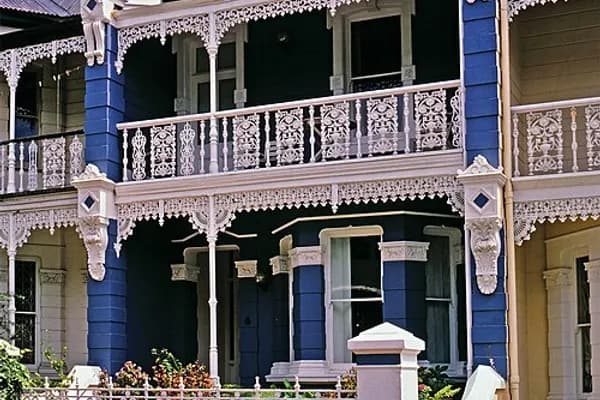
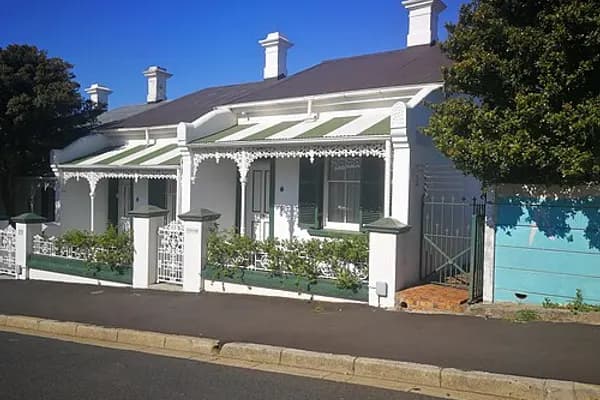
Young professionals have been quick to take advantage of still affordable pretty Victorian semi-detached homes, many of which have been beautifully renovated and restored. Restaurants, media and other businesses, offices, shops and furniture showrooms have sprung up in converted and revamped warehouses, abandoned buildings and even a disused Castle Brewery.
Places of interest
The Treaty Tree is an old milkwood tree in Treaty Road where in 1806 the peace treaty between the British and Batavians was signed after the Battle of Blaauwberg. Until 1834, slaves were sold and convicts hung under it.
Woodstock cave is a fairly large but shallow cave (it's more of an overhang) halfway up Devil's Peak
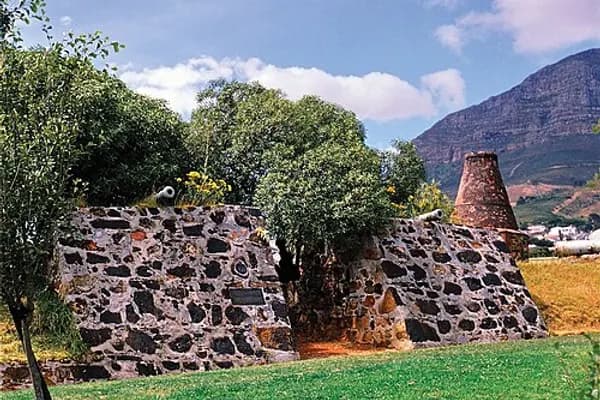
The King’s, Queen’s and Prince of Wales’ blockhouses on Devil's Peak.
The Woodstock Foundry, 160 Albert Road, Woodstock
The suburb is home to the roastery of one of South Africa's main coffeehouse chains, Bootlegger. One of the largest micro-roasteries in South Africa, the facility uses beans sourced from Central Africa and South America, and produces between 350 and 400 tons of coffee per year.
Education
Educational institutions located in Woodstock include:
Mountain Road Primary School
Observatory Junior School
St Agnes' Primary School
Queen's Park High School
Coat of arms
The Woodstock municipal council adopted a pseudo-heraldic coat of arms, designed by Mr St Vincent Cripps, in February 1892.
The shield was divided horizontally, the upper half depicting a sinking sailing ship and the lower half a man on horseback riding into the sea (both evidently referring to Wolraad Woltemade's heroic sea rescue efforts in 1773. The crest was a dolphin entwined around a crowned anchor; the supporters were two lions (one upright, the other doing a handstand(!)); and the motto was Per mare per terras.
Notable residents
Owen McCann, Catholic cardinal
References
External links
Upper Woodstock Residents Association
http://www.capetown.gov.za/en/parks/Pages/TrafalgarPark.aspx
Wikimedia Commons has media related to Woodstock, Cape Town.
City Bowl Bo-Kaap
Cape Town CBD
De Waterkant
Devil's Peak Estate
District Six
Foreshore
Gardens
Higgovale
Lower Vrede
Oranjezicht
Robben Island
Schotsche Kloof
Tamboerskloof
University Estate
Vredehoek
Walmer Estate
Woodstock
Zonnebloem
Helderberg Eerste River
Faure
Firgrove
Gordon's Bay
Macassar
Sir Lowry's Pass Village
Somerset West Parel Vallei
Strand Lwandle
Nomzamo
Northern Suburbs Acacia Park
Belhar
Bellville Boston
Eversdal
Kenridge
Stellenberg
Blue Downs
Bonteheuwel
Bothasig
Brackenfell
Delft Blikkiesdorp
Durbanville
Edgemead
Elsie's River
Fisantekraal
Goodwood
Joostenbergvlakte
Kensington
Kraaifontein
Kuils River
Loevenstein
Maitland
Mfuleni
Monte Vista
Ndabeni
Norwood
Panorama
Parow
Philadelphia
Plattekloof
Ravensmead
Richwood
Scottsdene
Sonnestraal
Tygerberg
Tyger Valley
Wallacedene
Southern Suburbs Bergvliet Kreupelbosch
Bishopscourt
Claremont Harfield Village
Constantia
Diep River
Epping
Grassy Park Pelican Park
Heathfield
Kenilworth
Kirstenhof
Langa Joe Slovo
Lakeside
Lotus River
Marina da Gama
Meadowridge
Mowbray
Muizenberg
Newlands
Observatory
Pinelands
Plumstead
Retreat
Rondebosch
Rosebank
Salt River
Southfield
Steenberg
Thornton
Tokai
Westlake
Wetton
Wynberg
South Peninsula Capri Village
Clovelly
Da Gama Park
Fish Hoek
Glencairn
Hangberg
Hout Bay
Imizamo Yethu
Kalk Bay
Kommetjie
Masiphumelele
Noordhoek
Ocean View
Scarborough
Simon's Town
St James
Sunnydale
Sun Valley
Vrygrond
Neighbourhoods Victoria & Alfred Waterfront
Public art Statues Nelson Mandela
Cecil Rhodes
Nobel Square
George Grey
Jan Hendrik Hofmeyer
Jan van Riebeeck
Maria van Riebeeck
Bartolomeu Dias
Religion Anglican Diocese of Cape Town
Roman Catholic Archdiocese of Cape Town
Religious buildings Auwal Mosque
Gardens Shul
Greek Orthodox Cathedral of St George
Groote Kerk
Lutheran Church in Strand Street
Nurul Islam Mosque
Palm Tree Mosque
Queen Victoria Mosque
St. George's Cathedral
St. James Church
St. Mary's Cathedral
Secular architecture Cape Dutch architecture
Tallest buildings in Cape Town
Athlone Power Station
Atterbury House
Bertram House
Boshofpoort
Cape Town City Hall
Cape Town Civic Centre
Castle of Good Hope
Centre for the Book
Coornhoop
Disa Park
Egyptian Building
Genadendal Residence
Hawthorndon House
Houses of Parliament
Huguenot Memorial Building
Leeuwenhof
Mandela Rhodes Building
Metlife Centre
Mutual Building
Naspers Centre
Portside Tower
Rhodes Memorial
Royal Observatory
Triangle House
Media Newspapers Cape Times
The Cape Messenger
Radio and television Bush Radio
CapeTalk
Cape Town TV
Fine Music Radio
Good Hope FM
Kfm 94.5
UCT Radio
Voice of the Cape
Outline
Encyclopedic content adapted from the Wikipedia article on Woodstock, used under CC BY-SA 4.0.