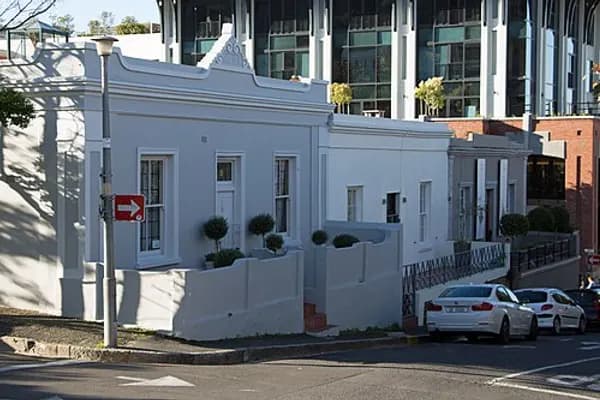
About the neighborhood
Part of Cape Town, in Western Cape, South Africa
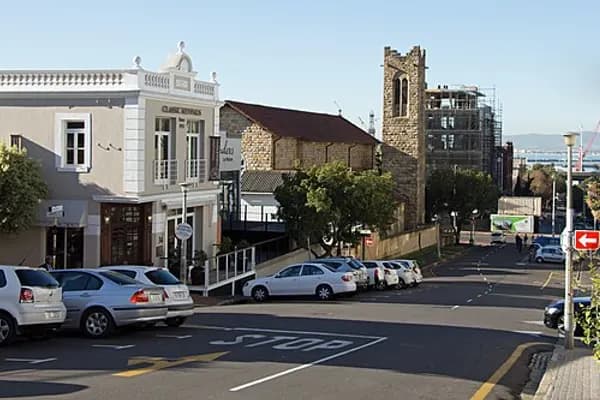
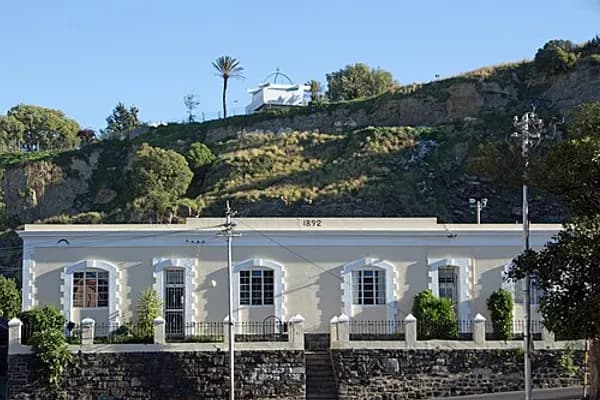
De Waterkant is a historic suburb in Cape Town, South Africa, and is well-known for being Cape Town's gay village.
The neighborhood is located in the City Bowl region of Cape Town, adjacent to the central business district (CBD), on the southeastern end of Somerset Road. To the south, it is neighbored by the historically Cape Malay neighborhood of Bo-Kaap.
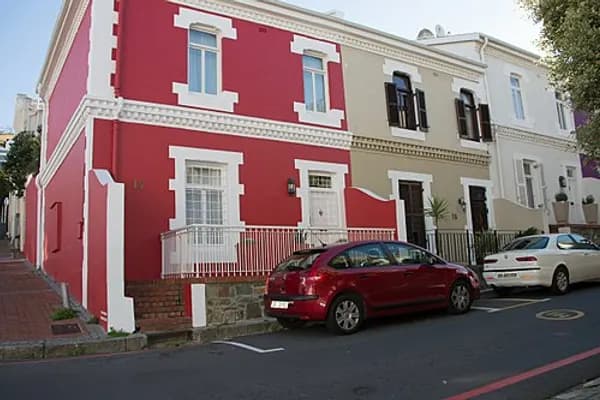
It contains many vibrantly-colored buildings, lining its sometimes still cobbled streets. creating a very distinct and enjoyable atmosphere.
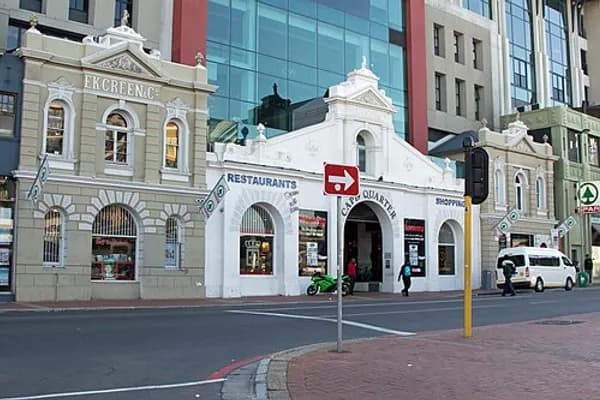
De Waterkant is popular among young professionals and tourists, and contains numerous niche restaurants and retailers. The area is also home to the Cape Quarter shopping mall and tertiary education institution Vega's Cape Town campus.
Cape Town's Gayborhood
De Waterkant is a gay village, and a neighborhood, destination, and tourist attraction, for members of the LGBTQIA+ community, as well as those interested in supporting the community.
Cape Town is a historically very friendly and welcoming city for members of the community, and is known as the Gay Capital of Africa, being a popular LGBTQIA+ tourist destination.
De Waterkant contains Cape Town's first rainbow crosswalk, installed in 2022 to celebrate the LGBTQIA+ community, as well as the Pink Route, which is a painted, pink line along the pavements of various streets in the area. The Route is a way for visitors to the suburb to take a guided walk around the area, taking them past numerous community-related establishments, in order to get to know it better.
The annual Cape Town Pride parade starts in De Waterkant, with a ribbon cutting ceremony at the rainbow crossing in Somerset Road, followed by a march to the Green Point Track grounds, for Pride-related festivities.
References
Further reading
Rink, Bradley Michael (2008). Village People: Quartering De Waterkant in discourse and bricks (Ph.D. thesis). University of Cape Town. Retrieved 30 June 2014.
Media related to De Waterkant at Wikimedia Commons
City Bowl Bo-Kaap
Cape Town CBD
De Waterkant
Devil's Peak Estate
District Six
Foreshore
Gardens
Higgovale
Lower Vrede
Oranjezicht
Robben Island
Schotsche Kloof
Tamboerskloof
University Estate
Vredehoek
Walmer Estate
Woodstock
Zonnebloem
Helderberg Eerste River
Faure
Firgrove
Gordon's Bay
Macassar
Sir Lowry's Pass Village
Somerset West Parel Vallei
Strand Lwandle
Nomzamo
Northern Suburbs Acacia Park
Belhar
Bellville Boston
Eversdal
Kenridge
Stellenberg
Blue Downs
Bonteheuwel
Bothasig
Brackenfell
Delft Blikkiesdorp
Durbanville
Edgemead
Elsie's River
Fisantekraal
Goodwood
Joostenbergvlakte
Kensington
Kraaifontein
Kuils River
Loevenstein
Maitland
Mfuleni
Monte Vista
Ndabeni
Norwood
Panorama
Parow
Philadelphia
Plattekloof
Ravensmead
Richwood
Scottsdene
Sonnestraal
Tygerberg
Tyger Valley
Wallacedene
Southern Suburbs Bergvliet Kreupelbosch
Bishopscourt
Claremont Harfield Village
Constantia
Diep River
Epping
Grassy Park Pelican Park
Heathfield
Kenilworth
Kirstenhof
Langa Joe Slovo
Lakeside
Lotus River
Marina da Gama
Meadowridge
Mowbray
Muizenberg
Newlands
Observatory
Pinelands
Plumstead
Retreat
Rondebosch
Rosebank
Salt River
Southfield
Steenberg
Thornton
Tokai
Westlake
Wetton
Wynberg
South Peninsula Capri Village
Clovelly
Da Gama Park
Fish Hoek
Glencairn
Hangberg
Hout Bay
Imizamo Yethu
Kalk Bay
Kommetjie
Masiphumelele
Noordhoek
Ocean View
Scarborough
Simon's Town
St James
Sunnydale
Sun Valley
Vrygrond
Neighbourhoods Victoria & Alfred Waterfront
Public art Statues Nelson Mandela
Cecil Rhodes
Nobel Square
George Grey
Jan Hendrik Hofmeyer
Jan van Riebeeck
Maria van Riebeeck
Bartolomeu Dias
Religion Anglican Diocese of Cape Town
Roman Catholic Archdiocese of Cape Town
Religious buildings Auwal Mosque
Gardens Shul
Greek Orthodox Cathedral of St George
Groote Kerk
Lutheran Church in Strand Street
Nurul Islam Mosque
Palm Tree Mosque
Queen Victoria Mosque
St. George's Cathedral
St. James Church
St. Mary's Cathedral
Secular architecture Cape Dutch architecture
Tallest buildings in Cape Town
Athlone Power Station
Atterbury House
Bertram House
Boshofpoort
Cape Town City Hall
Cape Town Civic Centre
Castle of Good Hope
Centre for the Book
Coornhoop
Disa Park
Egyptian Building
Genadendal Residence
Hawthorndon House
Houses of Parliament
Huguenot Memorial Building
Leeuwenhof
Mandela Rhodes Building
Metlife Centre
Mutual Building
Naspers Centre
Portside Tower
Rhodes Memorial
Royal Observatory
Triangle House
Media Newspapers Cape Times
The Cape Messenger
Radio and television Bush Radio
CapeTalk
Cape Town TV
Fine Music Radio
Good Hope FM
Kfm 94.5
UCT Radio
Voice of the Cape
Outline
People Zackie Achmat
Edwin Cameron
Pierre de Vos
Simon Nkoli
Pieter-Dirk Uys
Beverley Palesa Ditsie
Somizi Mhlongo
Caster Semenya
Portia Modise
Gert-Johan Coetzee
Zanele Muholi
Zakhele Mbhele
Lynne Brown
Mike Waters
Ian Ollis
Organisations Lesbian and Gay Equality Project
Organisation of Lesbian and Gay Activists
SistaazHood
Triangle Project
SportJozi CatsLanguages Gayle language
IsiNgqumo
Gay villages De Waterkant
Melville
Events Mr Gay South Africa
Out In Africa Film Festival
Pride parades Cape Town Pride
Media Wrapped (magazine)
IssuesCorrective rapeOther Timeline
LGBTQ tourism in Cape Town
Pride flag
Category:LGBTQ in South Africa
Encyclopedic content adapted from the Wikipedia article on De Waterkant, used under CC BY-SA 4.0.
What makes De Waterkant special
De Waterkant stands out among Cape Town’s neighborhoods for its distinctive character: cape town's pink-house village. Ranked #5 in Cape Town, it offers the kind of experience that defines a great city trip — a place where the streets themselves tell a story and every block rewards curiosity.
Best for
Our take on De Waterkant
De Waterkant occupies a distinctive place in Cape Town's neighborhood landscape. It is the kind of district that rewards travelers who venture beyond the obvious choices — quieter than the tourist-facing areas, richer in local character, and full of the small details that make a city trip memorable.
What makes De Waterkant worth the visit is the texture of daily life here. It is a neighborhood that functions for the people who live in it — not just for the visitors who pass through. The shops serve local needs, the restaurants feed local appetites, and the streets have a rhythm that reflects genuine community rather than tourism infrastructure. That is the quality our editors prize most, and De Waterkant has it in abundance.
Our editors recommend budgeting at least half a day here — enough time to walk the main streets, sit down for coffee, and discover the side streets where De Waterkant's real character lives.
Living in De Waterkant
De Waterkant is connected to the rest of Cape Town by public transit, and most visitors find it straightforward to reach from the city center or airport. Once you arrive, the neighborhood is best explored on foot — the scale is human and the streets reward wandering.
Day-to-day life in De Waterkant has the rhythm of a genuine residential neighborhood. You will find grocery stores, pharmacies, cafés with morning regulars, and the kind of small independent shops that only survive where locals support them. For visitors, this means the infrastructure you need — good coffee, a decent meal, a quiet place to sit — is always within a short walk.
Accommodation in De Waterkant ranges from boutique hotels to short-term rentals. We generally recommend staying within the neighborhood itself rather than commuting from a hotel elsewhere in Cape Town — the experience of waking up inside a great neighborhood is fundamentally different from visiting one as a day trip.
What locals say about De Waterkant
Long-term residents of De Waterkant tend to describe their neighborhood with a mix of pride and protectiveness. Like any district with genuine character, De Waterkant inspires loyalty — the kind of place people move to and never quite leave, or leave and spend years trying to get back to.
What locals appreciate most about De Waterkant is its consistency — the feeling that the neighborhood works the same way on a Tuesday morning as it does on a Saturday night. It is not a place that performs for visitors and then goes quiet. The rhythm is genuine, the community is real, and the daily experience of living here is what draws people and keeps them.
Compared to the more famous districts in Cape Town, De Waterkant has maintained a lower profile, which many residents consider an advantage. The neighborhood evolves gradually rather than being reshaped by sudden attention, and the result is a community that still feels organic rather than curated.
Visitor tips
- De Waterkant is located in Cape Town, South Africa. The neighborhood is accessible by public transport, taxi, or rideshare from most parts of the city.
- Morning is often the best time to explore — the streets are quieter, the light is better for photography, and cafes are at their most welcoming.
- Wear comfortable walking shoes — the best way to experience De Waterkant is on foot, wandering the side streets and discovering what lies around each corner.
- Save the neighborhood's location on your phone before you arrive. Offline maps are especially useful for navigating the smaller side streets.