About the neighborhood
Neighbourhoods in Helsinki, Finland
Töölö (Finnish: ˈtøːlø; Swedish: Tölö, formerly spelled Thölö) is the collective name for the neighbourhoods Etu-Töölö (Swedish: Främre Tölö, lit.'Front Töölö') and Taka-Töölö (Swedish: Bortre Tölö, lit.'Rear Töölö') in Helsinki, Finland. The neighbourhoods are located next to the city centre, occupying the western side of the Helsinki Peninsula.
Etu-Töölö, the southern neighbourhood, borders Kamppi and is the location of the Finnish Parliament House. Taka-Töölö, the northern neighbourhood, borders Meilahti and Laakso, and is the location of the Helsinki University Central Hospital. Contrary to popular belief, Töölö is no longer an official name of any district or neighbourhood in Helsinki; in 1959 Töölö was divided into Etu-Töölö and Taka-Töölö.
Overview
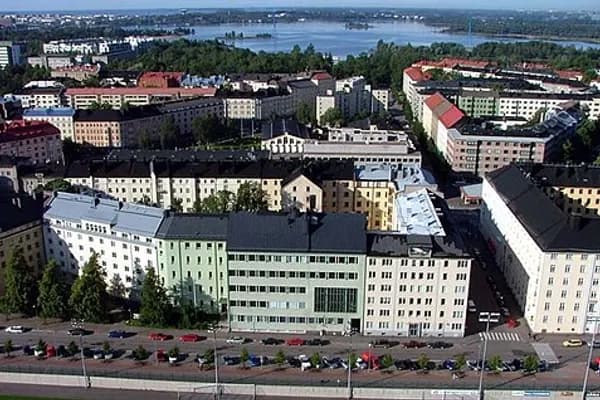
Töölö was built in its present form, for the most part, in the period between 1900 and 1930 during an era of rapid expansion with the aim to provide appropriate accommodation to a growing bourgeoise population. It was the site of the first ever town planning competition in Finland in 1898–1900. Three entries were lifted out for recognition; first prize was awarded to architect Gustaf Nyström (together with engineer Herman Norrmén), second prize to architect Lars Sonck, and third prize to a joint entry by Sonck together with architects Bertil Jung and Valter Thomé. Nyström's scheme represented classicism with wide main streets and imposing public buildings arranged in symmetrical axial compositions, and the other two entries following two picturesque theories of town planning proposed at that time by Viennese city planner Camillo Sitte, with the street network adapted to the rocky terrain and with picturesque compositions. Undecided what course of action to take, however, the City Council asked the prize-winners to submit new proposals. When this led to further stalemate Nyström and Sonck were commissioned to work together on the final plan combining Nyström's spacious street network and elements of Sonck's Sittesque details. The final plan (1906) under the direction of Jung, made the scheme more uniform, while the architecture is seen as typical of the Nordic Classicism style. A typical street in the plan is that of Museokatu, with tall lines of buildings in a classical style along a curving street line. A still wider (24 metres) new tree-lined boulevard was that of Helsinginkatu, driven through the working-class district of Kallio, first outlined in 1887 by Sonck, but with further input from Nyström, and completed in around 1923. However, despite these wide streets there are also several Sitte-inspired picturesque streets and squares, most notably Temppeliaukio square (in the centre of which is the "church in the rock").
Töölö has always been the most respected as a place to live, but the prices of apartments are high, especially in Etu-Töölö. In Töölö, the marketing times for apartments are clearly shorter and the prices per square meter are therefore higher than in the rest of Helsinki on average, which speaks of abundant demand. A square of living in Töölö costs about €8,000, which is close to the price level of the second most popular district, Lauttasaari, but clearly less than in Ullanlinna, where a square of living costs closer to €10,000.
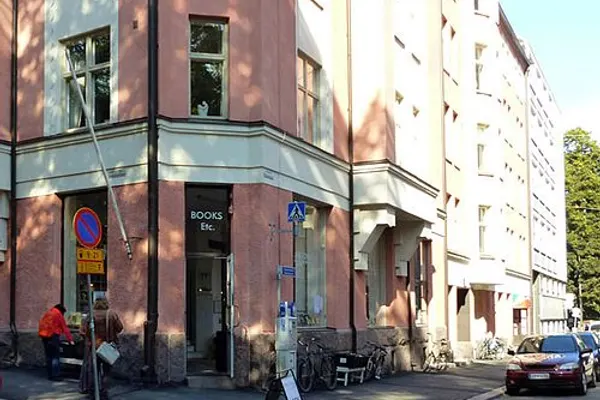
Töölö is also known for its functionalist architecture, notably around Taka-Töölö. There are many parks, including Hesperia Park on the Töölö Bay and also Sibelius Park, named after composer Jean Sibelius and containing a monument in his name. Töölö also has a vibrant cultural life, being the location of the Finnish National Opera, the National Museum of Finland, Kunsthalle Helsinki, the Zoological Museum, Töölö Library, and many small galleries and bookstores. With the Olympic Stadium, Sonera Stadium, the Sports Hall and the Ice Hall, all within walking distance from each other, Taka-Töölö is also a significant neighbourhood for sport life in Helsinki.
Notable people
Eeva-Kaarina Aronen (1948–2015), author and journalist
Notable sights
Parliament
Temppeliaukio church
Kristuskyrkan Swedish church
The National Museum of Finland
Finlandia Hall
Finnish National Opera
Helsinki Olympic Stadium
Hietaniemi Cemetery
Cafe Regatta
See also
Kluuvi
Töölöntori
References
Gallery
Media related to Töölö at Wikimedia Commons
60°10′45″N 024°55′26″E / 60.17917°N 24.92389°E / 60.17917; 24.92389
Encyclopedic content adapted from the Wikipedia article on Töölö, used under CC BY-SA 4.0.
What makes Töölö special
Töölö stands out among Helsinki’s neighborhoods for its distinctive character: quiet, cultured helsinki. Ranked #4 in Helsinki, it offers the kind of experience that defines a great city trip — a place where the streets themselves tell a story and every block rewards curiosity.
Best for
Our take on Töölö
Töölö occupies a distinctive place in Helsinki's neighborhood landscape. It is the kind of district that rewards travelers who venture beyond the obvious choices — quieter than the tourist-facing areas, richer in local character, and full of the small details that make a city trip memorable.
What makes Töölö exceptional is the density of its cultural life. Art galleries, independent bookshops, small theaters, and creative studios are woven into the fabric of the neighborhood rather than clustered in a single zone. You encounter culture here by accident, which is how the best cultural experiences always happen.
Our editors recommend budgeting at least half a day here — enough time to walk the main streets, sit down for coffee, and discover the side streets where Töölö's real character lives.
Living in Töölö
Töölö is connected to the rest of Helsinki by public transit, and most visitors find it straightforward to reach from the city center or airport. Once you arrive, the neighborhood is best explored on foot — the scale is human and the streets reward wandering.
This is a neighborhood with strong residential roots, which means the infrastructure of daily life is well-established: grocery stores, pharmacies, parks, playgrounds, and the kind of quiet side streets where children play and neighbors greet each other. For visitors, this translates into a feeling of safety and belonging that more tourist-oriented districts rarely provide.
Accommodation in Töölö ranges from boutique hotels to short-term rentals. We generally recommend staying within the neighborhood itself rather than commuting from a hotel elsewhere in Helsinki — the experience of waking up inside a great neighborhood is fundamentally different from visiting one as a day trip.
What locals say about Töölö
Long-term residents of Töölö tend to describe their neighborhood with a mix of pride and protectiveness. Like any district with genuine character, Töölö inspires loyalty — the kind of place people move to and never quite leave, or leave and spend years trying to get back to.
The creative community in Töölö is genuine, not aspirational. Residents include working artists, writers, musicians, and designers who chose the neighborhood because it supported their work — affordable studio space, a community that values craft, and enough foot traffic to sustain independent galleries and shops.
Compared to the more famous districts in Helsinki, Töölö has maintained a lower profile, which many residents consider an advantage. The neighborhood evolves gradually rather than being reshaped by sudden attention, and the result is a community that still feels organic rather than curated.
Visitor tips
- Töölö is located in Helsinki, Finland. The neighborhood is accessible by public transport, taxi, or rideshare from most parts of the city.
- Morning is often the best time to explore — the streets are quieter, the light is better for photography, and cafes are at their most welcoming.
- Wear comfortable walking shoes — the best way to experience Töölö is on foot, wandering the side streets and discovering what lies around each corner.
- Save the neighborhood's location on your phone before you arrive. Offline maps are especially useful for navigating the smaller side streets.