About the neighborhood
Borough of Cologne in North Rhine-Westphalia, Germany
Innenstadt (German: Köln-Innenstadt German pronunciation: ˈkœln ˈɪnənˌʃtat, lit.'Cologne-Inner City') is the central borough (Stadtbezirk) of the City of Cologne in Germany.
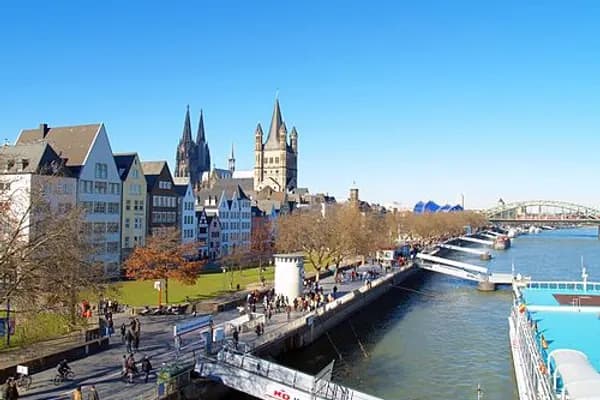
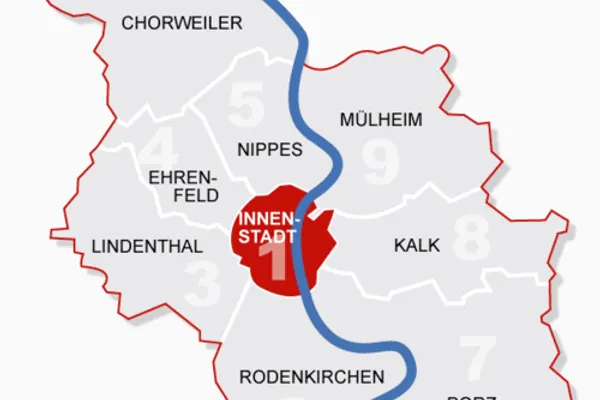
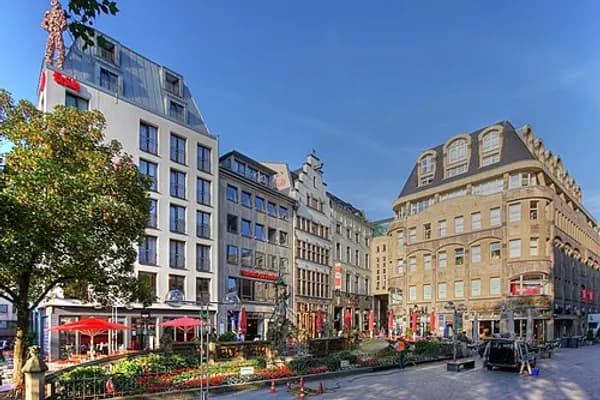
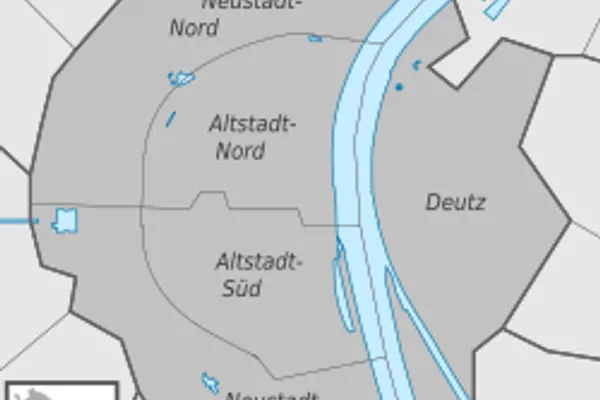
The borough was established with the last communal land reform in 1975, and comprises Cologne's historic old town (Altstadt), the Gründerzeit era new town (Neustadt) plus the right-Rhenish quarter of Deutz. The Innenstadt has about 127,000 inhabitants (as of December 2020) and covers an area of 16.37 square kilometres.
Subdivisions
The Innenstadt is made up of five Stadtteile (city parts):
Landmarks
Among the landmarks in Innenstadt are Cologne Cathedral, the twelve romanesque churches of Cologne (St. Andreas, St. Aposteln, St. Cäcilien, St. Georg, St. Gereon, St. Kunibert, St. Maria im Kapitol, St. Maria Lyskirchen, Groß St. Martin, St. Pantaleon, St. Severin and St. Ursula) and the 14th century Cologne City Hall (Kölner Rathaus). Several high rise structures were built over the last years as landmarks for Veedel (city quarters) within the district, most notably KölnTurm at MediaPark and the three Kranhaus buildings at Rheinauhafen.
Transportation
As the business center of Cologne, the Innenstadt is well served by numerous railway stations and highway. The largest train station is Köln Hauptbahnhof, other stations include Köln Messe/Deutz, Köln Hansaring, Köln West and Köln Süd station, as well as a dense net of Cologne Stadtbahn tram and U-Bahn stations. The Cologne Ring (Kölner Ringe) is a city boulevard, encircling the old town of Cologne. It is part of Bundesstraße 55 and picks up several principal arterial roads, which lead into adjacent city districts.
Rhine bridges
B 55a Zoobrücke
Hohenzollernbrücke
Deutzer Brücke
B 55 Severinsbrücke
See also
History of Cologne
References
External links
Wikimedia Commons has media related to Köln-Innenstadt.
Official webpage of the district (in German)
Encyclopedic content adapted from the Wikipedia article on Südstadt, used under CC BY-SA 4.0.
What makes Südstadt special
Südstadt stands out among Cologne’s neighborhoods for its distinctive character: cologne's hip southern district. Ranked #4 in Cologne, it offers the kind of experience that defines a great city trip — a place where the streets themselves tell a story and every block rewards curiosity.
Best for
Our take on Südstadt
Südstadt occupies a distinctive place in Cologne's neighborhood landscape. It is the kind of district that rewards travelers who venture beyond the obvious choices — quieter than the tourist-facing areas, richer in local character, and full of the small details that make a city trip memorable.
What makes Südstadt worth the visit is the texture of daily life here. It is a neighborhood that functions for the people who live in it — not just for the visitors who pass through. The shops serve local needs, the restaurants feed local appetites, and the streets have a rhythm that reflects genuine community rather than tourism infrastructure. That is the quality our editors prize most, and Südstadt has it in abundance.
Our editors recommend budgeting at least half a day here — enough time to walk the main streets, sit down for coffee, and discover the side streets where Südstadt's real character lives.
Living in Südstadt
Südstadt is connected to the rest of Cologne by public transit, and most visitors find it straightforward to reach from the city center or airport. Once you arrive, the neighborhood is best explored on foot — the scale is human and the streets reward wandering.
Day-to-day life in Südstadt has the rhythm of a genuine residential neighborhood. You will find grocery stores, pharmacies, cafés with morning regulars, and the kind of small independent shops that only survive where locals support them. For visitors, this means the infrastructure you need — good coffee, a decent meal, a quiet place to sit — is always within a short walk.
Accommodation in Südstadt ranges from boutique hotels to short-term rentals. We generally recommend staying within the neighborhood itself rather than commuting from a hotel elsewhere in Cologne — the experience of waking up inside a great neighborhood is fundamentally different from visiting one as a day trip.
What locals say about Südstadt
Long-term residents of Südstadt tend to describe their neighborhood with a mix of pride and protectiveness. Like any district with genuine character, Südstadt inspires loyalty — the kind of place people move to and never quite leave, or leave and spend years trying to get back to.
What locals appreciate most about Südstadt is its consistency — the feeling that the neighborhood works the same way on a Tuesday morning as it does on a Saturday night. It is not a place that performs for visitors and then goes quiet. The rhythm is genuine, the community is real, and the daily experience of living here is what draws people and keeps them.
Compared to the more famous districts in Cologne, Südstadt has maintained a lower profile, which many residents consider an advantage. The neighborhood evolves gradually rather than being reshaped by sudden attention, and the result is a community that still feels organic rather than curated.
Visitor tips
- Südstadt is located in Cologne, Germany. The neighborhood is accessible by public transport, taxi, or rideshare from most parts of the city.
- Morning is often the best time to explore — the streets are quieter, the light is better for photography, and cafes are at their most welcoming.
- Wear comfortable walking shoes — the best way to experience Südstadt is on foot, wandering the side streets and discovering what lies around each corner.
- Save the neighborhood's location on your phone before you arrive. Offline maps are especially useful for navigating the smaller side streets.