About the neighborhood
Quarter in Pomeranian Voivodeship, Poland
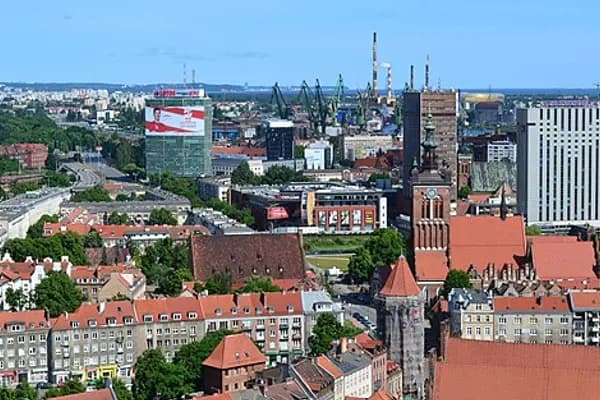
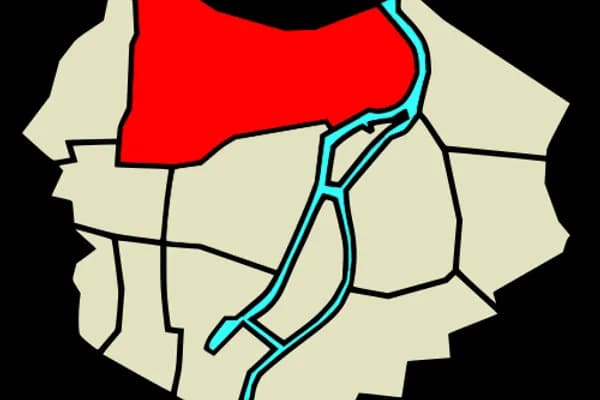
The Old Town (Polish: Stare Miasto; German: Altstadt) is a quarter (osiedle) of Śródmieście, a district of Gdańsk. It is the oldest area of the city to be granted city rights or privileges.
History
The Old Town was the location of a small fortified settlement by 970 and 980, and it comprised the majority and central section of the city of Gdańsk for much of its early history. In 1308, it was destroyed and burnt amidst the Gdańsk massacre, carried out by the Teutonic Order, slowly recovering, mostly as a suburb to the nearby Main City, which became the more important location in Gdańsk after 1308.
As of 1495, 3,655 people lived in the Old Town, which had increased to 31,250 by 1880 and 37,586 by 1917. The area was impoverished, and it suffered from significant destruction during the siege of Danzig in 1945. Some historical buildings, such as the Great Mill, were restored. Several commercial buildings, mostly shops and shopping malls, have been built in the Old Town since the 1980s.
Notable sights
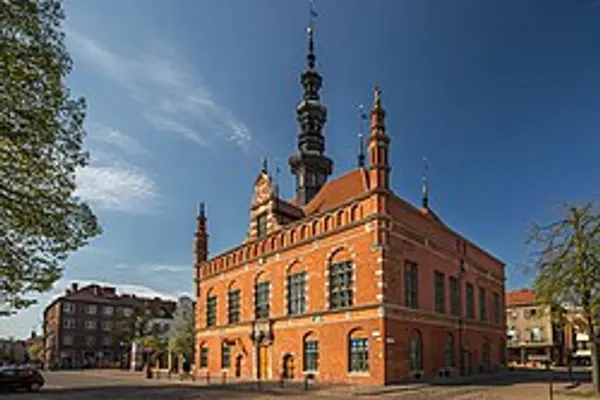
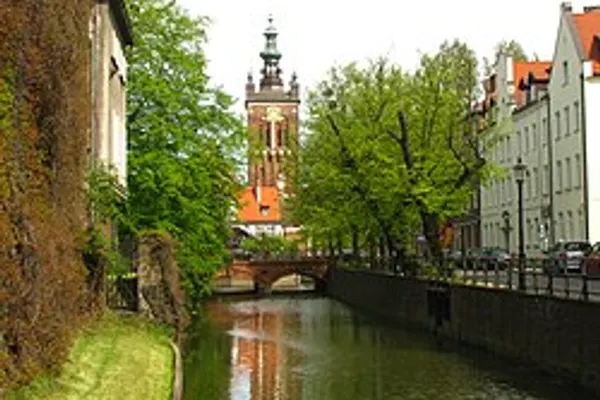
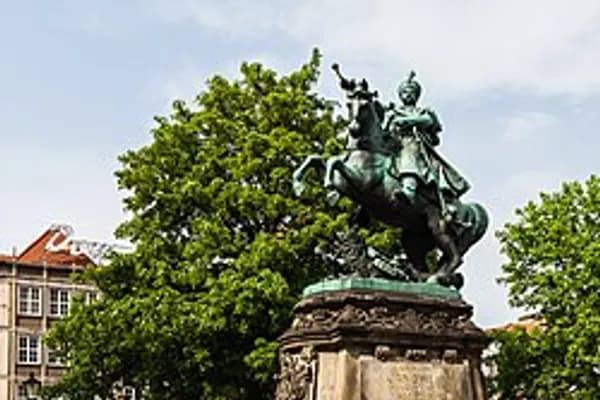
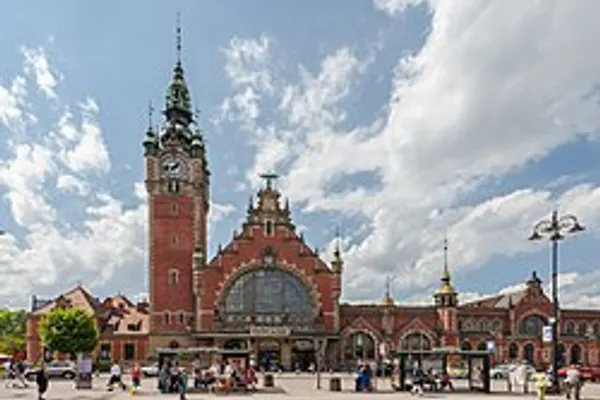
Notable sights in the Old Town include the historic Old Town Hall in Gdańskpl, completed in the 16th century, the 14th-century Great Mill, the preserved medieval House of the Pelplin Abbots, the Polish Post Office, famously defended on 1 September 1939, as well as its museum, the early-20th-century Gdańsk Główny railway station, the Mannerist Preachers' House, the tall Monument to the Fallen Shipyard Workers of 1970, the equestrian King John III Sobieski Monument, and the Radunia Canal, a 14th-century canal connecting two rivers, the Radunia and Motława.
Gallery
References
PoliticsDistricts Aniołki
Brętowo
Brzeźno
Chełm
Jasień
Kokoszki
Krakowiec-Górki Zachodnie
Letnica
Matarnia
Młyniska
Nowy Port
Oliwa
Olszynka
Orunia Górna-Gdańsk Południe
Orunia-Św. Wojciech-Lipce
Osowa
Piecki-Migowo
Przeróbka
Przymorze Małe
Przymorze Wielkie Przymorze
Rudniki
Siedlce
Stogi
Strzyża
Suchanino
Ujeścisko-Łostowice
VII Dwór
Wrzeszcz Dolny Nowe Szkoty
Wrzeszcz Górny Wrzeszcz
Wyspa Sobieszewska
Wzgórze Mickiewicza
Żabianka-Wejhera-Jelitkowo-Tysiąclecia Jelitkowo
Zaspa-Młyniec
Zaspa-Rozstaje Zaspa
LandmarksCulture and events Baltic Days of Jewish Culture
Baltic State Opera
Ergo Arena
Forum Gdańsk
European Solidarity Centre
Gdańsk City Stadium
Gdańsk Shakespeare Theatre
Gdańsk Sports Center Stadium
Hala Olivia
Łaźnia Centre for Contemporary Art
Museum of the Second World War
National Maritime Museum
National Museum
Polish Baltic Philharmonic
St. Dominic's Fair
Honorary citizens
Transport Rail SKM
PKM
Highways Tricity Ring Road
A1
S6
S7
Trams
Buses
Cycling Bicycle sharing
Universities and academies Academy of Fine Arts in Gdańsk
Gdańsk University of Technology
Medical University of Gdańsk
University of Gdańsk
Category
Encyclopedic content adapted from the Wikipedia article on Stare Miasto, used under CC BY-SA 4.0.
What makes Stare Miasto special
Stare Miasto stands out among Gdańsk’s neighborhoods for its distinctive character: gdańsk's old town. Ranked #2 in Gdańsk, it offers the kind of experience that defines a great city trip — a place where the streets themselves tell a story and every block rewards curiosity.
Best for
Our take on Stare Miasto
Stare Miasto is one of the strongest neighborhoods in Gdańsk, and it consistently appears in our editors' personal favorites lists. It may not always get the same attention as the city's most famous district, but among travelers who know Gdańsk well, Stare Miasto is often the first recommendation.
What makes Stare Miasto worth the visit is the texture of daily life here. It is a neighborhood that functions for the people who live in it — not just for the visitors who pass through. The shops serve local needs, the restaurants feed local appetites, and the streets have a rhythm that reflects genuine community rather than tourism infrastructure. That is the quality our editors prize most, and Stare Miasto has it in abundance.
Our editors recommend budgeting at least half a day here — enough time to walk the main streets, sit down for coffee, and discover the side streets where Stare Miasto's real character lives.
Living in Stare Miasto
Stare Miasto is connected to the rest of Gdańsk by public transit, and most visitors find it straightforward to reach from the city center or airport. Once you arrive, the neighborhood is best explored on foot — the scale is human and the streets reward wandering.
Day-to-day life in Stare Miasto has the rhythm of a genuine residential neighborhood. You will find grocery stores, pharmacies, cafés with morning regulars, and the kind of small independent shops that only survive where locals support them. For visitors, this means the infrastructure you need — good coffee, a decent meal, a quiet place to sit — is always within a short walk.
Accommodation in Stare Miasto ranges from boutique hotels to short-term rentals. We generally recommend staying within the neighborhood itself rather than commuting from a hotel elsewhere in Gdańsk — the experience of waking up inside a great neighborhood is fundamentally different from visiting one as a day trip.
What locals say about Stare Miasto
Long-term residents of Stare Miasto tend to describe their neighborhood with a mix of pride and protectiveness. Like any district with genuine character, Stare Miasto inspires loyalty — the kind of place people move to and never quite leave, or leave and spend years trying to get back to.
What locals appreciate most about Stare Miasto is its consistency — the feeling that the neighborhood works the same way on a Tuesday morning as it does on a Saturday night. It is not a place that performs for visitors and then goes quiet. The rhythm is genuine, the community is real, and the daily experience of living here is what draws people and keeps them.
Like any neighborhood that has earned attention, Stare Miasto is navigating the tension between popularity and preservation. Rents have risen, new businesses have arrived, and long-time residents occasionally grumble that the neighborhood is not what it was. But the fundamentals — the walkability, the food, the community — remain strong, and most locals we speak to believe the neighborhood is still gaining more than it is losing.
Visitor tips
- Stare Miasto is located in Gdańsk, Poland. The neighborhood is accessible by public transport, taxi, or rideshare from most parts of the city.
- Morning is often the best time to explore — the streets are quieter, the light is better for photography, and cafes are at their most welcoming.
- Wear comfortable walking shoes — the best way to experience Stare Miasto is on foot, wandering the side streets and discovering what lies around each corner.
- Save the neighborhood's location on your phone before you arrive. Offline maps are especially useful for navigating the smaller side streets.