About the neighborhood
Central part of Gdańsk
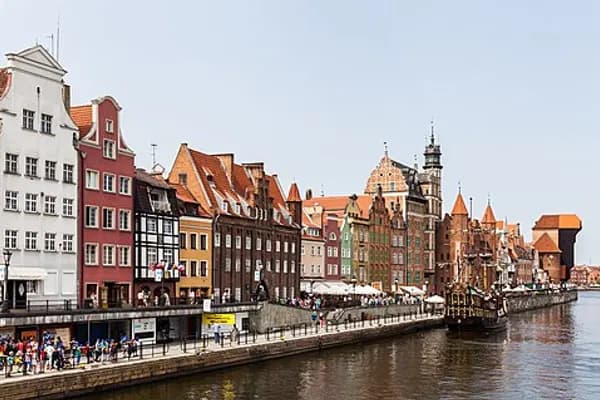
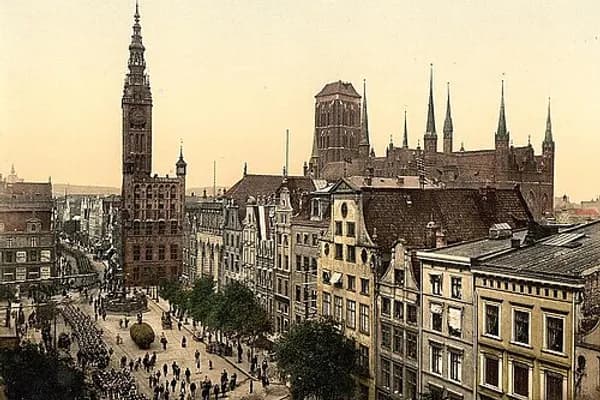
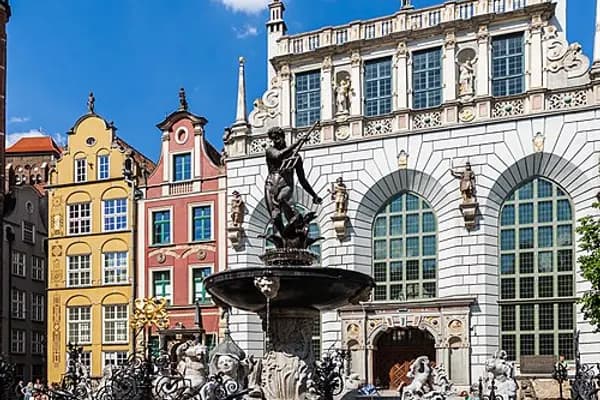
The Main City (Polish: Główne Miasto, German: Rechtstadt) is the central, historic part of Gdańsk's borough of Śródmieście. Unlike the Old Town, the area was rebuilt after World War II and includes some of the city's best known historical monuments, including the St. Mary's basilica, Golden Gate, Artus Court, Main City Hall, the Royal Road, Long Lane and Long Market.
Location
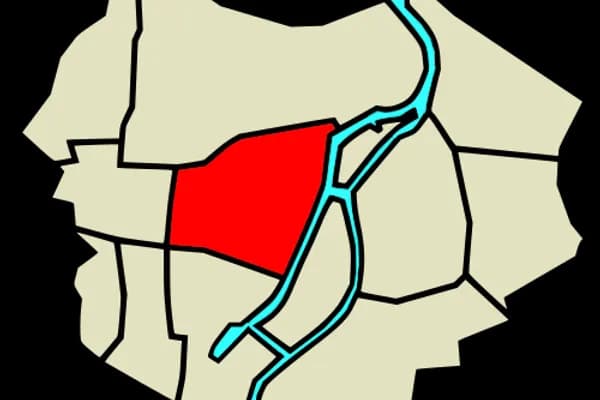
The Main City is located on the western bank of Motława. It is surrounded by the Old Town to the north, the Stare Przedmieście to the south, the borough of Nowe Ogrody to the east and the Granary Island to the east, across Motława.
History
It was founded in 1343 by the Teutonic Knights who had conquered the area in 1308. Officially a separate settlement from the nearby city (since then called the Old Town), it was chartered with Kulm Law, and was governed separately until 1457, when king Casimir IV of Poland granted the town with the Great Privilege, uniting the Main City with the Old Town and the suburb of Osiek. From then onwards the Main City shared its history with the rest of Gdańsk. In 19th century many houses in the largely mediaeval and renaissance part of Gdańsk received new, Gothic revival façades in line with a trend in Germany tying this style to "German spirit".
During World War II the Main City was often targeted by Allied bombing raids. It received further damage during and immediately after the Siege of Danzig in the spring of 1945. Altogether, approximately 90% of all buildings in the Main City were destroyed. Despite serious opposition to the idea, in 1949 Polish authorities decided to rebuild the Main City, with most of its historical landmarks.
However, instead of reconstructing the city to the way it looked immediately before World War II, various landmarks were restored to historical and quasi-historical forms alluding to their renaissance look, in order to underline the city's ties with Poland, but also to emphasize Gdańsk's rich multi-cultural tradition, with Flemish, Italian and French influences. In addition, Polish architects got rid of the largely mediaeval dense urban fabric and reconstructed mostly the façades along the main streets, while annexes, second and third rows of houses with their courtyards were replaced by larger open spaces, in line with contemporary understanding of urban planning.
References
See also
Wikimedia Commons has media related to Główne Miasto.
History of Gdańsk
Warsaw Old Town
PoliticsDistricts Aniołki
Brętowo
Brzeźno
Chełm
Jasień
Kokoszki
Krakowiec-Górki Zachodnie
Letnica
Matarnia
Młyniska
Nowy Port
Oliwa
Olszynka
Orunia Górna-Gdańsk Południe
Orunia-Św. Wojciech-Lipce
Osowa
Piecki-Migowo
Przeróbka
Przymorze Małe
Przymorze Wielkie Przymorze
Rudniki
Siedlce
Stogi
Strzyża
Suchanino
Ujeścisko-Łostowice
VII Dwór
Wrzeszcz Dolny Nowe Szkoty
Wrzeszcz Górny Wrzeszcz
Wyspa Sobieszewska
Wzgórze Mickiewicza
Żabianka-Wejhera-Jelitkowo-Tysiąclecia Jelitkowo
Zaspa-Młyniec
Zaspa-Rozstaje Zaspa
LandmarksCulture and events Baltic Days of Jewish Culture
Baltic State Opera
Ergo Arena
Forum Gdańsk
European Solidarity Centre
Gdańsk City Stadium
Gdańsk Shakespeare Theatre
Gdańsk Sports Center Stadium
Hala Olivia
Łaźnia Centre for Contemporary Art
Museum of the Second World War
National Maritime Museum
National Museum
Polish Baltic Philharmonic
St. Dominic's Fair
Honorary citizens
Transport Rail SKM
PKM
Highways Tricity Ring Road
A1
S6
S7
Trams
Buses
Cycling Bicycle sharing
Universities and academies Academy of Fine Arts in Gdańsk
Gdańsk University of Technology
Medical University of Gdańsk
University of Gdańsk
Category
Encyclopedic content adapted from the Wikipedia article on Główne Miasto, used under CC BY-SA 4.0.