About the neighborhood
Capital of the Venezuelan state of Mérida
Mérida, officially known as Santiago de los Caballeros de Mérida, is the capital of the municipality of Libertador and the state of Mérida, and is one of the main cities of the Venezuelan Andes. It was founded in 1558 by Captain Juan Rodríguez Suárez, forming part of Nueva Granada, but later became part of the Captaincy General of Venezuela and played an active role in the War of Independence.
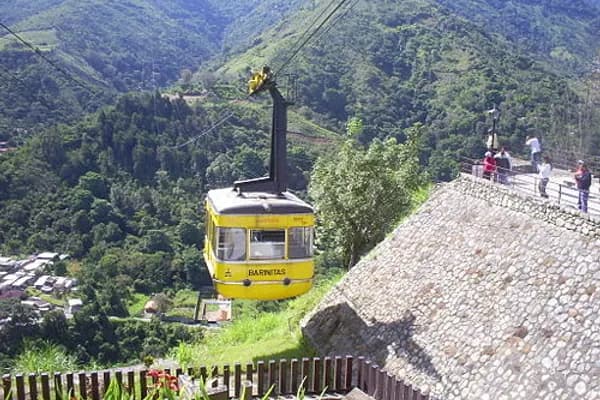
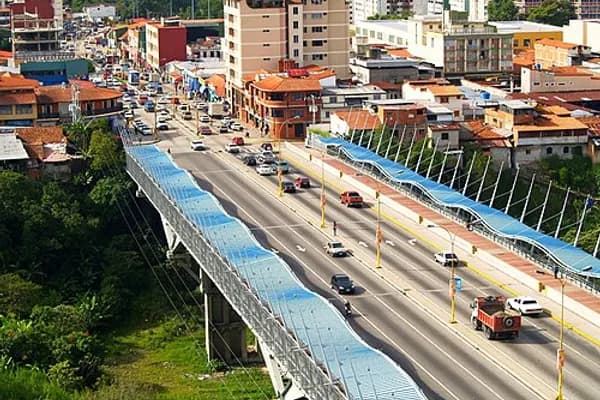
The capital city's population is 199,878 inhabitants, and the metropolitan area (including the municipalities of Libertador, Campo Elías, Sucre, and Santos Marquina) reaches 392,751 people (2011 census). The city accounts for 24% of the total population of Mérida State. It is home to the University of Los Andes and the Archdiocese of Mérida. It also has the highest and longest cable car in the world. It is the largest student and tourist center of western Venezuela. The mass transit system (Trolebús Mérida) is available as a means of tourist transport.
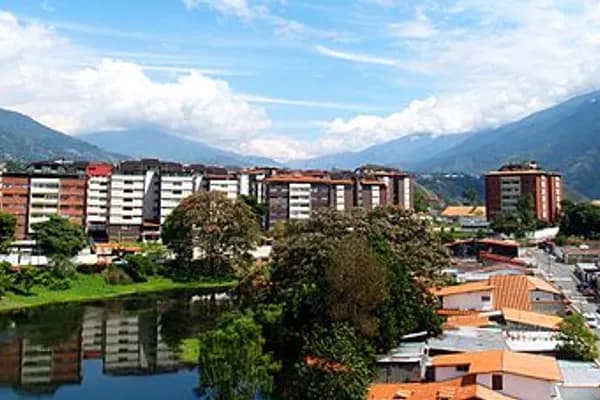
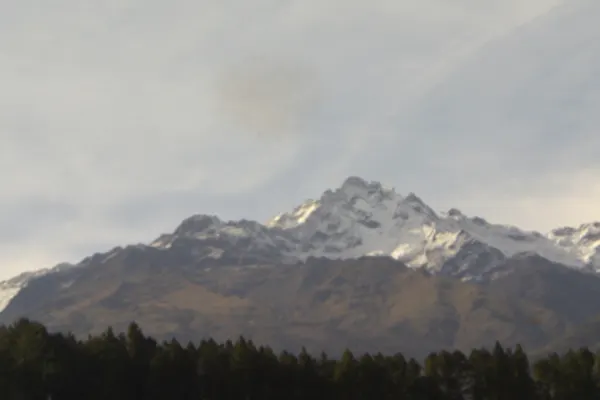
This city sits on a plateau nestled in the valley of the Chama River, which runs from end to end. The city of Mérida is located at an altitude of 1,600 metres (5,200 feet). Visible from the city is the country's highest summit Pico Bolívar, with an altitude of 4,981 metres (16,342 feet).
History
Mérida was founded by Juan Rodríguez Suárez on October 9, 1558, in one of the Pamplonian mining expeditions he led. The first settlement of Mérida was not the current one but 30 kilometres (19 miles) to the south, in Xamú, where today stands Lagunillas. Nevertheless, in November 1559, Juan de Maldonado moved the settlement to nearby El Punto (presently the Zumba area), because of constant confrontations with the native neighbours.
Rodríguez Suárez's foundation had not been authorized by the New Granadian Authorities, so in 1560 they sent Juan de Maldonado to arrest Juan Rodríguez and regularize the new city. On June 24 Maldonado moved Mérida to its present location on the plateau and rechristened it as Santiago de los Caballeros. The city then came to be governed by the corregimiento of Tunja until 1607, when it became itself a corregimiento of the Audiencia of Santa Fe.
In 1622, Mérida became the capital of the Province of Mérida, whose chief official established his residence there. The city and territory were part of New Granada until 1777, when it was integrated into the Captaincy of Venezuela.
The city was elevated to the status of an episcopal see in 1785. This led to the creation of a seminary, which in 1811 became the University of the Andes.
Etymology
The city was named by the founder Juan Rodríguez Suárez, who called it so in honor of his hometown of Mérida in Extremadura, Spain.
However, Juan de Maldonado renamed it as San Juan de las Nieves. In 1559 the name changed again, opting this time for Santiago de los Caballeros. Gradually, it was adopting the name of Santiago de los Caballeros de Mérida, combining the variants that had been appointed to the city until then.
The word Mérida comes from the Latin "emérita", from Emeritus, one who has merit, which also references to veteran Roman soldiers who were discharged from the army after completion of their mandatory service commitment. Another feature common to both the Spanish and the Venezuelan Méridas is that in both cities, there is a tributary of the main river with the name Albarregas.
Geography
The city is located in the center of the Venezuelan Andes, in a wide plain in the valley of the Chama River, between the Sierra Nevada de Mérida to the southeast and the Sierra La Culata to the northwest. The old quarter of the city is on the alluvial plain known as Tatuy.
Mérida has four principal rivers and some smaller seasonal streams in the less urbanized parts of the city, these last ones have a significant water flow only in times of heavy precipitation. The most important river is the Chama, followed by the Albarregas, which cross the plain and divide it into two parts: the Banda Occidental (west bank) and the Banda Oriental (east bank). These two rivers run from one end of the city to the other. The other two principal rivers are the Mucujún and the Milla, which flow into the Chama and Albarregas. In the lower part of the city is found the La Rosa lake, one of some 200 lakes in Mérida State.
In the center of the city the terrain, located on a plain, is almost flat. Nonetheless, there is an average incline of 3 to 7 degrees, which causes a difference in altitude between the high and low parts of the city of more than 400m (1,300ft), the average being 1,630m (5,350ft) above sea level at the Plaza Bolívar. However, the areas surrounding the city are rough and uneven, situated in the valleys formed by the Chama and Albarregas rivers and the Sierra Nevada and Sierra de La Culata ranges.
The valley in which the city is located was formed approximately 40 to 60 million years ago with the creation of the Venezuelan Andes and its continuous erosion by the area's water systems. Its soils consist of alluvial sediment and clay. Below the city runs the major tectonic fault in the western part of the country, the Boconó fault, which forms part of the South American Plate.
The vegetation in the interior of the city consists of medium to tall trees, and ferns (Pteridophyte), located mainly near the basin of the Albarregas river. On the outskirts of Mérida, one finds non-urbanized areas, where sub-mountainous and seasonal jungle vegetation predominates. On the other hand, vast coniferous forests extend toward the south, where they were planted some years ago. Toward the north and east, one finds cloud forests.
Significant among the local fauna are important populations of certain small and medium-sized birds such as hummingbirds and parrots (Psittacidae), spread particularly to the south of the city.
Climate
Mérida features a tropical monsoon climate (Köppen: Am), with cooler temperatures than other cities in Venezuela, with dry winters. Though the emission greenhouse gases has caused a rise in temperatures, this has been less, in relative terms, than in other important cities in Venezuela, with readings that vary between 19 °C and 24°C (75°F), with an overall average of 22°C (72°F). Precipitation is heavy during the rainy season, from April to November, though the city does receive more sunshine than most cities in the Colombian Andes, since the valley is too narrow for fog to accumulate.
Venezuela is situated in an inter-tropical zone, so that there is very little temperature variance over the course of a year. The same is true in Mérida—the temperatures recorded in August are normally comparable to those measured under comparable conditions in broad daylight in January.
On the other hand, given Mérida's location in the interior of the country, far from the maritime coasts and the influence of the ocean, and its high altitude, the temperature variance over the course of a day is relatively high. Between day and night a difference of more than 10°C (18°F) can be observed; this difference sometimes reaches more than 20°C (36°F). The maximums are reached during the day, and are usually around 24°C (75°F), but on rare occasions exceed 30°C (86°F). The lower limit of daytime temperatures tends to be around 14°C (57°F).
Snow can be seen in some Mérida peaks, such as Pico El Águila.
Government
Mérida is the seat of the state and municipal governments, and is also home to the Governor and the Mayor's offices, the state legislature, and the regional offices of the judicial and electoral branches. Important representatives and governors are also taken to this city to meet at an annual voting session. Moreover, 13 of the 15 prefectures of the Libertador Municipality are located within the city.
Nowadays, politics have an important role among the general population, although to a lesser extent than in the larger urban centers, and the most important government positions, including Mayor and Governor, are held by members of the official party, the Fifth Republic Movement. Because of the great concentration of students, and the importance of the Universidad de Los Andes in local development, the positions of University Director and President of the Student Body of the University of The Andes are also of great importance within the local political scene; the first of these offices is currently filled by an opposition party member. Due to the recent suspension of the elections for President of the University Student Body, the city has seen an intense wave of protests that have left more than a dozen wounded.
In the 2004 Venezuelan recall referendum, the city of Mérida voted against the overall trend, as at least 60% of voters opposed the continuation of President Hugo Chávez's mandate. By contrast, the majority of the rest of the population of the state of Mérida voted in favor of Chávez.
City planning
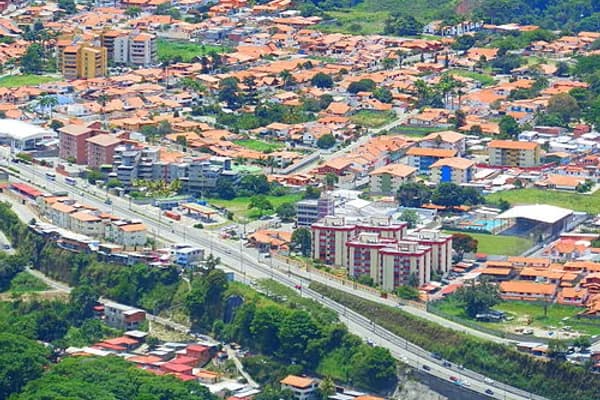
Because of its location on a plateau, in a small valley, covering an area of some 10 to 15km (6 to 9mi) in length and between 1 and 3km (2mi) wide, the city now lacks additional space for urban development. Though its polygonal area covers some 60 square kilometres (23sqmi), the city occupies a little over 25 square kilometres (10sqmi), and the rest consists of less developed zones or areas of uneven terrain, such as mountains or hillsides.
For this reason, the city layout is unorganized, oriented only by the traffic axes constructed in decades past. The layout of the city center or "Old Quarter" is in the Spanish Colonial style, consisting of eight major avenues running east–west and forty streets running north–south, creating blocks of 50 to 100 metres (160 to 330 feet) per side.
Historically, Mérida has been characterized by less pronounced differences between socio-economic classes and for its high quality of life. Recent years, however, owing to the economic situation confronting the country, have seen a significant increase in slums in the hills and outskirts of the city.
The southeastern part of the city, historically the headquarters of the large Haciendas that produced sugar cane, has for several decades undergone major urban development, consisting principally of single-family dwellings, and has grown almost to the point of joining with the city of Ejido, a bedroom community. Ejido currently extends to within less than 2km (1mi) of the border of Mérida, and the two cities are linked by a large avenue that goes from the neighborhoods of downtown Mérida to the outskirts of Ejido. At this point, it turns into a highway, running to the city of El Vigía, thereby uniting Mérida's metropolitan area.
Despite the limited space available for development, Mérida has the largest proportion of green areas per capita in Venezuela, thanks to its many squares and public parks, the one surrounding the river Albarregas being particularly noteworthy. The School of Architecture of the University of the Andes puts into practice diverse proposals for creating areas protected from urban development, thereby reducing the impact of population growth on the environment.
Neighborhoods
There were only two neighborhoods in the city at the beginning of the 20th century. One of them was Casco Central (central quarter), located in the east bank of the plateau; which in turn was divided in various zones, identified according to the name of the local square within. The other neighborhood of the city was by the other side of the Albarregas river, in the west bank. It was known as La Otra Banda ("the other bank"). However, as a result of the Oil Boom, immigration and various other reasons, new neighborhoods appeared as years went by. The first to emerge were those near downtown. Then, due to the lack of real estate and in the search of quieter areas, neighborhoods were created far, at the time, from the city center. Some of these old spurs have now become part of the city. The following are the main neighborhoods of the city.
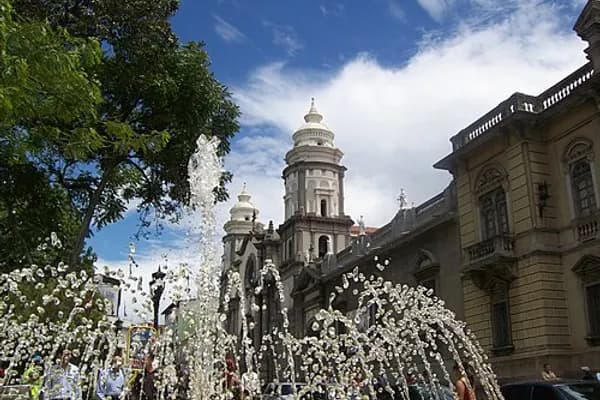
Belensate Predominantly a higher-class neighborhood, it contains the largest and most luxurious houses in the city. Casco Central It comprises the historic city center. It is the main commercial, cultural, and urban area, containing most museums, libraries, churches, and retail shopping stores in Mérida. Chama It is a residential area for the middle class located in the vicinity of the Chama river. It is the lowest-altitude neighborhood in the city, situated about 200 metres (660 feet) lower than downtown. It will be connected to Casco Central via an aerial cableway planned as part of the Mérida trolleybus project. Humboldt It is a populated neighborhood to the southwest of the city, with increasing commercial development in recent years. La Hechicera Located at the northern end of the city, it contains the scientific and engineering buildings of the ULA, as well as the zoo and the botanical garden. La Parroquia This is the current name of the village formerly known as La Punta. It shares similarities with the Casco Central, with residential and commercial zones intermingled. It contains the second Bolívar Square in the city, as well as large public high schools and sporting facilities, such as the Metropolitan Stadium and the sport complex Cinco Águilas Blancas. La Pedregosa It is a long neighborhood located in the valley of La Pedregosa creek. It is mainly a residential zone. Although connected to the city, it is far enough from it that its development has increased in the last decades due to the availability of suitable real estate. Los Curos This is a popular neighborhood, almost exclusively residential, though it houses one of the few industrial zones in the city. Pie del Llano Situated in the middle of the city, it surrounds the airport and local branches of a number of government offices, as well as the city Mayor's office. It is a commercial and residential neighborhood with plenty of public parks. Avenida 16/Campo de Oro/Santa Juana It is a middle-class neighborhood located in the geographical center of the city. It borders the Tatuy mesa, which houses a number of car dealers and auto shops and, above all, the largest hospital of the city, the IHULA (Instituto Autónomo Hospital Universitario de los Andes) Finally, the municipality is divided (for political purposes) into parishes; thirteen of the municipality's fifteen parishes are within the city.
Demographics
Encyclopedic content adapted from the Wikipedia article on Santiago, used under CC BY-SA 4.0.