About the neighborhood
City in Yucatán, Mexico
Mérida (Spanish pronunciation: ˈmeɾiða ; Yucatec Maya: Joꞌ) is the capital of the Mexican state of Yucatán, and the largest city in southern Mexico. The city is also the seat of the eponymous municipality. It is located slightly inland from the northwest corner of the Yucatán Peninsula, about 35km (22mi) from the coast of the Gulf of Mexico. In 2020, it had a population of 921,770 while its metropolitan area, which also includes the cities of Kanasín and Umán, had a population of 1,316,090.
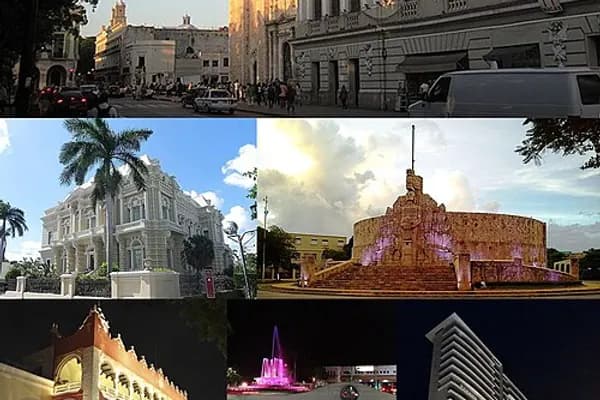
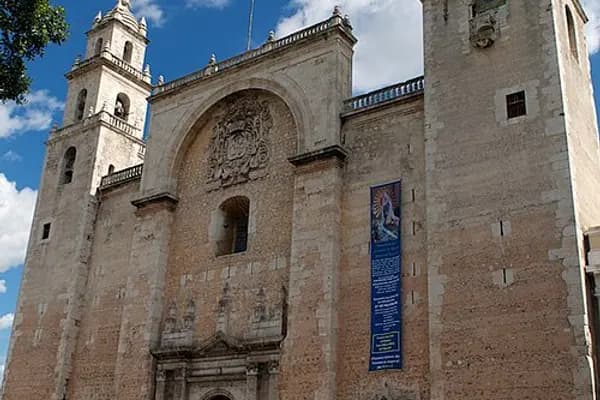
Mérida is also the cultural and financial capital of the Yucatán Peninsula. The city's rich cultural heritage is a product of the syncretism of the Maya and Spanish cultures during the colonial era. The Cathedral of Mérida, Yucatán was built in the late 16th century with stones from nearby Maya ruins and is the oldest cathedral in the mainland Americas. The city has the third largest old town district on the continent. It was the first city to be named American Capital of Culture, and the only city that has received the title twice.
Mérida is among the safest cities of Mexico as well as in the Americas. In 2015, the city was certified as an International Safe Community by the Karolinska Institute of Sweden for its high level of public security. Forbes has ranked Mérida three times as one of the three best cities in Mexico to live, invest and do business. In 2022, the UN-Habitat's City Prosperity Index recognized Mérida as the city with the highest quality of life in Mexico.
Nickname
Mérida was named after Mérida, Spain because the Maya ruins that the Spanish conquistadors found in the settlement of Ti'ho reminded them of the Roman ruins of Augusta Emerita. Over time, the city acquired the nickname "La Ciudad Blanca" (The White City). This nickname may be due to the white color of the limestone used to paint the façades of the city's colonial buildings. The city can be seen from outer space as a large whitish area in the middle of the immense green forest that covers the Yucatán Peninsula. Other cities in Hispanic America share the same nickname for this reason, like Arequipa and Popayan. Folklore says that the name goes back to the founding of the city when the Spanish conquistadors – motivated by security reasons and given the persistent rebellion of the indigenous Maya people – decided to allow only white-skinned Europeans to live in the city. Old arches at the entrance to the city would have been built for this reason, and beyond these were the Indigenous communities. However, the first arches were not commissioned until 1690, almost 150 years after the city's foundation. The arch of San Juan and the one on 59th street marked the beginning of roads to Campeche and Izamal, respectively. Other arches served only decorative purposes, like the one Juan Quijano had erected in 1760 in front of his house at the intersection of 65th and 56th streets, which has since been demolished. Additionally, the Nahua indigenous troops who accompanied Montejo's troops in the conquest of Yucatán settled in the neighborhoods of San Cristóbal, Santiago, and San Román, where they enjoyed the privilege of exemption from taxes for their military assistance.
History
Mérida was founded in 1542 by the Spanish conquistadors, including Francisco de Montejo the Younger and Juan de la Cámara, and named after the town of Mérida in Extremadura, Spain. It was built on the site of the Maya city of Ti'ho (/tʼχoʼ/), which was also called Ichkanzihóo or Ichcaanzihó (/iʃkan'siχo/; "City of Five Hills") in reference to its pyramids. Many of the carved stones of the ruins of ancient Ti'ho were used in the construction of the early Spanish buildings of Mérida. These stones are visible, for instance, in the walls of the main cathedral. From colonial times through the mid-19th century, Mérida was a walled city designed to protect the peninsulares and criollos from periodic revolts by the indigenous Maya people.
In the late 19th century, the area surrounding Mérida prospered from the cultivation of henequen, the fiber of which was used in the production of rope and twine, as well as for the production of licor del henequén, a traditional Mexican alcoholic drink. By the beginning of the 20th century, manufacturing focused mainly on tobacco, molasses, rum, soap, and leather products. Korean immigration to Mexico began in 1905 when more than a thousand people arrived in Yucatán from the city of Jemulpo. These first Korean immigrants settled around Mérida as workers in henequen plantations.
In August 1993, Pope John Paul II visited the city on his third trip to Mexico. The city has been host to two bilateral United States – Mexico conferences, the first in 1999 (Bill Clinton – Ernesto Zedillo) and the second in 2007 (George W. Bush – Felipe Calderón, which resulted in the creation of the Mérida Initiative). Mérida hosted the VI Summit of Association of Caribbean States in April 2014. In recent years, important sports competitions have been held in Mérida, such as the World Cup of the World Archery Federation. The city has also hosted important scientific meetings such as the International Cosmic Ray Conference.
Geography
Mérida is located in the northwest part of the state of Yucatán, which occupies the northern portion of the Yucatán Peninsula. To the north is Progreso and the Gulf of Mexico. Valladolid and Tizimín are to the east, Celestún is to the west, and the city of Campeche is located to the southwest. There are many important Maya archae sites in the area, including Chichen Itza, Uxmal, Oxkintok, Sayil and Kabah.
The city is located near the center of the Chicxulub Crater. It has a very flat topography and is only 9 metres (30ft) above sea level. The land outside of Mérida is covered with smaller scrub trees and former henequen fields. Almost no surface water exists, but several cenotes (sinkholes that provide access to underground springs and rivers) are found in the area.
Mérida has a centro histórico typical of colonial Spanish cities. The street grid is based on odd-numbered streets running east–west and even-numbered streets running north–south, with Calles 60 and 61 bounding the "Plaza Grande" in the heart of the city. The more affluent neighborhoods are located to the north and the most densely populated areas are to the south.
Climate
Mérida features a tropical savanna climate (Köppen: Aw). The city lies in the trade wind belt close to the Tropic of Cancer, with the prevailing wind from the east. Mérida's climate is hot and its humidity is moderate to high, depending on the time of year. The average annual high temperature is 33.5°C (92.3°F), ranging from 30.6°C (87.1°F) in December to 36.3°C (97.3°F) in May, but temperatures often rise above 38°C (100.4°F) in the afternoon during this period. Low temperatures range between 17.2°C (63.0°F) in January to 21.7°C (71.1°F) in May. It is most often a few degrees hotter in Mérida than in coastal areas due to its inland location and low elevation. The rainy season runs from June through October, associated with the Mexican monsoon which draws warm, moist air landward. Easterly waves and tropical storms also affect the area during this season.
Governance
Mérida is the capital of the state of Yucatán. The offices of the governor of Yucatán, the Congress of Yucatán, and the Superior Court of Justice of Yucatán are all located within the city.
The municipal government is invested under the authority of a City Council (Ayuntamiento) which it is seated at the Municipal Palace of Merida, located in the historic center of the city. The City Council is presided by a municipal president or mayor, and an assembly conformed by a number of regents (regidores) and trustees (síndicos). Renán Barrera Concha became Mayor on September 1, 2018.
Economy
The Yucatán Peninsula, in particular the capital city Mérida, is in a prime coastal location which allows for economic growth. Mérida has been a popular location for investment. This, in turn, has allowed the Yucatán economy to grow at three times the rate of the national average.
In addition, the World Bank Group's Ease of Doing Business Index ranked Mérida fourth nationally in the category of ease of starting a business.
Science and technology
The city is home to important national and local research institutes, like the Yucatan Scientific Research Center (Centro de Investigación Científica de Yucatán, CICY) of the National Council of Science and Technology (Consejo Nacional de Ciencia y Tecnología, Conacyt), a unit of the Center for Research and Advanced Studies of the National Polytechnic Institute (Centro de Investigación y de Estudios Avanzados, CINVESTAV Unidad Mérida), the Dr. Hideyo Noguchi Regional Research Center (Centro de Investigaciones Regionales Dr. Hideyo Noguchi) of the Autonomous University of Yucatan (CIR-UADY), the Yucatán Science and Technology Park (Parque Científico Tecnológico de Yucatán, PCYTY) and the Peninsular Center for Humanities and Social Sciences (Centro Peninsular en Humanidades y Ciencias Sociales, CEPHCIS) of the National Autonomous University of Mexico (UNAM).
Culture
Mérida has served as the American Capital of Culture in the years 2000 and 2017.
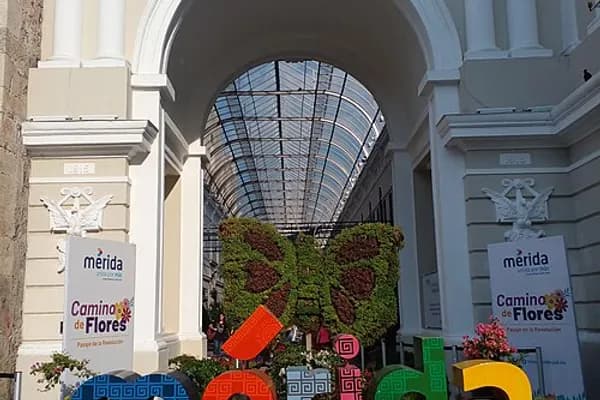
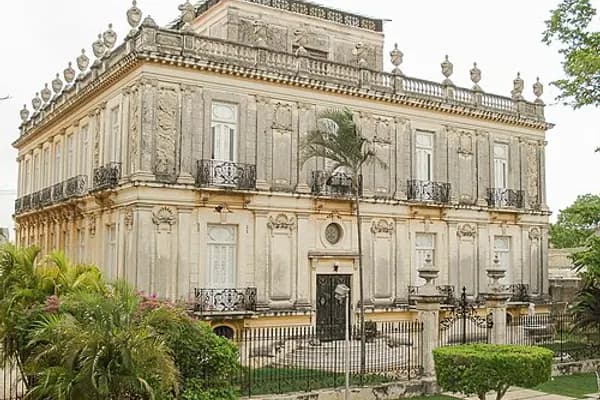
As the state and regional capital, Mérida is a cultural center, featuring multiple museums, art galleries, restaurants, movie theatres, and shops. Mérida retains an abundance of colonial buildings and is a cultural center with music and dancing playing an important part in day-to-day life. At the same time it is a modern city with a range of shopping malls, auto dealerships, hotels, restaurants, and leisure facilities. The famous avenue Paseo de Montejo is lined with original sculpture. Each year, the MACAY Museum in Mérida mounts a new sculpture installation, featuring works from Mexico and one other chosen country. Each exhibit remains for 10 months of the year. In 2007, sculptures on Paseo de Montejo featured works by artists from Mexico and Japan.
Mérida and the state of Yucatán have traditionally been isolated from the rest of the country by geography, creating a unique culture. The conquistadors found the Maya culture to be incredibly resilient, and their attempts to eradicate Maya tradition, religion, and culture had only moderate success. The surviving remnants of the Maya culture can be seen every day, in speech, dress, and in both written and oral histories. It is especially apparent in holidays like Hanal Pixan, a Maya/Catholic Day of the Dead celebration. It falls on November 1 and 2 (one day for adults, and one for children) and is commemorated by elaborate altars dedicated to dead relatives. It is a compromise between the two religions with crucifixes mingled with skull decorations and food sacrifices/offerings. Múkbil pollo is the Maya tamal pie offered to the dead on All Saints' Day, traditionally accompanied by a cup of hot chocolate. Many Yucatecans enjoy eating this on and around the Day of the Dead. And, while complicated to make, they can be purchased and even shipped via air. (Muk-bil literally means "to put in the ground" or to cook in a pib, an underground oven).
For English speakers or would-be speakers, Mérida has the Mérida English Library, a lending library with an extensive collection of English books, videos, tapes, and children's books. The library is also the site for expatriate meetings, children's storytelling hours, and other cultural events.
Mérida is also home to the Yucatán Symphony Orchestra, which plays regular seasons at the José Peón Contreras Theatre on Calle 60 and features classical music, jazz, and opera.
Food
Yucatán food is its own unique style and is very different from what most people consider "Mexican" food. It includes influences from the local Maya cuisine, as well as Caribbean, Mexican, European and Middle Eastern foods. Tropical fruit, such as coconut, pineapple, plum, tamarind and mamey are often used in Yucatán cuisine.
There are many regional dishes. Some of them are:
Poc Chuc, a Maya/Yucateco version of boiled/grilled pork
Salbutes and Panuchos. Salbutes are soft, cooked tortillas with lettuce, tomato, turkey and avocado on top. Panuchos feature fried tortillas filled with black beans, and topped with turkey or chicken, lettuce, avocado and pickled onions. Habanero chiles accompany most dishes, either in solid or puréed form, along with fresh limes and corn tortillas.
Queso Relleno is a gourmet dish featuring ground pork inside of a carved edam cheese ball served with tomato sauce
Pavo en Relleno Negro (also known locally as Chimole) is turkey meat stew cooked with a black paste made from roasted chiles, a local version of the mole de guajalote found throughout Mexico. The meat soaked in the black soup is also served in tacos, sandwiches and even in panuchos or salbutes.
Sopa de Lima is a lime soup with a chicken broth base often accompanied by shredded chicken or turkey and crispy tortilla.
Papadzules, egg tacos bathed with pumpkin seed sauce and tomatoes.
Cochinita pibil is a marinated pork dish, by far the most renowned from Yucatán, that is made with achiote. Achiote is a reddish spice with a distinctive flavor and peppery smell. It is also known by the Spanish (Recados) seasoning paste.
Bul keken (Mayan for "beans and pork") is a traditional black bean and pork soup. The soup is served in the home on Mondays in most Yucatán towns. The soup is usually served with chopped onions, radishes, chiles, and tortillas. This dish is also commonly referred to as frijol con puerco.
Brazo de reina (Spanish for "The Queen's Arm") is a traditional tamal dish. A long, flat tamal is topped with ground pumpkin seeds and rolled up like a roll cake. The long roll is then cut into slices. The slices are topped with a tomato sauce and a pumpkin seed garnish.
Tamales colados is a traditional dish made with pork/chicken, banana leaf, fresh corn masa and achiote paste, seasoned with roasted tomato sauce.
Achiote is a popular spice in the area. It is derived from the hard annatto seed found in the region. The whole seed is ground together with other spices and formed into a reddish seasoning paste, called recado rojo. The other ingredients in the paste include cinnamon, allspice berries, cloves, Mexican oregano, cumin seed, sea salt, mild black peppercorns, apple cider vinegar, and garlic.
Hot sauce in Mérida is usually made from the indigenous chiles in the area which include: Chile Xcatik, Chile Seco de Yucatán, and Chile Habanero.
Language and accent
Encyclopedic content adapted from the Wikipedia article on Centro, used under CC BY-SA 4.0.