About the neighborhood
Portuguese festival
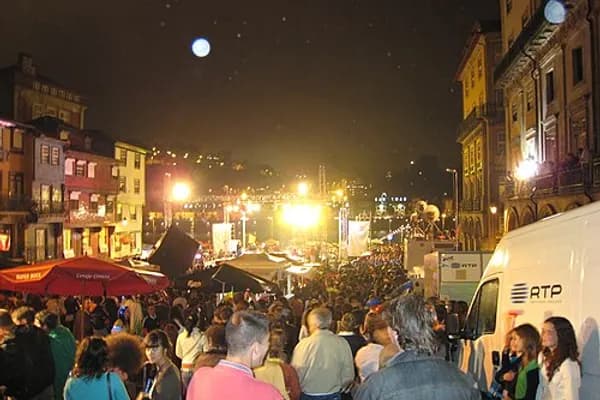
Festa de São João do Porto (Portuguese for 'Festival of St John of Porto') is a festival during Midsummer, on the night of 23 June (Saint John's Eve), in the city of Porto, in the north of Portugal, as thousands of people come to the city centre and more traditional neighborhoods to pay a tribute to Saint John the Baptist, in a party that mixes sacred and profane traditions.
History
Festivities have been held in the city for more than six centuries. During the 19th century Saint John's day became the city's most important festival.
Description
The party starts early in the afternoon of 23 June and usually lasts until the morning of 24 June.
A tradition with roots in pagan courtship rituals is for people to hit each other either with garlic flowers or soft plastic hammers.
Traditional attractions of the night include street concerts, dancing parties, bonfire jumping, eating barbecued sardines, Caldo verde and meat, drinking wine and releasing illuminated flame-propelled balloons over Porto's summer sky.
At midnight, partygoers make a short break to look at the sky at Saint John's firework spectacle, which now includes multimedia shows. The party has Christian roots but is also mixed with pagan traditions, with the fireworks embodying the spirit of tribute to the sun.
The fireworks mark the end of the official festivities. It is common for citizens of Porto to keep celebrating until the first hours in the morning. They walk from Porto's riverside core – Ribeira (for instance the parish of São Nicolau) up to the seaside in Foz (parishes of Foz do Douro and Nevogilde) or in the nearby suburb of Matosinhos where they wait for the sunrise near the sea, and sometimes, take a bath in the ocean.
In June 2004, a journalist from The Guardian commented that "Porto's Festa de São João is one of Europe's liveliest street festivals, yet it is relatively unknown outside the country".
See also
Bonfires of Saint John– Festival in Alicante, SpainPages displaying short descriptions of redirect targets
Saint John's Eve– Evening of June 23, celebration
Midsummer– Holiday held close to the summer solstice
Notes
Encyclopedic content adapted from the Wikipedia article on Ribeira, used under CC BY-SA 4.0.
What makes Ribeira special
Ribeira stands out among Porto’s neighborhoods for its distinctive character: porto's unesco riverfront. It tops our ranking of the best neighborhoods in Porto, it offers the kind of experience that defines a great city trip — a place where the streets themselves tell a story and every block rewards curiosity.
Best for
Our take on Ribeira
Ribeira is the neighborhood we send friends to first when they visit Porto. It earns the top spot in our ranking not because it is the most famous district in the city, but because it delivers the most complete neighborhood experience — the kind of place where every block rewards curiosity and every return visit reveals something new.
What makes Ribeira worth the visit is the texture of daily life here. It is a neighborhood that functions for the people who live in it — not just for the visitors who pass through. The shops serve local needs, the restaurants feed local appetites, and the streets have a rhythm that reflects genuine community rather than tourism infrastructure. That is the quality our editors prize most, and Ribeira has it in abundance.
Our editors recommend budgeting at least half a day here — enough time to walk the main streets, sit down for coffee, and discover the side streets where Ribeira's real character lives.
Living in Ribeira
Ribeira is connected to the rest of Porto by public transit, and most visitors find it straightforward to reach from the city center or airport. Once you arrive, the neighborhood is best explored on foot — the scale is human and the streets reward wandering.
Day-to-day life in Ribeira has the rhythm of a genuine residential neighborhood. You will find grocery stores, pharmacies, cafés with morning regulars, and the kind of small independent shops that only survive where locals support them. For visitors, this means the infrastructure you need — good coffee, a decent meal, a quiet place to sit — is always within a short walk.
Accommodation in Ribeira ranges from boutique hotels to short-term rentals. We generally recommend staying within the neighborhood itself rather than commuting from a hotel elsewhere in Porto — the experience of waking up inside a great neighborhood is fundamentally different from visiting one as a day trip.
What locals say about Ribeira
Long-term residents of Ribeira tend to describe their neighborhood with a mix of pride and protectiveness. Like any district with genuine character, Ribeira inspires loyalty — the kind of place people move to and never quite leave, or leave and spend years trying to get back to.
What locals appreciate most about Ribeira is its consistency — the feeling that the neighborhood works the same way on a Tuesday morning as it does on a Saturday night. It is not a place that performs for visitors and then goes quiet. The rhythm is genuine, the community is real, and the daily experience of living here is what draws people and keeps them.
Like any neighborhood that has earned attention, Ribeira is navigating the tension between popularity and preservation. Rents have risen, new businesses have arrived, and long-time residents occasionally grumble that the neighborhood is not what it was. But the fundamentals — the walkability, the food, the community — remain strong, and most locals we speak to believe the neighborhood is still gaining more than it is losing.
Visitor tips
- Ribeira is located in Porto, Portugal. The neighborhood is accessible by public transport, taxi, or rideshare from most parts of the city.
- Morning is often the best time to explore — the streets are quieter, the light is better for photography, and cafes are at their most welcoming.
- Wear comfortable walking shoes — the best way to experience Ribeira is on foot, wandering the side streets and discovering what lies around each corner.