About the neighborhood
Neighbourhood of Barcelona in Catalonia, Spain
El Poblenou (Catalan for 'new village'; Catalan pronunciation: əl ˌpɔbːləˈnɔw) is an extensive neighborhood of Barcelona’s Sant Martí district that borders the Mediterranean Sea to the south, Sant Adrià del Besòs to the east, Parc de la Ciutadella in Ciutat Vella to the west, and Sant Andreu to the north. Originally, it was a town entirely separate from Barcelona proper.
History
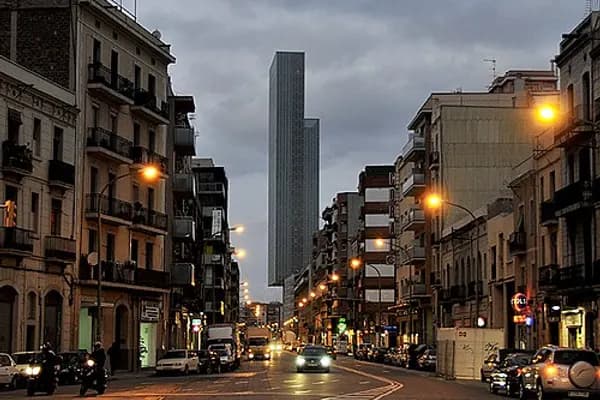
During the Industrial Revolution of the 19th century, Poblenou was the epicenter of Catalan and Iberian industry, earning it its sobriquet of the Catalan Manchester. Surrounding the extensive cluster of factories stood mostly working-class residential areas. When the industrial buzz passed, the neighborhood fell into a state of abandon and after a period of decay, the neighborhood underwent a dramatic transformation. The Olympic Games in 1992 were the main trigger for this massive transformation of El Poblenou. Many of the areas that have been developed — including the Vila Olímpica, the Diagonal Mar area, and the Fòrum area — arguably comprise their own neighborhoods. Completing its original, unfinished plan, The Avinguda Diagonal now stretches from Plaça de les Glòries to the sea. The massive 22@ plan is set to convert Poblenou into the city's technological and innovation district, as well as to increase leisure and residential spaces.
Alongside the newly built, upscale Vila Olímpica and Diagonal Mar areas, many artists and young professionals have converted the former factories and warehouses into lofts, galleries, and shops. Art & Design schools and studios have also opened, making the area known for its creative outlook.
Some of the old factory buildings are now declared historic monuments and are under protection. This is the case of the Factory Hispania SA, built by the Cuban-German merchant Emilio Heydrich, and architect Josep Graner in 1923, or the Valls, Teixidor i Jordana chemical factory.
The leafy Rambla del Poblenou, which stretches from Avinguda Diagonal to the beach, is the main commercial street.
Life in El Poblenou
El Poblenou lies between the beaches of Barcelona and city center. Due to its rising popularity, prices of flats in the area have increased dramatically. Besides beaches, this neighborhood offers open spaces, green parks and relatively few tourists. Despite local efforts to maintain authenticity, La Rambla de Poblenou is battling the effects of gentrification and mass tourism.
The annual light art festival Llum BCN is celebrated since 2012 every February in Poblenou.
Landmarks
Notable buildings of Poblenou include the Torre Agbar (Jean Nouvel), Herzog & de Meuron's Forum Building (which houses Europe's largest scale model of a city), and the ME Barcelona Hotel (former Habitat Sky Hotel) (Dominique Perrault). Major public spaces include the Parc de Diagonal Mar (Enric Miralles), the Plaça de les Glòries Catalanes, the Parc Central del Poblenou (Jean Nouvel), the beachfront Parc del Poblenou, the vast Parc del Forum, Oficines Diagonal 197 (David Chipperfield), the Media-Tic Building (Enric Ruiz Geli - CLOUD 9), the historic Poblenou Cemetery as well as many kilometres of beaches.
Public transport
Barcelona Metro line 1 stations: Marina, Glòries
Barcelona Metro line 4 stations: Selva de Mar, Poblenou, Llacuna, Bogatell
Trambesòs stations: Glòries, Ca l'Aranyó, Pere IV, Fluvià
See also
Primavera Sound Festival
2004 Universal Forum of Cultures
References
External links
Wikimedia Commons has media related to Sant Martí.
Online tour of Poblenou from the City's web Archived 2008-01-30 at the Wayback Machine
Website of 22@ 'The Innovation District' Archived 2008-04-08 at the Wayback Machine
Poblenou neighbourhood association
Information on the Parc Central del Poblenou
Sant Martí council
41°23′57″N 2°12′14″E / 41.39917°N 2.20389°E / 41.39917; 2.20389
Encyclopedic content adapted from the Wikipedia article on Poblenou, used under CC BY-SA 4.0.