About the neighborhood
Locality in Geneva, Switzerland
Plainpalais is a neighbourhood in Geneva, Switzerland, and a former municipality of the Canton of Geneva up to 1931.
History
Formed from the suburban areas of Palais (plana palus: marshy plain), Saint-Léger and Saint-Victor, between the Rhône and the Arve, the territory of the former municipality covers the current neighbourhoods of Plainpalais, La Jonction, La Cluse, Les Tranchées, Champel and Le Bout-du-Monde, Les Acacias and a strip of land on the left bank of the Arve (Les Vernets).
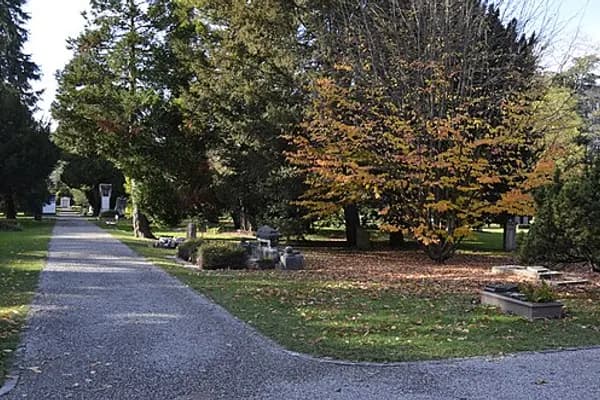
The Cimetière des Rois was created in 1482 to house victims of the plague. It was then located outside the city walls, around the Plague Hospital. Following the closure of most parish cemeteries after the Protestant Reformation (1536), the Plainpalais Cemetery remained the only one in use for the city of Geneva. It bears witness to Geneva's history and has become its Pantheon. The tomb of John Calvin stands alongside those of Beatriz Consuelo, Jorge Luis Borges, Sérgio Viera de Mello, Humphry Davy, Jean Piaget, Alberto Ginastera, Denis de Rougemont, Alice Rivaz, Grisélidis Réal, Jeanne de Salzmann, Frank Martin, Émile Jaques-Dalcroze and Genevan political figures such as Léon Nicole, James Fazy or Adrien Lachenal, the first Genevan president of the Swiss Confederation.
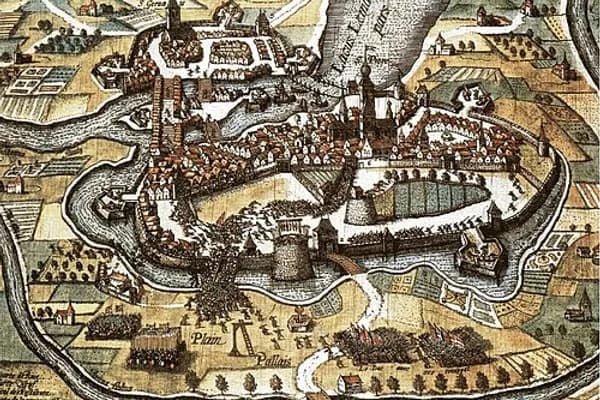
It was at Plainpalais that the troops of Charles Emmanuel I massed on the night of December 11–12, 1602, during the night of the Escalade.
The left bank of the Arve was disputed between the States of Savoy and Geneva until the Treaty of Turin (1754), which awarded it to the city. Plainpalais became a municipality by the law of February 17, 1800, the date on which the Municipal Council and the office of mayor were established. The Republic of Geneva, annexed by France from April 26, 1798 until December 31, 1813, was then part of the Léman a departement of the French First Republic then First French Empire.
In the 18th century, Plainpalais was primarily a market gardening suburb (cultivating cabbages, artichokes, lettuces, and cardoons) and a place for relaxation, with tree-lined avenues planted around a large diamond shape (the present-day Plainpalais plain). From 1848 onwards, the site became the property of the municipality and was used for both military and civilian celebrations. The site attracted several cultural and entertainment institutions clustered within a small radius (circus in 1865, diorama in 1880, casino in 1887, theaters, etc.) and was lastingly marked by the National Exhibition of 1896. In 1849, when the question of creating a cantonal hospital arose, the deputies chose the former property of Edouard Claparède because of its proximity to the city and its favorable exposure. The establishment of the cantonal hospital (1856), the maternity hospital (1875), the medical school (1876) and the school of chemistry (1878) diversified the activities of the municipality.
This area developed under the leadership of Charles Page (mayor from 1882 to 1910): the Sous-Terre bridge (1891) and the Coulouvrenière bridge (1896), the quays along the Arve river (1890-1891), the new town hall (1888), and the community centre (1906), unique in Geneva, were built. Located near Coulouvrenière, the gasworks (1845-1914) and the Power Plant (a building constructed between 1883 and 1892) gave the municipality industrial advantages in the mechanical engineering sector (La Jonction district).
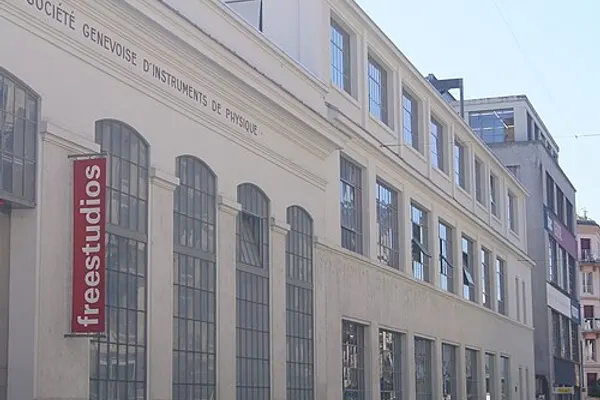
In 1858, Auguste Arthur De la Rive proposed to Marc Thury that he dedicate himself to the manufacture of physics instruments and precision devices. Auguste De la Rive provided the initial capital. Founded in 1862, the Société genevoise d'instruments physiques (SIP) manufactured standards and rulers for scientists. These were graduated using a dividing machine invented by Marc Thury. After the 1889 first General Conference on Weights and Measures, when each of the seventeen signatory countries of the Metre Convention received a prototype of the new standard metre, the company specialized in the manufacture of standard rulers or secondary standards, used for everyday measurements in industry. The SIP produced thousands of metal standards from the late 1880s until the early 1970s. The first standard metres were bronze bars in the shape of an "H," with graduations marked on a silver strip, itself set into the bronze within the hollow of the H. Later rulers were made from various iron and nickel alloys more stable than bronze, such as invar and platinite. From 1870 onwards, under the leadership of Théodore Turrettini, the company diversified its activities into new energy sectors (hydromotors, refrigeration systems, electricity meters). This expertise led to the development, in 1921, of a machine tool that would contribute to the rise of mass production in the mechanical industry: the pointing machine, known as the "MP," capable of machining with a precision on the order of a thousandth of a millimeter. A true technological feat, this product propelled the firm to the ranks of the world's most prestigious machine manufacturers. In 1990, the SIP left its Plainpalais site for Satigny. In 2006, Starrag Group took over the activities of SIP. The Bâtiment d'Art Contemporain (BAC), housed in the former factory, is located at the intersection of Rue de Bains, Rue Gourgas, and Rue des Vieux-Genadiers. Currently undergoing renovation, the BAC will bring together three cultural institutions (the MAMCO, the Centre d'Art Contemporain Genève, and the Centre de la photographie Genève) to form the largest contemporary art center in Switzerland.
Located at the corner of Avenue du Mail, Boulevard du Pont d'Arve and Boulevard Carl-Vogt, the Temple of Plainpalais has played a central role in the Geneva community throughout the centuries. Having previously been based on strict religious unity, Geneva has practiced freedom of worship since 1847. Following the annexation of Geneva by the French First Republic, Catholics had already obtained the right to settle there and practice their religion. In 1803, they were granted a place of worship, the Church of Saint-Germain in Geneva. In addition, after the departure of Napoleon's troops, Catholic municipalities were ceded by France in the Pays de Gex in 1815 and by Savoy in 1816 to the former Republic of Geneva, which became a confessionally mixed Swiss canton. After the project was approved by the Geneva Grand Council in 1849, James Fazy became, from 1850 onwards, the driving force behind the demolition of the old city's fortifications and an urban transformation known as the "Fazy belt." This project allowed the city to expand beyond the boundaries of the former walls, which were then destroyed, leading to new urban development and the construction of neighborhoods, including the boulevard that bears his name. Several religious buildings were erected in Geneva at the time, including the Basilica of Our Lady of Geneva, the Holy Trinity Church, Geneva, the Beth Yaakov Synagogue, the Russian Church, Geneva and a Masonic Temple, which would become the Catholic Church of the Sacred Heart. In 1939, the World Council of Churches inaugurated its first headquarters in Champel (41 Chemin des Crêts-de-Champel). In 1937-1938, church leaders representing more than undred churches had agreed to establish a World Council, but its official establishment was deferred with the outbreak of World War II. From its foundation in 1948, the World Council of Churches established its headquarters in Malagnou, Geneva. It moved to Le Grand-Saconnex in 1964.
Following its official recognition in 1852, the Jewish community built a synagogue in the Plainpalais district between 1853 and 1857, replacing the one in Carouge dating from 1787, the Beth Yaakov Synagogue, which was inaugurated in 1859. Banished from Geneva for centuries, Jews have had the right to citizenship since 1857. After the refusal to rename the Promenade Charles-Martin in Malagnou, the Place de la Petite-Fusterie was renamed Place Ruth-Fayon. A survivor of deportation to the Auschwitz and Bergen-Belsen extermination camps, Ruth Fayon shared her testimony with children in Geneva schools for over 30 years until her death in 2010.
The Roman Catholic parish of the Sacred Heart of Geneva was established in 1873 following the allocation of the Church of Saint-Germain to the Old Catholic Church as a result of the Kulturkampf. Built in 1859 as a single temple uniting seven Masonic lodges, the building was sold around 1870 to Roman Catholics, who have celebrated their services there since October 19, 1873. Transformed and enlarged in the 1930s by Adolphe Guyonnet, it suffered a major fire on July 19, 2018. Reopening at Easter 2024, the building has become multifunctional, housing the administration of the Roman Catholic Church of Geneva (ECR, formerly located on Rue des Granges), meeting rooms, and a function room. The church houses the French-speaking Sacred Heart parish and the Spanish-speaking Catholic parish, which already existed before the fire.
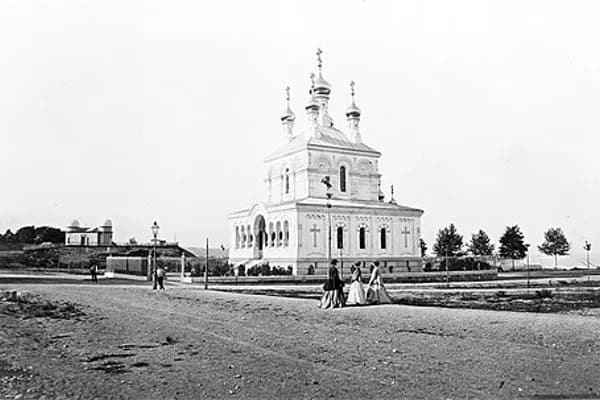
On the opposite side of the Old Town, the Promenade Saint-Antoine marked the boundary between Geneva and the new neighbourhood of Les Tranchées, then located in the former municipality of Plainpalais. At the end of the promenade lies Place Franz-Liszt, on the site where the Hungarian composer lived from 1835 to 1836, a period during which he taught at the Conservatoire de Musique de Genève at the time of its founding. The first building erected in the Tranchées district was the Russian Church, consecrated in 1866, which was the first Orthodox church built in Switzerland. Sophie, the daughter of Fyodor Dostoevsky, died in Geneva a few weeks after her birth. Sophie's funeral took place at the Russian Church. She is buried in the Cimetière des Rois.
The former Geneva Observatory was located on the Saint-Antoine bastion, now the Promenade de l’Observatoire, opposite the main entrance of the Musée d'Art et d'Histoire (1910). Built in 1772 at the initiative of Jacques-André Mallet, the Geneva Observatory was the first in Switzerland. In addition to astronomical observations, the institution carried out meteorological surveys and organized chronometer competitions. The building was demolished in 1829 and rebuilt on the same site the following year by Guillaume Henri Dufour. In 1875, Charles Sanders Peirce conducted experiments there with his reversible pendulum, and commissioned the SIP a vacuum chamber for his pendulum. Significant improvements in gravity measuring instruments must also be attributed to Friedrich Wilhelm Bessel. He devised a gravimeter constructed by Adolf Repsold which was first used in Switzerland by Emile Plantamour, Charles Sanders Peirce and Isaac-Charles Élisée Cellérier (1818–1889), a Genevan mathematician soon independently discovered a mathematical formula to correct systematic errors of this device which had been noticed by Plantamour and Adolphe Hirsch. This work led in 1901 to the Earth ellipsoid proposed by Friedrich Robert Helmert, whose parameter values were remarkably close to reality. Helmert determined a value of 1/298.3 for the flattening of the Earth to be compared with that of 1/298.25 obtained from the analysis of the first satellites measurements. The building on the former site was destroyed in 1969 after the inauguration of the Geneva Observatory in Sauverny, Versoix. The role of observatories in assessing the accuracy of mechanical watches was crucial in driving the mechanical watchmaking industry toward ever-higher levels of precision. As a result, high-quality mechanical watch movements today achieve extremely high accuracy. However, no mechanical movement could ultimately match the accuracy of the developing quartz movements. In 1936, thanks to the use of quartz clocks, irregularities in the Earth's rotation speed, caused by the unpredictable movements of air and water masses, were discovered. This implied that astronomical observations were an inaccurate method for determining time. Consequently, observatories ceased certifying chronometers between the late 1960s and early 1970s with the advent of a new definition of the second.
Jean-Jacques Challet-Venel, the first Genevan member of the Federal Council, was the driving force behind the creation of the Universal Postal Union in 1874 in Bern. He had been the director of the Venel boarding school in Champel, which hosted Napoleon III and King Peter I of Serbia.
A horse-drawn tram line was inaugurated on June 19, 1862, between Place Neuve and Rondeau de Carouge. One hundred years later, Geneva's tram line 12 was the last one still operating there. In the 20th century, Geneva's tram network nearly disappeared. Only line 12 survived. It is the oldest tram line in Europe still in operation. Redesigned in 1979-1980, the Plainpalais roundabout is an important intersection in the city of Geneva. The commercial activity of the adjacent district, the presence of university buildings, as well as events on the nearby Plainpalais Plain, make it a constantly lively place and an important station for Geneva's public transport network.
The Boulevard des Philosophes connects the Plainpalais roundabout to the Place Édouard-Claparède named after René-Édouard Claparède, the oncle of Édouard Claparède. The boulevard takes its name from a hamlet that was inhabited by philosophy students from the Academy of Geneva.
The Comédie de Genève was inaugurated on January 24, 1913, at number 6 Boulevard des Philosophes. The oldest Geneva institution dedicated to dramatic arts, it began as a theatre company performing in the Plainpalais community centre (now the Salle Pitoëff) rue de Carouge 52. A new theatre was inaugurated on Boulevard des Philosophes, in the territory of the former municipality of Plainpalais, during the term of Jacques Louis Willemin, who was the son-in-law of Carlos Ibáñez e Ibáñez de Ibero.
Encyclopedic content adapted from the Wikipedia article on Plainpalais, used under CC BY-SA 4.0.