About the neighborhood
City in Switzerland
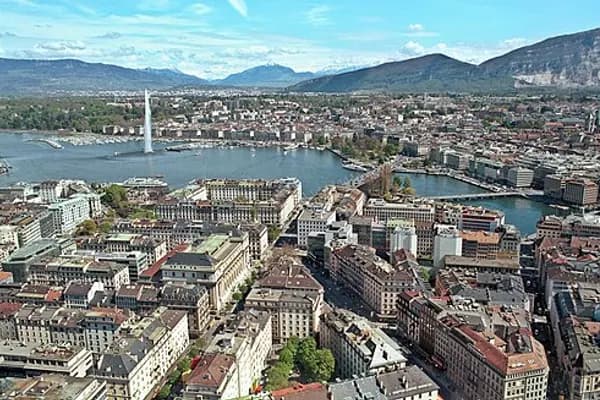
Geneva (/dʒɪˈniːvə/ jin-EE-və; French: Genève ʒ(ə)nɛv ) is the second-most populous city in Switzerland and the most populous in French-speaking Romandy. Situated in the southwest of the country, where the Rhône exits Lake Geneva, it is the capital of the Republic and Canton of Geneva. Geneva is a global city, an international financial centre, and a worldwide centre for diplomacy, which has led to it being called the "Peace Capital".
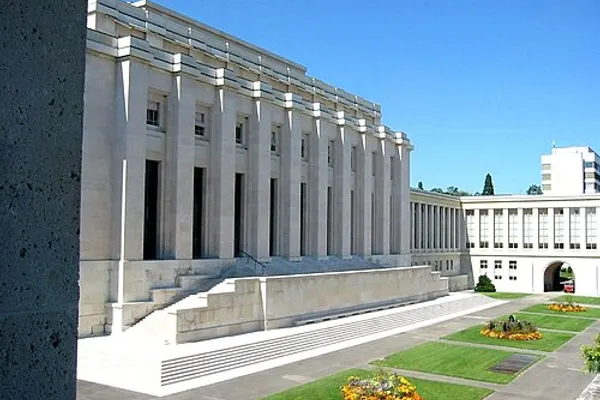
It hosts the highest number of international organizations in the world, including the headquarters of many agencies of the United Nations and the ICRC and IFRC of the Red Cross. It was where the Geneva Conventions on humanitarian treatment in war were signed, and, in the aftermath of World War I, it hosted the League of Nations. It shares a unique distinction with municipalities such as New York City, Bonn, Basel, and Strasbourg as a city which serves as the headquarters of at least one critical international organization without being the capital of a country.
The city of Geneva (Ville de Genève) had a population of 203,856 in January 2021 within its municipal territory of 16km (6sqmi). The Geneva metropolitan area as officially defined by Eurostat, including suburbs and exurbs in Vaud and the French departments of Ain and Haute-Savoie, extends over 2,292km (885sqmi) and had a population of 1,053,436 in 2021. The Canton of Geneva, the Nyon District, and the Pôle métropolitain du Genevois françaisfr (a federation of eight French intercommunal councils), form the Grand Genève ("Greater Geneva"), a Local Grouping of Transnational Cooperationfr in charge of organizing cooperation within the cross-border metropolitan area of Geneva. The Grand Genève GLCT extends over 1,996km (771sqmi) and had a population of 1,046,168, with 58.3% of them living in Switzerland, and 41.7% in France.
In 2025, Geneva was ranked as the world's fifteenth most important financial centre by the Global Financial Centres Index, and fourth in Europe behind London, Frankfurt and Dublin. In 2024, Geneva was ranked as the third most liveable city in the world by Mercer, as well as the fourth most expensive city in the world. In a UBS ranking of global cities in 2018, Geneva was ranked first for gross earnings, and fourth in purchasing power, and was also the second most expensive city.
Etymology
The city was mentioned in Latin texts, by Caesar, with the spelling Genava, probably from the Celtic genawa- from the stem genu- ("mouth"), in the sense of an estuary, an etymology shared with the Italian port city of Genoa (in Italian Genova).
The medieval county of Geneva in Middle Latin was known as pagus major Genevensis or Comitatus Genevensis (also Gebennensis). After 1400 it became the Genevois province of Savoy (albeit not extending to the city proper, until the reformation of the seat of the Bishop of Geneva).
History
Geneva was an Allobrogian border town, fortified against the Helvetii tribe, when the Roman Republic took it in 121 BC. It became Christian under the Late Roman Empire, and acquired its first bishop in the 5th century, having been connected to the Bishopric of Vienne in the 4th.
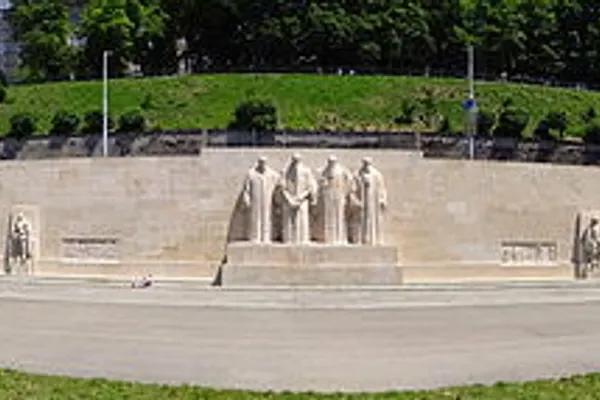
In the Middle Ages, Geneva was ruled by a count under the Holy Roman Empire until the late 14th century, when it was granted a charter giving it a high degree of self-governance. Around this time, the House of Savoy came to at least nominally dominate the city. In the 15th century, an oligarchic republican government emerged with the creation of the Grand Council. In the first half of the 16th century, the Protestant Reformation reached the city, causing religious strife, during which Savoy rule was thrown off and Geneva allied itself with the Swiss Confederacy. In 1541, with Protestantism on the rise, John Calvin, the Protestant Reformer and proponent of Calvinism, became the spiritual leader of the city and established a "Protestant Rome". By the 18th century, Geneva had come under the influence of Catholic France, which cultivated the city as its own. France tended to be at odds with the ordinary townsfolk, which inspired the failed Geneva Revolution of 1782, an attempt to win representation in the government for men of modest means. In 1798, Revolutionary France under the Directory annexed Geneva. France lost Geneva, which recovered its independence, at the end of the Napoleonic Wars. On 19 May 1815, Geneva joined the Swiss Confederation. In 1907, the separation of Church and State was adopted. Geneva flourished in the 19th and 20th centuries, becoming the seat of many international organizations.
Geography
Topography
Geneva is located at 46°12' North, 6°09' East, at the south-western end of Lake Geneva, where the Rhône flows out. It is surrounded by three mountain chains, each belonging to the Jura: the Jura main range lies north-westward, the Vuache southward, and the Salève south-eastward.
The city covers an area of 15.93km (6.2sqmi), while the area of the canton is 282km (108.9sqmi), including the two small exclaves of Céligny in Vaud. The part of the lake that is attached to Geneva has an area of 38km (14.7sqmi) and is sometimes referred to as petit lac ('small lake'). The canton has only a 4.5km-long (2.8mi) border with the rest of Switzerland. Of 107.5km (66.8mi) of the border, 103 are shared with France, the department of Ain to the north and west and the department of Haute-Savoie to the south and east.
Of the land in the city, 0.24km (0.093sqmi), or 1.5%, is used for agricultural purposes, while 0.5km (0.19sqmi), or 3.1%, is forested. The rest of the land, 14.63km (5.65sqmi), or 91.8%, is built up (buildings or roads), 0.49km (0.19sqmi), or 3.1%, is either rivers or lakes and 0.02km (4.9 acres), or 0.1%, is wasteland.
Of the built-up area, industrial buildings made up 3.4%, housing and buildings made up 46.2% and transportation infrastructure 25.8%, while parks, green belts and sports fields made up 15.7%. Of the agricultural land, 0.3% is used for growing crops. Of the water in the municipality, 0.2% is composed of lakes and 2.9% is rivers and streams.
The altitude of Geneva is 373.6m (1,225.7ft) and corresponds to the altitude of the largest of the Pierres du Niton, two large rocks emerging from the lake which date from the last ice age. This rock was chosen by General Guillaume Henri Dufour as the reference point for surveying in Switzerland. The second main river of Geneva is the Arve, which flows into the Rhône just west of the city centre. Mont Blanc can be seen from Geneva and is an hour's drive from the city.
Climate
The climate of Geneva is a temperate climate, more specifically an oceanic climate (Köppen climate classification: Cfb). Winters are cool, usually with light frosts at night and thawing conditions during the day. Summers are relatively warm. Precipitation is adequate and is relatively well-distributed throughout the year, although autumn is slightly wetter than other seasons. Ice storms near Lac Léman are normal in the winter: Geneva can be affected by the Bise, a north-easterly wind. This can lead to severe icing in winter.
In summer, many people swim in the lake and patronise public beaches such as Genève Plage and the Bains des Pâquis. The city, in certain years, receives snow during colder months. The nearby mountains are subject to substantial snowfall and are suitable for skiing. Many world-renowned ski resorts such as Verbier and Crans-Montana are less than three hours away by car. Mont Salève (1,379m (4,524ft)), just across the border in France, dominates the southerly view from the city centre, and Mont Blanc, the highest of the Alpine range, is visible from most of the city, towering high above Chamonix, which, along with Morzine, Le Grand Bornand, La Clusaz, and resorts of the Grand Massif such as Samoens, Morillon, and Flaine, are the closest French skiing destinations to Geneva.
During the years 2000–2009, the mean yearly temperature was 11°C and the mean number of sunshine-hours per year was 2003.
The highest temperature recorded in Genève–Cointrin was 39.7°C (103.5°F) in July 2015, and the lowest temperature recorded was −20.0°C (−4.0°F) in February 1956.
Politics
Coat of arms
Administrative divisions
The city is divided into eight quartiers, or districts, sometimes composed of several neighbourhoods. On the left bank are: (1) Jonction, (2) Centre, Plainpalais, and Acacias; (3) Eaux-Vives; and (4) Champel. The right bank includes: (1) Saint-Jean and Charmilles; (2) Servette and Petit-Saconnex; (3) Grottes and Saint-Gervais; and (4) Paquis and Nations.
Government
The Administrative Council (French: Conseil administratif) constitutes the executive government of the city of Geneva and operates as a collegiate authority. It is composed of five councilors (Conseiller administratif / Conseillère administrative), each presiding over a department. The president of the executive department acts as mayor (la maire/le maire). In the governmental year 2021–2022, the Administrative Council is presided over by Madame la maire de Genève Frédérique Perler. Departmental tasks, coordination measures and implementation of laws decreed by the Municipal Council are carried out by the Administrative Council. Elections for the Administrative Council are held every five years. The current term of office is from 1June 2020 to 31May 2025. The delegates take office due to a winner-takes-all election (French: scrutin majoritaire, Swiss Standard German: Majorzwahl or Majorz). The mayor and vice change each year, while the heads of the other departments are assigned by the collegiate. The executive body holds its meetings in the Palais Eynard, near the Parc des Bastions.
As of 2020, Geneva's Administrative Council is made up of two representatives each of the Social Democratic Party (PS) and the Green Party (PES), and one member of the Christian Democratic Party (PDC). This gives the left-wing parties four out of the five seats and, for the first time in history, a female majority in the election held on 15March / 5April 2020. Except for the mayor, all other councillors have been elected for the first time.
Parliament
Ensemble à gauche (PST-POP & Sol) (8.80%)
PS (23.8%)
Les Verts (PES) (22.5%)
PDC (10.0%)
PLR (17.5%)
UDC (8.80%)
MCG (8.80%)
The Municipal Council (French: Conseil municipal) holds legislative power. It is made up of 80 members, with elections held every five years. The Municipal Council makes regulations and by-laws that are executed by the Administrative Council and the administration. The delegates are selected by means of a system of proportional representation with a seven percent threshold. The sessions of the Municipal Council are public. Unlike members of the Administrative Council, members of the Municipal Council are not politicians by profession, and they are paid a fee based on their attendance. Any resident of Geneva allowed to vote can be elected as a member of the Municipal Council. The Council holds its meetings in the Town Hall (Hôtel de Ville), in the old city.
The last election of the Municipal Council was held on 15March 2020 for the term 2020–2025. Currently, the Municipal Council consists of: 19 members of the Social Democratic Party (PS), 18 Green Party (PES), 14 Les Libéraux-Radicaux (PLR), 8 Christian Democratic People's Party; (PDC) 7 Geneva Citizens' Movement (MCG), 7 Ensemble à Gauche (an alliance of the left parties PST-POP (Parti Suisse du Travail – Parti Ouvrier et Populaire) and solidaritéS, 6 Swiss People's Party (UDC).
Elections
National Council
In the 2019 federal election for the Swiss National Council the most popular party was the Green Party which received 26% (+14.6) of the vote. The next seven most popular parties were the PS (17.9%, -5.9), PLR (15.1%, -2.4), the UDC (12.6%, -3.7), the PdA/solidaritéS (10%, +1.3), the PDC (5.4%, -5.3), the pvl (5%, +2.9), and MCR (4.9%, -2.7). In the federal election a total of 34,319 votes were cast, and the voter turnout was 39.6%.
In the 2015 federal election for the Swiss National Council the most popular party was the PS which received 23.8% of the vote. The next five most popular parties were the PLR (17.6%), the UDC (16.3%), the Green Party (11.4%), the PDC (10.7%), and the solidaritéS (8.8%). In the federal election a total of 36,490 votes were cast, and the voter turnout was 44.1%.
Metropolitan cooperation
The city centre of Geneva is located only 1.9km (1.2mi) from the border of France. As a result, the urban area and the metropolitan area largely extend across the border on French territory. Due to the small size of the municipality of Geneva (16km (6sqmi)) and extension of the urban area over an international border, official bodies of transnational cooperation were developed as early as the 1970s to manage the cross-border Greater Geneva area at a metropolitan level.
In 1973, a Franco-Swiss agreement created the Comité régional franco-genevois ('Franco-Genevan Regional Committee', CRFG). In 1997 an 'Urban planning charter' of the CRFG defined for the first time a planning territory called agglomération franco-valdo-genevoise ('Franco-Vaud-Genevan urban area'). 2001 saw the creation of a Comité stratégique de développement des transports publics régionaux ('Strategic Committee for the Development of Regional Public Transports', DTPR), a committee which adopted in 2003 a 'Charter for Public Transports', first step in the development of a metropolitan, cross-border commuter rail network (see Léman Express).
In 2004, a public transnational body called Projet d’agglomération franco-valdo-genevois ('Franco-Vaud-Genevan urban area project') was created to serve as the main body of metropolitan cooperation for the planning territory defined in 1997, with more local French councils taking part in this new public body than in the CRFG created in 1973. Finally in 2012 the Projet d’agglomération franco-valdo-genevois was renamed Grand Genève ('Greater Geneva'), and the following year it was transformed into a Local Grouping of Transnational Cooperationfr (GLCT), a public entity under Swiss law, which now serves as the executive body of the Grand Genève.
The Grand Genève GLCT is made up of the Canton of Geneva, the Nyon District (in the canton of Vaud), and the Pôle métropolitain du Genevois françaisfr (literally 'Metropolitan hub of the French Genevan territory'), this last one a federation of eight French intercommunal councils in Ain and Haute-Savoie. The Grand Genève GLCT extends over 1,996km (771sqmi) and had a population of 1,046,168 in Jan. 2021 (Swiss estimates and French census), 58.3% of them living on Swiss territory, and 41.7% on French territory.
International relations
Geneva does not have any sister relationships with other cities. It declares itself related to the entire world.
Demographics
Encyclopedic content adapted from the Wikipedia article on Pâquis, used under CC BY-SA 4.0.