About the neighborhood
Neighborhood in Atlanta, Georgia
The Old Fourth Ward, often abbreviated O4W, is a historic intown neighborhood on the eastside of Atlanta, Georgia, United States. The neighborhood is best known as the location of the Martin Luther King Jr. historic site.
Geography
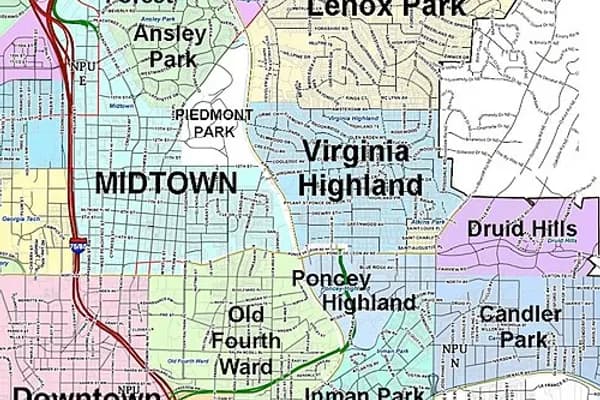
The Old Fourth Ward's borders:
West: Piedmont Avenue, across which is Downtown Atlanta
East: the BeltLine, across which are Poncey–Highland and Inman Park
North: Ponce de Leon Avenue, across which is Midtown Atlanta
South: MARTA Green Line and Oakland Cemetery, across which are Grant Park and Cabbagetown
The exception is the area west of Boulevard and south of Freedom Parkway which, although historically part of Atlanta's Fourth Ward (see Atlanta annexations and wards), is considered a separate recognized neighborhood called Sweet Auburn.
The neighborhood can be divided into three areas, with Freedom Parkway and Boulevard serving as dividing lines.
Northeast
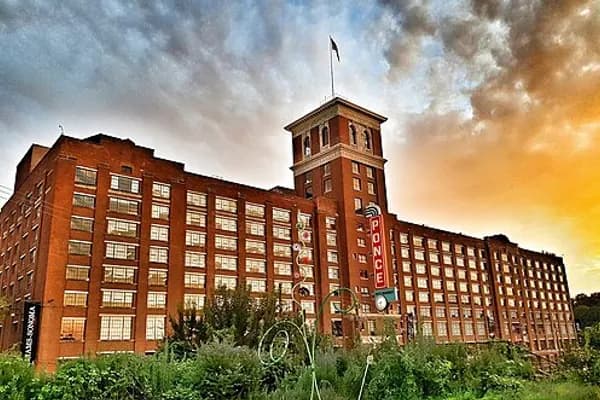
The area north of Freedom Parkway and east of Boulevard is home to the 2.1 million sq. ft. Ponce City Market, a mixed-use development, and Historic Fourth Ward Park, a product of the BeltLine project. In the 2010s, many new multi-family developments have been built bordering the park, including BOHO4W, AMLI Ponce Park, and 755 North. The BeltLine Eastside Trail is the eastern border of this area.
Northwest
The area west of Boulevard and north of Freedom Parkway was once called Bedford Pine, and, prior to the 1960s, it was a slum called Buttermilk Bottom. In the 1960s, slum housing gave way to massive urban renewal and the construction of large projects, such as the Atlanta Civic Center, the Georgia Power headquarters, and public housing projects. Bedford Pine was officially absorbed into the Old Fourth Ward neighborhood, whose boundaries officially extend west to Piedmont Avenue.
Boulevard
Boulevard itself, in the 1890s described as "one of the most desirable residence streets in the city," has for decades been notorious citywide as a center of crime and drug activity, as well as the highest concentration of Section 8 housing in the Southeastern United States. However, in January 2012, City Councilman Kwanza Hall revealed a seven-point "Year of Boulevard" strategy to revitalize the corridor.
Southeast
The largest concentration of single family homes are found south of Freedom Parkway, especially south of Irwin Street, and the area is perhaps the most eclectic part of O4W. Auburn Avenue and Old Wheat Streets are in character extensions of the historic African-American business and residential district, Sweet Auburn, and of the Martin Luther King Jr. National Historic Site.
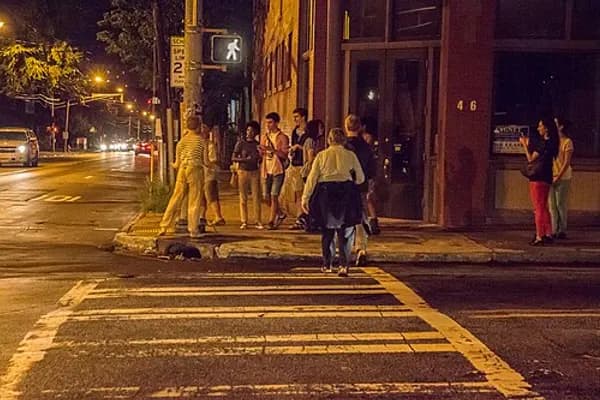
The Ward's entertainment options in the southeast section of the neighborhood are primarily on Edgewood Avenue and Decatur Street, where there is a concentration of bars and restaurants.
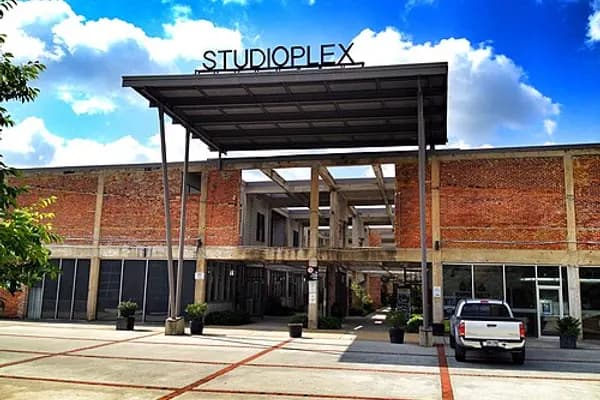
The eastern border is the BeltLine Eastside Trail, lined with repurposed industrial buildings such as Studioplex, now used for residential and retail use.
History
What is now the Old Fourth Ward is a smaller version of the historic Fourth Ward political area in place until the 1950s when the city changed to a district system. It is one of the oldest sections of the city, with the westernmost blocks developing soon after the Civil War. Different parts of the ward were, at different times, considered white, black, or mixed-race areas. From the 1910s onward, as Atlanta politicians moved to institutionalize racially segregated residential areas, Old Fourth Ward continued as a patchwork of whites living as close neighbors with blacks.
The Ward was home to the spectrum of races but also socioeconomic classes: the foremost thoroughfare in today's Old Fourth Ward, Boulevard, was in the 1890s called one of the most desirable residential streets in the city, even as the Buttermilk Bottom slum festered less than half a mile west. However, after the Great Atlanta fire of 1917, Boulevard's grand houses were destroyed and replaced by brick apartment buildings.
As with most of Intown Atlanta, the Old Fourth Ward declined precipitously during the 1950s and 1960s as wealthier residents moved further out from central neighborhoods. Streets, houses and businesses that sat upon the land that is now Freedom Parkway were also razed to make way for a freeway that was never built. What was once a consistent and dense grid pattern of streets is now difficult to recognize, with Freedom Parkway occupying what had once been multiple city blocks.
Boulevard in particular witnessed a steady decline. The road was lined with apartment buildings constructed after the Great Atlanta fire of 1917, most of which were section 8 housing. Boulevard became infamous throughout Atlanta and beyond as a haven for blight, littering, drug activity, homeless encampments, prostitution, and violent gangs, a reputation that endured into the 2010s, despite revitalization efforts growing in the area. However, as more Section 8 housing was demolished and investors moved into the neighborhood, the area's amenities, demand, reputation, and public safety significantly improved.
Gentrification of the Old Fourth Ward began in the 1980s, and continued at a more rapid pace since the 2000s. New apartment and condo complexes with ground-floor retail sprung up, particularly along the BeltLine, Ponce de Leon Avenue, North Avenue, Highland Avenue, and Boulevard. The area, which was majority Black for many decades, has seen a huge influx of diversity in recent decades. As of December 2025, Niche estimated Old Fourth Ward is 53% White, 33% Black, 5% Hispanic, 4% Asian, and 3% Other/Multi-Racial.
Trails and parks
Two of the city's iconic walking and biking trails intersect in the neighborhood:
BeltLine Eastside Trail
Freedom Parkway park and trail
Historic Fourth Ward Park and Skate Park opened in phases starting in 2011 and includes an attractive retention pond. The area around the park has since mushroomed with large apartment buildings.
Other parks include:
Central Park
Renaissance Park and Dog Park
Selena Butler Park
Culture
The Old Fourth Ward is one of Atlanta's best neighborhoods for viewing street art. Some of the best locations to view street art in the Old Fourth Ward include Decatur St., Edgewood Ave. and on and around the Eastside Trail of the Atlanta Beltline. The Outerspace Project is responsible for bringing many works of street art to the Old Fourth Ward. Several examples of street art in the Old Fourth Ward are found on the Atlanta Street Art Map.
Other points of interest
Ponce City Market
Edgewood Avenue around Boulevard has become a bar and restaurant district after decades of neglect, prior to 2013 having been known for "drug traffic, petty crime, and homeless hideaways". Sister Louisa's Church of the Living Room and Ping Pong Emporium, a bar, is a landmark here.
Industrial architecture along the BeltLine Eastside Trail, including the DuPre Excelsior Mill and National NuGrape Company lofts
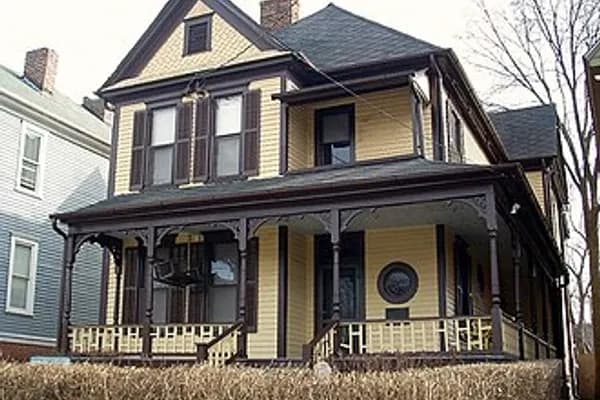
part of the Martin Luther King Jr. National Historic Site, including King's Birth Home
Atlanta Civic Center
Edward C. Peters House
Homage to King sculpture
WSB-TV tower
The Carter Center borders the neighborhood
The Jackson Street Bridge is one of Atlanta's most iconic landmarks for photos
Transportation
The MARTA Green Line runs east–west at the south end of the neighborhood, although there is no station in O4W itself. King Memorial station is to the west and Inman Park / Reynoldstown station is to the east. The Atlanta Streetcar line starts just west of the neighborhood. Several MARTA bus lines serve the neighborhood. Relay provides bike share.
References
External links
Bedford Pine Neighborhood Photograph Collection, 1970-1971 from the Atlanta History Center
Old Fourth Ward organizations
Fourth Ward West (FWW) Archived December 3, 2010, at the Wayback Machine, until 2012 known as Central Atlanta Neighbors (CAN) - covers north of the Baker-Highland connector (extension of Freedom Parkway), west of Boulevard to Peachtree Street thus including part of Downtown Atlanta)
Fourth Ward Alliance (on Facebook) - covers north of Freedom Parkway, east of Boulevard
Fourth Ward Neighbors - covers south of Freedom Parkway
About the Old Fourth Ward
Robbie Brown, "King's Atlanta neighborhood on the upswing", Surfacing in New York Times, December 4, 2011
"Dr. Martin Luther King Jr.'s Atlanta neighborhood on the upswing" (slideshow), New York Times, December 4, 2011
Encyclopedic content adapted from the Wikipedia article on Old Fourth Ward, used under CC BY-SA 4.0.
What makes Old Fourth Ward special
Old Fourth Ward stands out among Atlanta’s neighborhoods for its distinctive character: atlanta's beltline renaissance. Ranked #2 in Atlanta, it offers the kind of experience that defines a great city trip — a place where the streets themselves tell a story and every block rewards curiosity.
Best for
Our take on Old Fourth Ward
Old Fourth Ward is one of the strongest neighborhoods in Atlanta, and it consistently appears in our editors' personal favorites lists. It may not always get the same attention as the city's most famous district, but among travelers who know Atlanta well, Old Fourth Ward is often the first recommendation.
What makes Old Fourth Ward worth the visit is the texture of daily life here. It is a neighborhood that functions for the people who live in it — not just for the visitors who pass through. The shops serve local needs, the restaurants feed local appetites, and the streets have a rhythm that reflects genuine community rather than tourism infrastructure. That is the quality our editors prize most, and Old Fourth Ward has it in abundance.
Our editors recommend budgeting at least half a day here — enough time to walk the main streets, sit down for coffee, and discover the side streets where Old Fourth Ward's real character lives.
Living in Old Fourth Ward
Old Fourth Ward is connected to the rest of Atlanta by public transit, and most visitors find it straightforward to reach from the city center or airport. Once you arrive, the neighborhood is best explored on foot — the scale is human and the streets reward wandering.
Day-to-day life in Old Fourth Ward has the rhythm of a genuine residential neighborhood. You will find grocery stores, pharmacies, cafés with morning regulars, and the kind of small independent shops that only survive where locals support them. For visitors, this means the infrastructure you need — good coffee, a decent meal, a quiet place to sit — is always within a short walk.
Accommodation in Old Fourth Ward ranges from boutique hotels to short-term rentals. We generally recommend staying within the neighborhood itself rather than commuting from a hotel elsewhere in Atlanta — the experience of waking up inside a great neighborhood is fundamentally different from visiting one as a day trip.
What locals say about Old Fourth Ward
Long-term residents of Old Fourth Ward tend to describe their neighborhood with a mix of pride and protectiveness. Like any district with genuine character, Old Fourth Ward inspires loyalty — the kind of place people move to and never quite leave, or leave and spend years trying to get back to.
What locals appreciate most about Old Fourth Ward is its consistency — the feeling that the neighborhood works the same way on a Tuesday morning as it does on a Saturday night. It is not a place that performs for visitors and then goes quiet. The rhythm is genuine, the community is real, and the daily experience of living here is what draws people and keeps them.
Like any neighborhood that has earned attention, Old Fourth Ward is navigating the tension between popularity and preservation. Rents have risen, new businesses have arrived, and long-time residents occasionally grumble that the neighborhood is not what it was. But the fundamentals — the walkability, the food, the community — remain strong, and most locals we speak to believe the neighborhood is still gaining more than it is losing.
Visitor tips
- Old Fourth Ward is located in Atlanta, United States. The neighborhood is accessible by public transport, taxi, or rideshare from most parts of the city.
- Morning is often the best time to explore — the streets are quieter, the light is better for photography, and cafes are at their most welcoming.
- Wear comfortable walking shoes — the best way to experience Old Fourth Ward is on foot, wandering the side streets and discovering what lies around each corner.
- Save the neighborhood's location on your phone before you arrive. Offline maps are especially useful for navigating the smaller side streets.