About the neighborhood
7th District of Vienna in Austria
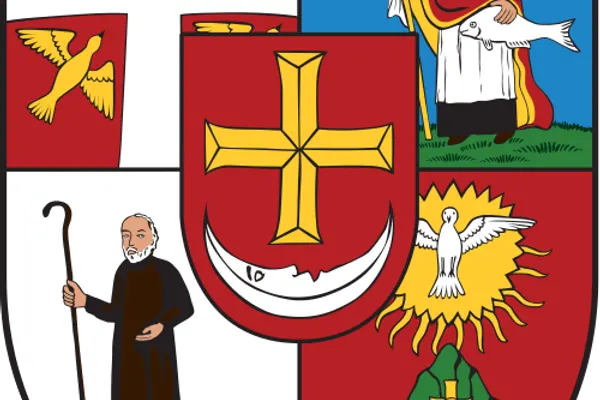
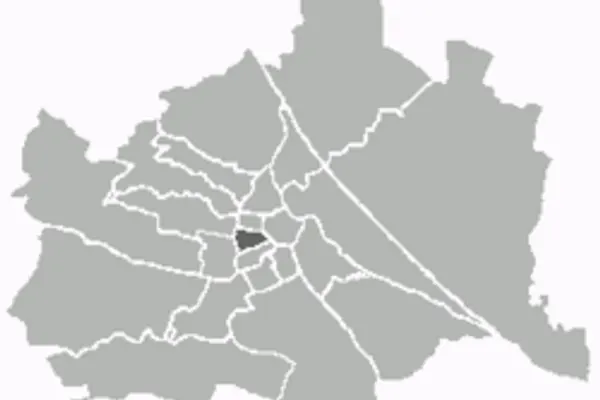
Neubau (German pronunciation: ˈnɔʏbaʊ ; Viennese: Neibau; "New Build") is the seventh district of Vienna (German: 7. Bezirk). It is located near the center of Vienna and was established as a district in 1850, but borders changed later. Neubau is a heavily populated urban area, with a major shopping area and residential buildings. It has a population of 32,027 people (as of 2016-01-01) within an area of 1.61km² (0.62sq.mi.).
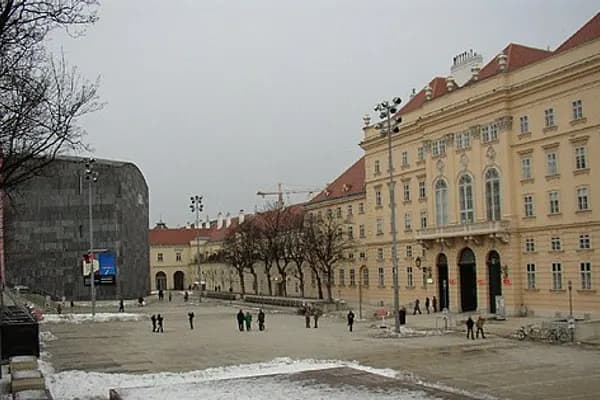
It consists of the former Vorstädte of Neubau, Altlerchenfeld, St. Ulrich, Schottenfeld and Spittelberg. The district borders are formed by Lerchenfelder Straße in the north, Mariahilfer Straße in the south, Neubaugürtel in the west, and Museumstraße and Museumsplatz in the east.
History
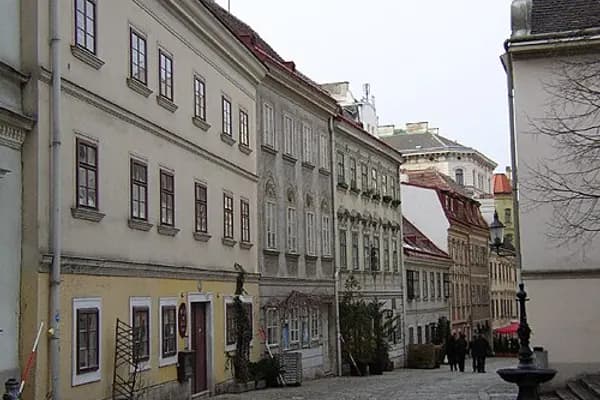
In the 18th century, Neubau was the location of the city's silk factories. At this time, the area became densely populated. Today, it is an important shopping district, especially in the Mariahilfer Straße and Neubaugasse. Many pubs, popular among the district's large student population, are located in the Spittelberg neighborhood. The Volkstheater Wien, one of Vienna's large mainstream theatres, and the Austrian Ministry of Justice are located in Neubau, as well as the Museumsquartier, a centre dedicated to modern art, housing for example the Leopold Collection.
In the 2001 communal elections, Neubau became the first district in Austria with a Green Party plurality (32.6% of the votes).
In the 2004 European elections the Green Party received 41% of all votes, which is more than Social Democratic Party and Austrian People's Party together.
Like Mariahilf, Neubau is known as one of Vienna's districts with the youngest, most liberal, and urban population.
Politics
After the Second World War, the ÖVP had the largest party vote until 1991, when it was displaced by the SPÖ. In 2001, the SPÖ in turn was displaced, this time by the Greens.
At the 2010 elections, the Greens increased their vote, the Liberal Forum vote remained at 1.1%, and the BZÖ increased their vote from their 2005 level of 0.8% to 1.1%.
This district was the first in 2001 and until the 2004 (European Elections 2004) the only district in Austria where the Greens had a relative majority (plurality).
People
Johann Christoph Voigtländer (1732–1797) (de)
Josef Lanner (1801–1843)
Carl Michael Ziehrer (1843–1922) (de)
Gustav Klimt (1862–1918)
Karl Farkas (1893–1971)
Fritz Hochwälder (1911–1986)
Fritz Muliar (1919–2009)
Theodor Graf Latour (de)
Sankt Ulrich
Johann Strauß II (1825–1899), born here
Historic sites
St. Ulrich
Notes
Twin town
Erzsébetváros, Hungary
References
"Wien - 7. Bezirk/Neubau", Wien.gv.at, 2008, webpage (15 subpages): Wien.gv.at-neubau Archived 2010-09-15 at the Wayback Machine (in German).
Elfriede Faber: Neubau: Geschichte des 7. Wiener Gemeindebezirks und seiner alten Orte. Ed. Wien, Vienna 1995, ISBN3-85058-065-2.
Manfred Lang: Ein neuer Neubau: Geschichte der Sozialdemokratie am Neubau. Verl. d. SPÖ Wien, Vienna 1989.
Carola Leitner (Hg.): Neubau: Wiens 7. Bezirk in alten Fotografien ("Neubau: Vienna's 7th District in Old Photographs"). Ueberreuter, Vienna 2007, ISBN978-3-8000-7306-1.
External links
Wikivoyage has a travel guide for Vienna/Neubau.
Mariahilferstrasse: Vienna's largest shopping street.
Museumsquartier: Centre for culture and modern art.
Volkstheater Wien: Peoples Theatre, founded in 1887-89 by architects F. Fellner and H. Helmer.
results of the last elections (official web site of Vienna)
48°12′09″N 16°20′53″E / 48.20250°N 16.34806°E / 48.20250; 16.34806
Encyclopedic content adapted from the Wikipedia article on Neubau, used under CC BY-SA 4.0.
What makes Neubau special
Neubau stands out among Vienna’s neighborhoods for its distinctive character: vienna's coolest shopping streets. Ranked #2 in Vienna, it offers the kind of experience that defines a great city trip — a place where the streets themselves tell a story and every block rewards curiosity.
Best for
Our take on Neubau
Neubau is one of the strongest neighborhoods in Vienna, and it consistently appears in our editors' personal favorites lists. It may not always get the same attention as the city's most famous district, but among travelers who know Vienna well, Neubau is often the first recommendation.
What makes Neubau worth the visit is the texture of daily life here. It is a neighborhood that functions for the people who live in it — not just for the visitors who pass through. The shops serve local needs, the restaurants feed local appetites, and the streets have a rhythm that reflects genuine community rather than tourism infrastructure. That is the quality our editors prize most, and Neubau has it in abundance.
Our editors recommend budgeting at least half a day here — enough time to walk the main streets, sit down for coffee, and discover the side streets where Neubau's real character lives.
Living in Neubau
Neubau is connected to the rest of Vienna by public transit, and most visitors find it straightforward to reach from the city center or airport. Once you arrive, the neighborhood is best explored on foot — the scale is human and the streets reward wandering.
Day-to-day life in Neubau has the rhythm of a genuine residential neighborhood. You will find grocery stores, pharmacies, cafés with morning regulars, and the kind of small independent shops that only survive where locals support them. For visitors, this means the infrastructure you need — good coffee, a decent meal, a quiet place to sit — is always within a short walk.
Accommodation in Neubau ranges from boutique hotels to short-term rentals. We generally recommend staying within the neighborhood itself rather than commuting from a hotel elsewhere in Vienna — the experience of waking up inside a great neighborhood is fundamentally different from visiting one as a day trip.
What locals say about Neubau
Long-term residents of Neubau tend to describe their neighborhood with a mix of pride and protectiveness. Like any district with genuine character, Neubau inspires loyalty — the kind of place people move to and never quite leave, or leave and spend years trying to get back to.
What locals appreciate most about Neubau is its consistency — the feeling that the neighborhood works the same way on a Tuesday morning as it does on a Saturday night. It is not a place that performs for visitors and then goes quiet. The rhythm is genuine, the community is real, and the daily experience of living here is what draws people and keeps them.
Like any neighborhood that has earned attention, Neubau is navigating the tension between popularity and preservation. Rents have risen, new businesses have arrived, and long-time residents occasionally grumble that the neighborhood is not what it was. But the fundamentals — the walkability, the food, the community — remain strong, and most locals we speak to believe the neighborhood is still gaining more than it is losing.
Visitor tips
- Neubau is located in Vienna, Austria. The neighborhood is accessible by public transport, taxi, or rideshare from most parts of the city.
- Morning is often the best time to explore — the streets are quieter, the light is better for photography, and cafes are at their most welcoming.
- Wear comfortable walking shoes — the best way to experience Neubau is on foot, wandering the side streets and discovering what lies around each corner.
- Save the neighborhood's location on your phone before you arrive. Offline maps are especially useful for navigating the smaller side streets.