About the neighborhood
Suburb in Auckland, New Zealand
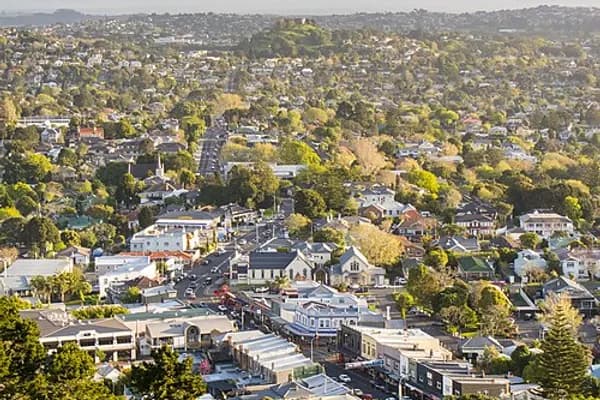
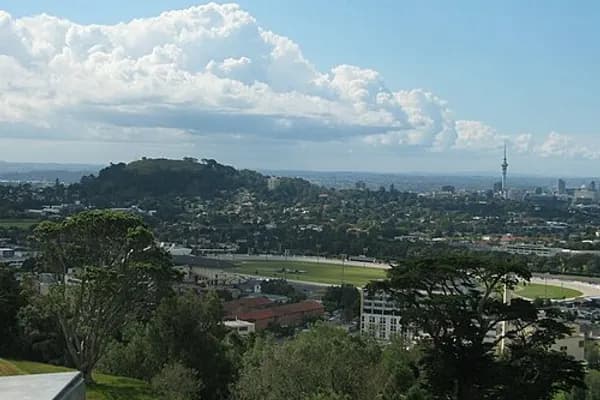
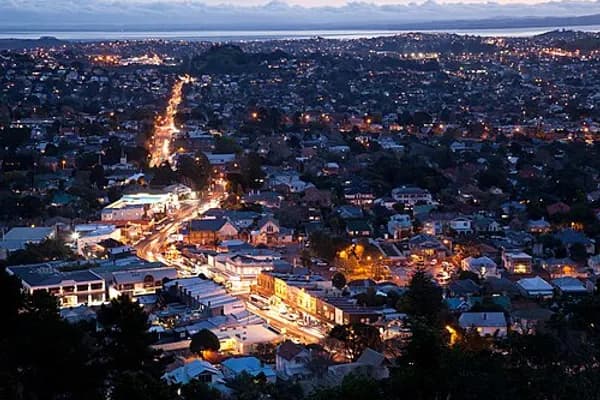
Mount Eden is a suburb in Auckland, New Zealand whose name honours George Eden, 1st Earl of Auckland. It is 4 kilometres (2.5mi) south of the Central Business District (CBD). Mt Eden Road winds its way around the side of Mount Eden Domain and continues to weave back and forth as it descends into the valley; it runs south from Eden Terrace to Three Kings. Mt Eden village centre is located roughly between Valley Road and Grange Road. The domain is accessible on foot from many of the surrounding streets, and by vehicle from Mt Eden Road. The central focus of the suburb is Maungawhau / Mount Eden, a dormant volcano whose summit is the highest natural point on the Auckland isthmus.
History
Pre-European
In pre-European times Mount Eden was utilised as a fortified hill pā by various Māori iwi (tribes). The pā is thought to have been abandoned around 1700 AD after conflict between the resident Waiohua people and the Hauraki tribes The earth ramparts and terraces from this period contribute to the distinctive outline of the hill today.
European settlement
Following a gift of land from Ngāti Whātua Ōrākei Mount Eden began being subdivided and sold off to settlers in 1841. The land was mostly used for farming to support the Borough of Auckland. Due to population growth in Auckland Mount Eden would start having suburban development in the late 1800s. In 1873, Alfred Cucksey established a store in what would later become Mount Eden Village.
The Colonial Ammunition Company, first formed in 1885, was based at Mount Eden. The steel Mount Eden Shot Tower, completed in 1914, was the major supplier of ammunition in New Zealand until World War II, and was classified as a Category I heritage building by Heritage New Zealand in 1983.
Mount Eden developed from a rural and agricultural area to a suburban one between 1840 and the 20th century. Access to the water supply of the City of Auckland, piped gas from Auckland, and electric trams were some of the main driving factors behind the urbanisation of the area. By 1895 cattle driving was outlawed in the area. By 1930 the last large block of land was subdivided.
Mount Eden is now a "leafy suburb" consisting predominantly of large houses from the first half of the 20th century, many with verdant gardens and large trees. In the 19th century, on the eastern slopes of Mt Eden were constructed several large country houses set in extensive grounds. These included "Harewood House" (since demolished and now the site of Allevia Hospital Epsom (formerly the Mater Misericordiae Hospital), Justice Gillies "Rocklands Hall" (now a hostel), Alfred Buckland's "Highwic" (now a museum), the Hellaby family's "Florence Court", Josiah Clifton Firth's "Clifton House" (both still private residences) and Professor Sir Algernon Thomas' "Trewithiel" (the garden is partially preserved in Withiel Thomas Reserve and the reduced house at 114 Mountain Road). Close by the current Government House (the official Auckland residence of the Governor General) is Eden Garden, an ornamental public garden set up in a disused quarry.
In the 1950s and 1960s the inner suburbs became unfashionable and the old houses of the Mt Eden area were comparatively cheap to buy. Mt Eden developed a slightly bohemian image during this time as a community of artists, writers, teachers and university lecturers made it their home. Mt Eden village is still regarded by many as the "Home Of Arts" in Auckland, due to the large amount of creative activity in and around the suburb and the large number of artists who live nearby.
The Presbyterian Boys' Hostel at 22 View Road is a historic building that became the first home for many young men, who moved to Auckland to train in government and industry at low rates of pay.
Transport
In Mt Eden, the plentiful supply of volcanic stone (a suitable material for building roads), as well as the ready supply of labourers from the Mt Eden Prison, allowed for a progressive development of early roads, many of which still exist today as main arterial routes. Early roads were metal or made from scoria. Toll gates were established on several main roads, including Mt Eden Road and Dominion Road, during the 19th century in order to help pay for their upkeep.
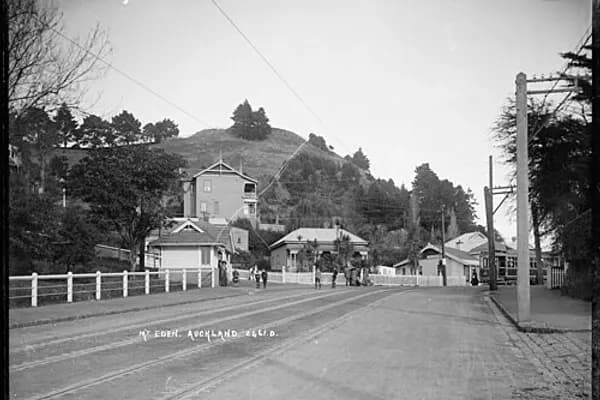
Public transportation extended from the inner city to the surrounding areas in the late 1870s and early 1880s with horse-drawn buses being the first mode of regular public transportation in the late 1870s. In 1881, a railway opened that connected Newmarket to Helensville and stopped in Mt Eden. At the beginning of the 20th century, trams began connecting Mt. Eden, Balmoral, Kingsland, and Mt Albert with the city. The trams ran for the last time in the 1950s. Trams were replaced with trolley buses. The trolley buses were replaced with diesel buses in the 1970s.
Local government
Mt Eden falls within the Epsom constituencies for the national Parliament. In terms of local government, Mt Eden comes under the Albert-Eden Local Board, of Auckland Council.
During the 19th century, the planning and maintenance of the main arterial roads (Mt Eden Road and Dominion Road) provided the impetus to form local governing bodies in the area. The Mt Eden Highway Board held its first meeting in 1868; it covered the area of Mt Eden, Eden Valley, Sandringham, and Balmoral. At the time, it was responsible for building and maintaining the roads and dealing with the pigs, horses, cattle, and sheep that freely roamed the area. In 1882 it became the Mt Eden Road Board. In 1906 Mt Eden gained borough status and the Mt Eden Borough Council was formed. In 1989 the Borough Council amalgamated with Auckland City Council in a nationwide local government reorganisation. In November 2010, the City Council was dissolved and was incorporated into the new larger Auckland Council.
Mayors (1906–1989)
Oliver Nicholson, 1906–1918
Charles Hudson, 1918–1920
John Wisdom Shackelford, 1920–1923
Rev. James Leslie Allan Kayll, 1923–1923
Ernest Herbert Potter, 1923–1931
Thomas McNab, 1931–1938
Robert James Mills, 1938–1950
Alton Clive Johns, 1950–1959
Phillip Guy Dickinson, 1959–1962
Ernest Wilfred Turner, 1962–1968
Robert Claude Mills, 1968–1974
Ronald Athol Gribble, 1974–1977
William Noel Barton, 1977–1983
Philippa Anne Cunningham, 1983–1986
Gordon Brayden Johns, 1986–1989
Housing
Housing in Mount Eden ranges from 19th century Victorian villas to modern apartments. Mount Eden's continual development has resulted in a range of types of homes. Some areas such as around Balmoral Road predominantly features villas, whereas areas further from the Auckland city centre are composed primarily of bungalows. The majority of early homes are wooden but two stone homes are still extant. Most of the early homes were constructed from kauri, mataī, and tōtara. King Edward Street and Burnley Terrace have special heritage protections due to their Victorian and Edwardian villas that have remained mostly the same for over a century.
During the 1870s many middle class residents left the urban central city for areas such as Mount Eden due to a desire for healthier living conditions. Many large homesteads were built around this time, although few survive.
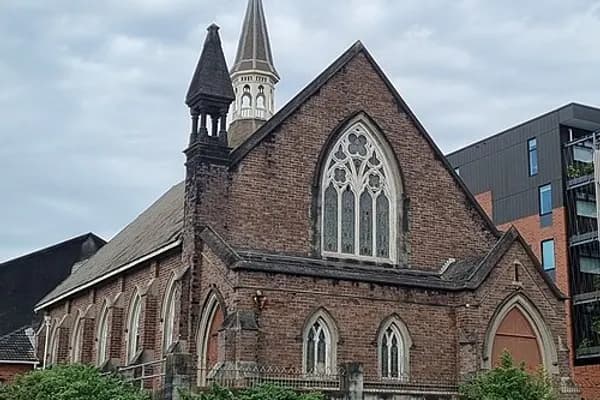
Homes in the 20th century were built with a mix of styles including Arts and Crafts, modernism, and Spanish Mission. Traditionally homes were standalone but during the interwar period apartment blocks started being built. Multi unit homes were built more frequently after WW2 but were often derided due to lacking architectural merit. The construction of a high rise apartment around the base of Mount Eden led to restrictions on building height to preserve views of the mountain. The desirability of the area and protections for existing buildings has led to many non-residential buildings being converted into apartments. Notable examples include the former council chambers and fire station and the Mt Eden Congregational Church.
Economy
Initially Mt Eden's economy was based upon agricultural and small shops that serviced residents. With the railway connection in the 1880s industrial businesses start popping up although Mt Eden remained rural. The most notable industrial business was the Colonial Ammunition Company which was formed in 1888 by Major John Whitney. In the 1960s Mount Eden's economy was primarily timber working, engineering products, and warehousing. These manufacturing industries have been gradually shutting down, with former sites being developed into residential housing.
Demographics
Historical population in the Mount Eden Eden Road District and Mount Eden Borough:
1878: 733
1881: 1135
1886: 3144
1891: 3136
1896: 3677
1901: 5129
1906: 6888
1911: 9381
1956: 19,400
Population in the district grew rapidly during a period of economic boom following victory in the New Zealand Wars, Julius Vogel's borrowing of 10 million pounds and investment that followed, and the gold rush at Thames. In the mid-1880s population growth slowed and started to decline as the Long Depression impacted New Zealand. Population growth in the district did not increase until the mid-1890s.
Mount Eden covers 6.32km (2.44sqmi) and had an estimated population of 25,560 as of June 2025, with a population density of 4,044 people per km.
Mount Eden had a population of 24,495 in the 2023 New Zealand census, a decrease of 369 people (−1.5%) since the 2018 census, and an increase of 897 people (3.8%) since the 2013 census. There were 12,300 males, 12,009 females and 183 people of other genders in 8,535 dwellings. 6.6% of people identified as LGBTIQ+. The median age was 35.6 years (compared with 38.1 years nationally). There were 3,504 people (14.3%) aged under 15 years, 6,297 (25.7%) aged 15 to 29, 11,982 (48.9%) aged 30 to 64, and 2,712 (11.1%) aged 65 or older.
People could identify as more than one ethnicity. The results were 63.8% European (Pākehā); 8.2% Māori; 5.4% Pasifika; 30.1% Asian; 3.1% Middle Eastern, Latin American and African New Zealanders (MELAA); and 2.0% other, which includes people giving their ethnicity as "New Zealander". English was spoken by 94.9%, Māori language by 1.8%, Samoan by 1.1%, and other languages by 28.5%. No language could be spoken by 1.3% (e.g. too young to talk). New Zealand Sign Language was known by 0.4%. The percentage of people born overseas was 40.0, compared with 28.8% nationally.
Religious affiliations were 24.5% Christian, 4.2% Hindu, 1.6% Islam, 0.3% Māori religious beliefs, 1.9% Buddhist, 0.4% New Age, 0.3% Jewish, and 1.8% other religions. People who answered that they had no religion were 59.7%, and 5.3% of people did not answer the census question.
Of those at least 15 years old, 10,611 (50.6%) people had a bachelor's or higher degree, 7,116 (33.9%) had a post-high school certificate or diploma, and 3,267 (15.6%) people exclusively held high school qualifications. The median income was $52,900, compared with $41,500 nationally. 4,689 people (22.3%) earned over $100,000 compared to 12.1% nationally. The employment status of those at least 15 was that 11,961 (57.0%) people were employed full-time, 2,877 (13.7%) were part-time, and 681 (3.2%) were unemployed.
Education
Auckland Normal Intermediate is a coeducational intermediate school (years 7–8) with a roll of 743. Mount Eden Normal School is a coeducational contributing primary school (years 1–6) with a roll of 618. The term "Normal" comes from the French term ecole normale and means these schools assist in the training of teachers. Ficino School is a coeducational full primary private school (years 1–8) with a roll of 148. Eden Campus is a Teen Parent Unit which provides secondary education to mothers and early childhood education to their children. It is associated with Auckland Girls' Grammar School. Rolls are as of October 2025.
Mount Eden District Normal Primary School was opened in August 1877 and provided three classes to 23 students in a single room. The original school house was constructed for £287 by John Corwell and is today part of the Valley Road International Church. In 1880 the school was renting space from St Barnabas Church. In 1882 the school had a site on the corner of Valley and Sherbourne Roads and by 1910 was catering for 1,222 students. Other schools were opened to relieve pressure such as Mangawhau School and in 1922, Kowhai Junior High School. The school's buildings were demolished in 1962 and it was reopened 3 years later.
Notable buildings
Valley Road Church – First school for the area and was also used as a Church, would later be owned by the Free Methodist Church and become known as the 'Mt Eden Methodist Free Church.
Garage and Marriots building – In 1931 this was built as the first garage and petrol station for the area.
Essex Road corner building – Italianate building built before 1905 located on the corner of Essex Road and Mt Eden Road.
Till & Sons – Built in c.1905 in an Italianate style this building used to be a bakery.
Methodist Church and Sunday School – Built in 1900 as a Church and Sunday school the building would be extended in 1975 and since 2010 has served as a Church and community centre.
Crystal Palace Theatre – Built in 1928 for the Hippodrome Theatre Company it originally showed live performances but later moved to screening films.
Greyfriars Church – Designed by Thomas Mullions it was built in 1916 and underwent remodelling in 1958.
Old Post Office – Built in 1909 the former Post Office the building is no longer a post office.
Mt Eden Borough Council and Firestation building – Built in 1913 by Wade and Wade architects. In 1940 the building was expanded. By 1970 the firestation had moved and in 1989 the Mt Eden Borough Council was dissolved as part of local government reforms.
Dominion Road Methodist Church – Church built in 1926 and designed by Arthur White.
Cucksey's building – Located at the corner of Stokes Road and Mt Eden Road it was built in 1905 to replace the earlier 1873 store.
Mount Eden Prison – registered as a category 1 building with Heritage New Zealand.
St Barnabas Church – Bellevue Road, registered as a category 2 building with Heritage New Zealand.
Auckland Grammar School. The school building is registered as a category 1 building with Heritage New Zealand along with the school's war memorial. The school's janitor house is registered as a category 2 building.
Mt Eden Congregational Church – Congregational church built in 1900. Converted into apartments.
Coldicutt House is a Georgian homestead constructed before 1865. It is registered as a category 2 building with Heritage New Zealand.
Clifton House. – registered as a category 1 building with Heritage New Zealand.
Colonial Ammunition Company shot tower – registered as a category 1 building with Heritage New Zealand. Now demolished.
Whare Tane, 26 Clive Road – registered as a category 1 building with Heritage New Zealand.
Encyclopedic content adapted from the Wikipedia article on Mount Eden, used under CC BY-SA 4.0.