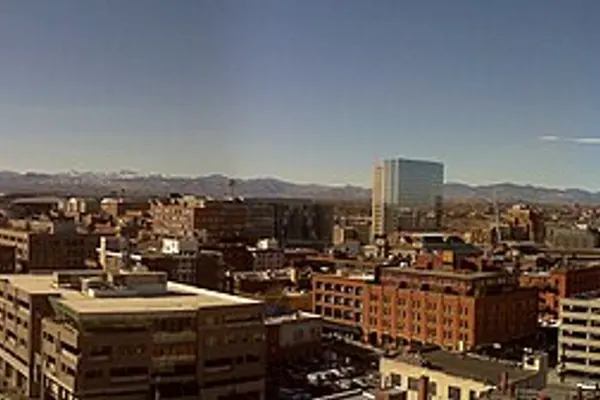
About the neighborhood
Unofficial neighborhood in Denver, Colorado
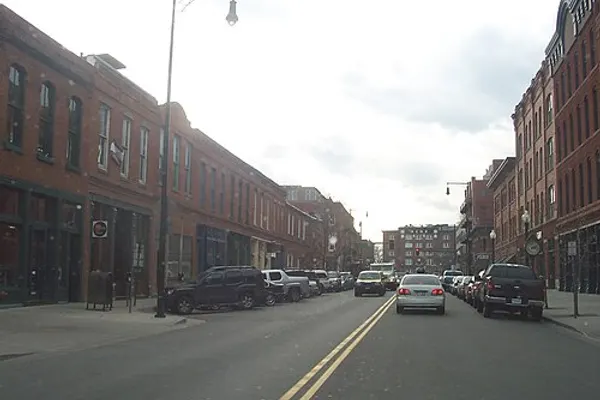
LoDo (Lower Downtown) is an unofficial neighborhood in Denver, Colorado, and is one of the oldest places of settlement in the city. It is a mixed-use historic district, known for its nightlife, and serves as an example of success in urban reinvestment and revitalization. The current population is approximately 21,145.
History
Prior to European exploration of the area, Native Americans, particularly the Arapaho tribe, established encampments along the South Platte River near or in what is now LoDo. In 1858, after the discovery of gold in the river, General William Larimer founded Denver by putting down cottonwood logs in the center of a square mile plot that would eventually be the current LoDo neighborhood, making LoDo both the original city of Denver, as well as its oldest neighborhood. Then, like now, LoDo was a bustling and sometimes wild area known for its saloons and brothels. During the Sand Creek Massacre, it was in LoDo that the heads of the slaughtered Arapaho tribe were paraded in victory.
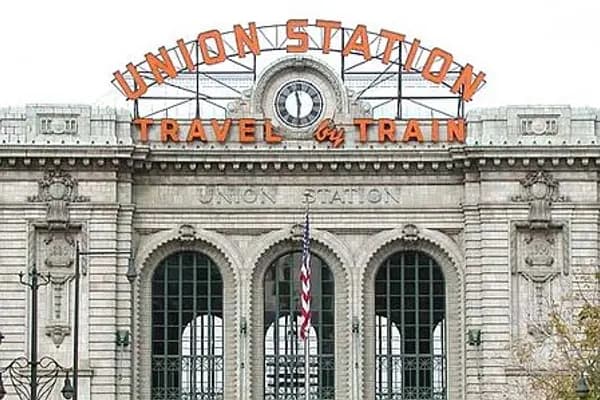
As Denver grew, city leaders realized a railroad was needed to keep Denver a strong city, especially when the transcontinental railroad bypassed Denver for Cheyenne, Wyoming. In 1870, after much cajoling from town leaders, residents passed bonds that brought a 106-mile (171km) rail spur from Cheyenne. This and later train lines ended up in the Central Platte Valley, adjacent to LoDo. Union Station became the place by which most people traveled into the city and LoDo would be the first part of the city they would see. This section eventually became Denver's Chinatown from the 1870s to the 1880s, only to be torn down by race riots.
By the mid-twentieth century, what was once a thriving business area had become a skid row. As highways and airports diminished the dominance of passenger railroad transportation, the importance of Union Station, LoDo's most prominent building, waned.
The Lower Downtown Historic District, known as LoDo, was created by the enactment of a zoning ordinance by Denver City Council in March 1988. The resolution's intent was to encourage historic preservation and to promote economic and social vitality in Denver's founding neighborhood at a time when it still held significant historic and architectural value. The status granted by this special designation provided protection to the community's archivable resources and to the 127 contributing historic structures that remained after roughly 20% of Lower Downtown's buildings had been demolished through DURA policies in the 1960s and 1970s. LoDo's historic district ordinance includes zoning that restricts building height and encourages mixed-use development. It stipulates strict design guidelines for rehabilitation and new construction. These guidelines have been challenged by out-of-state developers but are vigorously defended by residents.
During this time, the neighborhood began its renaissance and new businesses opened. Gradually LoDo became a destination neighborhood. By the time Coors Field opened on the edge of the LoDo Historic District in 1995, the area had revitalized itself, becoming a new, hip neighborhood filled with clubs, restaurants, art galleries, boutiques, bars, and other businesses. Pepsi Center, located on the other edge of the neighborhood, opened in 1999 and further established the neighborhood as a sport fan's paradise. New residential development came to LoDo, transforming old warehouses into pricey new lofts.
Geography
The B-7 zoned historic district is roughly bordered by:
Cherry Creek/Speer Boulevard
Wewatta Street (excluding Union Station)
20th Street
The alley between Market and Larimer Streets
When referring to the greater LoDo area, people often include adjacent neighborhoods that are not a part of the official historic district, but encompass LoDo's sphere of influence. This unofficial greater area includes Larimer Square, the Auraria Campus, Riverfront Park, the Central Platte Valley, Union Station North, River North, and the Ballpark neighborhoods.
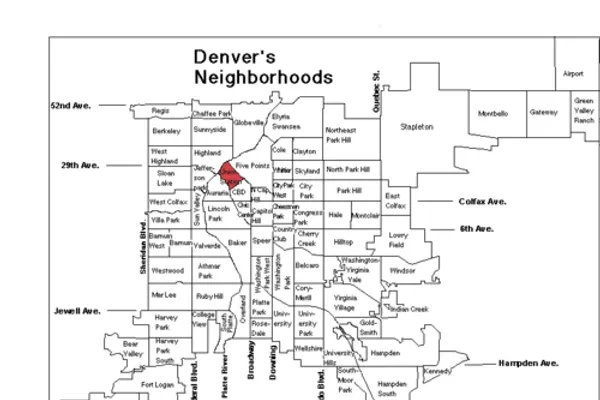
LoDo is located in north-central Denver, directly northwest of the downtown CBD, near the confluence of Cherry Creek and the South Platte River.
Economy
Land in the Lower Downtown Historic District is zoned B-7, which includes building height limitations and encourages mixed-use development and provides strict design guidelines for rehabilitation and new construction. Projects must go through an architectural design review, which allows LoDo to retain its pedestrian scale and historic character as it continues to densify.
The average cost of a home in LoDo in May of 2016 was $701,286.
Oxford Hotel
The Oxford Hotel, built in 1891, is listed on the National Register of Historic Places. The Cruise Room is a hotel bar with historic art deco interior, that was operated as an illicit speakeasy.
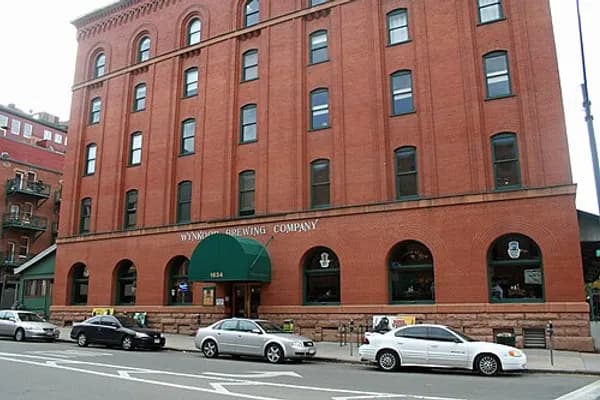
Wynkoop Brewing Company
The Wynkoop Brewing Company, a brewpub founded in 1988 by Colorado's 42nd Governor John Hickenlooper with partners Russell Schehrer, Mark Schiffler, and Jerry Williams, sponsors the "Beerdrinker of the Year" competition, which is hosted yearly in one of the banquet halls. The Wynkoop has a large billiards hall on its top floor.
Arts and culture
In the summer of 2006, LoDo hosted the cast members of MTV's popular reality show The Real World, as season 18: The Real World: Denver. Several movies have also been filmed, wholly or in part, in the neighborhood, including the Eddie Murphy film Imagine That (2009). LoDo's combination of contemporary architecture sprinkled among historic buildings, beautiful mountain views, access to Cherry Creek and nearby parks, plus its proximity to two major sporting venues, make it an attractive location for television and movie filming.
The 70+ bars and restaurants in the historic district provide a positive economic impact for the city. However, late night violence, including a fatal shooting, has caused concern. The police are increasing foot patrols and asking private security officers to assist with the 2:00 am "let out" period. A security task force, made up of members of the public, Denver Police, neighborhood and business associations, and bar and club owners has convened to examine the issue.
Community
The LoDo District, Inc., a non-profit neighborhood and business association, represents both the residential and commercial communities, and functions as a LoDo-specific chamber of commerce, visitors bureau, registered neighborhood organization, advocacy agent, and marketing entity. The Lower Downtown Neighborhood Association, the residential association, is a non-profit organization committed to seeking quality living conditions amid the mixed uses of the Lower Downtown area.
Because of the numerous bars and clubs in the area, LoDo is also a popular location for the nightlife of Denver.
Attractions
Coors Field
Ball Arena
Denver Union Station
Denver Millennium Bridge
Museum of Contemporary Art Denver
Children's Museum of Denver
Elitch Gardens Amusement Park
16th Street Mall
Tattered Cover
See also
Geography portal
History portal
United States portal
Colorado portal
Bibliography of Colorado
Geography of Colorado
History of Colorado
Index of Colorado-related articles
List of Colorado-related lists List of neighborhoods in Denver
List of populated places in Colorado
Outline of Colorado
References
External links
Media from Commons
News from Wikinews
Quotations from Wikiquote
Texts from Wikisource
Travel information from Wikivoyage
The LoDo District - The neighborhood and business association for Lower Downtown Denver. The LoDo District, Inc. is a 501(c) 3, membership organization that supports Lower Downtown (LoDo) Denver’s unique historical, cultural, and retail neighborhood through marketing, education, and advocacy.
The Lower Downtown Neighborhood Association - The residential association for Lower Downtown Denver.
LoveLoDo - District Website
City and County of Denver City and County of Denver: Neighborhoods map
State of Colorado History Colorado
39°45′13″N 105°00′01″W / 39.7536°N 105.0004°W / 39.7536; -105.0004
Encyclopedic content adapted from the Wikipedia article on LoDo, used under CC BY-SA 4.0.
What makes LoDo special
LoDo stands out among Denver’s neighborhoods for its distinctive character: denver's historic downtown core. Ranked #2 in Denver, it offers the kind of experience that defines a great city trip — a place where the streets themselves tell a story and every block rewards curiosity.
Best for
Our take on LoDo
LoDo is one of the strongest neighborhoods in Denver, and it consistently appears in our editors' personal favorites lists. It may not always get the same attention as the city's most famous district, but among travelers who know Denver well, LoDo is often the first recommendation.
Walking through LoDo is like reading a history book with your feet. The architecture tells the story of decades — sometimes centuries — of evolution, and the neighborhood has managed to preserve its historical character without becoming a museum piece. People still live here, still run businesses here, still argue about parking here. That living quality is what separates a great historic neighborhood from a pretty but lifeless one.
Our editors recommend budgeting at least half a day here — enough time to walk the main streets, sit down for coffee, and discover the side streets where LoDo's real character lives.
Living in LoDo
LoDo is connected to the rest of Denver by public transit, and most visitors find it straightforward to reach from the city center or airport. Once you arrive, the neighborhood is best explored on foot — the scale is human and the streets reward wandering.
Day-to-day life in LoDo has the rhythm of a genuine residential neighborhood. You will find grocery stores, pharmacies, cafés with morning regulars, and the kind of small independent shops that only survive where locals support them. For visitors, this means the infrastructure you need — good coffee, a decent meal, a quiet place to sit — is always within a short walk.
Accommodation in LoDo ranges from boutique hotels to short-term rentals. We generally recommend staying within the neighborhood itself rather than commuting from a hotel elsewhere in Denver — the experience of waking up inside a great neighborhood is fundamentally different from visiting one as a day trip.
What locals say about LoDo
Long-term residents of LoDo tend to describe their neighborhood with a mix of pride and protectiveness. Like any district with genuine character, LoDo inspires loyalty — the kind of place people move to and never quite leave, or leave and spend years trying to get back to.
Long-time residents speak about LoDo with a historian's eye — they know which buildings are original, which streets have been renamed, which family has run the corner shop for decades. This accumulated knowledge gives the neighborhood a depth that guidebooks cannot replicate. The best way to access it is simply to talk to people.
Like any neighborhood that has earned attention, LoDo is navigating the tension between popularity and preservation. Rents have risen, new businesses have arrived, and long-time residents occasionally grumble that the neighborhood is not what it was. But the fundamentals — the walkability, the food, the community — remain strong, and most locals we speak to believe the neighborhood is still gaining more than it is losing.
Visitor tips
- LoDo is located in Denver, United States. The neighborhood is accessible by public transport, taxi, or rideshare from most parts of the city.
- Morning is often the best time to explore — the streets are quieter, the light is better for photography, and cafes are at their most welcoming.
- Wear comfortable walking shoes — the best way to experience LoDo is on foot, wandering the side streets and discovering what lies around each corner.
- Save the neighborhood's location on your phone before you arrive. Offline maps are especially useful for navigating the smaller side streets.