About the neighborhood
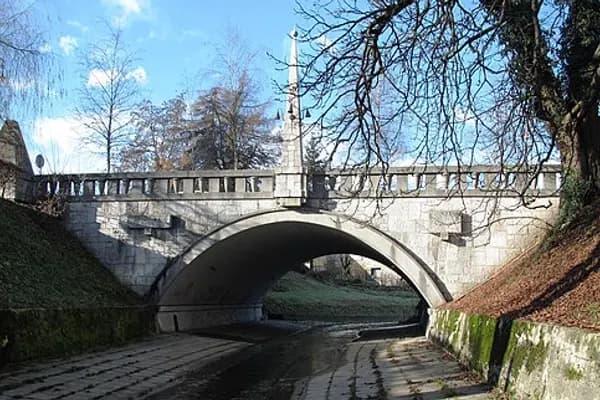
Bridge over the Gradaščica in Ljubljana, Slovenia
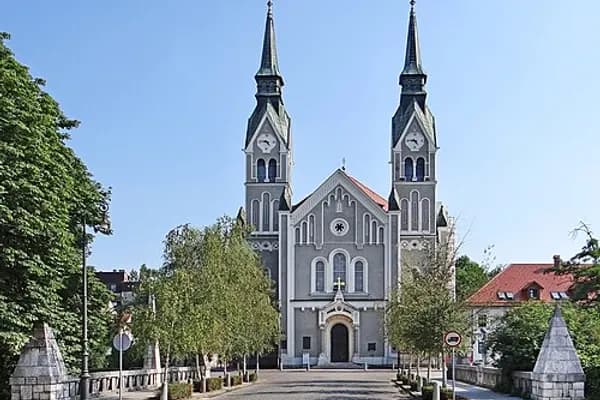
The Trnovo Bridge (Slovene: Trnovski most) is a bridge crossing the Gradaščica River in Ljubljana, the capital of Slovenia. It is located in front of Trnovo Church at the end of Karun Street (Karunova ulica) to the south of the city centre and is a continuation of Emona Street (Emonska cesta). It connects the neighborhoods of Krakovo and Trnovo, the oldest Ljubljana suburbs, known for their market gardens and cultural events. A bridge has stood on the site since the late 17th century. The modern bridge was built between 1928 and 1932 by the constructor Matko Curk upon the plans of the architect Jože Plečnik. It is distinguished by its width and the trees that it bears. It is the most prominent object of Plečnik's renovation of the banks of the Gradaščica. Since August 2021, the Trnovo Bridge has been inscribed as part of Plečnik's legacy on the UNESCO World Heritage List.
Architecture
The iron-concrete bridge, designed as a public space, has a roughly square platform with a width of 20 metres (66ft). It is supported from below by a stone arch. Each of its corners is capped with a small pyramid, a signature motif of Plečnik's, designed in the same way as the spires of the church. The mid-span features a pair of Art-Deco male sculptures. The bridge is among the rare with live trees. Two rows of birches divide the pedestrian and vehicle lanes, intentionally obscuring the bridge silhouette. They are complemented by a balustrade of vase-like elements and a row of short columns at each side. There is also a statue of Saint John the Baptist, the patron of the church, at the center of the bridge. It was designed by Nikolaj Pirnat. On the opposite side stands a slender obelisk with a lamp. It has been dedicated to Sigmund Zois, a naturalist and patron of science and arts. On the Krakovo side, a stone tablet with the inscription KRAKOVU 'to Krakovo' is mounted on the face of the bridge. On the Trnovo side, there is a stone tablet that reads TRNOVU 'to Trnovo'.
References
External links
Media related to Trnovo Bridge at Wikimedia Commons
Parks, ponds, squares, and streetsProtected areasHills and valleys Kucja Valley
Mount Saint Mary
Rožnik
Culture, science, and education Anton Melik Geographical Institute
Archives of the Republic of Slovenia
Historical Archives of Ljubljana
Biennial of Graphic Arts
Botanical Garden
Cankar Centre
Rog factory
International Centre of Graphic Arts
Jakopič Pavilion
Jožef Stefan Institute
Ljubljana International Film Festival
Kiberpipa
Križanke
Ljubljana Slovene National Theatre Drama
Ljubljana Slovene National Theatre Opera and Ballet
Ljubljana Opera House
Ljubljana Summer Festival
Metelkova
Museum of Contemporary History
Museum of Modern Art
The Naked Stage
National Gallery
National and University Library
National Museum
Poligon
Slovenian Academy of Sciences and Arts
Natural History Museum
Slovenian Philharmonic Orchestra
Slovenian Railway Museum
St. Stanislaus Institute
University of Ljubljana
Zoo
SportsHealth-related institutions Medical Centre
Lists of people related to Ljubljana List of people from Ljubljana
List of University of Ljubljana people
Settlements besides the administrative seat Besnica
Brezje pri Lipoglavu
Češnjica
Črna Vas
Dolgo Brdo
Dvor
Gabrje pri Jančah
Janče
Javor
Lipe
Mali Lipoglav
Mali Vrh pri Prežganju
Malo Trebeljevo
Medno
Pance
Podgrad
Podlipoglav
Podmolnik
Prežganje
Rašica
Ravno Brdo
Repče
Sadinja Vas
Selo pri Pancah
Šentpavel
Spodnje Gameljne
Srednje Gameljne
Stanežiče
Toško Čelo
Tuji Grm
Veliki Lipoglav
Veliko Trebeljevo
Vnajnarje
Volavlje
Zagradišče
Zgornja Besnica
Zgornje Gameljne
Former settlements Bizovik
Bokalce
Brod (Črnuče District)
Brod (Šentvid District)
Črnuče
Dobrava pri Črnučah
Dobrunje
Dolnice
Dravlje
Fužine
Glince
Glinica
Gmajna
Grič
Gunclje
Hradeckega Vas
Hrastje
Jarše
Ježa
Ježica
Kamna Gorica
Kleče
Koseze
Kozarje
Laze
Mala Vas
Moste
Nadgorica
Obrije
Podboršt
Podgora
Podgorica pri Črnučah
Podutik
Poljane (Šentvid District)
Polje
Pržan
Rožna Dolina
Rudnik
Savlje
Selo
Šentjakob ob Savi
Šentvid
Slape
Šmartno ob Savi
Šmartno pod Šmarno Goro
Sneberje
Sostro
Soteska
Spodnja Hrušica
Spodnja Šiška
Spodnja Zadobrova
Spodnji Kašelj
Štepanja Vas
Stožice
Studenec
Tacen
Tomačevo
Trata
Vevče
Vič
Vižmarje
Vodmat
Vrhovci
Zadvor
Zalog
Zapuže
Zavoglje
Zgornja Hrušica
Zgornja Šiška
Zgornja Zadobrova
Zgornji Kašelj
History Timeline
46°02′36″N 14°30′07″E / 46.0434°N 14.502°E / 46.0434; 14.502
Encyclopedic content adapted from the Wikipedia article on Krakovo, used under CC BY-SA 4.0.
What makes Krakovo special
Krakovo stands out among Ljubljana’s neighborhoods for its distinctive character: ljubljana's historic village-in-the-city. Ranked #4 in Ljubljana, it offers the kind of experience that defines a great city trip — a place where the streets themselves tell a story and every block rewards curiosity.
Best for
Our take on Krakovo
Krakovo occupies a distinctive place in Ljubljana's neighborhood landscape. It is the kind of district that rewards travelers who venture beyond the obvious choices — quieter than the tourist-facing areas, richer in local character, and full of the small details that make a city trip memorable.
Walking through Krakovo is like reading a history book with your feet. The architecture tells the story of decades — sometimes centuries — of evolution, and the neighborhood has managed to preserve its historical character without becoming a museum piece. People still live here, still run businesses here, still argue about parking here. That living quality is what separates a great historic neighborhood from a pretty but lifeless one.
Our editors recommend budgeting at least half a day here — enough time to walk the main streets, sit down for coffee, and discover the side streets where Krakovo's real character lives.
Living in Krakovo
Krakovo is connected to the rest of Ljubljana by public transit, and most visitors find it straightforward to reach from the city center or airport. Once you arrive, the neighborhood is best explored on foot — the scale is human and the streets reward wandering.
Day-to-day life in Krakovo has the rhythm of a genuine residential neighborhood. You will find grocery stores, pharmacies, cafés with morning regulars, and the kind of small independent shops that only survive where locals support them. For visitors, this means the infrastructure you need — good coffee, a decent meal, a quiet place to sit — is always within a short walk.
Accommodation in Krakovo ranges from boutique hotels to short-term rentals. We generally recommend staying within the neighborhood itself rather than commuting from a hotel elsewhere in Ljubljana — the experience of waking up inside a great neighborhood is fundamentally different from visiting one as a day trip.
What locals say about Krakovo
Long-term residents of Krakovo tend to describe their neighborhood with a mix of pride and protectiveness. Like any district with genuine character, Krakovo inspires loyalty — the kind of place people move to and never quite leave, or leave and spend years trying to get back to.
Long-time residents speak about Krakovo with a historian's eye — they know which buildings are original, which streets have been renamed, which family has run the corner shop for decades. This accumulated knowledge gives the neighborhood a depth that guidebooks cannot replicate. The best way to access it is simply to talk to people.
Compared to the more famous districts in Ljubljana, Krakovo has maintained a lower profile, which many residents consider an advantage. The neighborhood evolves gradually rather than being reshaped by sudden attention, and the result is a community that still feels organic rather than curated.
Visitor tips
- Krakovo is located in Ljubljana, Slovenia. The neighborhood is accessible by public transport, taxi, or rideshare from most parts of the city.
- Morning is often the best time to explore — the streets are quieter, the light is better for photography, and cafes are at their most welcoming.
- Wear comfortable walking shoes — the best way to experience Krakovo is on foot, wandering the side streets and discovering what lies around each corner.
- Save the neighborhood's location on your phone before you arrive. Offline maps are especially useful for navigating the smaller side streets.