About the neighborhood
Ethiopian musical group
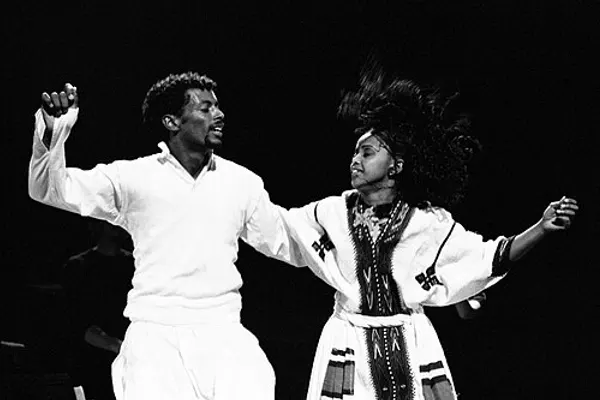
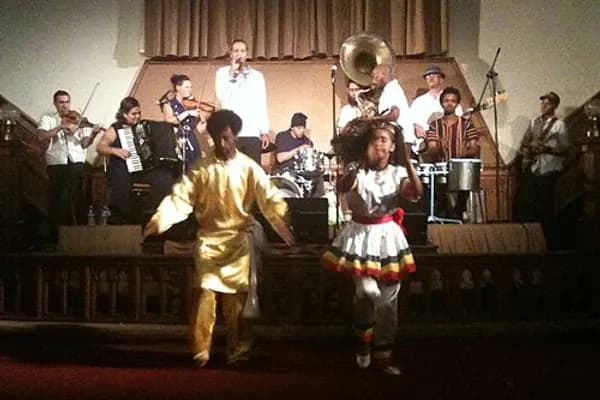
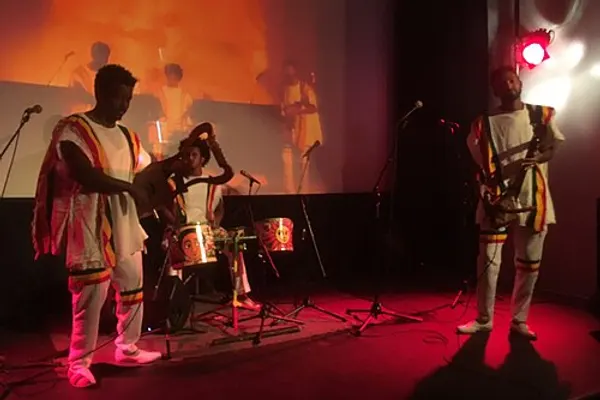
Fendika (Amharic: "Exult!") is an Ethiopian music group based in Addis Ababa. Led by dancer/choreographer Melaku Belay, they operate a venue, tour, record, and perform under the name Fendika.
History
Born in 1980 in Ethiopia, Melaku Belay lived as an orphan on the streets of Addis Ababa. As a child Belay earned a living shining shoes and taught himself to dance through participation in folk traditions and religious festivals. He worked for seven years as a dancer for tips in Addis Ababa's Kazanchis neighborhood at a local azmari bet—a tavern that hosts azmari story-songsters who accompany themselves on the masenko (a one-stringed violin) or krar (a type of lyre). Each night after work, the young Melaku slept under the bar and eventually saved enough money to buy the club, Fendika Azmari Bet, from its owners.
When not working at the azmari bet, Melaku traveled extensively through Ethiopia, Eritrea, Somalia, and South Sudan to learn as many dances as he could from more than 80 tribes around the Horn of Africa, including the traditions of Gurage, Wolaita, Tigray, Wollo, Konso, Gonder, and Gojam, as well as dances from Somali and Afar regions. Melaku also became a nationally celebrated artist in eskesta, a shoulder dance style whose movements share roots with hip hop's traditions of locking and popping.
With Ethiopia's capital city being a nexus of culture, music, and dance from other nations, Melaku incorporated these into his repertoire as well, gradually assembling a 13-piece ensemble called the Ethiocolor Cultural Band. Combining tribal dances and folk instruments with jazz, rock, theater and elaborate costumes. The group became a staple at Fendika, rooted in the azmari tradition but with amplified versions of its instruments. In 2009 Melaku assembled a smaller group out of the larger Ethiocolor ensemble, featuring three musicians, two dancers, and one singer. With a more portable acoustic sound and azmari folk aesthetic, the group named themselves Fendika in tribute to the establishment from which they originated.
Through the Fendika venue's hosting touring artists from all over the world, the ensemble has established an international network enabling them to travel and collaborate with musicians from around the globe. They have toured the United States and eastern Africa with Boston-area Ethio-jazz orchestra Debo Band, and in 2010 the two groups released a joint live recording from a concert given at the Sauti za Busara African music festival in Zanzibar. Fendika has also toured throughout Europe with Dutch post-punk band The Ex and released records through the band's label. In 2018 Fendika toured Scandinavia in collaboration with Paal Nilssen-Love's free jazz orchestra Large Unit before embarking on their first U.S. solo tour, performing as headliners to Ethiopia Fest Chicago and Boston's Global Music Fest.
In their home city of Addis Ababa, Fendika have collaborated with many of their nation's most well-known musicians, including singer Mahmoud Ahmed, begena player Alemu Aga, and saxophonist Getatchew Mekuria.
Educational work
Fendika often leads workshops in traditional Ethiopian music and dance. The group also supports a school for migrant children which aims to prevent youth homelessness and child labor by providing cultural education for these children and their families. At the azmari bet, Belay supports a dozen young azmaris with room and board plus stipends to support their work. Fendika has also collaborated with members of The Ex, Instant Composers Pool, and others to bring electronic, punk, and improvised music education to Ethiopia.
Awards and tributes
In 2011 Melaku Belay won the Alliance Ethio-Francaise award for dance excellence and in 2015 was named Chevalier dans l’Ordre des Arts et des Lettres by the French Ministry of Culture.
In 2011 Los Angeles rock group the Red Hot Chili Peppers released the song "Ethiopia" for their album I'm with You based on band members' time spent at Fendika. While visiting Ethiopia with guitarist Josh Klinghoffer, Peppers' bass player Flea had called up Melaku and asked to play at the venue. Inspired by their experience at Fendika, the musicians returned home and penned the song.
Members
Fendika and Ethicolor perform, tour, and record in different configurations with ensembles that vary from 5 to 20 members at any given time.
Discography
Albums Addis Tradition CD (2013)
Ethiocolor CD (Selam Sounds, 2014)
Melaku's Fendika CD (2016)
Birabiro LP/CD (Terp Records, 2017)
Ethiobraz CD/FLAC with Large Unit (PNL, 2019)
Singles and EPs Flamingoh: Pink Bird Dawn CD EP with Debo Band (2010)
"Lale Guma"/"Addis Hum" 7" single with The Ex (Ex Records, 2015)
References
External links
Fendika's website
Reverb Nation
Terp Records
Encyclopedic content adapted from the Wikipedia article on Kazanchis, used under CC BY-SA 4.0.
What makes Kazanchis special
Kazanchis stands out among Addis Ababa’s neighborhoods for its distinctive character: addis' new diplomatic district. Ranked #3 in Addis Ababa, it offers the kind of experience that defines a great city trip — a place where the streets themselves tell a story and every block rewards curiosity.
Best for
Our take on Kazanchis
Kazanchis is one of the strongest neighborhoods in Addis Ababa, and it consistently appears in our editors' personal favorites lists. It may not always get the same attention as the city's most famous district, but among travelers who know Addis Ababa well, Kazanchis is often the first recommendation.
What makes Kazanchis worth the visit is the texture of daily life here. It is a neighborhood that functions for the people who live in it — not just for the visitors who pass through. The shops serve local needs, the restaurants feed local appetites, and the streets have a rhythm that reflects genuine community rather than tourism infrastructure. That is the quality our editors prize most, and Kazanchis has it in abundance.
Our editors recommend budgeting at least half a day here — enough time to walk the main streets, sit down for coffee, and discover the side streets where Kazanchis's real character lives.
Living in Kazanchis
Kazanchis is connected to the rest of Addis Ababa by public transit, and most visitors find it straightforward to reach from the city center or airport. Once you arrive, the neighborhood is best explored on foot — the scale is human and the streets reward wandering.
Day-to-day life in Kazanchis has the rhythm of a genuine residential neighborhood. You will find grocery stores, pharmacies, cafés with morning regulars, and the kind of small independent shops that only survive where locals support them. For visitors, this means the infrastructure you need — good coffee, a decent meal, a quiet place to sit — is always within a short walk.
Accommodation in Kazanchis ranges from boutique hotels to short-term rentals. We generally recommend staying within the neighborhood itself rather than commuting from a hotel elsewhere in Addis Ababa — the experience of waking up inside a great neighborhood is fundamentally different from visiting one as a day trip.
What locals say about Kazanchis
Long-term residents of Kazanchis tend to describe their neighborhood with a mix of pride and protectiveness. Like any district with genuine character, Kazanchis inspires loyalty — the kind of place people move to and never quite leave, or leave and spend years trying to get back to.
What locals appreciate most about Kazanchis is its consistency — the feeling that the neighborhood works the same way on a Tuesday morning as it does on a Saturday night. It is not a place that performs for visitors and then goes quiet. The rhythm is genuine, the community is real, and the daily experience of living here is what draws people and keeps them.
Compared to the more famous districts in Addis Ababa, Kazanchis has maintained a lower profile, which many residents consider an advantage. The neighborhood evolves gradually rather than being reshaped by sudden attention, and the result is a community that still feels organic rather than curated.
Visitor tips
- Kazanchis is located in Addis Ababa, Ethiopia. The neighborhood is accessible by public transport, taxi, or rideshare from most parts of the city.
- Morning is often the best time to explore — the streets are quieter, the light is better for photography, and cafes are at their most welcoming.
- Wear comfortable walking shoes — the best way to experience Kazanchis is on foot, wandering the side streets and discovering what lies around each corner.