About the neighborhood
Affluent suburb of Nairobi in Kenya
Karen is a suburb of Nairobi in Kenya, lying south-west of Nairobi's central business district. The suburb of Karen borders the Ngong Forest and is home to the Ngong Racecourse. Karen and Langata previously formed a somewhat isolated area of mid- to high-income residents, but the two suburbs have become increasingly interconnected and linked to the rest of Nairobi through the expansion of the eponymous Langata Road and Ngong Road, the latter project completed in 2021.
History
Karen was previously in Ngong County. After Nairobi received city status in 1950 the counties were redefined. In 1963 Karen was placed under the Nairobi City Council's administration.
It is generally considered that the suburb is named after Karen Blixen, the Danish author of the colonial memoir Out of Africa; her farm occupied the land where the suburb now stands. Blixen declared in her later writings that "the residential district of Karen" was "named after me," although it has never been formally recognised.
Blixen's home is still standing and forms the centerpiece of the Karen Blixen Museum, a key local tourist attraction. Other tourist attractions are the AFEW Giraffe Center, the exclusive Giraffe Manor, the Sheldrick Wildlife Trust Elephant Orphanage, and the Oloolua Forest nature trails.
On 1 September 2017 the first interreligious conference of the DIMMID in Africa took place at the Subiaco Center of the Missionary Benedictine Sisters of Tutzing.
Cityscape
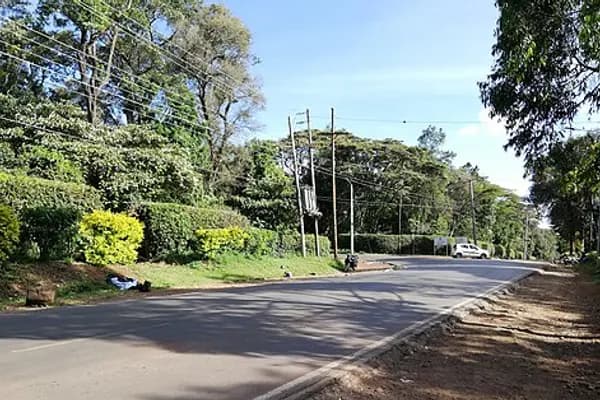
Karen is a vibrant residential suburb characterized by big mansions, many trees, a tranquil atmosphere, and plush gardens this is due to the areas minimum acreage requirement for all homeowners. Karen is also home to an increasing number upscale restaurants, hotels, and malls such as The Hub and The Waterfront. There is a branch of the Red Cross in Karen.
Government
The Karengata Association manages Karen and Langata. It was organized in 1940 and by 2010 it had begun to manage the area's infrastructure.
Demographics
Karen is mainly populated by the wealthier demographic of Kenyans, as well as the political class.
Education
The West Nairobi School is located in Karen. The current campus opened in 2000.
The Nairobi Japanese School is located in the Lang'ata area, in proximity to Karen.
Notable residents
Ellinor Catherine Cunningham van Someren (1915–1988), entomologist
Jan Bonde Nielsen, oil tycoon
General references
De Lame, Danielle. "Grey Nairobi: Sketches of Urban Socialities." In: Charton-Bigot, Hélène and Deyssi Rodriguez-Torres (editors). Nairobi Today: The Paradox of a Fragmented City. African Books Collective, 2010. p.167-214. ISBN9987080936, 9789987080939. The source edition is an English translation, published by Mkuki na Nyota Publishers Ltd. of Dar es Salaam, Tanzania in association with the French Institute for Research in Africa (IFRA) Archived 2020-03-13 at the Wayback Machine of Nairobi. The book was originally published in French as Nairobi contemporain: Les paradoxes d'une ville fragmentée, Karthala Editions (Hommes et sociétés, ISSN 0993-4294). French version article: "Gris Nairobi: Esquisses de sociabilités urbaines." p.221-284. ISBN2845867875, 9782845867871. Includes a section on Karen and Langata, titled "Karen and Langata: Gardens and Suburbs", p.174-179 (In French: "Karen et Langata, jardins et faubourgs", p.231-237).
References
Kenya portal
Further reading
Muhumuza, Ahumuza. "In the footsteps of Karen Blixen Archived 2019-12-27 at the Wayback Machine." The East African. Monday, March 14, 2011. - Available at AllAfrica.com
Landmarks KICC
Nairobi National Museum
Times Tower
Uhuru Park
Nairobi at Wikimedia Commons . Kenyaportal
1°19′11″S 36°41′56″E / 1.3198°S 36.6988°E / -1.3198; 36.6988
Encyclopedic content adapted from the Wikipedia article on Karen, used under CC BY-SA 4.0.
What makes Karen special
Karen stands out among Nairobi’s neighborhoods for its distinctive character: green, colonial-era nairobi. Ranked #2 in Nairobi, it offers the kind of experience that defines a great city trip — a place where the streets themselves tell a story and every block rewards curiosity.
Best for
Our take on Karen
Karen is one of the strongest neighborhoods in Nairobi, and it consistently appears in our editors' personal favorites lists. It may not always get the same attention as the city's most famous district, but among travelers who know Nairobi well, Karen is often the first recommendation.
What makes Karen worth the visit is the texture of daily life here. It is a neighborhood that functions for the people who live in it — not just for the visitors who pass through. The shops serve local needs, the restaurants feed local appetites, and the streets have a rhythm that reflects genuine community rather than tourism infrastructure. That is the quality our editors prize most, and Karen has it in abundance.
Our editors recommend budgeting at least half a day here — enough time to walk the main streets, sit down for coffee, and discover the side streets where Karen's real character lives.
Living in Karen
Karen is connected to the rest of Nairobi by public transit, and most visitors find it straightforward to reach from the city center or airport. Once you arrive, the neighborhood is best explored on foot — the scale is human and the streets reward wandering.
Day-to-day life in Karen has the rhythm of a genuine residential neighborhood. You will find grocery stores, pharmacies, cafés with morning regulars, and the kind of small independent shops that only survive where locals support them. For visitors, this means the infrastructure you need — good coffee, a decent meal, a quiet place to sit — is always within a short walk.
Accommodation in Karen ranges from boutique hotels to short-term rentals. We generally recommend staying within the neighborhood itself rather than commuting from a hotel elsewhere in Nairobi — the experience of waking up inside a great neighborhood is fundamentally different from visiting one as a day trip.
What locals say about Karen
Long-term residents of Karen tend to describe their neighborhood with a mix of pride and protectiveness. Like any district with genuine character, Karen inspires loyalty — the kind of place people move to and never quite leave, or leave and spend years trying to get back to.
What locals appreciate most about Karen is its consistency — the feeling that the neighborhood works the same way on a Tuesday morning as it does on a Saturday night. It is not a place that performs for visitors and then goes quiet. The rhythm is genuine, the community is real, and the daily experience of living here is what draws people and keeps them.
Like any neighborhood that has earned attention, Karen is navigating the tension between popularity and preservation. Rents have risen, new businesses have arrived, and long-time residents occasionally grumble that the neighborhood is not what it was. But the fundamentals — the walkability, the food, the community — remain strong, and most locals we speak to believe the neighborhood is still gaining more than it is losing.
Visitor tips
- Karen is located in Nairobi, Kenya. The neighborhood is accessible by public transport, taxi, or rideshare from most parts of the city.
- Morning is often the best time to explore — the streets are quieter, the light is better for photography, and cafes are at their most welcoming.
- Wear comfortable walking shoes — the best way to experience Karen is on foot, wandering the side streets and discovering what lies around each corner.
- Save the neighborhood's location on your phone before you arrive. Offline maps are especially useful for navigating the smaller side streets.