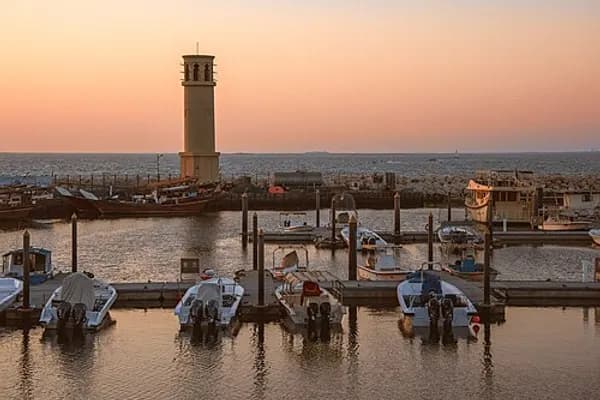
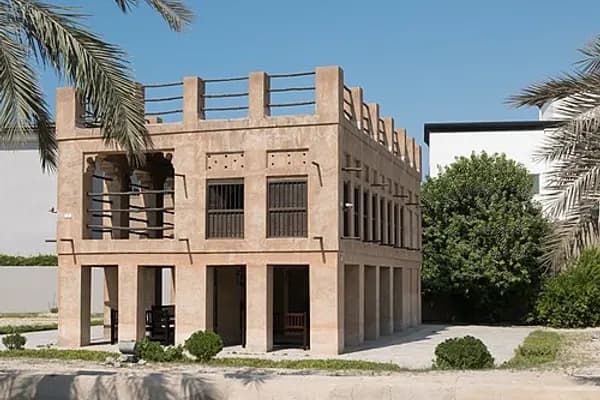
About the neighborhood
Community in Emirate of Dubai, United Arab Emirates
Jumeirah (Arabic: جُمَيْرَا, romanized:Jumayrā Emirati pronunciation: dʒʊˈmeːrɐ) is a coastal residential area of Dubai, United Arab Emirates mainly comprising low rise private dwellings and hotel developments. It has both large expensive detached properties and more modest town houses built in a variety of architectural styles. The area is popular with expatriates working in Dubai and is familiar to many visiting tourists.
History
Archaeological excavations at Jumeirah Archaeological Site, which was discovered in 1969, demonstrate that the area was inhabited as far back as the Abbasid era, approximately in the 10th century CE. Measuring about 80,000m (860,000sqft), the site lay along a caravan route linking India and China to Oman and Iraq.
Historically, Emirati people living in Jumeirah were fishermen, pearl divers and traders. At the turn of the 20th century, it was a village of some 45 areesh (palm leaf) huts, inhabited mainly by settled Bedouin of the Bani Yas and Manasir tribes. At the time, Jumeirah was 'about 3 miles southwest of Dibai town'.
In modern times (1960 onwards), Jumeirah was the principal area for western expatriate residences. The beachfront area was previously called "Chicago Beach", as the site of the former Chicago Beach Hotel. The locale's peculiar name had its origins in the Chicago Bridge & Iron Company which at one time welded giant floating oil storage tankers called "Kazzans" on the site. The old name persisted for a time after the old hotel was demolished in 1997. "Dubai Chicago Beach Hotel" was the Public Project Name for the construction phase of the Burj Al Arab Hotel until Sheikh Mohammed bin Rashid Al Maktoum announced the new name: Burj Al Arab.
The Theatre of Digital Art (ToDA) opened in 2020 at Souk Madinat in Jumeirah as an exhibition space for digital art.
See also
United Arab Emirates portal
Jumeirah Beach
Jumeirah Beach Hotel
Jumeira Baccalaureate School
Palm Jumeirah
Jumeirah Mosque
City Walk
References
External links
Wikimedia Commons has media related to Jumeirah.
Wikivoyage has a travel guide for Dubai/Jumeirah.
Archaeological site Jumeirah Archaeological Site, Dubai Culture & Arts Authority
Lonelyplanet website
Majlis Ghorfat Umm Al-Sheif Majlis Ghorfat Umm Al Sheif, Dubai Culture & Arts Authority
Encyclopedic content adapted from the Wikipedia article on Jumeirah, used under CC BY-SA 4.0.
What makes Jumeirah special
Jumeirah stands out among Dubai’s neighborhoods for its distinctive character: beachside dubai at its most polished. Ranked #3 in Dubai, it offers the kind of experience that defines a great city trip — a place where the streets themselves tell a story and every block rewards curiosity.
Best for
Our take on Jumeirah
Jumeirah is one of the strongest neighborhoods in Dubai, and it consistently appears in our editors' personal favorites lists. It may not always get the same attention as the city's most famous district, but among travelers who know Dubai well, Jumeirah is often the first recommendation.
The waterfront presence in Jumeirah shapes everything about the neighborhood's character — the light, the air, the pace of life, the kind of restaurants that thrive here. But what elevates it beyond a simple beach district is the depth of the neighborhood behind the waterfront: the residential streets, the local markets, the café culture that exists independent of the views.
Our editors recommend budgeting at least half a day here — enough time to walk the main streets, sit down for coffee, and discover the side streets where Jumeirah's real character lives.
Living in Jumeirah
Jumeirah is connected to the rest of Dubai by public transit, and most visitors find it straightforward to reach from the city center or airport. Once you arrive, the neighborhood is best explored on foot — the scale is human and the streets reward wandering.
Day-to-day life in Jumeirah has the rhythm of a genuine residential neighborhood. You will find grocery stores, pharmacies, cafés with morning regulars, and the kind of small independent shops that only survive where locals support them. For visitors, this means the infrastructure you need — good coffee, a decent meal, a quiet place to sit — is always within a short walk.
Accommodation in Jumeirah ranges from boutique hotels to short-term rentals. We generally recommend staying within the neighborhood itself rather than commuting from a hotel elsewhere in Dubai — the experience of waking up inside a great neighborhood is fundamentally different from visiting one as a day trip.
What locals say about Jumeirah
Long-term residents of Jumeirah tend to describe their neighborhood with a mix of pride and protectiveness. Like any district with genuine character, Jumeirah inspires loyalty — the kind of place people move to and never quite leave, or leave and spend years trying to get back to.
What locals appreciate most about Jumeirah is its consistency — the feeling that the neighborhood works the same way on a Tuesday morning as it does on a Saturday night. It is not a place that performs for visitors and then goes quiet. The rhythm is genuine, the community is real, and the daily experience of living here is what draws people and keeps them.
Compared to the more famous districts in Dubai, Jumeirah has maintained a lower profile, which many residents consider an advantage. The neighborhood evolves gradually rather than being reshaped by sudden attention, and the result is a community that still feels organic rather than curated.
Visitor tips
- Jumeirah is located in Dubai, United Arab Emirates. The neighborhood is accessible by public transport, taxi, or rideshare from most parts of the city.
- Morning is often the best time to explore — the streets are quieter, the light is better for photography, and cafes are at their most welcoming.
- Wear comfortable walking shoes — the best way to experience Jumeirah is on foot, wandering the side streets and discovering what lies around each corner.
- Save the neighborhood's location on your phone before you arrive. Offline maps are especially useful for navigating the smaller side streets.