About the neighborhood
Place in Maharashtra, India
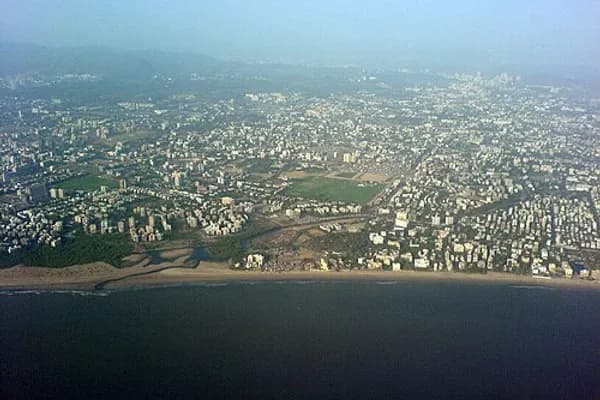
Juhu (pronunciation: [d͡ʒuɦuː]) is a coastal suburb in the Mumbai Suburban district, located on the western coast of Salsette Island. It is known for its sprawling Juhu Beach. It is surrounded by the Arabian Sea to the west, Versova to the north, Vile Parle to the east, and Santacruz to the south. Juhu is among the most expensive and affluent areas of the metropolitan region and is home to many Bollywood celebrities. The nearest railway stations are Santacruz, Andheri, and Vile Parle on the Western and Harbour lines of the Mumbai Suburban Railway. The nearest metro stations are D. N. Nagar and Andheri West. There are two minor B.E.S.T. bus depots in Juhu.
J. R. D. Tata, the father of civil aviation in India, made his maiden voyage to Juhu Airport from Drigh Road Airstrip, Karachi, via Ahmedabad, on 15 October 1932, carrying mail in a Puss Moth aircraft.
History
Juhu is mentioned in the 15th-17th century Marathi-language text Mahikavatichi Bakhar, which states that it was captured by king Pratap Bimb's general Balkrishnrao Somvanshi in the 12th century.
In the nineteenth century, Juhu was an island: a long, narrow sand bar rising above sea level by a metre or two, just off the west coast of Salsette. It could be reached during low tides by walking across the tidal inlet.
Juhu was called "Juvem" by the Portuguese. At its north point, nestled the village of Juhu, inhabited by Agris (salt traders) and Kunbis (cultivators) and at its south point, opposite Bandra island, lived a small colony of fisherfolk and cultivators (Koliwada). The inhabitants of Juhu were mainly Koli people and there was a small section of Goans. The Church of St. Joseph was built by the Portuguese in 1853. The open beaches of Juhu have attracted the well-heeled and the most affluent among Mumbai's population for almost a century. In the 1890s, Jamsetji Tata purchased land on Juhu and built a bungalow there. He planned to develop 1,200 acres (4.9km) in Juhu Tara. This was to yield 500 plots of one acre (4,000m) each and a seaside resort. Simultaneously he wanted to extend the Mahim Causeway to Santacruz, to access to this area. After his death in 1904, the scheme was abandoned. With the dawn of aviation in the 20th century, the Bombay Flying Club commenced operations in 1929 at what eventually became the present Juhu Aerodrome.
During the Indian independence movement, Mahatma Gandhi visited Mumbai and took several walks along Juhu Beach. A famous photograph of Gandhi poking his grandson Kanaa during a walk on the beach was taken in 1937. To mark Gandhi's visit to Juhu, a statue of him was installed by the beach and a lane near the beach was named Gandhigram Road. There is also a school named after him, the Gandhi Shiksha Bhavan school, in Juhu.
Founded in 1928 as India's first civil aviation airport, Juhu aerodrome served as the city's primary airport during and up to World War II. In the 1990s, a group of terror suspects detonated a bomb in a Juhu hotel, as well as in a number of other locations.
Juhu Beach
Juhu Beach is a symbolic attraction in Mumbai and one of the most popular beaches for tourists and the local public. It is spread across 5 kilometers along the Arabian Sea and is open to the public. The area contains many celebrities’ homes, upscale residences, and hotels. The north end of the beach is Gandhi Gram where Mahatma Gandhi lived when he was a practicing lawyer. The southern end of the beach contains numerous upscale hotels. The area where many Bollywood stars live is coined the ‘Beverly Hills of Bollywood.’ Along the beach are many vendors popular for their street food.
Religious places
International Society for Krishna Consciousness (ISKCON) also known as Hare Krishna Mandir
St. Joseph's Church, Juhu
References
Wikimedia Commons has media related to Juhu.
Encyclopedic content adapted from the Wikipedia article on Juhu, used under CC BY-SA 4.0.
What makes Juhu special
Juhu stands out among Mumbai’s neighborhoods for its distinctive character: beachfront bollywood. Ranked #5 in Mumbai, it offers the kind of experience that defines a great city trip — a place where the streets themselves tell a story and every block rewards curiosity.
Best for
Our take on Juhu
Juhu occupies a distinctive place in Mumbai's neighborhood landscape. It is the kind of district that rewards travelers who venture beyond the obvious choices — quieter than the tourist-facing areas, richer in local character, and full of the small details that make a city trip memorable.
The waterfront presence in Juhu shapes everything about the neighborhood's character — the light, the air, the pace of life, the kind of restaurants that thrive here. But what elevates it beyond a simple beach district is the depth of the neighborhood behind the waterfront: the residential streets, the local markets, the café culture that exists independent of the views.
Our editors recommend budgeting at least half a day here — enough time to walk the main streets, sit down for coffee, and discover the side streets where Juhu's real character lives.
Living in Juhu
Juhu is connected to the rest of Mumbai by public transit, and most visitors find it straightforward to reach from the city center or airport. Once you arrive, the neighborhood is best explored on foot — the scale is human and the streets reward wandering.
Day-to-day life in Juhu has the rhythm of a genuine residential neighborhood. You will find grocery stores, pharmacies, cafés with morning regulars, and the kind of small independent shops that only survive where locals support them. For visitors, this means the infrastructure you need — good coffee, a decent meal, a quiet place to sit — is always within a short walk.
Accommodation in Juhu ranges from boutique hotels to short-term rentals. We generally recommend staying within the neighborhood itself rather than commuting from a hotel elsewhere in Mumbai — the experience of waking up inside a great neighborhood is fundamentally different from visiting one as a day trip.
What locals say about Juhu
Long-term residents of Juhu tend to describe their neighborhood with a mix of pride and protectiveness. Like any district with genuine character, Juhu inspires loyalty — the kind of place people move to and never quite leave, or leave and spend years trying to get back to.
What locals appreciate most about Juhu is its consistency — the feeling that the neighborhood works the same way on a Tuesday morning as it does on a Saturday night. It is not a place that performs for visitors and then goes quiet. The rhythm is genuine, the community is real, and the daily experience of living here is what draws people and keeps them.
Compared to the more famous districts in Mumbai, Juhu has maintained a lower profile, which many residents consider an advantage. The neighborhood evolves gradually rather than being reshaped by sudden attention, and the result is a community that still feels organic rather than curated.
Visitor tips
- Juhu is located in Mumbai, India. The neighborhood is accessible by public transport, taxi, or rideshare from most parts of the city.
- Morning is often the best time to explore — the streets are quieter, the light is better for photography, and cafes are at their most welcoming.
- Wear comfortable walking shoes — the best way to experience Juhu is on foot, wandering the side streets and discovering what lies around each corner.
- Save the neighborhood's location on your phone before you arrive. Offline maps are especially useful for navigating the smaller side streets.