About the neighborhood
District in Shanghai, China
Jing'an District (静安区) is one of the central districts of Shanghai. In 2020, it had 975,707 inhabitants in an area of 37km (14sqmi).
The district borders the Hongkou to the east, Huangpu to the east and south, Putuo to the west, Baoshan District to the north and Changning to the west. On 4 November 2015, Zhabei merged with Jing'an District, bringing Shanghai down to 15 districts and one county.
Jing'an District is named after Jing'an Temple, an ancient traditional Chinese Buddhist temple. Today's temple is a new replica of the old one, located in the southern part of the district. An Art Deco "dancehall" is just across the street; the neighborhood is largely residential, but with many bars and restaurants. Jing'an Park, located opposite the temple, is popular among locals; it used to be a graveyard for foreigners in the old Shanghai.
Historically, the northern part of the district, what used to be Zhabei, has been highly populated with working class residents. However, due to the shift in the structure of industries and increasing number of immigrants from outside Shanghai, partly due to its reasonable real estate prices (compared to its counterparts such as Putuo and Hongkou), the district has become increasingly appealing to city residents.
Economy and facilities
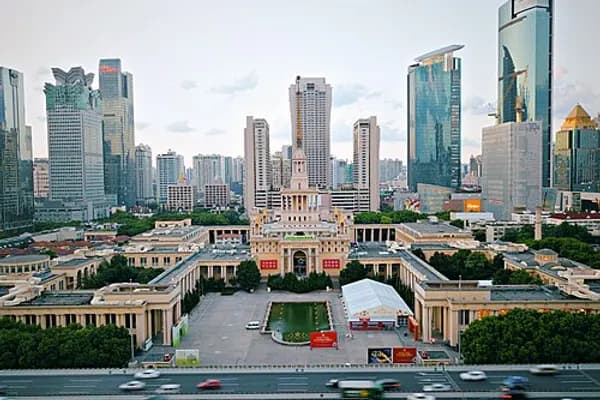
Development in the southern part of the district has been rapid. In three years the stock of Grade A office space in the southern part of the district increased approximately 320 percent, from a total of just 333,000 sqm in 2007 to 1,067,000 sqm in 2010. West Nanjing Road is one of Shanghai's premier shopping districts and is home to five-star hotels and exhibition centers as well as several upscale housing complexes. Key landmarks on West Nanjing Road include the Shanghai Exhibition Centre and the Shanghai Centre.
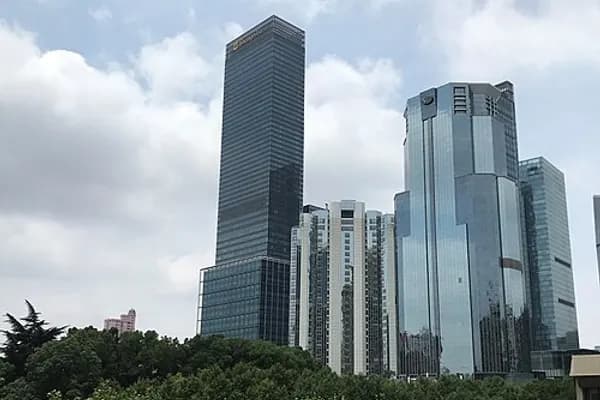
The southern part of the district is one of Shanghai's key central business and commercial districts. It contains numerous large office buildings, hotels, and many shopping venues at the street level. The district comprises a prominent portion of the Shanghai skyline. The district is also known for having many high-rise residential buildings.
The northern part of the district used to be the place of agglomeration of traditional industries such as flavorings factories and tires factories. In the last decade the municipality decided to move the old industry out to make space for more promising ones, such as the hi-tech and creative industries. It has attracted foreign companies to build offices, apartments and commercial retail outlets over there.
Jing'An District is also where the Shanghai Multimedia Valley (SMV) is located to attract media and IT talent. Major companies located in Zhabei include TÜV Rheinland, Royal Philips Electronics and Shanghai Bell Alcatel Business Systems Co., LTD. The Jing'An District is also home to Fotografiska Shanghai.
Daning Lingshi Park, the biggest green area in the downtown area, is surrounded by a series of cultural facilities such as the Zhabei Stadium and Shanghai Circus World.
The Shanghai University, Yanchang Campus is also located near the Daning Lingshi Park.
Education
Universities & Colleges
Shanghai University, Yanchang Campus
Shanghai Theatre Academy, Huahan Road Campus
High School
Shanghai Shixi High School (SSHS)
Qiyi High School Affiliated to Tongji University
Primary School
First Central Primary School of Jing'an District
Chinese Language Institutes
Silk Mandarin
English Teaching Schools
EF Education First, headquarters
Subdistricts and towns
Transportation
Metro
Jing'an is currently served by nine metro lines operated by Shanghai Metro:
Line 1 - Hanzhong Road, Shanghai Railway Station, North Zhongshan Road, Yanchang Road, Shanghai Circus World, Wenshui Road, Pengpu Xincun, Gongkang Road
Line 2 - Jing'an Temple, West Nanjing Road
Line 3 and Line 4 - Shanghai Railway Station, Baoshan Road
Line 7 - Changping Road, Jing'an Temple
Line 8 - North Xizang Road, Zhongxing Road, Qufu Road
Line 10 - Tiantong Road
Line 12 - West Nanjing Road, Hanzhong Road, Qufu Road, Tiantong Road
Line 13 - Hanzhong Road, Shanghai Natural History Museum, West Nanjing Road
Line 14 - Wuding Road, Jing'an Temple
See also
China portal
Jing'an Sculpture Park
References
Further reading
"Jing'an District". Encyclopedia of Shanghai. Shanghai Municipal Government. 2010. Archived from the original on 2013-03-02.
External links
Wikimedia Commons has media related to Jing'an District.
Jing'an District travel guide from Wikivoyage
Jing'an District website Archived 2019-06-25 at the Wayback Machine (in Chinese)
Jing'an District website Archived 2016-09-19 at the Wayback Machine (English version)
Zhabei District travel guide from Wikivoyage
Shanghai Zhabei Government Portal Archived 2008-03-06 at the Wayback Machine
Shanghai Circus World
Culture and demographicsTourist attractionsPlaces of worshipSkyscrapersSports venuesSports teamsTransportUniversitiesGovernance Shanghai Municipal Public Security Bureau
Category
Encyclopedic content adapted from the Wikipedia article on Jing'an, used under CC BY-SA 4.0.
What makes Jing'an special
Jing'an stands out among Shanghai’s neighborhoods for its distinctive character: shanghai's smart commercial heart. Ranked #5 in Shanghai, it offers the kind of experience that defines a great city trip — a place where the streets themselves tell a story and every block rewards curiosity.
Best for
Our take on Jing'an
Jing'an occupies a distinctive place in Shanghai's neighborhood landscape. It is the kind of district that rewards travelers who venture beyond the obvious choices — quieter than the tourist-facing areas, richer in local character, and full of the small details that make a city trip memorable.
What makes Jing'an exceptional is the density of its cultural life. Art galleries, independent bookshops, small theaters, and creative studios are woven into the fabric of the neighborhood rather than clustered in a single zone. You encounter culture here by accident, which is how the best cultural experiences always happen.
Our editors recommend budgeting at least half a day here — enough time to walk the main streets, sit down for coffee, and discover the side streets where Jing'an's real character lives.
Living in Jing'an
Jing'an is connected to the rest of Shanghai by public transit, and most visitors find it straightforward to reach from the city center or airport. Once you arrive, the neighborhood is best explored on foot — the scale is human and the streets reward wandering.
Day-to-day life in Jing'an has the rhythm of a genuine residential neighborhood. You will find grocery stores, pharmacies, cafés with morning regulars, and the kind of small independent shops that only survive where locals support them. For visitors, this means the infrastructure you need — good coffee, a decent meal, a quiet place to sit — is always within a short walk.
Accommodation in Jing'an ranges from boutique hotels to short-term rentals. We generally recommend staying within the neighborhood itself rather than commuting from a hotel elsewhere in Shanghai — the experience of waking up inside a great neighborhood is fundamentally different from visiting one as a day trip.
What locals say about Jing'an
Long-term residents of Jing'an tend to describe their neighborhood with a mix of pride and protectiveness. Like any district with genuine character, Jing'an inspires loyalty — the kind of place people move to and never quite leave, or leave and spend years trying to get back to.
The creative community in Jing'an is genuine, not aspirational. Residents include working artists, writers, musicians, and designers who chose the neighborhood because it supported their work — affordable studio space, a community that values craft, and enough foot traffic to sustain independent galleries and shops.
Compared to the more famous districts in Shanghai, Jing'an has maintained a lower profile, which many residents consider an advantage. The neighborhood evolves gradually rather than being reshaped by sudden attention, and the result is a community that still feels organic rather than curated.
Visitor tips
- Jing'an is located in Shanghai, China. The neighborhood is accessible by public transport, taxi, or rideshare from most parts of the city.
- Morning is often the best time to explore — the streets are quieter, the light is better for photography, and cafes are at their most welcoming.
- Wear comfortable walking shoes — the best way to experience Jing'an is on foot, wandering the side streets and discovering what lies around each corner.
- Save the neighborhood's location on your phone before you arrive. Offline maps are especially useful for navigating the smaller side streets.