About the neighborhood
Suburb of Adelaide, South Australia
Hindmarsh is an inner suburb of Adelaide, South Australia. It is located in the City of Charles Sturt.
The suburb is located between South Road to the west and North Adelaide. The River Torrens forms its southern boundary and the Grange and Outer Harbor railway lines form the northeast.
History
Before the colonisation of South Australia in 1836, the land now called Hindmarsh was occupied by the Kaurna people.
The suburb was named by South Australia's first Governor, Sir John Hindmarsh. Hindmarsh was the first owner of section 353 in the Hundred of Yatala, being among the earliest to make a selection of a "country section" to which he and other early investors in South Australia were entitled by their purchase of land orders prior to settlement (see Lands administrative divisions of South Australia § Land division history). He and Arthur Lindsay subdivided the land in June 1838 and were responsible for it being laid out as the first private town in the colony of South Australia. In the process, according to South Australian historian Geoffrey Manning, the Governor "acquired a dubious reputation by prohibiting squatting in the Parklands, thus forcing people to acquire land in the subdivision".
In 1916, the old town hall was expanded and extensively refurbished by noted cinema architect Chris A. Smith, to accommodated use as a picture theatre. This was the Star Theatre, one of cinema chain owner Dan Clifford's earliest cinemas. Later known as the Odeon Star, Cinema Italia, Cinema Europa, and Windsor Theatre, the cinema eventually closed in 1990.
The modern suburb of Hindmarsh has western and southern boundaries contiguous with the original village and section 353, the Torrens River being the southern boundary. The modern suburb includes land between Port Road and the railway line as well, making the railway line the northern border instead of Port Road, as it was for the early village.
Demographics
The 2016 Census by the Australian Bureau of Statistics counted 231 persons in Hindmarsh on census night. Of these, 61.1% were male and 38.9% were female.
The majority of residents (66.8%) are of Australian birth, with other common census responses being England (5.2%), South Korea (4.3%), Malaysia (3.8%), Thailand (3.3%), and Italy (1.9%). Additionally, people of Aboriginal and/or Torres Strait Islander descent made up 2.6% of the suburb.
In terms of religious affiliation, 46.8% of residents attributed themselves to being irreligious, 17.9% attributed themselves to being Catholic, 6.8% attributed themselves to be Buddhist, and 6.4% attributed themselves to being Eastern Orthodox. Within Welland, 82.8% of the residents were employed, with the remaining 17.2% being unemployed.
Politics
Local government
Hindmarsh is part of Beverley Ward in the City of Charles Sturt local government area, being represented in that council by Independent Edgar Agius and Labor Member Matt Mitchell.
State and federal
Hindmarsh lies in the state electoral district of West Torrens. Prior to the 2016 redistribution, it was in the Croydon district. and the federal electoral division of Adelaide. The suburb is represented in the South Australian House of Assembly by Tom Koutsantonis and federally by Steve Georganas.
Community
The local newspaper is (was?) the Weekly Times Messenger. Other regional and national newspapers such as The Advertiser and The Australian are also available.
Facilities and attractions
The Gov
The Governor Hindmarsh Hotel, more commonly known as The Gov on Port Road, Hindmarsh, was opened in 1848. It underwent renovations in 1988, but had fallen into disrepair when new owners the Tonkins took over in 1993. "The Gov" was developed into a major and popular live music venue, with five separate performing spaces and featuring a wide range of genres of music. It has attracted performers such as Billy Bragg, Vika and Linda Bull, Paul Kelly and The Whitlams, as well as lesser-known musicians, local schools' annual concerts and weekly open mic sessions in the front bar. The venue has won a number of awards, such as both the AHA(SA) and National AHA awards for Best Live Music Venue in 2017, and it has been inducted into the SA Music Hall of Fame. It has been described as "the city's mecca for live music". Its performance spaces are also used by the Adelaide Fringe each year.
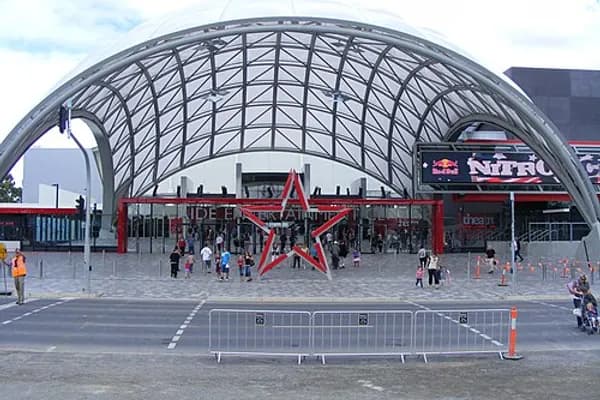
Adelaide Entertainment Centre
The Adelaide Entertainment Centre is a major venue for all kinds of performances, from small intimate spaces to large concerts. It houses up to 11,300 people.
Other venues
The 16,500-seat Hindmarsh Stadium, home to the Adelaide United football club
Holden Street Theatres, a performing arts precinct
The Education Development Centre, a conference venue owned by the state Department for Education
Seven Network's Adelaide studio
The Hindmarsh Library, a public library servicing the area.
Heritage listings
Hindmarsh Town Hall (1936), designed by Christopher Arthur Smith. listed on the South Australian Heritage Register 23 November 1989.
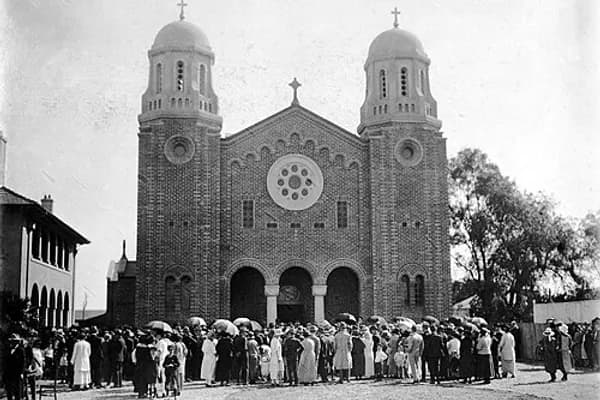
Sacred Heart Church, Port Road, was designed in Romanesque Revival style by Adelaide architect Herbert Jory of Woods, Bagot, Jory & Laybourne Smith and opened in November 1924 as St Saviour's Church. The church was renamed and dedicated as Sacred Heart Church in 1950. It is a Missionaries of the Sacred Heart (MSC) church. The church and its priory were locally heritage-listed by the council on 12 September 2017.
Transport
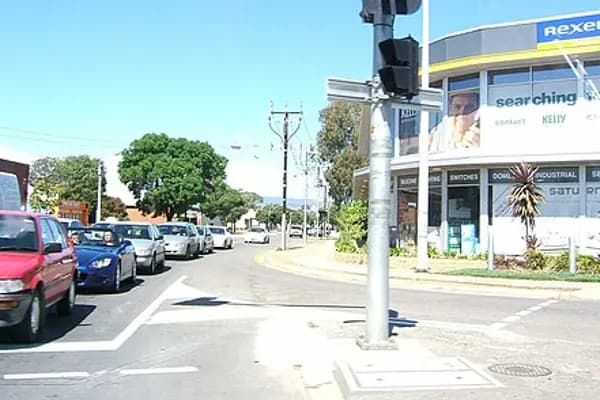
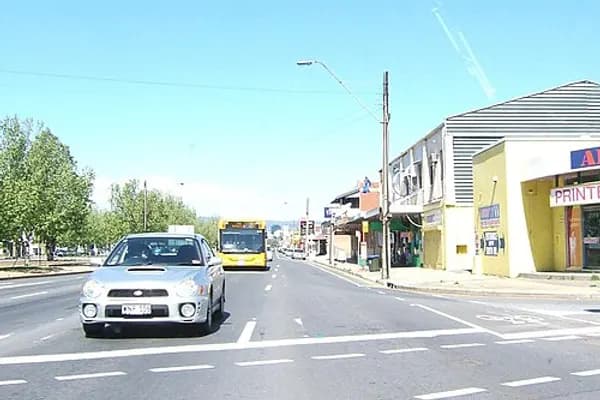
Port Road is the main arterial road connecting the suburb to the Adelaide city centre, while South Road forms its western boundary.
Hindmarsh is serviced by public transport run by the Adelaide Metro:
The Grange and Outer Harbor railway lines pass beside the suburb. The closest station is Bowden.
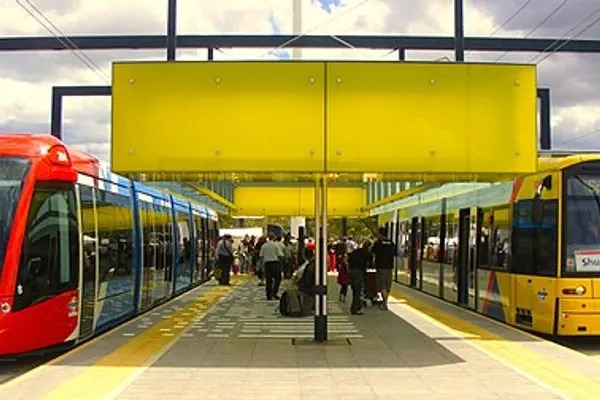
Adelaide Metro operates a tram service to the Entertainment Centre, which is free from anywhere in the city centre.
The suburb is serviced by several bus routes.
See also
Wikimedia Commons has media related to Hindmarsh, South Australia.
List of Adelaide suburbs
References
External links
"City of Charles Sturt". Official website. City of Charles Sturt. Retrieved 1 February 2012.
Susan Marsden. "Hindmarsh-a short history". website. Professional Historians Association (South Australia). Retrieved 30 March 2012.
Encyclopedic content adapted from the Wikipedia article on Hindmarsh, used under CC BY-SA 4.0.
What makes Hindmarsh special
Hindmarsh stands out among Adelaide’s neighborhoods for its distinctive character: adelaide's reborn industrial quarter. Ranked #5 in Adelaide, it offers the kind of experience that defines a great city trip — a place where the streets themselves tell a story and every block rewards curiosity.
Best for
Our take on Hindmarsh
Hindmarsh occupies a distinctive place in Adelaide's neighborhood landscape. It is the kind of district that rewards travelers who venture beyond the obvious choices — quieter than the tourist-facing areas, richer in local character, and full of the small details that make a city trip memorable.
What makes Hindmarsh exceptional is the density of its cultural life. Art galleries, independent bookshops, small theaters, and creative studios are woven into the fabric of the neighborhood rather than clustered in a single zone. You encounter culture here by accident, which is how the best cultural experiences always happen.
Our editors recommend budgeting at least half a day here — enough time to walk the main streets, sit down for coffee, and discover the side streets where Hindmarsh's real character lives.
Living in Hindmarsh
Hindmarsh is connected to the rest of Adelaide by public transit, and most visitors find it straightforward to reach from the city center or airport. Once you arrive, the neighborhood is best explored on foot — the scale is human and the streets reward wandering.
Day-to-day life in Hindmarsh has the rhythm of a genuine residential neighborhood. You will find grocery stores, pharmacies, cafés with morning regulars, and the kind of small independent shops that only survive where locals support them. For visitors, this means the infrastructure you need — good coffee, a decent meal, a quiet place to sit — is always within a short walk.
Accommodation in Hindmarsh ranges from boutique hotels to short-term rentals. We generally recommend staying within the neighborhood itself rather than commuting from a hotel elsewhere in Adelaide — the experience of waking up inside a great neighborhood is fundamentally different from visiting one as a day trip.
What locals say about Hindmarsh
Long-term residents of Hindmarsh tend to describe their neighborhood with a mix of pride and protectiveness. Like any district with genuine character, Hindmarsh inspires loyalty — the kind of place people move to and never quite leave, or leave and spend years trying to get back to.
The creative community in Hindmarsh is genuine, not aspirational. Residents include working artists, writers, musicians, and designers who chose the neighborhood because it supported their work — affordable studio space, a community that values craft, and enough foot traffic to sustain independent galleries and shops.
Compared to the more famous districts in Adelaide, Hindmarsh has maintained a lower profile, which many residents consider an advantage. The neighborhood evolves gradually rather than being reshaped by sudden attention, and the result is a community that still feels organic rather than curated.
Visitor tips
- Hindmarsh is located in Adelaide, Australia. The neighborhood is accessible by public transport, taxi, or rideshare from most parts of the city.
- Morning is often the best time to explore — the streets are quieter, the light is better for photography, and cafes are at their most welcoming.
- Wear comfortable walking shoes — the best way to experience Hindmarsh is on foot, wandering the side streets and discovering what lies around each corner.
- Save the neighborhood's location on your phone before you arrive. Offline maps are especially useful for navigating the smaller side streets.