About the neighborhood
Human settlement in Scotland
Finnieston is an area within the city of Glasgow, located in the central belt of Scotland, situated on the north bank of the River Clyde roughly between the city's West End and the city centre. The area is home to the SEC Centre and OVO Hydro, where many musical concerts, sporting events and conferences are held. It is also the location of Glasgow City Heliport, the former home base of both the Police Scotland air support unit and the Scottish Ambulance Service "Helimed 5".
Finnieston borders the neighbourhoods of Anderston, Kelvingrove, Kelvinhaugh, Overnewton and Sandyford. Historically, it covered a primarily industrial area between the River Clyde and the main thoroughfare at Argyle Street, but in the 21st century the wider area has become a popular tourist destination marketed under the Finnieston name.
History
The village of Finnieston was established in 1768 on the lands of Stobcross by Matthew Orr, the owner of Stobcross House. Orr named the new village "Finnieston" in honour of the Reverend John Finnie, who had been his tutor.
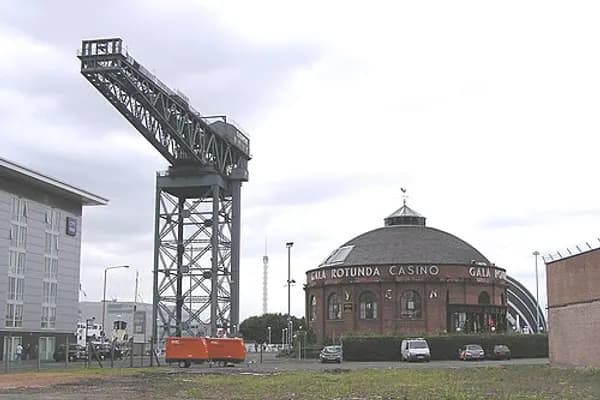
The area has had a significant change in land-use since deindustrialisation. Previously, Finnieston was an area of warehouses and docks — the film 1980 film Death Watch used this aspect extensively in location shots.
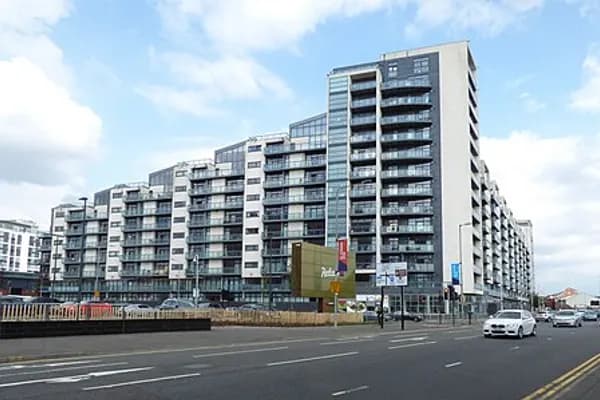
In the early 21st century, Finnieston has been promoted and built up as a modern residential and leisure area, mirroring Shoreditch in Greater London. To this end many new bars and restaurants have been established. There is modern housing, office, retail, leisure and arts & culture developments. In 2016, Finnieston ranked first in The Times list "20 Hippest Places to Live in Britain" and The Herald claimed it the 'Hippest Place in Britain'.
Finnieston Street is a major junction on the Clydeside Expressway, and on 18 September 2006, was augmented with the addition of the Clyde Arc (known locally as "The Squinty Bridge") over the River Clyde. Finneiston forms part of the Glasgow City Council ward of Anderston/City/Yorkhill.
Transport
Exhibition Centre railway station, on the Argyle Line was previously known as Stobcross station. Built by the Glasgow Central Railway and opened in 1894, it was closed in 1955. When it was reopened in 1979 it was called 'Finnieston' until it was given its current name in 1986. A separate Finnieston railway station of the Glasgow City and District Railway was opened in 1886 but is now disused, although reopening was under consideration in the late 2010s. However, the line is still in use as part of the North Clyde Line.
Landmarks
The Corunna Bowling Club located on A-Listed St Vincent Crescent has been a key feature of the area since 1850.
The Clyde Arc (known locally as "The Squinty Bridge") over the River Clyde sits to the south of Finnieston.
The SEC Centre, which opened in 1985 and where many musical concerts and important conferences are held, is located in Finnieston along with the Clyde Auditorium which opened in 1997.
The OVO Hydro (previously known as the SSE Hydro) opened in 2013 next to the SEC Centre and welcomed over 1 million visitors per year to the venue and surrounding area. In 2016 the OVO Hydro boasted the title as 8th largest venue in the world.
Notable people
Danny McGrain, footballer
Sharleen Spiteri, musician
References
External links
Media related to Finnieston at Wikimedia Commons
The Glasgow Harbour Tunnels
South of the River Clyde
Encyclopedic content adapted from the Wikipedia article on Finnieston, used under CC BY-SA 4.0.
What makes Finnieston special
Finnieston stands out among Glasgow’s neighborhoods for its distinctive character: glasgow's foodie corridor. Ranked #3 in Glasgow, it offers the kind of experience that defines a great city trip — a place where the streets themselves tell a story and every block rewards curiosity.
Best for
Our take on Finnieston
Finnieston is one of the strongest neighborhoods in Glasgow, and it consistently appears in our editors' personal favorites lists. It may not always get the same attention as the city's most famous district, but among travelers who know Glasgow well, Finnieston is often the first recommendation.
What strikes us most about Finnieston is the depth of its food culture. This is not a neighborhood with a few good restaurants — it is a neighborhood where eating well is woven into daily life, where the corner places are as good as the destination spots, and where you could eat every meal for a week without repeating yourself or being disappointed.
Our editors recommend budgeting at least half a day here — enough time to walk the main streets, sit down for coffee, and discover the side streets where Finnieston's real character lives.
Living in Finnieston
Finnieston is connected to the rest of Glasgow by public transit, and most visitors find it straightforward to reach from the city center or airport. Once you arrive, the neighborhood is best explored on foot — the scale is human and the streets reward wandering.
Dining options range from quick, affordable local spots to more deliberate sit-down restaurants. The neighborhood supports a genuine food ecosystem — bakeries, grocery shops, specialty stores — which means you can eat well at every price point. Weekend mornings tend to be the most atmospheric time for a food-focused walk.
Accommodation in Finnieston ranges from boutique hotels to short-term rentals. We generally recommend staying within the neighborhood itself rather than commuting from a hotel elsewhere in Glasgow — the experience of waking up inside a great neighborhood is fundamentally different from visiting one as a day trip.
What locals say about Finnieston
Long-term residents of Finnieston tend to describe their neighborhood with a mix of pride and protectiveness. Like any district with genuine character, Finnieston inspires loyalty — the kind of place people move to and never quite leave, or leave and spend years trying to get back to.
Ask a local what they love most, and the answer almost always starts with the food. Residents have strong opinions about which bakery is best, which café makes the best morning coffee, which restaurant they bring visiting friends to as proof that Finnieston is the best neighborhood in Glasgow. The food culture here is not performative — it is the backbone of community life.
Compared to the more famous districts in Glasgow, Finnieston has maintained a lower profile, which many residents consider an advantage. The neighborhood evolves gradually rather than being reshaped by sudden attention, and the result is a community that still feels organic rather than curated.
Visitor tips
- Finnieston is located in Glasgow, United Kingdom. The neighborhood is accessible by public transport, taxi, or rideshare from most parts of the city.
- For the best food experience, visit during lunchtime on weekdays when locals fill the restaurants, or explore weekend markets if available.
- Wear comfortable walking shoes — the best way to experience Finnieston is on foot, wandering the side streets and discovering what lies around each corner.
- Save the neighborhood's location on your phone before you arrive. Offline maps are especially useful for navigating the smaller side streets.