About the neighborhood
Neighbourhood in Valencia, Spain
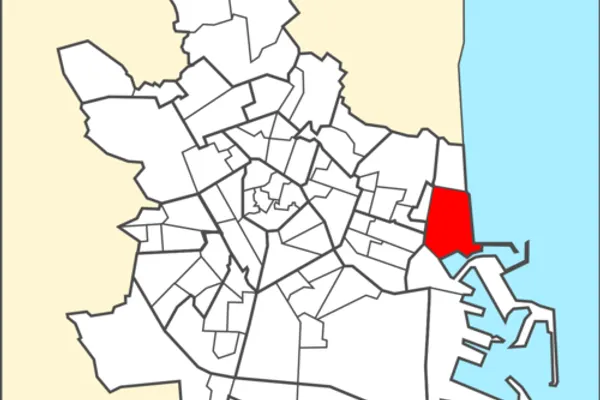
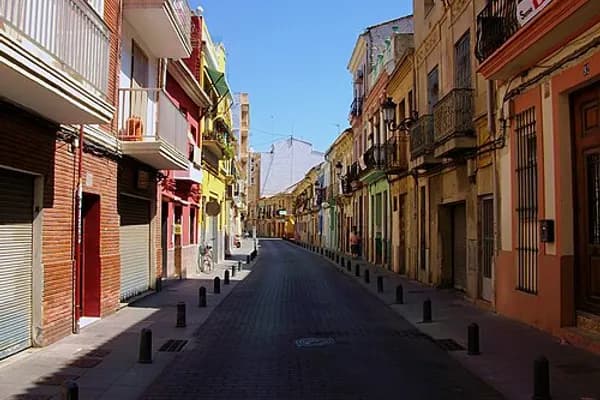
El Cabanyal (Cabanyal-Canyamelar) is a neighbourhood in the city of Valencia which is part of the sea village. It is located in the eastern part of the city, very near to La Malvarrosa, Valencia's main beach.
In 2020, The Guardian classes El Cabanyal as the third coolest neighbourhood in Europe.
Remodeling
On 24 July 1998, the local government of Rita Barberà, of the conservative People's Party approved a plan for extending the Blasco Ibáñez avenue to the sea. The plan implied the destruction of 1,651 houses all located in the whole neighbourhood. The old fishing enclave of Cabanyal-Canyamelar, which was and is very deteriorated, is also considered a Heritage site of Cultural Interest, so the plan could not be applied and the struggle between the Town Hall and the neighbours fighting against the destruction of their home led to a social fracture that has continued since then.
The main organization against Barberà's plans, Salvem el Cabanyal (Save Cabanyal, in Valencian) worked as civic resistance and won some tactical victories at the courts. The Mayor of Valencia, Rita Barberà, even disqualified them by arguing that they were "violent", because "they summit judicial appeals".
The strategy of the local council for taking the demolition ahead consisted of creating some public corporations (as "AUMSA" or "Cabanyal 2010"), which bought 500 of the houses in the area to be demolished, after pressuring the owners to sell their homes at low prices. During the 2000 decade those houses were abandoned, with drug-dealers occupying them.
In 2007, Barberà's government sent expropriation letters to all neighbours in Sant Pere street, the main artery in the affected area. Meanwhile, Las Provincias newspaper started a campaign against the citizens organized under "Salvem", damaging the cohabitation in the neighbourhood.
Despite the fact that law courts did not allow Barbera's plan in a protected area, the People's Party used their majorities in both the local council and the regional government to modify laws in a sense that could allow the demolition. In April 2010, Rita Barberà approved, by decree, the demolition of the houses affected by the plan. Civic actions prevented the action of the bulldozers and finally the courts prevented the action. Despite this, about 125 houses were demolished, 28 of which were tiled in the very specific way Cabanyal houses are tiled. In 2013, the conflict in Cabanyal was still ongoing. That year, 272 tiled houses were catalogued, with 139 of those protected and 43 marked to be demolished by the expansion plan.
After Barberà's team lost the local elections in 2015, the new left-leaning local council with the mayor Joan Ribó paralyzed the plans of demolition and prolongation of the avenue Blasco Ibáñez. Instead, the local council has the revitalization of the Cabanyal district as one of its main flags, through the rehabilitation and increase of public services in the neighborhood.
References
Wikimedia Commons has media related to Cabanyal-Canyamelar.
39°28′08″N 0°19′58″W / 39.46889°N 0.33278°W / 39.46889; -0.33278
Encyclopedic content adapted from the Wikipedia article on El Cabanyal, used under CC BY-SA 4.0.
What makes El Cabanyal special
El Cabanyal stands out among Valencia’s neighborhoods for its distinctive character: valencia's fishermen's quarter. Ranked #3 in Valencia, it offers the kind of experience that defines a great city trip — a place where the streets themselves tell a story and every block rewards curiosity.
Best for
Our take on El Cabanyal
El Cabanyal is one of the strongest neighborhoods in Valencia, and it consistently appears in our editors' personal favorites lists. It may not always get the same attention as the city's most famous district, but among travelers who know Valencia well, El Cabanyal is often the first recommendation.
What makes El Cabanyal exceptional is the density of its cultural life. Art galleries, independent bookshops, small theaters, and creative studios are woven into the fabric of the neighborhood rather than clustered in a single zone. You encounter culture here by accident, which is how the best cultural experiences always happen.
Our editors recommend budgeting at least half a day here — enough time to walk the main streets, sit down for coffee, and discover the side streets where El Cabanyal's real character lives.
Living in El Cabanyal
El Cabanyal is connected to the rest of Valencia by public transit, and most visitors find it straightforward to reach from the city center or airport. Once you arrive, the neighborhood is best explored on foot — the scale is human and the streets reward wandering.
Day-to-day life in El Cabanyal has the rhythm of a genuine residential neighborhood. You will find grocery stores, pharmacies, cafés with morning regulars, and the kind of small independent shops that only survive where locals support them. For visitors, this means the infrastructure you need — good coffee, a decent meal, a quiet place to sit — is always within a short walk.
Accommodation in El Cabanyal ranges from boutique hotels to short-term rentals. We generally recommend staying within the neighborhood itself rather than commuting from a hotel elsewhere in Valencia — the experience of waking up inside a great neighborhood is fundamentally different from visiting one as a day trip.
What locals say about El Cabanyal
Long-term residents of El Cabanyal tend to describe their neighborhood with a mix of pride and protectiveness. Like any district with genuine character, El Cabanyal inspires loyalty — the kind of place people move to and never quite leave, or leave and spend years trying to get back to.
The creative community in El Cabanyal is genuine, not aspirational. Residents include working artists, writers, musicians, and designers who chose the neighborhood because it supported their work — affordable studio space, a community that values craft, and enough foot traffic to sustain independent galleries and shops.
Compared to the more famous districts in Valencia, El Cabanyal has maintained a lower profile, which many residents consider an advantage. The neighborhood evolves gradually rather than being reshaped by sudden attention, and the result is a community that still feels organic rather than curated.
Visitor tips
- El Cabanyal is located in Valencia, Spain. The neighborhood is accessible by public transport, taxi, or rideshare from most parts of the city.
- Morning is often the best time to explore — the streets are quieter, the light is better for photography, and cafes are at their most welcoming.
- Wear comfortable walking shoes — the best way to experience El Cabanyal is on foot, wandering the side streets and discovering what lies around each corner.
- Save the neighborhood's location on your phone before you arrive. Offline maps are especially useful for navigating the smaller side streets.