About the neighborhood
Rural parish in Pichincha, Ecuador
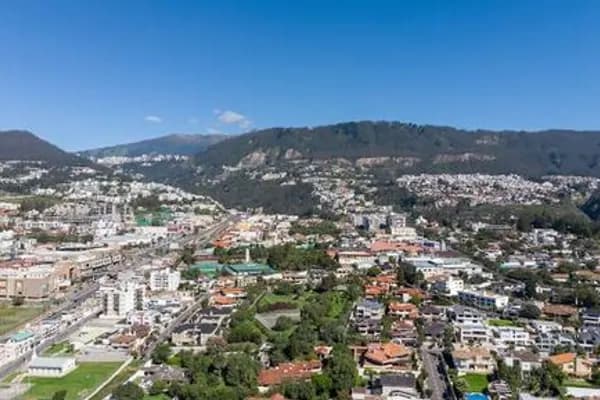
Cumbayá is a rural parish of the Metropolitan District of Quito in the Pichincha Province, Ecuador. It is located east of Quito, in the Tumbaco Valley northwest of the Ilaló volcano, in the San Pedro River valley, a tributary of the Guayllabamba River.
Climate
At an elevation of 2200m (7200ft) above sea level, Cumbayá is lower than Quito and its climate is about 2 to 5 degrees Celsius warmer. Weather is semi tropical year-round, with a short rainy season.
Developments
In the years up to 2008, the parish has become a commuter town of Quito as a significant number of middle-upper and higher class families moved from the city to live a more suburban lifestyle. A significant amount of expensive and luxurious properties of Quito can be found in Cumbaya making it the highest income area in the country. This shift in population has attracted investors and entrepreneurs to the area, boosting the local economy. In 2017 there has been commercial activity centered around restaurants ranging from food trucks to gourmet-style places. The town is also characterized by many gated communities that vary in size and wealth.
Cumbayá has become home to the main campus of the Universidad San Francisco de Quito. International students of the campus are placed in host families in Quito for cultural immersion. Quorum Quito, built in the late eighties and located in Paseo San Francisco in the Cumbayá Valley gathered parliamentarians from all over the world at the assemblee of the Interparliamentary Union in 2013.
Population Growth
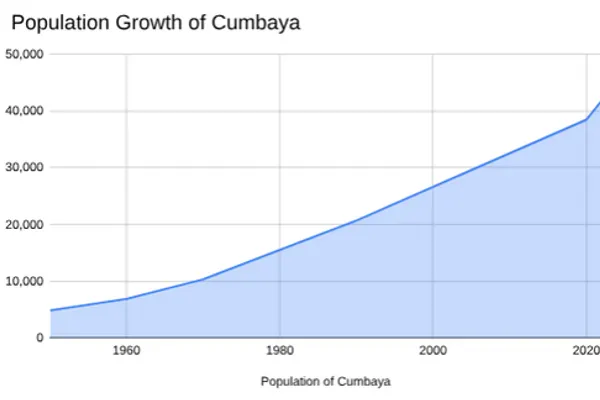
Historically a quiet agricultural retreat, Cumbayá has undergone a profound demographic transformation over the last seventy years. In 1950, the parish was home to a modest community of approximately 4,838 residents. This figure nearly doubled by 1970, reaching 10,323 as the area began to attract those seeking a valley climate outside of Quito's urban core.
The turn of the century marked a period of rapid suburbanization; by the early 2000s, the population surged to 26,623. This upward trajectory continued into the following decades, with estimates placing the population at 38,450 in 2020 "Cumbayá Population". Retrieved 2026-03-15. According to the most recent 2022 census, Cumbayá’s population reached 41,819 people, reflecting its status as one of the most significant and fastest-growing rural parishes in the Metropolitan District "Current Population". Retrieved 2026-03-15.
Architecture
Examples of architecture drawing from the area's rural beginnings include the Iglesia de Cumbayá in the Main Square and the Iglesia de Miravalle built in 1987. Modern examples include the Rancho San Francisco complex, Paseo San Francisco, La Esquina, Centro Plaza, Scala and Villa Cumbayá shopping centers, among new office blocks.
Traffic and tourism
The Túnel Oswaldo Guayasamín, named after the revered Quito born painter and sculptor Oswaldo Guayasamín, is the longest vehicular tunnel in Ecuador at 1.5kilometres and connects the parish with the Iñaquito urban parish of the city of Quito.
In 2004, the Chaquiñán rail trail from Cumbayá to the parish of Puembo, 20kilometres to the northeast was re-opened.
References
Encyclopedic content adapted from the Wikipedia article on Cumbayá, used under CC BY-SA 4.0.
What makes Cumbayá special
Cumbayá stands out among Quito’s neighborhoods for its distinctive character: quito's elegant valley. Ranked #5 in Quito, it offers the kind of experience that defines a great city trip — a place where the streets themselves tell a story and every block rewards curiosity.
Best for
Our take on Cumbayá
Cumbayá occupies a distinctive place in Quito's neighborhood landscape. It is the kind of district that rewards travelers who venture beyond the obvious choices — quieter than the tourist-facing areas, richer in local character, and full of the small details that make a city trip memorable.
What makes Cumbayá worth the visit is the texture of daily life here. It is a neighborhood that functions for the people who live in it — not just for the visitors who pass through. The shops serve local needs, the restaurants feed local appetites, and the streets have a rhythm that reflects genuine community rather than tourism infrastructure. That is the quality our editors prize most, and Cumbayá has it in abundance.
Our editors recommend budgeting at least half a day here — enough time to walk the main streets, sit down for coffee, and discover the side streets where Cumbayá's real character lives.
Living in Cumbayá
Cumbayá is connected to the rest of Quito by public transit, and most visitors find it straightforward to reach from the city center or airport. Once you arrive, the neighborhood is best explored on foot — the scale is human and the streets reward wandering.
Day-to-day life in Cumbayá has the rhythm of a genuine residential neighborhood. You will find grocery stores, pharmacies, cafés with morning regulars, and the kind of small independent shops that only survive where locals support them. For visitors, this means the infrastructure you need — good coffee, a decent meal, a quiet place to sit — is always within a short walk.
Accommodation in Cumbayá ranges from boutique hotels to short-term rentals. We generally recommend staying within the neighborhood itself rather than commuting from a hotel elsewhere in Quito — the experience of waking up inside a great neighborhood is fundamentally different from visiting one as a day trip.
What locals say about Cumbayá
Long-term residents of Cumbayá tend to describe their neighborhood with a mix of pride and protectiveness. Like any district with genuine character, Cumbayá inspires loyalty — the kind of place people move to and never quite leave, or leave and spend years trying to get back to.
What locals appreciate most about Cumbayá is its consistency — the feeling that the neighborhood works the same way on a Tuesday morning as it does on a Saturday night. It is not a place that performs for visitors and then goes quiet. The rhythm is genuine, the community is real, and the daily experience of living here is what draws people and keeps them.
Compared to the more famous districts in Quito, Cumbayá has maintained a lower profile, which many residents consider an advantage. The neighborhood evolves gradually rather than being reshaped by sudden attention, and the result is a community that still feels organic rather than curated.
Visitor tips
- Cumbayá is located in Quito, Ecuador. The neighborhood is accessible by public transport, taxi, or rideshare from most parts of the city.
- Morning is often the best time to explore — the streets are quieter, the light is better for photography, and cafes are at their most welcoming.
- Wear comfortable walking shoes — the best way to experience Cumbayá is on foot, wandering the side streets and discovering what lies around each corner.
- Save the neighborhood's location on your phone before you arrive. Offline maps are especially useful for navigating the smaller side streets.