About the neighborhood
Locality in Bogotá, Colombia
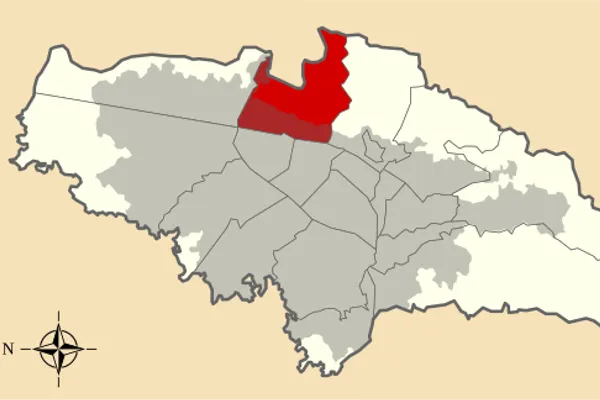
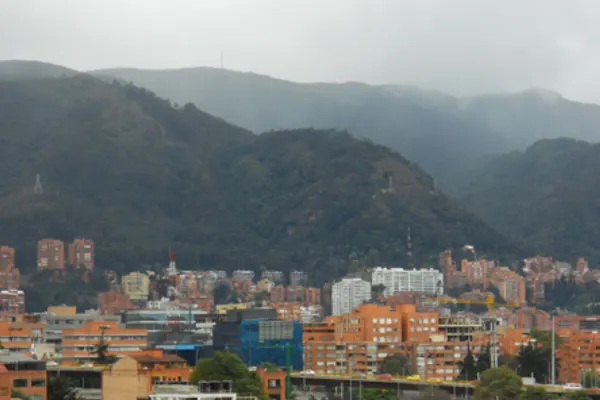
Chapinero is the 2nd locality of Bogotá, capital of Colombia. It is located in the north of the city and is one of the more affluent districts of the city. This district is mostly inhabited by upper-class residents, although it also encompasses less wealthy neighborhoods such as Bosque Calderón Tejada or El Paraíso that started out as informal settlements. The boundaries are Calle 39 in the south, Avenida Caracas in the west, Calle 100 in the north and the Eastern Hills in the east.
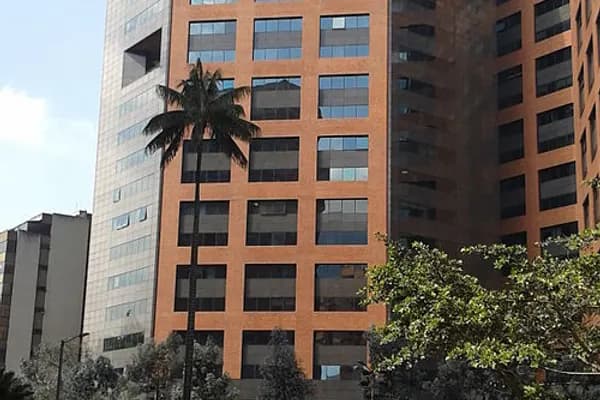
The Central Business District (CBD) is located between Calle 72 (traditionally known as the Financial District) in the south and Calle 100 in the north. Chapinero hosts several important leisure, dining and nightlife areas of the city. The locality covers 3,899 hectares (9,630 acres). 35.1% is considered urban area, 23.1% unbuilt area; 20.4% residential area and 21.2% protected rural area.
History
Chapinero was part of the thoroughfare connecting Bogotá and the northern part of the country. The area was settled in 1812 by workers in the various industries that provided Bogotá with its day-to-day necessities. The name Chapinero comes from the shoemakers of bespoke shoes for chapines, the local expression for people suffering of pigeon toe syndrome.
Toward the end of the 19th century, the area was further settled with mansions and country estates. As the urbanized city expanded, the area was integrated accordingly. Mule-pulled trams were extended northward in 1875, followed by electric tracks in 1910.
When the Special District of Bogotá was formed in 1955, the area was made into a locality. At that time the El Lago, Chicó, and Cataluña neighborhoods were added into the locality. The physical boundaries remained the same under the reorganization into the Capital District that took place in 1991.
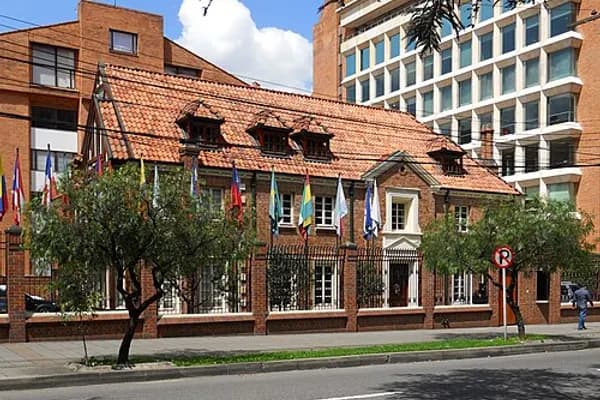
Together with La Candelaria and Teusaquillo, Chapinero is one of the traditional neighborhoods that is distinctive of a particular era in the city's history and urban growth. A historically upper-class neighborhood, the southern part of Chapinero is famous for areas with large Victorian houses reflecting the influence of European architectural styles in Bogotá at the beginning of the 20th century.
Economy and culture
Chapinero is one of the most important commercial and economic zones of the capital city. Banking and financial centers are headquartered along Calle 72, Carrera 7 and Calle 100 with major shopping areas located along Carreras 11 and 15. Several universities are based in the locality, including the Pontificia Universidad Javeriana, Catholic University of Colombia, Universidad Piloto de Colombia, and the National Pedagogic University.
The zone also includes popular dining areas and nightlife centers, which include the Zona Rosa, the Parque de la 93, and the Zona G; the last one known for its wide offer of upscale restaurants (G stands for Gourmet).
Chapinero is also the center of Bogotá's gay community. There are more than 100 bars, discos and clubs that cater to the gay community in Bogotá, many of which can be found in Chapinero. The biggest and most popular gay disco in Bogotá, Theatron, is located in the heart of Chapinero. Furthermore, the former mayor of Chapinero, Blanca Inés Durán Hernández, is openly lesbian. The locality has a unique community center focused on the LGBT population of the neighborhood and the city. It is the first of its kind in Latin America.
Government
Chapinero is among the 20 localities that make up the Capital District of Bogota and thus has its own local administration that is under the jurisdiction of the District's Government secretariat. The current locality mayor is Hernando J. Quintero, appointed by the Mayor of Bogotá, Enrique Peñalosa.
For the 2015 fiscal year it counted with a budget of 26,053,160,000 pesos, about US$8,400,000.
General information
Borders
North: Calle 100, bordering the locality of Usaquén
East: the Eastern Hills, bordering the municipalities of La Calera and Choachí
South: Calle 39, bordering the locality of Santa Fe
West: Avenida Caracas and Autopista Norte, with the localities of Barrios Unidos and Teusaquillo
Points of interest
Chicó Museum (Museo del Chicó), which includes an old manor house and a surrounding park.
Our Lady of Lourdes Basilica (Basílica de Nuestra Señora de Lourdes)
93rd street park (93 Park; Parque de la 93), which is also a hotspot for upscale restaurants, bars and nightclubs.
Shopping centers: Avenida Chile, formerly known as Granahorrar
Centro Andino
Atlantis Plaza
El Retiro
United Church of Bogotá
Transportation
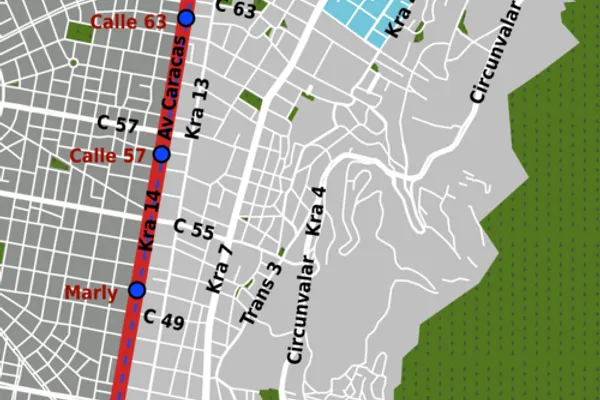
Major east-west roads include Calles 39, 45, 53, 57, 63, 85, 92, 94, 100, and Avenida Chile (Calle 72). North-south routes include Carreras 7, 9, 11, 13, 15 and Avenida Caracas.
The locality is served by TransMilenio lines on Avenida Caracas (Carrera 14) and to the west along the Carrera 30. All of the major roads have extensive private bus services.
Neighborhoods
Before 1955, the term Chapinero included some neighborhoods that are now part of the Teusaquillo locality and did not include the El Lago, Chicó, and Cataluña neighborhoods that are currently part of the locality.
Chapinero is divided into 5 units of zonal planning (Unidades de planeamiento zonal), which are then further divided into a total of 50 neighborhoods ("barrios") and an area on the east named El Verjón Bajo. The 50 neighborhoods are as follows:
Chapinero Alto
Chapinero Norte
Chapinero Central
El Chicó
Chicó Alto
La Porciúncula
Marly
Los Rosales
Juan XXIII
Bellavista
El Nogal
El Refugio
La Cabrera
Seminario
Toscana
La Esperanza Nororiental
La Sureña
San Isidro
San Luis Altos del Cabo
Bosque Calderón
Bosque Calderón Tejada
El Castillo
El Paraíso
Emaus
Granada
Nueva Granada
Sucre
La Salle
Las Acacias
Los Olivos
María Cristina
Mariscal Sucre
Ingemar
Palomar
Pardo Rubio
San Martín de Porres
Villa Anita
Villa del Cerro
Antiguo Country
El Retiro
Espartillal
La Cabrera
Lago Gaitán
Quinta Camacho
Cataluña
Chicó Norte
Chicó Norte II
Chicó Norte III
Chicó Occidental
Chicó Reservado
Hydrology
The rural Eastern Hills today are heavily forested, while until the 1930s were very much deforested. They are crossed by several rivers and creeks, many of which flow through the locality in man-made canals. Among the more important waterways are the Arzobispo River which joins with the San Francisco into the Bogotá River and the Quebrada El Virrey that forms a part of the Salitre river system.
References
External links
Wikivoyage has a travel guide for Chapinero-Zona G.
City of Bogota site (in Spanish)
Official Secretary of Bogotá site about Chapinero (in Spanish)
National University of Colombia in the locality (in Spanish)
Encyclopedic content adapted from the Wikipedia article on Chapinero, used under CC BY-SA 4.0.
What makes Chapinero special
Chapinero stands out among Bogotá’s neighborhoods for its distinctive character: bogotá's creative, diverse heart. Ranked #2 in Bogotá, it offers the kind of experience that defines a great city trip — a place where the streets themselves tell a story and every block rewards curiosity.
Best for
Our take on Chapinero
Chapinero is one of the strongest neighborhoods in Bogotá, and it consistently appears in our editors' personal favorites lists. It may not always get the same attention as the city's most famous district, but among travelers who know Bogotá well, Chapinero is often the first recommendation.
What strikes us most about Chapinero is the depth of its food culture. This is not a neighborhood with a few good restaurants — it is a neighborhood where eating well is woven into daily life, where the corner places are as good as the destination spots, and where you could eat every meal for a week without repeating yourself or being disappointed.
Our editors recommend budgeting at least half a day here — enough time to walk the main streets, sit down for coffee, and discover the side streets where Chapinero's real character lives.
Living in Chapinero
Chapinero is connected to the rest of Bogotá by public transit, and most visitors find it straightforward to reach from the city center or airport. Once you arrive, the neighborhood is best explored on foot — the scale is human and the streets reward wandering.
Day-to-day life in Chapinero has the rhythm of a genuine residential neighborhood. You will find grocery stores, pharmacies, cafés with morning regulars, and the kind of small independent shops that only survive where locals support them. For visitors, this means the infrastructure you need — good coffee, a decent meal, a quiet place to sit — is always within a short walk.
Accommodation in Chapinero ranges from boutique hotels to short-term rentals. We generally recommend staying within the neighborhood itself rather than commuting from a hotel elsewhere in Bogotá — the experience of waking up inside a great neighborhood is fundamentally different from visiting one as a day trip.
What locals say about Chapinero
Long-term residents of Chapinero tend to describe their neighborhood with a mix of pride and protectiveness. Like any district with genuine character, Chapinero inspires loyalty — the kind of place people move to and never quite leave, or leave and spend years trying to get back to.
The creative community in Chapinero is genuine, not aspirational. Residents include working artists, writers, musicians, and designers who chose the neighborhood because it supported their work — affordable studio space, a community that values craft, and enough foot traffic to sustain independent galleries and shops.
Like any neighborhood that has earned attention, Chapinero is navigating the tension between popularity and preservation. Rents have risen, new businesses have arrived, and long-time residents occasionally grumble that the neighborhood is not what it was. But the fundamentals — the walkability, the food, the community — remain strong, and most locals we speak to believe the neighborhood is still gaining more than it is losing.
Visitor tips
- Chapinero is located in Bogotá, Colombia. The neighborhood is accessible by public transport, taxi, or rideshare from most parts of the city.
- Morning is often the best time to explore — the streets are quieter, the light is better for photography, and cafes are at their most welcoming.
- Wear comfortable walking shoes — the best way to experience Chapinero is on foot, wandering the side streets and discovering what lies around each corner.
- Save the neighborhood's location on your phone before you arrive. Offline maps are especially useful for navigating the smaller side streets.