About the neighborhood
Centre of municipal administration of Toulouse, France
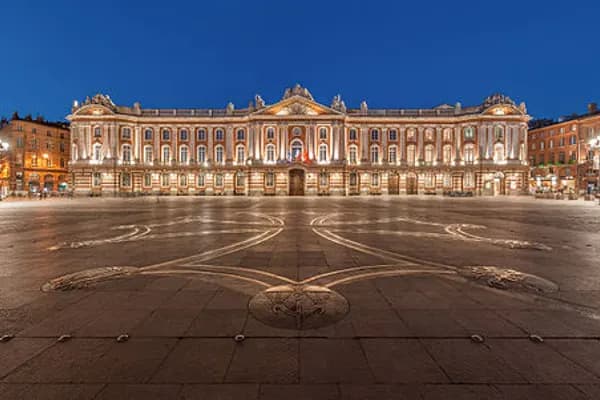
The Capitole de Toulouse (Occitan: Capitòli de Tolosa; lit.'Capitol of Toulouse'), commonly known as the Capitole, is the heart of the municipal administration and the city hall of the French city of Toulouse. It was designated a monument historique by the French government in 1840.
History
Early history of the site
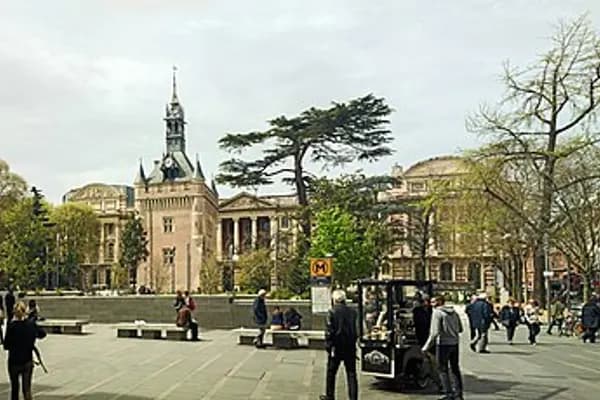
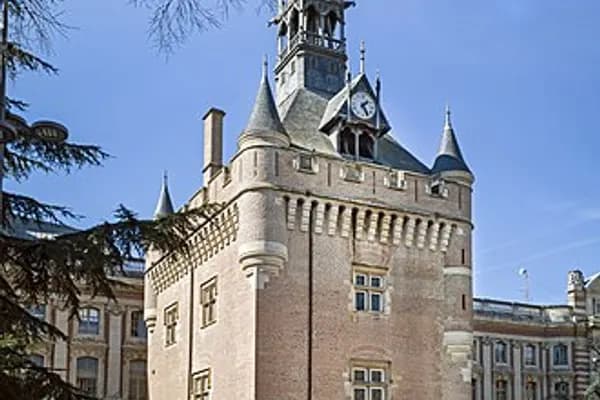
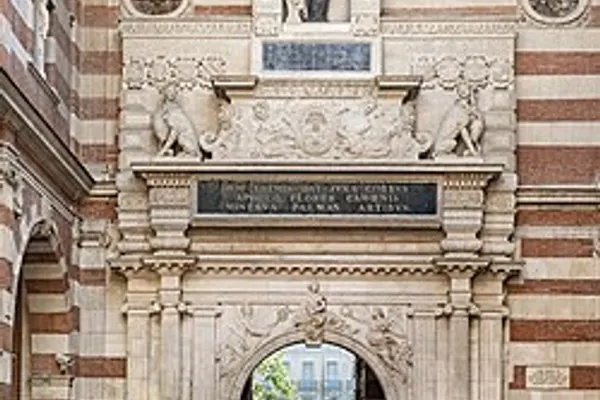
In 1190, the Capitouls (governing magistrates) of Toulouse commissioned the original structures on the site to provide a seat for the government of a province which was growing in wealth and influence. The site was named the Capitole by the town clerk, Pierre Salmon, in 1522 to recall the Roman Capitol. A dungeon tower, known as le donjon, was completed in 1530 and a renaissance style gateway, designed by Nicolas Bachelier, providing access to the Henri IV courtyard, was completed in 1546.
Only the Henri IV courtyard and the gateway survive from the original medieval buildings. Le donjon was fought over during the 1562 Riots of Toulouse, with Huguenot forces holding it with captured cannons. It was in the Henri IV courtyard that Henri de Montmorency, 4th Duke of Montmorency was decapitated after his rebellion against Cardinal Richelieu in 1632. The Salle du jeu de Spectacle (the room for shows), from which the Théâtre du Capitole Opera Company and the Orchestre national du Capitole de Toulouse later emerged, was created in 1737.
The new building
In the mid-18th century, the capitouls decided to commission a municipal palace which would be unique in France. The site they chose was to the immediate west of le donjon and the site enclosed the Henri IV courtyard. The new building, which was 135 meters (443ft) long, was designed by Guillaume Cammas in the neoclassical style, built in characteristic pink brick and was completed in 1760.
The design involved a central section of the three bays, which was slightly projected forward, wings of six bays on either side, and a pair of end bays, which were projected forward as pavilions. The central section featured a segmental headed doorway with a keystone flanked by a pair of segmental headed windows on the ground floor, a French door flanked by a pair of tall segmental headed windows on the first floor, and a clock flanked by a pair of shorter segmental headed windows on the second floor. The bays in the central section were flanked by eight Corinthian order columns supporting an entablature and a pediment. The wings and end bays were fenestrated in a similar style and flanked by Corinthian order pilasters. The eight columns in the central section were intended to recall the original eight capitouls. Internally, the principal rooms included Le Grand Consistoire, Le Petit Consistoire, L'Arsenal and Le Salle des Illustres. These rooms exhibited some fine paintings, some of which were destroyed during the French Revolution.
Le donjon was the venue for a religiously-biased trial during which a protestant, Jean Calas, was interrogated and broken on the wheel in 1762.
On 24 March 1871, inspired by the establishment of the Paris Commune, a crowd of revolutionary guardsmen stormed the Capitole, seeking the establishment of a similar commune in Toulouse. However, the insurrection only lasted a few days and on 27 March 1871, the revolutionaries left the building peacefully. Le donjon was rebuilt to a design by Eugène Viollet-le-Duc in a style typical of northern France in 1873.
Following the liberation of Toulouse on 19 August 1944, during the Second World War, the Capitole was draped in French tricolour flags. On 19 February 1967, the president of France, Charles de Gaulle, visited the town and delivered a speech from the balcony of the building.
Gallery
See also
List of mayors of Toulouse
Parlement of Toulouse
References
Citations
Bibliography
Turning, Patricia (2013), Municipal Officials, Their Public, and the Negotiation of Justice in Medieval Languedoc: Fear Not the Madness of the Raging Mob, Later Medieval Europe, No. 10, Leiden: Brill, ISBN978-90-04-23464-2.
Wikimedia Commons has media related to Capitole de Toulouse.
Encyclopedic content adapted from the Wikipedia article on Capitole, used under CC BY-SA 4.0.
What makes Capitole special
Capitole stands out among Toulouse’s neighborhoods for its distinctive character: toulouse's pink-brick civic centre. It tops our ranking of the best neighborhoods in Toulouse, it offers the kind of experience that defines a great city trip — a place where the streets themselves tell a story and every block rewards curiosity.
Best for
Our take on Capitole
Capitole is the neighborhood we send friends to first when they visit Toulouse. It earns the top spot in our ranking not because it is the most famous district in the city, but because it delivers the most complete neighborhood experience — the kind of place where every block rewards curiosity and every return visit reveals something new.
What makes Capitole worth the visit is the texture of daily life here. It is a neighborhood that functions for the people who live in it — not just for the visitors who pass through. The shops serve local needs, the restaurants feed local appetites, and the streets have a rhythm that reflects genuine community rather than tourism infrastructure. That is the quality our editors prize most, and Capitole has it in abundance.
Our editors recommend budgeting at least half a day here — enough time to walk the main streets, sit down for coffee, and discover the side streets where Capitole's real character lives.
Living in Capitole
Capitole is connected to the rest of Toulouse by public transit, and most visitors find it straightforward to reach from the city center or airport. Once you arrive, the neighborhood is best explored on foot — the scale is human and the streets reward wandering.
Day-to-day life in Capitole has the rhythm of a genuine residential neighborhood. You will find grocery stores, pharmacies, cafés with morning regulars, and the kind of small independent shops that only survive where locals support them. For visitors, this means the infrastructure you need — good coffee, a decent meal, a quiet place to sit — is always within a short walk.
Accommodation in Capitole ranges from boutique hotels to short-term rentals. We generally recommend staying within the neighborhood itself rather than commuting from a hotel elsewhere in Toulouse — the experience of waking up inside a great neighborhood is fundamentally different from visiting one as a day trip.
What locals say about Capitole
Long-term residents of Capitole tend to describe their neighborhood with a mix of pride and protectiveness. Like any district with genuine character, Capitole inspires loyalty — the kind of place people move to and never quite leave, or leave and spend years trying to get back to.
What locals appreciate most about Capitole is its consistency — the feeling that the neighborhood works the same way on a Tuesday morning as it does on a Saturday night. It is not a place that performs for visitors and then goes quiet. The rhythm is genuine, the community is real, and the daily experience of living here is what draws people and keeps them.
Like any neighborhood that has earned attention, Capitole is navigating the tension between popularity and preservation. Rents have risen, new businesses have arrived, and long-time residents occasionally grumble that the neighborhood is not what it was. But the fundamentals — the walkability, the food, the community — remain strong, and most locals we speak to believe the neighborhood is still gaining more than it is losing.
Visitor tips
- Capitole is located in Toulouse, France. The neighborhood is accessible by public transport, taxi, or rideshare from most parts of the city.
- Morning is often the best time to explore — the streets are quieter, the light is better for photography, and cafes are at their most welcoming.
- Wear comfortable walking shoes — the best way to experience Capitole is on foot, wandering the side streets and discovering what lies around each corner.
- Save the neighborhood's location on your phone before you arrive. Offline maps are especially useful for navigating the smaller side streets.