About the neighborhood
Area of the City of York, North Yorkshire, England
Bishophill is an area of central York, in England. It lies within the city walls and has been occupied since at least the Roman period.
Etymology
Known as "Bichill" by 1334, the name was also recorded as "Bychehill Lomelyth", "Lomelyth" being a reference to the gate in the walls now called Victoria Bar. The name may be derived from the "Biche Doughter" tower on the walls.
Geography
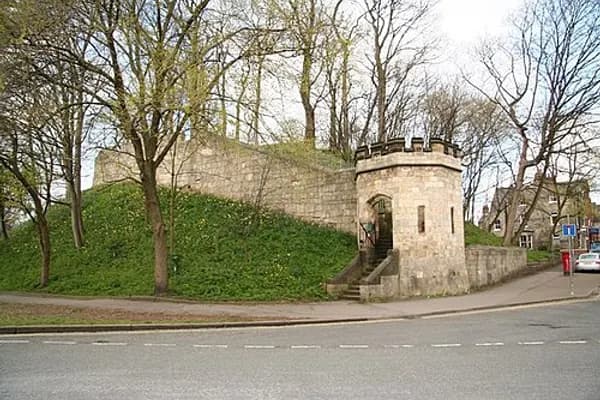
The district lies within the York city walls, covering the south-western area of the city's core. It slopes down, gently, to the River Ouse. Until the mid-18th century, a stream divided the area, running from Scarcroft Hill eastwards to the moat of the Old Baile. This was significant enough to act as the boundary between the two parishes of St Mary Bishophill Junior and Senior. The main road running through Bishophill is Bishophill Senior, which becomes Cromwell Road. The city walls border the area to the south and east.
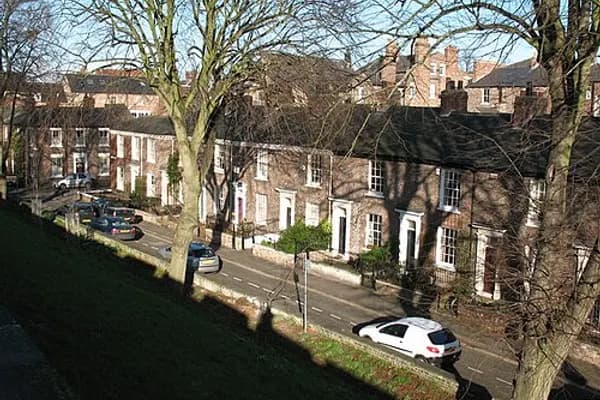
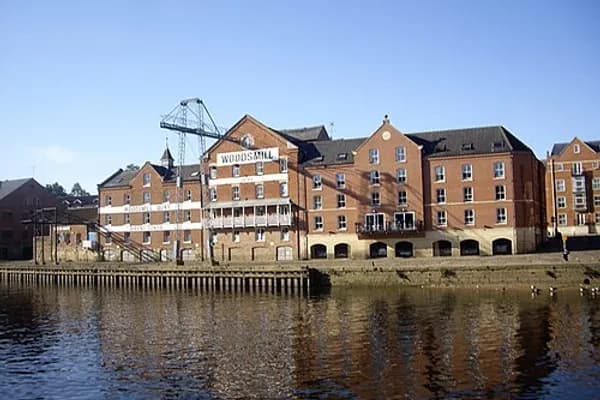
The riverside area is now characterised by City of York Council as a "quiet residential area with modern warehouse-style residential buildings", while the streets away from the river are described as a "charming network of terraced streets" and "a tranquil haven with a very strong sense of identity". The area's green spaces run along the ramparts of the city walls. The riverside buildings are at high risk of flooding, and so their ground floors are not in residential or commercial use.
History
The area was probably occupied in the pre-Roman period, and a few artifacts of the period have been found nearby, outside the present walls. In the Roman era, it was the site of the principal civil built-up area of Eboracum, which later became a colonia. The site had defences and some stone buildings, remains of which have been excavated in the churchyard of the former St Mary Bishophill Senior. George Pace suggested that the church may have been on the site of a Romano-British cathedral, but there is no evidence for this.
Following the Roman withdrawal, the history of the area is obscure until the construction of St Mary Bishophill Junior in the 10th century, a large stone building for the period. Following the Norman Conquest, Baile Hill was built up at the south of the Bishophill area, with one of the city's two castles atop. A bailey with earth ramparts lay to its north west; the castle may also have had its own mill. However, after Clifford's Tower on the other bank of the River Ouse was rebuilt in stone, the castle was allowed to decay, some of its defences being incorporated into the city walls. By the 14th century, the current line of the city walls had been developed, and in the 15th century, the site was handed over to the city corporation and used for sports. Meanwhile, wharves were developed along the riverside, notably Queen's Staith, which opened in 1660, and warehouses were built. Over time, more houses were constructed in the area; the most significant was Buckingham House, home of Lord Fairfax. In 1667, the Friends' Burial Ground was created, and Middleton's Hospital was founded in 1659.
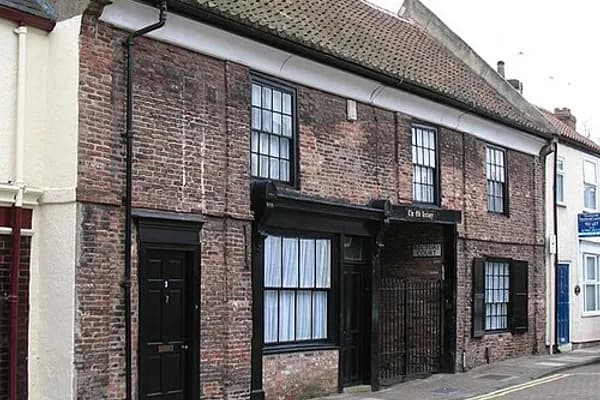
A small number of buildings from the late Mediaeval period and the 17th century survive in Bishophill; aside from St Mary Bishophill Junior, and the walls, these include 29 Trinity Lane, Cransfields on St Martin's Lane, Old Rectory on Victor Street. Other important early buildings were demolished in the 20th century. The Old Warehouse on Skeldergate, dating from the 17th century, was demolished in 1970, and the Plumbers' Arms, built about 1575, was rebuilt as the Cock and Bottle in 1964.
The early-18th century was a period of decline for the area; several houses were demolished and replaced with orchards. This changed in 1756, when the City Corporation began designating building plots, the first at the north side of Bishophill Junior. In 1765, the architect John Carr built his own house on Skeldergate, which survived until 1945. 56 Skeldergate was built in the 1770s, probably by Carr, and survives.
A jail was built in the 1800s on what is now Cromwell Road; the Skeldergate Postern in the city wall was demolished to provide better access, but the public outcry led to the start of preservation efforts, and instead of further demolition, a new archway was constructed. Access to the area was further improved by the construction of Victoria Bar gate in the walls in 1838, and the replacement of the Skeldergate ferry with Skeldergate Bridge.
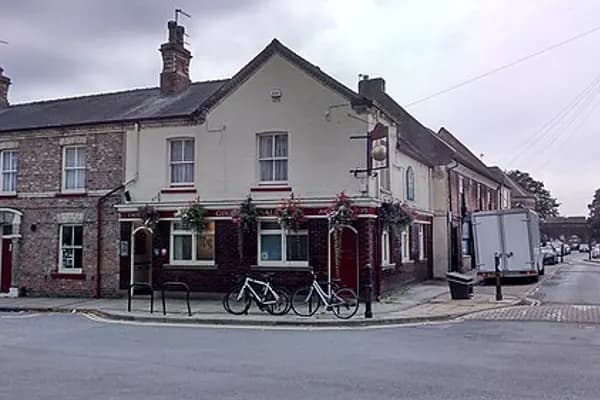
Development of the area continued through the 19th century, with the second half of the century seeing much of the remaining open area covered with small terrace housing. Notable buildings of the period include the warehouses on Queen's Staith and the Bonding Warehouse on Skeldergate. The large Emperor's Wharf was devoted to the transshipment of timber but, by the end of the century, seagoing ships docked further downstream. Away from the river, the former sawmill at 52 Skeldergate and the Golden Ball pub are key survivals. A community cooperative took over the Golden Ball in 2012, as the owners sought to retire. Many 19th-century churches survive, including the former Victoria Bar Primitive Methodist Chapel, Wesley Chapel on Priory Street, and St Columba's Presbyterian Church.
In the twentieth century, slum clearance took place in the area, many smaller properties being replaced by low-rise flats and maisonettes. Plans to erect a multi-storey car park in the centre of the district were opposed by a newly-formed residents' association and were subsequently abandoned.
Notable people
Edith Aitken (1861–1940), headmistress
References
Sources
Pace, George (1987) . Bishophill, York – Appraisal and Renewal. York: William Sessions. ISBN0900657227.
Webster Appleton, Avril E. (2011). Looking Back at Micklegate, Nunnery Lane and Bishophill: York. York: Reeder Publications. ISBN9780954346324.
Further reading
Royal Commission on Historical Monuments of England (1972). An Inventory of the Historical Monuments in City of York, Volume 3, South west. London: HM Stationery Office.
Wikimedia Commons has media related to Bishophill.
Encyclopedic content adapted from the Wikipedia article on Bishophill, used under CC BY-SA 4.0.
What makes Bishophill special
Bishophill stands out among York’s neighborhoods for its distinctive character: york's roman quarter. Ranked #4 in York, it offers the kind of experience that defines a great city trip — a place where the streets themselves tell a story and every block rewards curiosity.
Best for
Our take on Bishophill
Bishophill occupies a distinctive place in York's neighborhood landscape. It is the kind of district that rewards travelers who venture beyond the obvious choices — quieter than the tourist-facing areas, richer in local character, and full of the small details that make a city trip memorable.
What makes Bishophill exceptional is the density of its cultural life. Art galleries, independent bookshops, small theaters, and creative studios are woven into the fabric of the neighborhood rather than clustered in a single zone. You encounter culture here by accident, which is how the best cultural experiences always happen.
Our editors recommend budgeting at least half a day here — enough time to walk the main streets, sit down for coffee, and discover the side streets where Bishophill's real character lives.
Living in Bishophill
Bishophill is connected to the rest of York by public transit, and most visitors find it straightforward to reach from the city center or airport. Once you arrive, the neighborhood is best explored on foot — the scale is human and the streets reward wandering.
Day-to-day life in Bishophill has the rhythm of a genuine residential neighborhood. You will find grocery stores, pharmacies, cafés with morning regulars, and the kind of small independent shops that only survive where locals support them. For visitors, this means the infrastructure you need — good coffee, a decent meal, a quiet place to sit — is always within a short walk.
Accommodation in Bishophill ranges from boutique hotels to short-term rentals. We generally recommend staying within the neighborhood itself rather than commuting from a hotel elsewhere in York — the experience of waking up inside a great neighborhood is fundamentally different from visiting one as a day trip.
What locals say about Bishophill
Long-term residents of Bishophill tend to describe their neighborhood with a mix of pride and protectiveness. Like any district with genuine character, Bishophill inspires loyalty — the kind of place people move to and never quite leave, or leave and spend years trying to get back to.
The creative community in Bishophill is genuine, not aspirational. Residents include working artists, writers, musicians, and designers who chose the neighborhood because it supported their work — affordable studio space, a community that values craft, and enough foot traffic to sustain independent galleries and shops.
Compared to the more famous districts in York, Bishophill has maintained a lower profile, which many residents consider an advantage. The neighborhood evolves gradually rather than being reshaped by sudden attention, and the result is a community that still feels organic rather than curated.
Visitor tips
- Bishophill is located in York, United Kingdom. The neighborhood is accessible by public transport, taxi, or rideshare from most parts of the city.
- Morning is often the best time to explore — the streets are quieter, the light is better for photography, and cafes are at their most welcoming.
- Wear comfortable walking shoes — the best way to experience Bishophill is on foot, wandering the side streets and discovering what lies around each corner.
- Save the neighborhood's location on your phone before you arrive. Offline maps are especially useful for navigating the smaller side streets.