About the neighborhood
District of Casablanca in Casablanca-Settat, Morocco
Anfa (Berber language: Anfa or Anaffa, ⴰⵏⴼⴰ; Arabic: أنفا) was the ancient toponym for Casablanca during the classical period. The city was founded by Berbers around the 10th century BC, with the Romans under Augustus later establishing the commercial port of "Anfus" in 15 BC. Anfa is now the name of a district in the oldest part of Casablanca, located in the Casablanca-Settat region of Morocco. The district covers an area of 37.5 square kilometres (14.5 square miles), and as of 2024 has 344.000 inhabitants.
Roman Anfa
The area which is today Casablanca was founded and settled by the Berbers by about the 10th century BC. It was used as a port by the Phoenicians and later by the Romans.
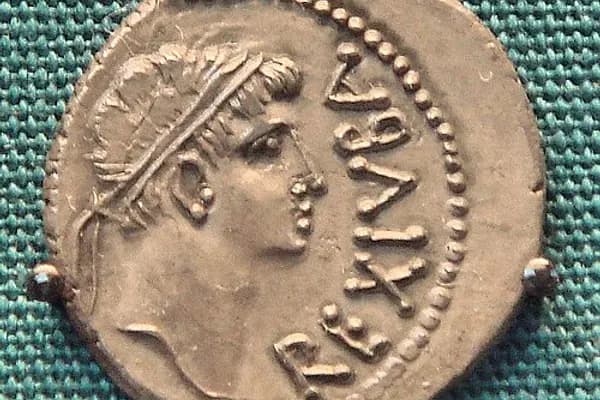
Romans occupied the area in 15 BC and created a commercial port under Augustus, directly connected to the Mogador island in the Iles Purpuraires of southern Mauritania. From there they obtained a special dye, that colored the purple stripe in Imperial Roman Senatorial togas. The expedition of Juba II to discover the Canary Islands and Madeira probably departed from Anfa.
Anfa est une grande cité, edifiée par les Romans sur le rivage de la mer Oceane... (Leo Africanus: Anfa is a big city, built by the Romans on the ocean shore...)
The Roman port, probably called Anfus, was part of a Berber client state of Rome until Emperor Augustus. When Rome annexed Ptolemy of Mauretania's kingdom, Anfa was incorporated into the Roman Empire by Caligula. But this was done only nominally because the Roman limes was a few dozen kilometers north of the port (the Roman military fortifications of Mauretania Tingitana were just a few kilometers south of the Roman colonia named Sala Colonia). However, Roman Anfaconnected mainly by commerce and by socio-cultural ties to Volubilis (autonomous from Rome since 285 AD)lasted until the 5th century, when Vandals conquered Roman northwestern Africa.
A Roman wreck of the 2nd century, from which were salvaged 169 silver coins, shows that the Romans appreciated this useful port for commerce. There is even evidence of oil commerce with Roman Volubilis and Tingis in the 3rd century.
Meanwhile, a large Berber tribe, the Berghouata, settled in the area between the rivers Bou Regreg to the north and Oum er-Rbia to the south of the Roman port. Consequently, the independent Berber kingdom called Barghawata, in the area then named Anfa, arose around in 744 AD, and continued until it was conquered by the new Berber kingdom of the Almoravids in 1068 AD.
Abou El Kassem El Ziani refers to ancient Casablanca as "Anfa" and stated that the Zenatiyins (Berber dynasty under Arab rule) were the first people that established Anfa in the period of their settlement in Tamassna.
Leo Africanus defined Anfa as a Roman city in his famous Della descrittione dell’Africa et delle cose notabili che ivi sono (Description of Africa), written in the 16th century.
Modern history
Actual Anfa was originally built and settled by the Berbers in the Middle Ages. Anfa is a Berber name which means "the top". The area became an independent kingdom ruled by Barghawata from 744 CE until it was conquered by the Almoravids in 1068.
From the 14th century, under the Marinids, Anfa rose in importance as a port. In the early 15th century, the town became an independent state once again. It also became a safe harbour for pirates, which led to it being targeted by the Portuguese, who destroyed the town in 1468. It was used by the Portuguese, who called it Casablanca, as a military fortress from 1515.
Anfa is today to the west of central Casablanca, and was the name of one of the city's two airports before being closed in 2007. The region around Casablanca is named Casa-Anfa. The neighborhood of Anfa is the most upper-class and westernized in the city.
Subdivisions
The district is divided into three arrondissements:
Anfa (أنفا)
Maârif (المعاريف)
Sidi Belyout (سيدي بليوط)
See also
Casablanca
Timeline of Casablanca
References
External links
A 1572 map of Anfa, after an unidentified Portuguese original Archived 2018-10-13 at the Wayback Machine.
Encyclopedic content adapted from the Wikipedia article on Anfa, used under CC BY-SA 4.0.
What makes Anfa special
Anfa stands out among Casablanca’s neighborhoods for its distinctive character: casablanca's upscale residential district. Ranked #4 in Casablanca, it offers the kind of experience that defines a great city trip — a place where the streets themselves tell a story and every block rewards curiosity.
Best for
Our take on Anfa
Anfa occupies a distinctive place in Casablanca's neighborhood landscape. It is the kind of district that rewards travelers who venture beyond the obvious choices — quieter than the tourist-facing areas, richer in local character, and full of the small details that make a city trip memorable.
What makes Anfa worth the visit is the texture of daily life here. It is a neighborhood that functions for the people who live in it — not just for the visitors who pass through. The shops serve local needs, the restaurants feed local appetites, and the streets have a rhythm that reflects genuine community rather than tourism infrastructure. That is the quality our editors prize most, and Anfa has it in abundance.
Our editors recommend budgeting at least half a day here — enough time to walk the main streets, sit down for coffee, and discover the side streets where Anfa's real character lives.
Living in Anfa
Anfa is connected to the rest of Casablanca by public transit, and most visitors find it straightforward to reach from the city center or airport. Once you arrive, the neighborhood is best explored on foot — the scale is human and the streets reward wandering.
This is a neighborhood with strong residential roots, which means the infrastructure of daily life is well-established: grocery stores, pharmacies, parks, playgrounds, and the kind of quiet side streets where children play and neighbors greet each other. For visitors, this translates into a feeling of safety and belonging that more tourist-oriented districts rarely provide.
Accommodation in Anfa ranges from boutique hotels to short-term rentals. We generally recommend staying within the neighborhood itself rather than commuting from a hotel elsewhere in Casablanca — the experience of waking up inside a great neighborhood is fundamentally different from visiting one as a day trip.
What locals say about Anfa
Long-term residents of Anfa tend to describe their neighborhood with a mix of pride and protectiveness. Like any district with genuine character, Anfa inspires loyalty — the kind of place people move to and never quite leave, or leave and spend years trying to get back to.
What locals appreciate most about Anfa is its consistency — the feeling that the neighborhood works the same way on a Tuesday morning as it does on a Saturday night. It is not a place that performs for visitors and then goes quiet. The rhythm is genuine, the community is real, and the daily experience of living here is what draws people and keeps them.
Compared to the more famous districts in Casablanca, Anfa has maintained a lower profile, which many residents consider an advantage. The neighborhood evolves gradually rather than being reshaped by sudden attention, and the result is a community that still feels organic rather than curated.
Visitor tips
- Anfa is located in Casablanca, Morocco. The neighborhood is accessible by public transport, taxi, or rideshare from most parts of the city.
- Morning is often the best time to explore — the streets are quieter, the light is better for photography, and cafes are at their most welcoming.
- Wear comfortable walking shoes — the best way to experience Anfa is on foot, wandering the side streets and discovering what lies around each corner.
- Save the neighborhood's location on your phone before you arrive. Offline maps are especially useful for navigating the smaller side streets.