About the neighborhood
District in Zurich, Switzerland
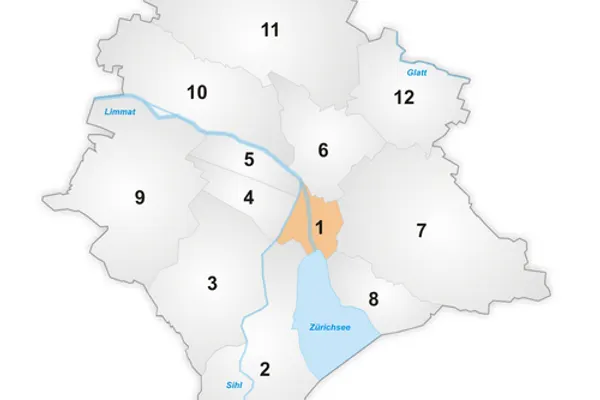
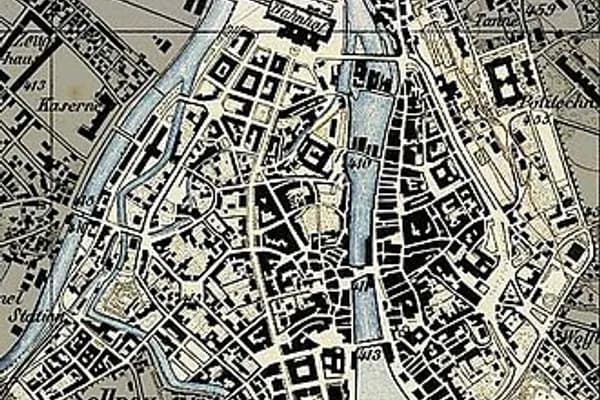
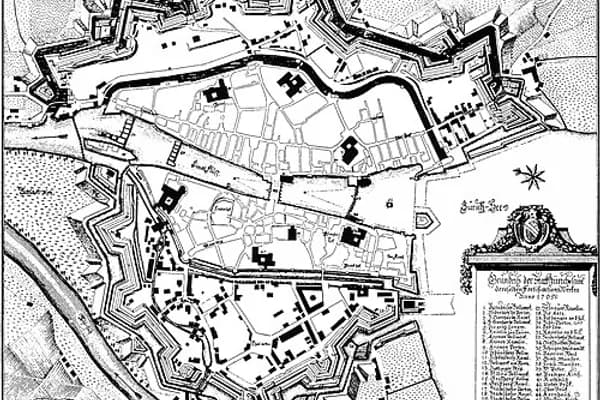
The Altstadt (German pronunciation: ˈaltˌʃtat , lit.'old town') in the Swiss city of Zurich encompasses the area of the entire historical city before 1893, before the incorporation of what are now districts 2 to 12 into the municipality, over the period 1893 to 1934. Die Altstadt approximately corresponds to the area enclosed by the former city ramparts, and is today within the administrative area of the city called Kreis 1 (District 1).
With a population of 5,617 (as of 2015), it houses about 1.4% of the city's total population.
Administratively, District 1 is divided into four parts or quarters by the Zurich statistical office, Rathaus (town hall), Hochschulen (universities), Lindenhof ("lime trees courtyard") and City. Lindenhof and Rathaus correspond to the parts of the medieval city left (west) and right (east) of the Limmat, respectively, while City and Hochschulen include the area of the Early Modern city west and east of the medieval walls, respectively.
Lindenhof
Der Lindenhof ("The lime trees courtyard") quarter corresponds to the mindere Stadt, the smaller but more prestigious half of the medieval town left of the river. This is the oldest core of the city, with settlement traces dating to pre-Roman (La Tène) times, and fortified as the Roman Vicus Turicum, a Roman customs station with a surrounding civilian settlement, in the final decades of the 1st century BC.
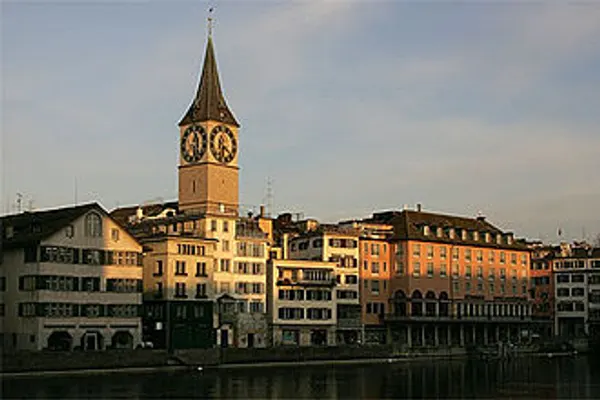
The Lindenhof hill itself is the site of the Roman castle at the location of the Celtic Oppidum Zurich-Lindenhof, rebuilt in Carolingian times but derelict by the 13th century, when it was used as a source for building stone for the first stone houses of rich burghers of the recently reichsfrei city. The Schipfe quarter at the Limmat below the Lindenhof is the site of the Roman vicus, with traces of a hypocaustum nearby the Münsterhof excavated. St. Peter church was the parish church of the medieval city, built on the site of an earlier temple to Jupiter.
The Rennweg street below the Lindenhof hill was the main street of the medieval city, entering by the Rennweg gate through the western city wall which is now marked by the course of Bahnhofstrasse. Augustinergasse is a small street leading from St. Peterhofstatt situated at the St. Peter church, passing the former Augustinians monastery below the Lindenhof hill, towards the Kecinstürlin gate at the southern Fröschengraben moat, Bahnhofstrasse as of today.
Zunfthaus zur Meisen at Münsterhof plaza near Fraumünster church houses the porcelain and faience collection of the Swiss National Museum. Lindenhof also contains the former Augustinian abbey, and formerly the Oetenbach nunnery north of the Lindenhof hill, demolished in 1903 to make way for the Uraniastrasse as part the partially built «Urania-axis» Sihlporte–Uraniastrasse–Zähringerplatz by Gustav Gull, and the Urania Sternwarte.
Fraumünster
The Fraumünster ("women's minster") abbey ruled the town until the 1336 "guild revolution" of Rudolf Brun and which remained highly influential until Zwingli's Reformation.
Rathaus
The Rathaus quarter is named for the town hall, built in the 1690s. It is the part of the medieval town on the right side of the Limmat, separated by the Hirschengraben from the Hochschulen quarter to the east, and delimited by the Bellevue and Central squares to the south and north, respectively. As such, it includes the Limmatquai as well as the Niederdorf (downstream of the Kirchgasse) and the Oberdorf (upstream of the Kirchgasse). The historical name of this eastern half of the medieval town was "greater town" (mehrere Stadt), contrasting with the "lesser town" (mindere Stadt), the western half along the left river bank.
Limmatquai
The Limmatquai was built along the right side of the Limmat, running from Central to Bellevue. It was built in the 19th century, connecting various earlier quais built into the Limmat. The current right bank is some 28 m west of the medieval river's. The quai was constructed from 18231859 from Bellevue to the Rathaus, in 18351836 from the Rathaus to the Wasserkirche and 18351839 the portion from the Wasserkirche to Bellevue, formerly called Sonnenquai. At the Limmatquai are located some guild houses, as Zunfthaus zur Zimmerleuten, Zunfthaus zur Haue, Zunfthaus zum Rüden and Zunfthaus zur Saffran. Zurich tram routes 4 and 15 run along the Limmatquai, serving the stops Helmhaus, Rathaus and Rudolf-Brun-Brücke. The quai was one of the main routes through the old town before it was freed from traffic in 2004. The bridges passed by the Limmatquai, south to north, are:
Quaibrücke, connecting Bellevue and Bürkliplatz,
Münsterbrücke between Grossmünster and Fraumünster,
Rathausbrücke just north of the town hall,
Rudolf-Brun-Brücke, between Mühlegasse and Uraniastrasse,
the Mühlesteg footbridge
Bahnhofbrücke, between Central and Zürich Hauptbahnhof.
north of Limmatquai:
Walche-Brücke
the Drahtschmidlisteg, a footbridge to Platzspitz
Niederdorf
The Niederdorf (lit.: "low village") was the least developed part of the medieval city. It properly includes just the north-eastern corner, between Mühlegasse and Central, but the term was extended to the whole part of the mehrere Stadt north of the town hall, i.e. for the entire length of the Niederdorfstrasse, or even including the parts north of the Kirchgasse.
So defined, the Niederdorf includes Rindermarkt and Neumarkt, Froschaugasse and the area of the medieval Jewish quarter, the Predigerkirche (the former Blackfriars' monastery) at Zähringerplatz (historically the city hospital, now housing the city library) and the Zähringerstrasse.
Münstergasse
The mehrere Stadt between the Niederdorf and the Oberdorf (between Rathaus and Kirchgasse) includes the Münstergasse, Obere Zäune, Untere Zäune and the Barfüsserkloster (the former Franciscan abbey) as well as a number of alleys leaving Münstergasse: Marktgasse, Spiegelgasse, Krebsgasse, Ankengasse, Römergasse and Kirchgasse.
Grossmünster
Predigerkirche
Initially the church of the Predigerkloster (Dominican monastery), it became after the Reformation in Switzerland the parish church of Niederdorf respectively Neumarkt, and owns since 1900 the tallest church tower of Zurich.
Oberdorf
The Oberdorf (lit.: "upper village") proper is the mehrere Stadt south of the Grossmünster, along the Oberdorfstrasse, between Kirchgasse and Rämistrasse.
Hochschulen
Hochschulen (universities) is wedged between Hirschengraben (the historical course of the eastern moat) and Rämistrasse, corresponding to the area taken up by the eastern fortifications of the 17th century ramparts (destroyed following the 1839 Züriputsch), the hillside now holding the main buildings of both ETH Zurich (built 1861 to 1864 under Gustav Zeuner) and University of Zurich (built 1914 under Karl Moser), at the sites of the Kronen Bollwerk and Schönenberg Bollwerk ramparts, respectively. Hochschulen borders on District 6 (Unterstrass and Oberstrass) to the north, on District 7 (Fluntern and Hottingen) to the east and on District 8 (Mühlebach and Seefeld) to the south.
Hochschulen in its southern end also includes the Bellevue and Sechseläuten squares as well as the theater and opera house at Stadelhoferplatz and the Stadelhofen train station. Stops of the Zurich tram system in the Hochschulen quarter are: Central, ETH/Universitätsspital, Kantonsschule, Kunsthaus, Neumarkt, Bellevue, Opernhaus and Stadelhofen. Line 9 follows Rämistrasse which separates Hochschulen from Fluntern, line 3 follows Hirschengraben and Seilergraben (the historical eastern moat), which separates it from the Rathaus quarter. The Polybahn funicular connects Central and the ETH Zurich main building.
Central
The Central square at the northern border between Rathaus and Hochschulen quarters is a major junction of the Zurich tram system, served by lines 3, 4, 6, 7, 10 and 15 besides buses 31 and 46. Formerly called Leonhardsplatz, it was renamed after the Hotel Central built in 1883.
Pfauen
Situated at Heimplatz, vernacularly called the Pfauen, are the theatre Schauspielhaus Zürich and the art museum Kunsthaus Zürich.
Bellevue
The Bellevueplatz, a square at the southern border between the Rathaus quarter and the southern end of the Hochschulen quarter, right next to the lake outflow, is a major junction of the Zurich tram system, served by lines 2, 4, 5, 8, 9, 11 and 15 besides buses 912 and 916. It is situated at the lakeside, just north of Sechseläutenplatz. It is named for the Grandhotel Bellevue built in 1856, and is the nodal point of the quaysides that were built between 1881 and 1887 crossing the Quaibrücke towards Bürkliplatz and General-Guisan-Quai.
Stadelhofen
South of Bellevue are the squares Sechseläutenplatz and Stadelhofenplatz. Stadelhofen was an estate just south of the southeasternmost bastion, the Stadelhofen Bollwerk, whilst Sechseläutenplatz takes its name from the Sechseläuten, a traditional Zurich festival that is celebrated there.
Stadelhofen station, on Stadelhoferplatz, is an important stop of the Zurich S-Bahn lines to Uster, Rapperswil-Jona and Winterthur as well as the terminal of the Forchbahn (S18) line serving Zumikon and Esslingen. The Zurich Opera House is situated at the southern end of the Sechseläutenplatz.
City
City is the area west of the Bahnhofstrasse, delimited by the Sihl and the Schanzengraben, the moat of the 17th century ramparts. It includes the Paradeplatz, Zürich Hauptbahnhof, the Swiss National Museum and the Platzspitz park (formerly Limmatspitz). It comprises the tram stops Bürkliplatz, Paradeplatz, Rennweg, Bahnhofstrasse / Bahnhofplatz / Bahnhofquai, Löwenplatz, Sihlstrasse and Bahnhof Selnau. City borders on District 2 (Enge) to the southwest, and on Districts 4 and 5 (Aussersihl) to the northwest.
Platzspitz
Platzspitz (formerly Platzpromenade, Limmatspitz) is a park at the confluence of the two rivers of Zurich; the Limmat and the Sihl.
In medieval times, the area situated north of the city was used as pasture. In the early 15th century it was made into a shooting-range, and in the 16th to 17th centuries, Schützenfeste were held there. A remnant of these can be found in the contemporary Knabenschiessen shooting contest.
During the 1990s, the long-practised official tolerance of drug users there from throughout Central Europe has been the subject of much worldwide media interest.
Hauptbahnhof
Bahnhofstrasse
Bürkliplatz
Bürkliplatz is a square and stop of the Zurich tram system (lines 2, 4, 8, 9, 11 and buses 161, 165), situated at the southern end of the Bahnhofstrasse, and west of the Bellevue square, with which it is connected by the Quaibrücke. The lakeshore quay connecting the square with Lake Zurich is named General-Guisan-Quai, after Henri Guisan. From the Bürkliplatz landing gate, Zürichsee-Schifffahrtsgesellschaft boat services leave for Thalwil, Rapperswil, Schmerikon, Erlenbach and down the Limmat to Zürich Landesmuseum. Bürkliplatz is named for Arnold Bürkli (18331894), the engineer responsible for the construction of the city's quays.
Schanzengraben
On its remains at «zur Katz» ramparts, the Old Botanical Garden is located.
Selnau
Selnau (from earlier Sellnau, Seldnau) was historically an estate west of the city, which came to lie between the north-western moat (Schanzengraben) and the Sihl. Together with the Gessnerallee, Selnaustrasse and Sihlhölzlistrasse running along the right bank of the Sihl, it is part of the City quarter even though strictly situated outside the city ramparts. Today, Zürich Selnau railway station is a stop on the line of the Uetlibergbahn, running from Zürich Hauptbahnhof to the Sihltal (S4) and to the Uetliberg (S10). The SWX Swiss Exchange building is located in Selnau. The museum Haus Konstruktiv is located in a former power station near Selnau train station.
See also
Wikimedia Commons has media related to Rathaus (Quarter Zürich).
History of Zurich
Fortifications of Zurich
Literature
Heimatkunde der Stadt Zürich. Zürich: Büromaterialverwaltung, 1977.
Hochbaudepartement der Stadt Zürich, Amt für Städtebau: Stadtzentrum – Altstadt / City. Verlag Neue Zürcher Zeitung, Zurich 2008 (Baukultur in Zürich, Band VI), ISBN978-3-03823-343-5
References
Public Transport VBZ
ZVV Fare zones
Main Railway Station all railway stations
S-Bahn Template
Tram Glattalbahn
Limattalbahn
Trolleybus
Polybahn
Dolderbahn
Funicular Rigiblick
Lake Zurich‘s Lake Navigation Assoc.
Zurich model
U-Bahn
EducationStreets/ Squares Augustinergasse
Bahnhofplatz
Bahnhofstrasse
Bellevueplatz
Bürkliplatz
Central
Escher-Wyss-Platz
Helvetiaplatz
Langstrasse
Limmatquai
Lindenhof
Münsterhof
Neumarkt
Paradeplatz
Rennweg
Sechseläutenplatz
Stauffacher
Weinplatz
Wühre
Bridges Bahnhofbrücke
Hardbrücke
Münsterbrücke
Postbrücke
Quaibrücke
Rathausbrücke
Tunnels Gubrist
Hirschengraben
Käferberg
Letten
Milchbuck
Schöneich
Weinberg
Wipkingen
Zimmerberg I
Zürichberg
BuildingsMuseums Beyer Watch and Clock Museum
Ethnographic Museum
FIFA Museum
Foundation E. G. Bührle
Haus Konstruktiv
Kunsthalle
Kunsthaus
Migros Museum of Contemporary Art
Money Museum
Musée Visionnaire
Museum of Design
Natural History Museum
North American Native Museum
Pavillon Le Corbusier
Rietberg
Swiss National Museum
Tram Museum
Zoo
Entertainment/ Events Art Zurich
Bernhard Theater
Cabaret Voltaire
Dynamo
Frauenbad Stadthausquai
Theater am Hechtplatz
Knabenschiessen
New Year's Marathon
Zurich Opera House
Theater am Neumarkt
Theater Rigiblick
Rote Fabrik
Schauspielhaus Zürich
Sechseläuten
Street Parade
Tonhalle
Volkshaus
Weltklasse Zürich
Zürcher Theater Spektakel
Zurich Film Festival
Züri-Metzgete
Parks/Forests see Parks and forests in Zurich
Water Bodies Katzensee
Lake Zurich template
Limmat
Schanzengraben
Sihl
See also Canton of Zurich History of Zurich Mayors of Zurich People of Zurich Restaurants in Zurich Timeline of Zurich Turicum Zurich Airport Zurich Metropolitan Area Zurich Oberland Zurich Unterland
Islands Au Peninsula
Bauschänzli
Grosser Hafner
Hurden Peninsula
Lützelau
Rapperswil Peninsula
Saffa
Schönenwerd
Ufenau
Rivers Jona
Limmat
Linth
Schmerikoner Aa
Sihl
Steinenbach
Wägitaler Aa
Valleys Küsnachter Tobel
Limmattal
Sihltal
Mountains Adlisberg
Albis
Buechberg
Etzel
Pfannenstiel
Uetliberg
Zimmerberg
Zürichberg
Landmarks Felsenegg
Frauenwinkel
Ganymed statue
Goldküste
Hurden canal
Lindenhof (Rapperswil)
Obersee
Quaibrücke
Rapperswil–Hurden bridge
Seedamm
Zürichhorn
Transportation Forchbahn
Horgen–Meilen ferry
LAF cable car
St. Gallen S-Bahn
SZU
VBZ
Voralpen Express
VZO
Zimmerbergbus
Lake Zurich Navigation Company
Zürich S-Bahn
ZVV
People Gerold Späth
House of Rapperswil Elisabeth
Johann I
Johann II
Lydia Escher
Rudolf Brun
Ulrich von Hutten
Encyclopedic content adapted from the Wikipedia article on Altstadt, used under CC BY-SA 4.0.