About the neighborhood
Capital city of Santa Catarina, Brazil
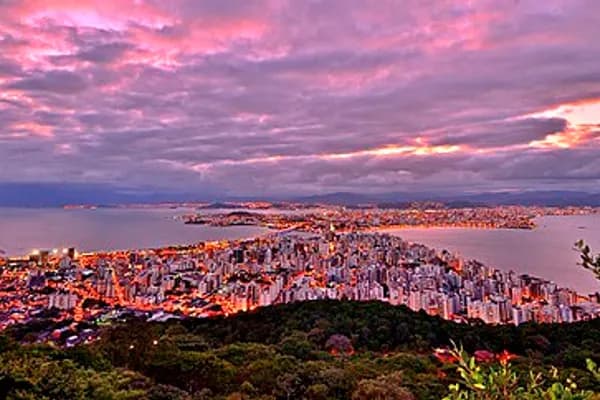
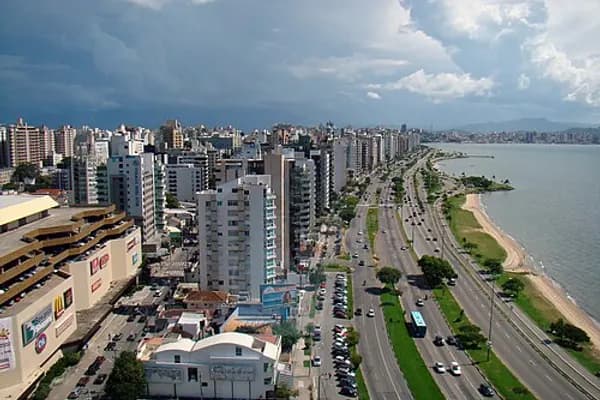
Florianópolis (Brazilian Portuguese: floɾiaˈnɔpolis; English: /ˌflɔːriæˈnɒpəlɪs/) is the capital and second largest city of the state of Santa Catarina, in the South region of Brazil. The city encompasses Santa Catarina Island and surrounding small islands, as well as part of the mainland. It has a population of 537,211, according to the 2022 Brazilian census, the second-most populous city in the state (after Joinville), and the 39th in Brazil. The metropolitan area has an estimated population of 1,111,702, the 21st largest in the country. The city is known for having the country's third-highest Human Development Index score among all Brazilian cities (0.847).
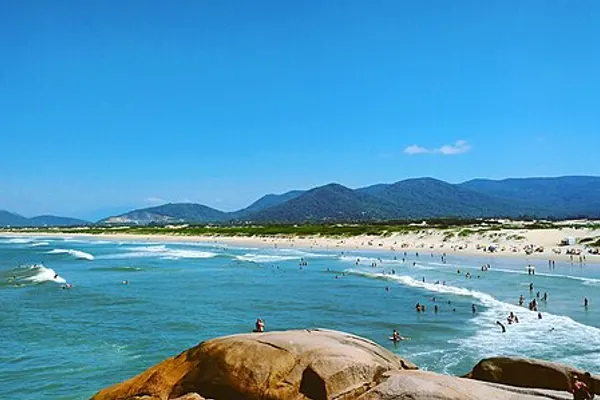
The economy of Florianópolis is heavily based on information technology, tourism, and services. The city has 60 beaches and is a center of surfing activity. Lagoa da Conceição is the most famous area for tourism, recreation, nature, and extreme sports. The New York Times reported that "Florianopolis is the party destination of the year in 2009." Newsweek placed Florianópolis in its "ten most dynamic cities of the world" list in 2006. Veja, a Brazilian publication, named the city as "the best place to live in Brazil." As a result of this exposure, Florianópolis is growing as a second home destination for many Paulistas, Argentines, Uruguayans, U.S. citizens, and Europeans.
Florianópolis is also commonly known by the nicknames Floripa and Ilha da Magia (Magic Island). Most of the population lives on the mainland and on the island's central and northern parts. The southern half is less inhabited. Many small commercial fishermen populate the island.
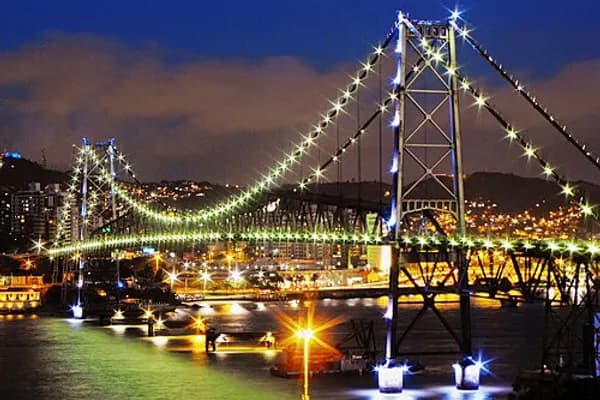
The Hercílio Luz International Airport serves the city. Florianópolis is home to the Universidade Federal de Santa Catarina (Federal University of Santa Catarina). There are also the Santa Catarina Federal Institute of Education, Science and Technology (Instituto Federal de Santa Catarina), and two campuses of the Universidade do Estado de Santa Catarina (State University of Santa Catarina), among other institutions of higher and professional education.
The city has been ranked as the safest capital to live in Brazil in 2024, according to the 2024 Security Atlas, released by the Institute for Applied Economic Research (IPEA) and the Brazilian Public Security Forum (FBSP). Among other rankings, it has been placed as well as the 5th best place to retire, in Brazil and the USA, by the Mongeral Aegon Longevity Institute in partnership with FGV.
Etymology
The name Florianópolis is a tribute to Marshal Floriano Peixoto, the second President (1891–1894) of the Republic of the United States of Brazil and from Greek term polis, meaning "city". Until 1893, the city was called Nossa Senhora do Desterro (Portuguese: ˈnɔsɐ siˈɲɔɾɐ du desˈteʁu or dʒisˈteʁu; lit.'Our Lady of Banishment') or simply Desterro.
Geography
Vegetation
Florianópolis lies within the Atlantic Forest, which has an extremely diverse and unique mix of vegetation and forest types. The main ecoregion is the coastal Atlantic forest, the narrow strip of about 50–100 kilometers (31–62 miles) along the coast, which covers about 20 percent of the region. This forest extends as far as 500–600 kilometers (310–370 miles) inland, and its range is as high as 2,000 meters above sea level. Altitude determines at least three vegetation types in the Atlantic Forest: the lowland forest of the coastal plain, montane forests, and the high-altitude grassland or "campo rupestre."
The municipality contains part of the 17,104-hectare (42,260-acre) offshore Marinha do Arvoredo Biological Reserve, a fully protected conservation unit established in 1990. It also contains part of the 84,130-hectare (207,900-acre) Serra do Tabuleiro State Park, a mountainous area covered in lush forests. The park protects the sources of the Vargem do Braço, Cubatão, and Una rivers, which supply most of the drinking water for greater Florianópolis and the south coast region. The municipality contains the 1,532-hectare (3,790-acre) Rio Vermelho State Park in the northeast of Santa Catarina Island, created in 2007.
Precipitation
There is significant precipitation, which is well distributed throughout the year. The annual normal rainfall for the period of 1961 through 1990 was 1,517.8 millimetres (59.76in). There is no dry season, and summer generally is the rainiest season. Increased rainfall occurs from January to March, with a median of 160 millimetres (6.3in) per month, and from April to December, there is somewhat less precipitation, averaging 100 millimetres (3.9in) per month. The driest months are from June to August.
Climate
Florianópolis experiences a warm humid subtropical climate (Koppen: Cfa), falling just short of a true tropical climate. The seasons of the year are distinct, with a well-defined summer and winter, and characteristic weather for autumn and spring. Due to the proximity of the sea, the relative humidity of the atmosphere is 80% on average.
The area is threatened by climate change, with rising sea levels expected to lead to increased coastal erosion. Mangroves are being planted in and around the city to help mitigate potential damage while restoring local ecosystems.
The maximum temperatures of the hottest month varies from 25 to 38.8°C (77.0 to 101.8°F) and the minimum temperatures are from 6 to 11°C (43 to 52°F). The lowest temperature ever recorded was −0.4°C (31.3°F) in July 2000 while the highest temperature ever recorded was 38.8°C (101.8°F) in February 1973.
Neighbourhoods
History
Carijós Indians, a Tupi people, were the first inhabitants of the Florianópolis area. The traces of its presence are verified through archaeological sites and sambaquis dating up to 4000 years ago. The Indians called the place Meiembipe, meaning "mountain along the channel."
Around 1514, the Portuguese landed and gave the area the name Ilha dos Patos (Island of the Ducks), but in 1526 it was renamed Ilha de Santa Catarina (Saint Catherine's Island). The area supplied the vessels that went to the River Plate (Río de la Plata) Basin.
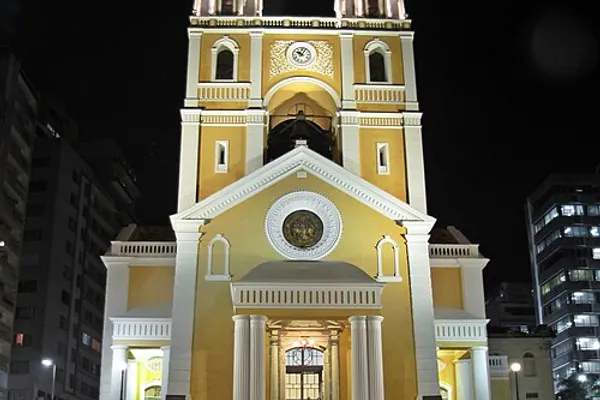
The official settlement of the island began in 1673 with the arrival of bandeirante Francisco Dias Velho's agricultural company, and it continued in 1678 with the construction of a chapel consecrated to Nossa Senhora do Desterro. At this time, a villa began to take form, slowly becoming a colonial settlement.
To guarantee its domain, the Portuguese Crown elevated Santa Catarina Island to the category of village in 1714 with the name of Nossa Senhora do Desterro, and already in 1726, they promoted it again, now to the category of town.
From this date on, Vila do Desterro and mainly the port began to have a strategic function because it was situated halfway between Rio de Janeiro and Buenos Aires, possibly two of the largest seaside cities of South America at that time. For this reason, in 1739, the Capitania da Ilha de Santa Catarina was created, and Desterro became its capital. Soon, the most expressive seaside defensive ring of Southern Brazil started to be built: Santa Cruz, São José da Ponta Grossa, Santo Antonio, and Nossa Senhora da Conceição da Barra do Sul fortresses.
With the coming of the Captaincy, the population began to grow, but the great population growth happened between 1747 and 1756 with the arrival of about 6,000 settlers coming from the Archipelago of Azores and from Madeira Island. The development of agriculture, the cotton and linen industry, and the commerce followed the Azorean occupation. In 1823, during the monarchy which ended in 1889, Desterro became the Capital of Santa Catarina Province, opening a period of prosperity with many urban works and also intense political organization.
Regional elites, unhappy with the government centralization, staged the Federalist Revolt at the beginning of the Brazilian Republic. The movement that started in Rio Grande do Sul spread to Santa Catarina and turned Desterro into the Federalist Capital of the Republic. The then president of Brazil, Marshal Floriano Peixoto, known as the Iron Marshal, suppressed the rebellion and ordered the shooting of many people who were considered enemies of the state, in the Anhatomirim Island Fortress. Possibly to show loyalty to the marshal, 1893 saw the change of the state capital's name: from Desterro to Florianópolis, that is to say, the city of Floriano.
Demographics
Catholic Church (63.7%)
Protestantism (12.8%)
Spiritism (7.48%)
Other religions (4.05%)
Irreligious (11.8%)
According to the 2022 census, there were 537,211 people residing in the city. The population density was 623.68 inhabitants per square kilometre (1,615.3/sqmi). The last PNAD (National Research for Sample of Domiciles) census revealed the following numbers: 410,298 White people (76.4%), 87,542 Pardo (Multiracial) people (16.3%), 35,813 Black people (6.7%), 2.398 Asian people (0.4%) and 1,148 Amerindian people (0.2%).
Florianópolis has a population mostly composed of Brazilians of European descent. The number of immigrants started to increase in the mid-18th century, mostly with the arrival of Portuguese colonists from the Azores Islands. The population of Florianópolis was composed mainly of Portuguese/Azoreans, Germans, and Italians. Further south, some neighborhoods preserve their rural village identity. The cultural heritage left by their Azorean ancestors is noticeable in their dialect, in handicrafts, and in traditional festivities.
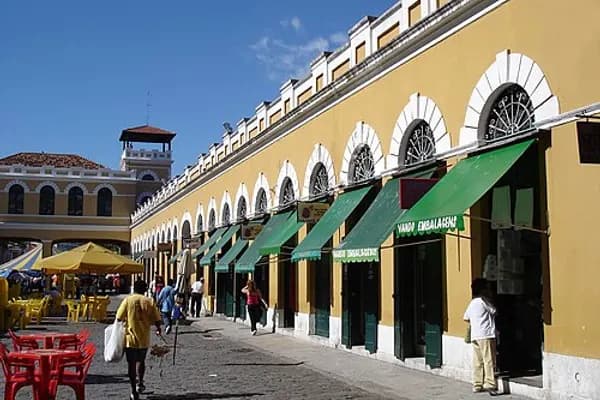
The small village of Santo António de Lisboa (Saint Anthony of Lisbon) is an example of colonial period architecture and in Ribeirão da Ilha, the oldest part of the capital, the inhabitants speak in an accent closer to the Azorean dialect of the first settlers. In Ribeirão da Ilha is the church of Our Lady of Lapa do Ribeirão, built in 1806. Lagoa da Conceição, with its many sand dunes, restaurants, and seaside nightlife, and where women make lace to sell in the street, has also managed to retain many traces of its colonial architecture.
The city is densely populated, with a population distribution of 623.68 inhab./km, the 6th highest in the state of Santa Catarina. The vast majority of Florianopólis residents live in the urban area of the municipality, corresponding to 96.2% of its inhabitants, while 3.78% live in the rural area of Florianópolis.
On the other side, the city has taken on a cosmopolitan air with the arrival of Brazilians from other states and foreigners who chose to live there. The island, which at the beginning of the colonization period was an important whale hunting centre, is today a technological pole of the IT industry. A State Capital of interest to tourism, Florianópolis' population in 2020 was estimated to be around 508,826 people in the city proper and 1,111,702 people in the metropolitan area.
Religion
According to the 2010 Brazilian Census, most of the population (63.68%) is Roman Catholic, other religious groups include Protestants and evangelicals (12.81%), Spiritists (7.48%), Umbandists (0.66%), No religion (11.76%), and people with other religions (3.39%).
Economy
According to 2002 Sefaz statistics, agricultural activities represented 0.05%, manufacturing represented 3.41% and the commerce and service sector 96.54%.
Tourism is one of the staples of Florianópolis's economy, and relates to not only Floripa's Azorean culture but also the fact that it is situated on the coastline. Its environmental restrictions on building and commercial development have been more or less strictly enforced, helping it to keep its original character.
The city has invested heavily in infrastructure, from roads to schools, and Florianópolis ranks high on development measures such as literacy (97 percent) and electrification (near 100 percent). By the late 1990s, private companies were flocking to the island, or emerging from a technology "incubator" at the federal university. (Among the innovations it hatched: the computerized voting machines that have reduced fraud and increased efficiency in Brazilian elections.) Local officials now say they aim to be the Silicon Valley of Brazil, with beaches.
In addition to its white sand beaches, Florianópolis offers many historical attractions, including the sites of the original Azorean colonists, the Lagoa da Conceição lagoon, and Santo Antônio de Lisboa. Tourism in Florianópolis has grown significantly over the past 10 years, with increasing numbers of visitors coming from other large cities in Brazil (particularly Porto Alegre, Curitiba, São Paulo and Rio de Janeiro) as well as other South American countries (particularly Argentina, with direct flights offered daily from Buenos Aires).
During the past decade, technology and software development firms also experienced strong growth, and today Information Technology services are one of the top revenue generators in Florianópolis. Several technology centers are spread around Florianópolis, making the city an important pole in this economic sector.
The GDP for the city was R$323,264,000,000 (2019).
The per capita income for the city was R$45,602 (2021).
Education
Educational institutions
Universidade Federal de Santa Catarina (UFSC);
Universidade do Estado de Santa Catarina (UDESC);
Serviço Nacional de Aprendizagem Comercial (Senac/SC)
Complexo de Ensino Superior de Santa Catarina (CESUSC);
Universidade do Sul de Santa Catarina (UNISUL);
Universidade do Vale do Itajaí (UNIVALI);
Centro Universitário Estácio de Sá de Santa Catarina;
Instituto Federal de Educação, Ciência e Tecnologia de Santa Catarina (IFSC);
and many others.
Primary and secondary schools
The Florianópolis high schools that obtained the best results on the 2007 Exame Nacional do Ensino Médio (National High School Exam) are Escola Autonomia, Colégio da Lagoa, Colégio Energia, Colégio Tendência, Colégio Expoente, Colégio Adventista de Florianópolis, Colégio Geração, Colégio de Aplicação UFSC, EEB Feliciano Nunes Pires, IFSC, Colégio Decisão, EEB Professor AníbalNunes Pires, Instituto Estadual de Educação, EEB Osmar Cunha, EEb Getúlio Vargas, EEB Presidente Roosevelt, EEB Professor Henrique Stodieck.
Tourism and lifestyle
Florianópolis is one of the most visited places in Brazil, as it is an island with 42 beaches, lagoons, and waterfalls.
Beaches
Conceição Lagoon (Lagoa da Conceição) is the largest lagoon on the Santa Catarina Island and one of the most visited areas of the island by foreign travelers and backpackers. The adjacent district of the same name has the highest concentration of restaurants, bars, organic markets, and shops. Many expats and Brazilian people from other cities choose to live by the lagoon because of its views, safety, nature, and quality of life.
Encyclopedic content adapted from the Wikipedia article on Trindade, used under CC BY-SA 4.0.